Physical Address
304 North Cardinal St.
Dorchester Center, MA 02124
Physical Address
304 North Cardinal St.
Dorchester Center, MA 02124

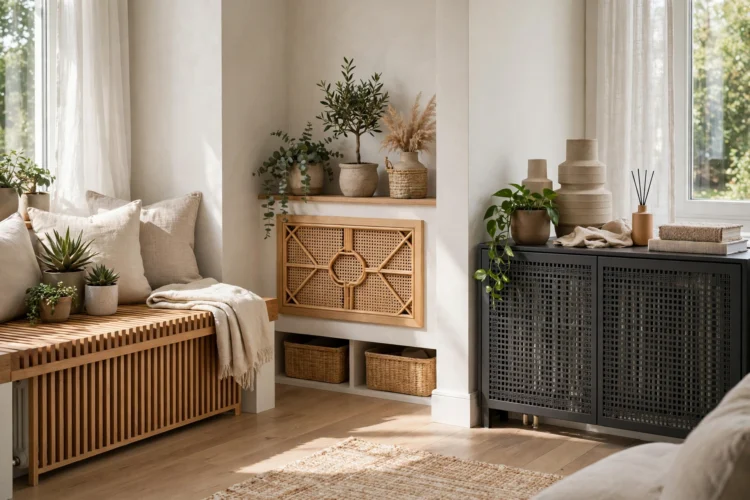
Radiators and vents do a useful job and look terrible doing it. These nine ideas hide them in plain sight while keeping the warm air flowing.
Every home has a radiator or a vent sitting in the worst possible spot, usually right where you want to put furniture. The fix is not to block it, because a covered radiator that cannot breathe wastes heat and can damage the cover. These radiator cover ideas show how to hide radiators decoratively while keeping airflow, so the room looks better and still stays warm.
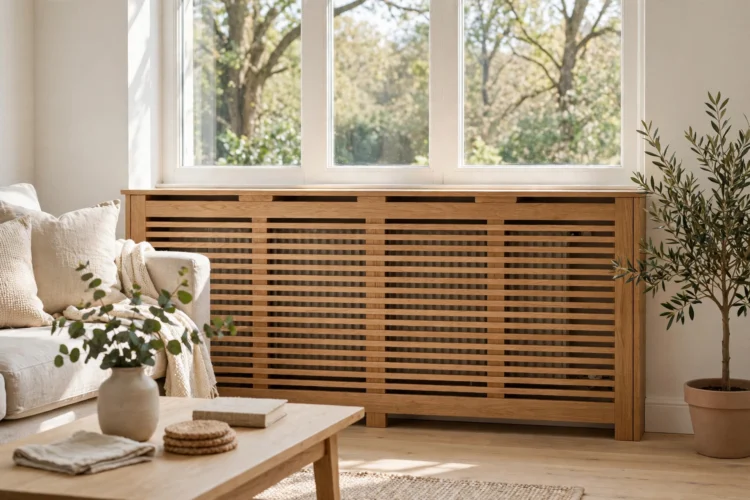
A slatted radiator cover is the classic fix for a reason. Vertical or horizontal slats hide the radiator behind a screen of wood while gaps between the slats let warm air pass. Build the cover as a freestanding box with an open back and a mesh or slatted top, and leave at least two inches of clearance on every side so air can circulate.
Paint the cover the same color as the wall and it fades into the room. Paint it a contrasting color and it becomes a piece of furniture. Choose a hardwood or a good plywood, since softwood can warp near heat. If you want the slatted look elsewhere in the room, our slatted wood divider ideas for modern interiors show how the same rhythm works as a room divider.
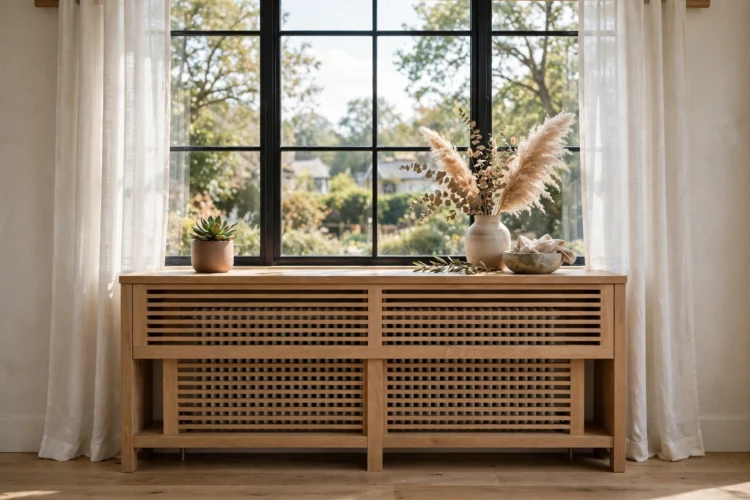
A radiator under a window becomes a console table with one wide board on top. Fit a solid wood or stone top that extends a few inches past the radiator on each side, and the radiator disappears under a useful surface. Add a lamp, a stack of books, or a small plant, and nobody looks at what sits below.
Use a heat-resistant top such as stone, tile, or thick hardwood, and keep soft items away from the surface when the heating runs. Leave the front open or slatted so heat escapes into the room instead of pooling under the top. This works best for low radiators under windows, where the top sits at a natural table height.
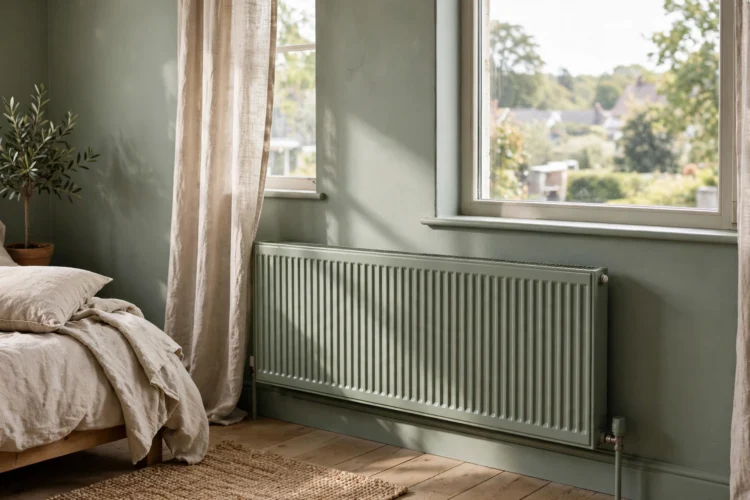
The cheapest disguise is paint. A painted radiator in the wall color stops reading as a separate object and becomes part of the background. Use a heat-resistant radiator paint in the same shade as the wall, and paint the pipes to match as well, because bare copper pipes give the game away.
Prep matters more than the color. Clean the radiator, sand lightly, and use a metal primer so the paint bonds and does not peel when the metal heats and cools. Two thin coats last longer than one thick coat. This trick works for vents too, and it costs almost nothing.
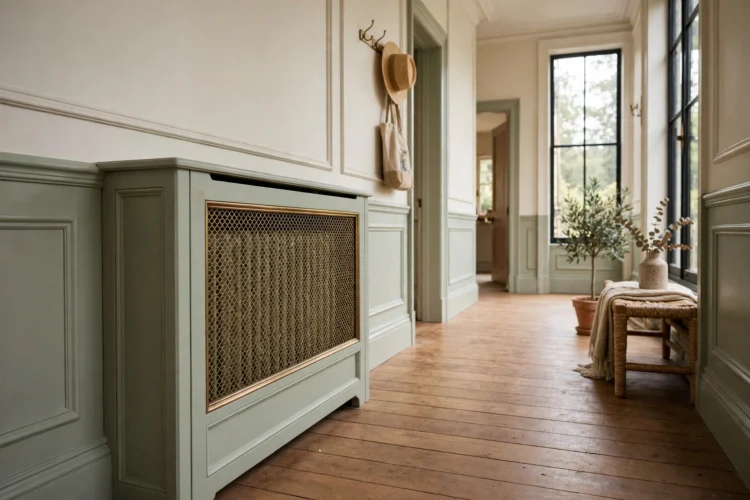
A full cabinet with a metal mesh or perforated front hides the radiator completely while letting heat through. Mesh fronts come in brass, black, and white, and the pattern can be decorative in its own right. Build the cabinet with a hinged front or a removable panel so you can reach the valve and bleed the radiator when needed.
Size the cabinet generously, with space above the radiator for warm air to rise. A tight cabinet traps heat and can scorch the wood over time. If the cabinet sits in a hallway, add a shelf on top for keys and post, so it earns its floor space.
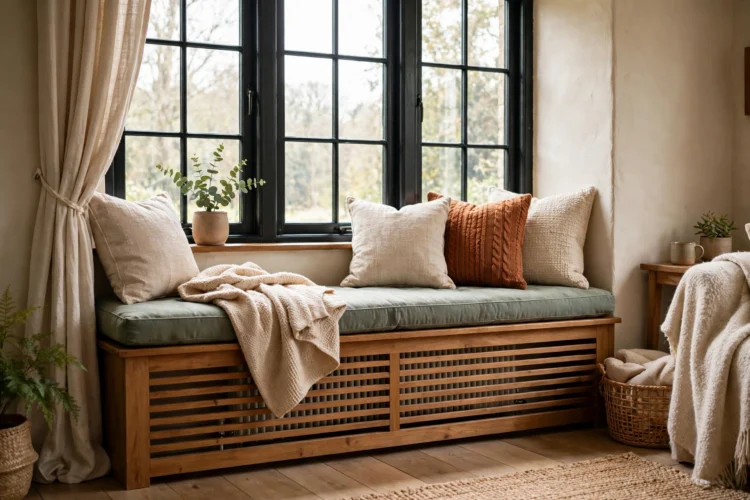
A low bench or a window seat in front of a radiator turns an eyesore into seating. Build the bench with an open or slatted front so heat passes through, and add a cushion in a washable fabric. This works well in bedrooms and living rooms where extra seating is always welcome.
Keep the cushion fabric heat-safe and avoid foam that sits directly against hot metal. A hinged bench top adds storage for blankets or shoes, which makes the disguise even more useful. For more bench ideas that double as storage, our DIY storage bench plans for small spaces show how to build one to fit an awkward spot.
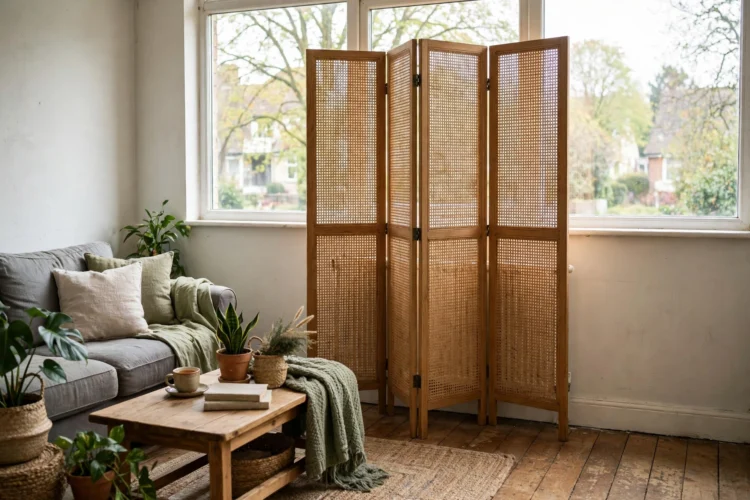
A folding screen hides a radiator in seconds and moves when you need access. Choose a screen with an open weave, slats, or a fabric panel that lets air through, and match it to the room so it reads as decor rather than a cover-up. Screens suit renters especially well, since they need no screws and no permanent changes.
Keep the screen a few inches from the radiator so heat does not build up behind it, and avoid paper screens near very hot radiators. A screen also hides floor vents and wall vents in a hallway, where a permanent cover would be harder to fit. Our folding screen ideas for flexible privacy show styles that work as both a divider and a disguise.
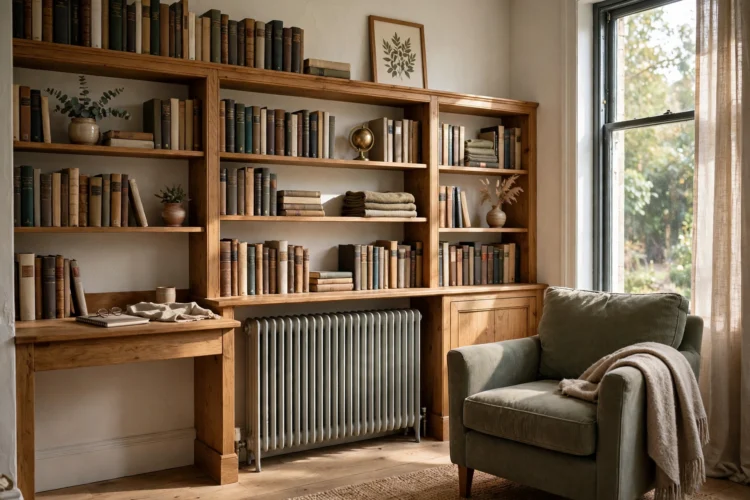
A shallow bookshelf built around a radiator turns the wall into storage and the radiator into a background detail. Leave the shelf open at the back, use slatted or open sides, and keep books a few inches from the hot surface. The eye reads the books and the shelf, and the radiator fades behind them.
This suits living rooms and studies where books already live. Avoid paperbacks directly against the radiator, and use the lower shelves for baskets or storage boxes that tolerate warmth. A bookshelf cover also works for tall vertical radiators, which are harder to hide with a standard box.
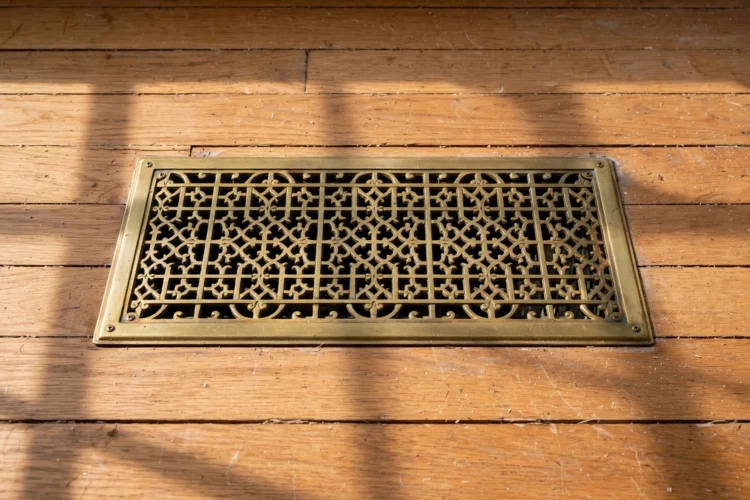
Floor vents look better with a decorative vent grille than with the standard stamped metal cover. A decorative vent grille swaps in with a screwdriver and suits traditional and modern floors alike. Brass, bronze, and wood grilles come in patterns that suit traditional and modern floors, and they swap in with a screwdriver. Measure the duct opening before ordering, because grilles are sized by the hole, not by the old cover.
Vacuum the duct before fitting the new grille, and check that the grille does not rattle when air flows. A heavy grille sits flatter than a light one, and a dab of felt on the underside stops buzzing. For wall vents, the same idea works with a framed grille painted to match the wall.
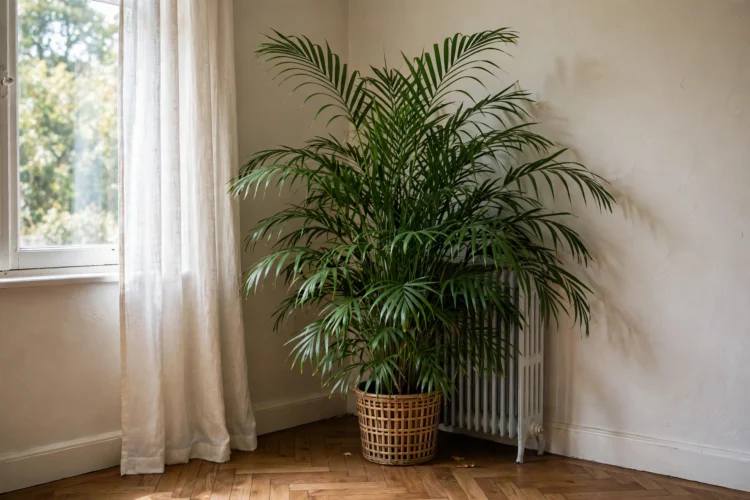
Sometimes the simplest disguise is placement. A tall plant in front of a radiator, a floor lamp beside a vent, or an armchair angled to block the view can hide the problem without any building work. Plants need care near heat, so choose tough varieties and water them more often, or use a tall faux plant for the hottest spots.
Keep at least a few inches of clearance so air still moves, and never drape fabric over a radiator. This approach suits renters and anyone who wants a quick fix before committing to a built cover. A tall plant also softens the corner, so the disguise adds something to the room instead of just hiding something. For more ways to use plants as soft dividers, our plant room divider ideas with living greenery show how greenery zones a space.
Whichever method you pick, check the heat output after the cover goes on. Hold your hand a few feet away and feel whether warm air still reaches the room. If the room feels cooler, widen the gaps or open the front. A good disguise hides the radiator from sight, not from the room. If you enjoy building your own covers, our DIY wall molding projects that mimic custom millwork show how simple trim work can give a plain cover a custom look.