Physical Address
304 North Cardinal St.
Dorchester Center, MA 02124
Physical Address
304 North Cardinal St.
Dorchester Center, MA 02124

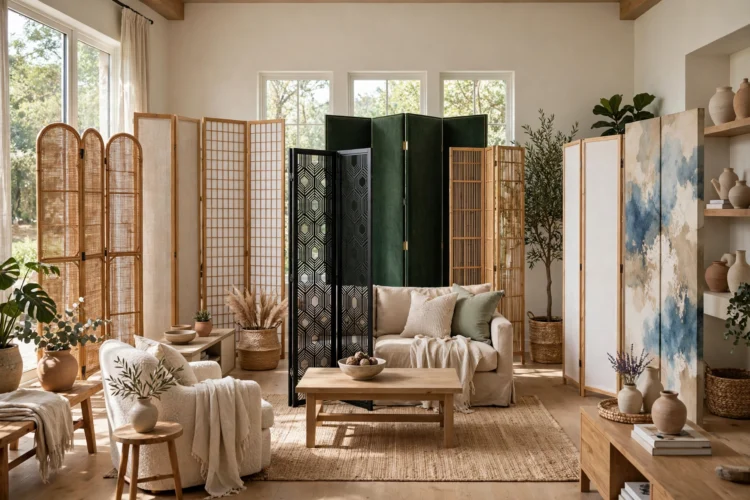
Eight freestanding screens that add privacy, hide clutter, and zone a room without a single nail in the wall. Pick the style that fits your space.
These folding screen room divider ideas solve a problem renters know well: you want a bedroom corner, a home office, or a quiet reading spot, but you cannot build a wall and you do not want to commit to one. A folding screen gives you privacy you can move, fold flat, and take with you when you leave.
Pick the screen by what you need most. Light and air call for slats, linen, or glass. Total cover calls for solid panels. A small room calls for mirrors or a low screen that zones the space without closing it in. Every idea below works as a rental friendly room divider. Nothing here needs screws in a wall or a call to a landlord, and every screen folds flat when the room needs to open up again.
A wood slat screen is the safest first pick. The gaps between slats let light and air pass through, so the room still feels like one room, while the frame reads as furniture rather than a barrier. Oak and walnut suit warm rooms; pale ash or pine suits rooms that already lean bright and simple. As a freestanding room divider, it needs no screws, no brackets, and no permission from a landlord. Look for a frame that stands steady on its own feet and hinges that hold the panels at the angle you set instead of flopping flat.
Use it to close off a sleeping area in a studio, or to give a desk a back wall in a shared living room. A three-panel screen about 120 to 150 centimeters wide covers a twin bed or a desk without eating the walkway. In a narrow living room layout, angle one panel toward the wall so the screen feels built in rather than parked in the middle of the floor. This is also the easiest type to move: fold it flat, lean it behind a door, and the room is open again.
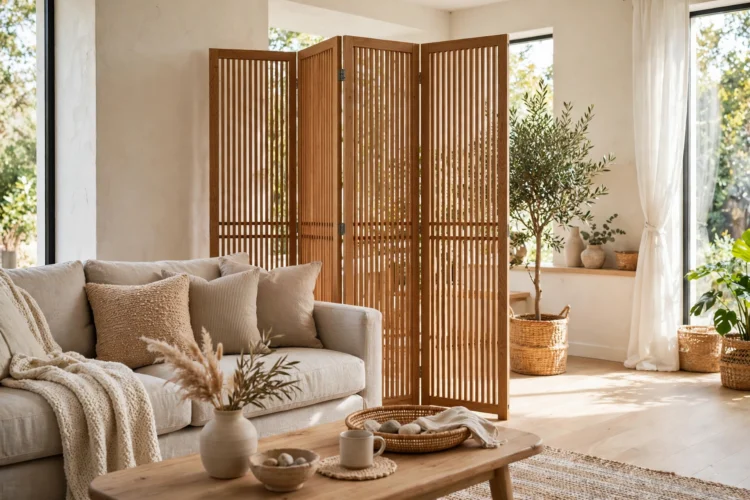
A linen or canvas screen trades the hard lines of wood for soft light. Daylight passes through the fabric and lands as a warm glow on the other side, which makes it a good pick for a bedroom corner or a dressing area where harsh shadows are unwelcome. Choose a tight weave if you want real cover, and a loose weave if you only want to soften the view. A portable privacy screen in linen also folds down to almost nothing, so it fits in a closet or under a bed when guests arrive.
Keep the frame simple so the fabric does the work. A slim wood or metal frame in black, white, or natural wood keeps the look calm. If the fabric starts to sag, tighten the tacks or staples along the back of the frame, or swap the panel for a fresh piece of cloth. That swap is the real advantage: you can change the color of the whole screen in an afternoon for the price of a few meters of fabric.
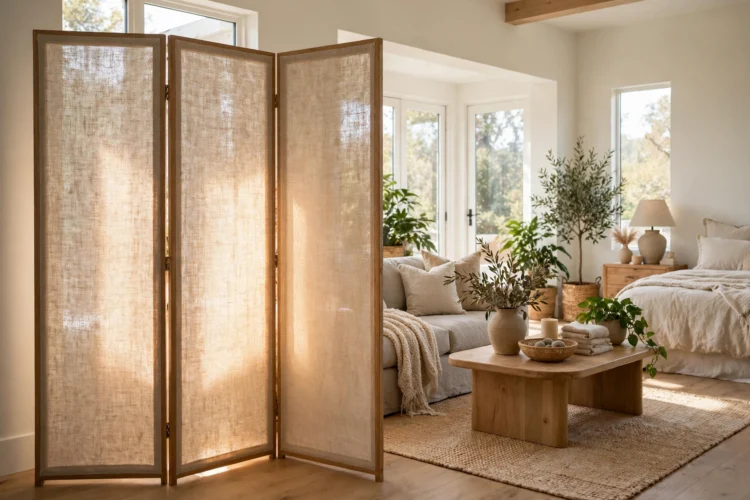
A mirrored screen does two jobs at once: it divides the room and it bounces light into the darkest corner. Place it opposite a window and the reflection doubles the daylight in a small room. Three narrow mirrored panels work better than one wide one, because you can angle each panel to catch a different slice of the room. Pick panels with a thin frame in brass, black, or wood so the mirrors read as furniture and not as a gym wall.
Use the back of the screen as well. The side facing the bed or desk can hold the mirror, while the side facing the room stays plain, or the other way around. Keep the glass clean with a quick wipe once a week, since fingerprints show fast on a mirror that sits at eye level. Pair the screen with layered lighting, a floor lamp on one side and a table lamp on the other, so the reflection adds glow after dark instead of a black slab.
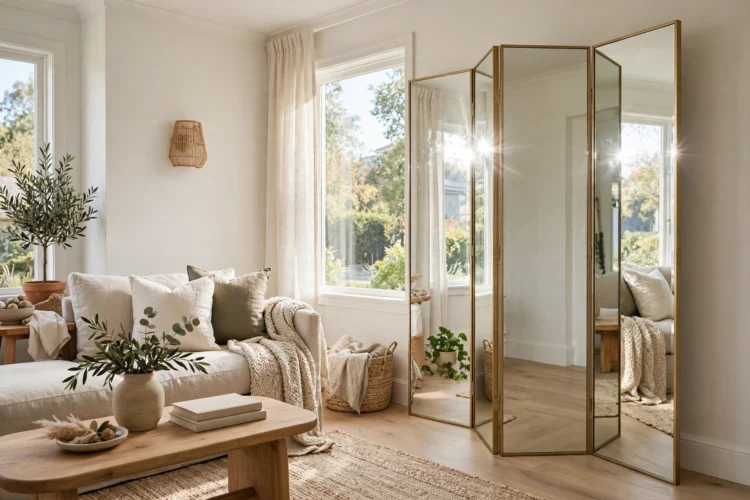
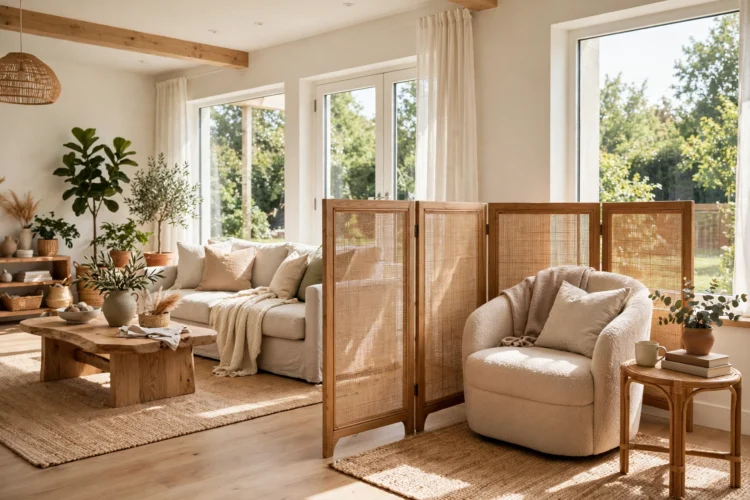
Rattan and cane bring texture that flat panels cannot. The woven pattern breaks up a plain wall, lets air move through, and still blocks the direct view, which makes it a natural fit for warm rooms, plant-filled corners, and bedrooms that lean relaxed rather than formal. A cane screen pairs well with wood floors, woven baskets, and linen bedding, and it looks right next to plants in a way that glass and metal rarely do.
Check the weave before you buy. Tight cane gives more cover; open weave gives more airflow and a lighter look. Keep it out of damp spots, since natural cane can sag when it stays wet, and dust it with a soft brush rather than a wet cloth. If a panel rattles, a small felt pad where the panels meet quiets it. In a rental, this is the screen that looks most like it was always meant to be there.
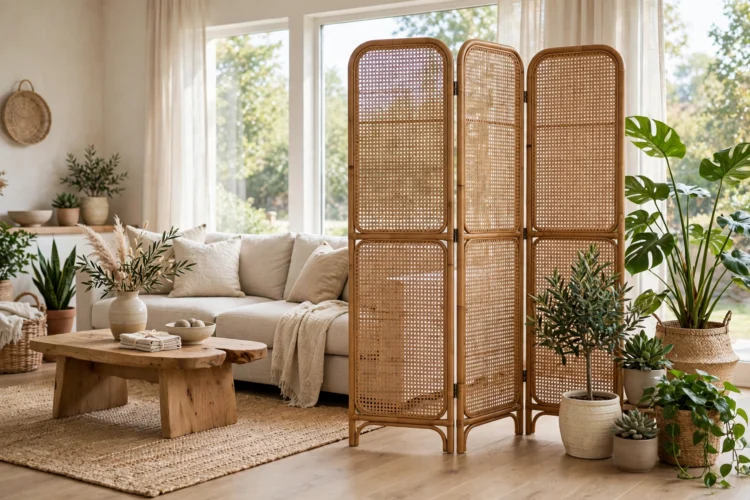
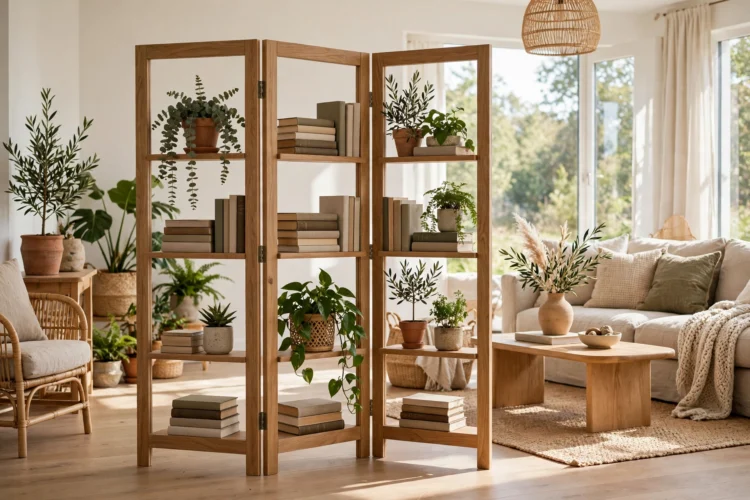
A folding screen with shelves earns its floor space. Instead of a flat panel that only blocks a view, you get a place for books, plants, and the small things that would otherwise pile up on a table. A three-panel screen with two or three shelves per panel holds a surprising amount, but keep the load light and low: heavy books on the bottom shelf, plants and small objects higher up, so the screen stays steady.
Borrow a few bookshelf styling tricks: a mix of upright books, one stack lying flat, and a single plant or vase per shelf. Leave some shelves half empty so the screen still reads as a divider and not as a wall of stuff. Put the shelves on the side you see most, and keep the plain back toward the bed or desk. It works well as a room divider behind a sofa, where it hides a workspace from the living area without closing the room off.
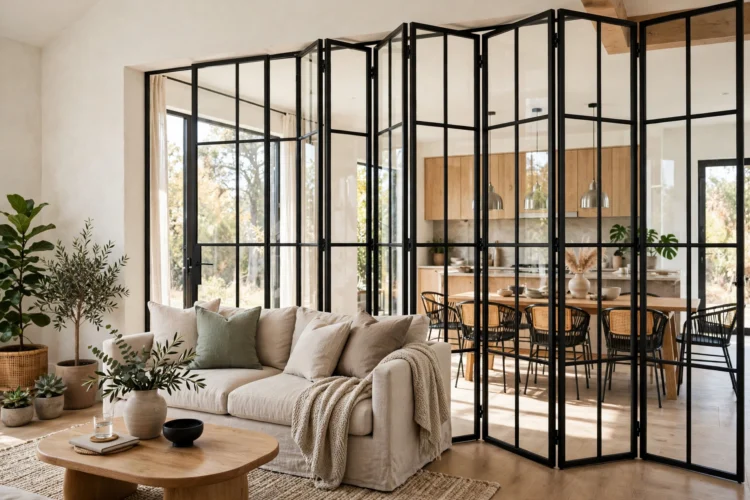
A black metal frame with glass panels suits an open-plan living room where you want zones without losing the sense of space. The frame draws a clear line between the living area and a dining table or desk, while the glass keeps the sightline open, so the room still feels large. Frosted or reeded glass gives more cover than clear glass; clear glass keeps the view and only marks the boundary.
Match the frame to something already in the room, such as black window frames, a dark lamp, or cabinet handles, so the screen looks planned rather than added. Keep the glass panels slim and the feet flat so the screen sits close to the floor. A four-panel version can wrap a corner, which works well for a desk tucked behind a sofa. Set the screen a few steps from the wall so you can walk around both ends instead of trapping yourself in the zone it creates.
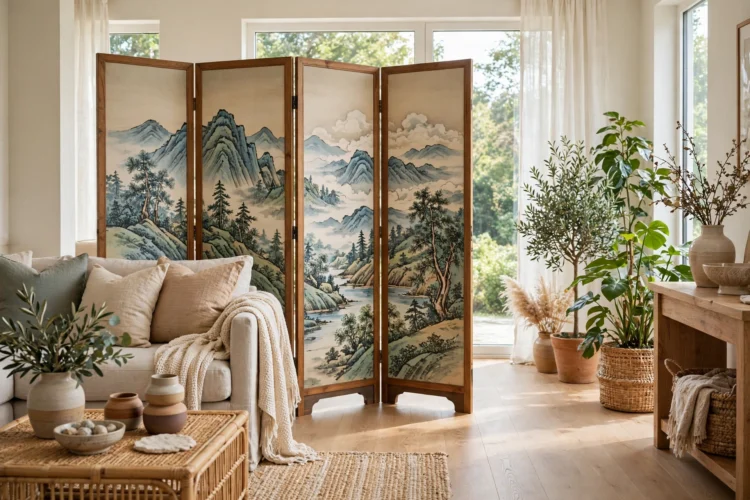
A painted screen is decor first and a divider second, which is exactly why it works in rooms where a plain panel would feel like a compromise. A landscape, a bold pattern, or a single large motif turns the screen into the art on the wall, and the privacy comes along for free. Paint it yourself on primed canvas panels, or look for a vintage screen at a flea market and give it a fresh coat in one color that already appears in the room.
Keep the design simple enough to read from across the room. One strong image beats a busy pattern that turns to noise at a distance. A decorative folding screen like this earns the best spot in the room, facing the sofa or the front door, rather than hiding in a corner. If you paint it yourself, seal the surface with a clear matte coat so it survives dusting and the occasional bump from a vacuum cleaner.
A low screen, about waist to shoulder height, zones a room without blocking light or conversation. It marks where the living area ends and the workspace begins, but you can still see over it and talk across it, which keeps a small home feeling open. Use it behind a sofa to carve out a desk area, or beside a dining table to separate it from a play area. A low screen is the quietest of these folding screen room divider ideas, and it also suits homes with kids or pets, since it is easy to step around and hard to knock over when it sits low and wide.
Pair it with a reading chair and a small side table to make a nook that feels finished rather than fenced off. An accent chair in a color pulled from the screen, or from a cushion on the sofa, ties the nook to the rest of the room. Choose a screen with a solid base and a wide stance so it stays put when someone brushes past it. When the room needs to open up again, fold it flat and slide it behind the sofa.
Start with the job, not the style. Decide whether you need cover, light, storage, or a simple line on the floor, then pick the screen that does that job. Measure the spot, check that the panels stand steady at the angle you want, and live with it for a week before you decide where it belongs. A good screen moves with you, and the best spot often turns out to be the second place you try.