Physical Address
304 North Cardinal St.
Dorchester Center, MA 02124
Physical Address
304 North Cardinal St.
Dorchester Center, MA 02124

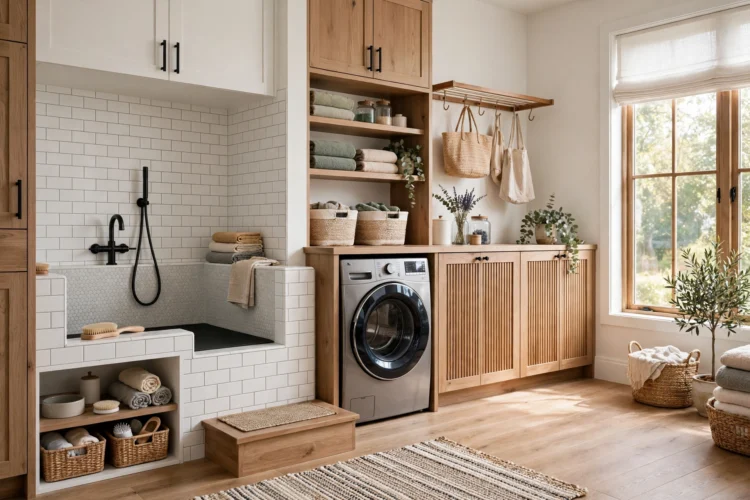
Turn a corner of the laundry room into a wash spot for muddy paws, with a raised tub, a handheld sprayer, and a drying nook. These eight setups keep the mess in one room.
A dog that comes home muddy will shake, drip, and track paw prints across the floor unless you catch the mess at the door. A pet wash station laundry room setup stops that trail in one room, where water, towels, and shampoo already live. These eight ideas cover tubs, sprayers, ramps, and drying spots, so you can pick a setup that fits your dog, your room, and how often muddy walks happen at your house.
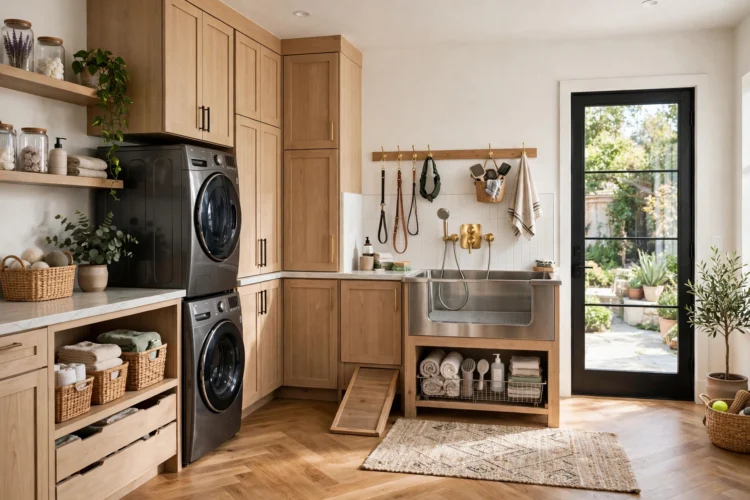
The best layout puts the wash spot between the door your dog uses and the rest of the house, so muddy paws never cross a clean floor to reach the tub. A corner near the back door works well, with the tub on one wall and towel hooks on the wall beside it. Leave a clear patch of floor in front of the tub for the dog to stand and shake, and keep a mat there to catch the first drips.
Think about the path in and out before you pick a tub. A dog that enters through the laundry room can step straight into the wash spot, while a dog that has to cross the kitchen first will leave a trail no tub can fix. A dog wash station works best when the washer sits nearby too, since muddy towels can go straight into the machine while the dog dries. Plan for a drain, a water supply, and a place to hang a wet leash, and the rest of the layout follows from those three points.
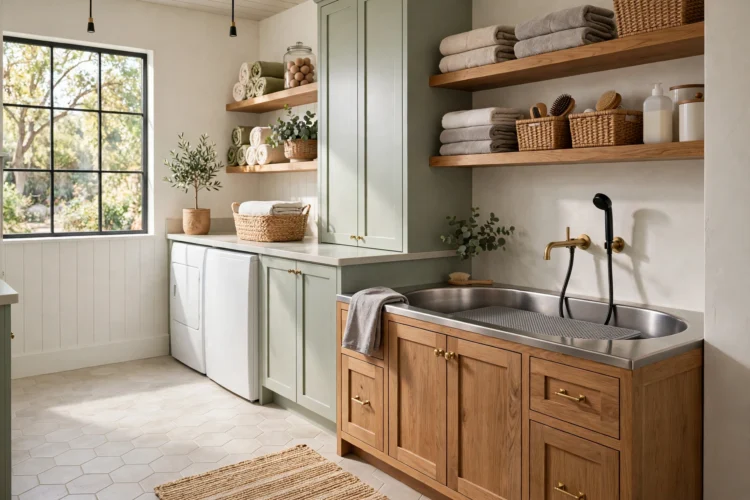
A raised dog wash tub lifts the dog to waist height, so you can wash its belly and legs without kneeling on a wet floor. The tub sits on a sturdy base or a tiled platform, with steps or a small ramp at one end so the dog can climb in on its own. A handheld pet shower sprayer hangs on the wall beside the tub, with a long hose that reaches every side of the dog without pulling the sprayer off its hook.
Pick a tub with a non-slip floor and a drain that clears water fast, so the dog does not stand in a puddle while you rinse. A sprayer with a gentle flow and a shut-off button at the handle lets you pause the water while you lather shampoo, which keeps the room drier and the dog calmer. Store shampoo and towels on a shelf above the tub, and keep the floor clear, so you can move around the tub without tripping over bottles. The same keep-it-close logic shapes bathroom storage ideas that hide everyday clutter, where supplies sit within reach and out of the way at the same time.
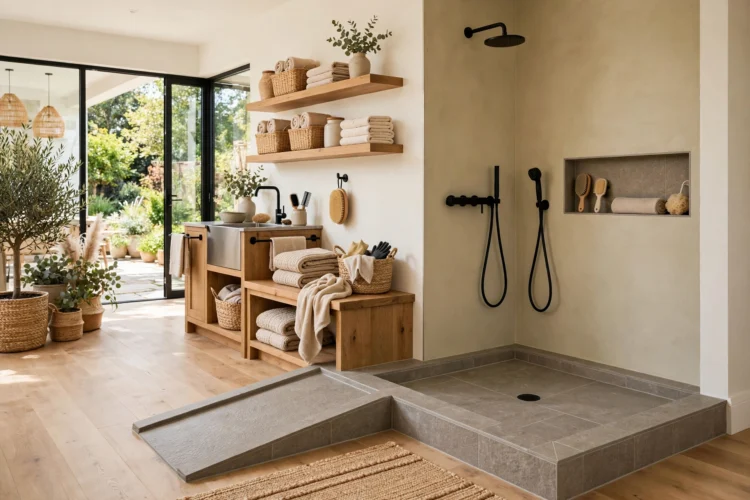
Big dogs do not fit a raised tub, and lifting a heavy dog into one is hard on your back. A walk-in shower tray solves that by sitting almost flush with the floor, so the dog steps in and out without a jump. A low curb keeps water in the tray, and a glass panel or a curtain keeps spray off the rest of the room.
This setup borrows its shape from a wet room, where the whole floor drains and the shower has no step to cross. The wet room bathroom ideas on this site show how a sloped floor and a single drain can keep water in one zone, and the same trick works in a laundry room corner. Tile the tray and the wall behind it, add a handheld pet shower sprayer at dog height, and fit a hook for the leash on the wall outside the spray zone, so the dog stays put while you rinse its paws.
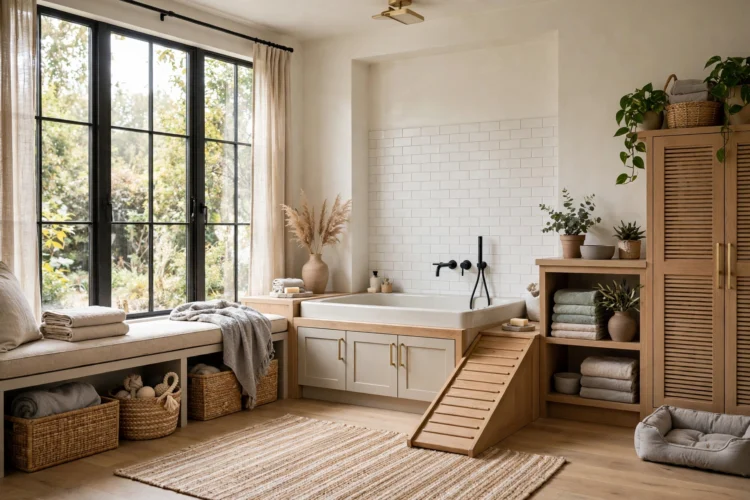
Older dogs and small pets need a tub they can enter without jumping or climbing steep steps. A low tub with a wide, gentle ramp lets a stiff dog walk in at its own pace, and a non-slip ramp surface keeps paws steady on wet plastic or tile. The tub sits low enough that you can sit on a stool beside it and wash the dog at its own level, which suits a pet that dislikes being lifted.
Fit the ramp with side rails or a raised edge, so a nervous dog does not step off the side halfway up. Keep the water shallow at first, and let the dog stand in the tub for a minute before you start the sprayer, so it settles before the wash begins. A low tub also doubles as a soaking spot for muddy paws on days when a full wash is more than the dog needs, since you can rinse four paws and lift the dog straight out again.
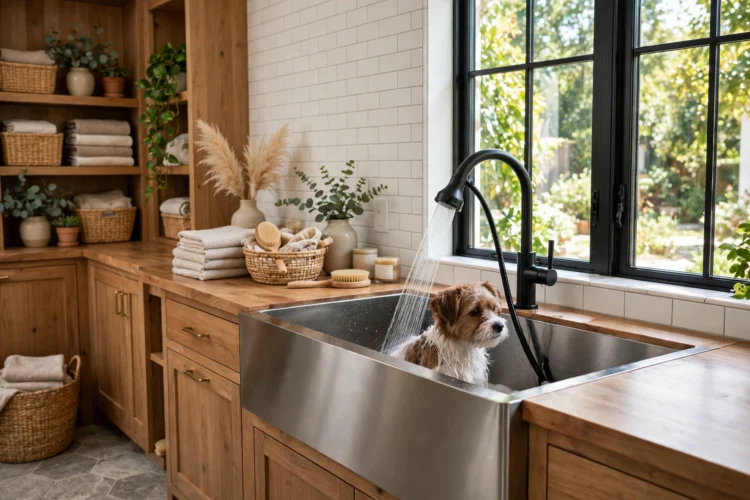
A deep utility sink can act as the tub in a dog wash station for small and medium dogs, with no new plumbing to run. The sink already has a tap and a drain, so you only need to add a handheld sprayer on a hose and a non-slip mat in the base. Lift the dog in, wet it down, lather, rinse, and lift it out onto a towel on the floor.
This option suits a laundry room that already has a large sink and little spare floor. Check the sink depth before you commit, since a shallow sink will splash water over the edge the moment the dog shakes. A sink with a high back or a tiled splashback behind it catches spray and keeps the wall dry. Keep a jug or a cup beside the sink for rinsing ears and faces, where a direct spray would startle the dog, and dry the sink after each wash so it stays clean for its next job.
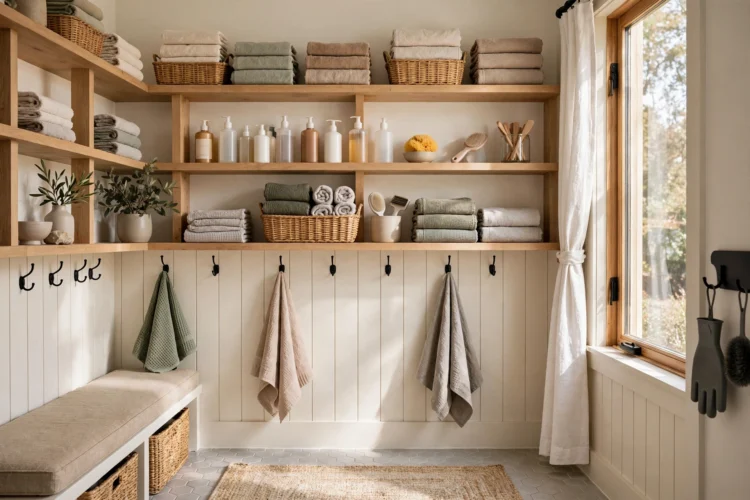
A wash station fails when the towel you need sits in another room, so storage belongs inside the station itself. A shelf above the tub holds shampoo, conditioner, and a brush, while hooks at dog height hold the leash and a drying towel. A basket under the tub holds clean towels, and a second basket holds dirty ones until wash day.
Keep the shelf shallow, so bottles do not sit two deep and get lost behind each other. Label the baskets if more than one person washes the dog, so clean towels and dirty towels never swap places by mistake. A recessed niche in the tiled wall works even better than a shelf, since it keeps bottles out of the spray path. The bathroom shower niche ideas on this site show how a small built-in shelf can hold bottles without taking floor or counter space, and the same niche fits neatly into a tiled wash wall.
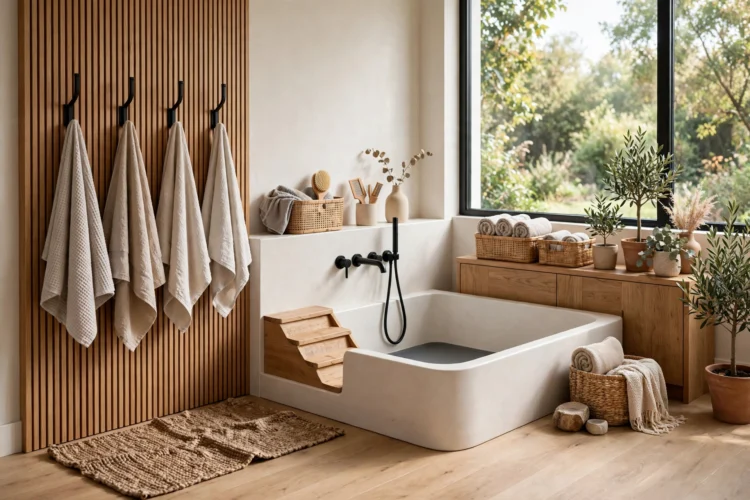
Washing is only half the job, because a wet dog will shake and drip for several minutes after the rinse. A drying nook gives the dog a place to stand while that happens, with a thick mat under its paws and hooks above for towels. The nook sits beside the tub, not across the room, so the dog steps from water to mat in one move.
Pick a mat that grips the floor and absorbs water, and wash it often, since a damp mat soon smells if it never dries out. Hang two towels on hooks at your own shoulder height, so you can grab one without bending while you hold the dog with the other hand. A small bench in the nook gives you a place to sit while you towel-dry legs and ears. The same towel-first thinking runs through bathroom linen storage ideas, where clean towels live close to where wet hands and wet paws need them most.
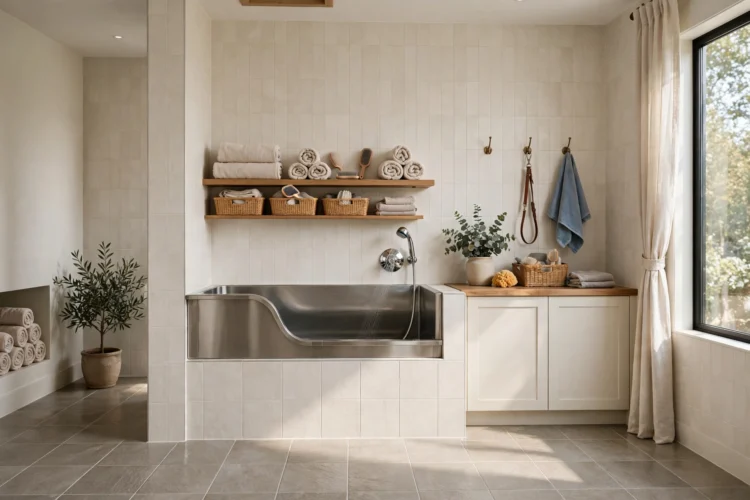
A muddy paw station needs surfaces that can take water, claws, and daily mopping without showing wear. Tile, sealed concrete, or sheet vinyl all handle splashes well, while wood and carpet soak up water and hold smells. A floor with a slight grip under wet paws keeps the dog steady, and a drain in the floor lets you hose the whole corner down after a muddy wash.
Run tile or a waterproof panel up the wall behind the tub to at least shoulder height, so spray does not soak into drywall. Seal the grout and the joints around the tub, and check them once a year, since a small gap can let water behind the tile over time. Choose a floor color that hides paw prints between cleans, and keep a mop and a bucket in the room, so a quick wash of the floor takes a minute after the dog is dry. With the right surfaces, the station stays a working corner of the laundry room instead of turning into a damp spot you avoid.
Start with the dog you have and the room you have. A raised dog wash tub suits a small dog you can lift, a walk-in tray suits a big dog that steps in on its own, and a deep sink suits a laundry room with no spare floor. Add a sprayer, a drying mat, and towel storage within reach, and the wash stops being a bathroom job that soaks the house. Pick one setup, fit it near the door your dog uses, and a muddy paw station will catch muddy walks in the laundry room instead of across your clean floors.