Physical Address
304 North Cardinal St.
Dorchester Center, MA 02124
Physical Address
304 North Cardinal St.
Dorchester Center, MA 02124


Built-in niches beat hanging caddies every time. These eleven ideas cover sizing, placement, tiling, and lighting so your shower storage holds real bottles and looks like part of the wall.
A shower caddy hanging off the showerhead is a sign the storage was never planned. Bottles crowd the rim, rust marks appear on grout, and the tallest bottle always topples at the worst moment. A recessed shower shelf solves the problem by building storage into the wall itself, flush with the tile and out of the water path. These bathroom shower niche ideas show how to size, place, and tile a niche so it holds what your household actually uses and looks like part of the room, not an afterthought.
Start with the tallest bottle in your shower, then add clearance. Most shampoo and conditioner bottles stand 200 to 250 mm tall, so a niche height of at least 300 mm per shelf keeps them upright without tilting. Measure before the tiler cuts the wall, because a niche built to a catalog size often ends up a few centimeters short of the one bottle you use daily.
Depth matters as much as height. A standard wall gives about 90 mm of recess, which fits most bottles but not oversized pump dispensers. If your bottles are wide, plan a wider niche rather than a deeper one, since depth is limited by the studs. A niche that fits your real bottles beats a showroom niche that looks neat and holds nothing.
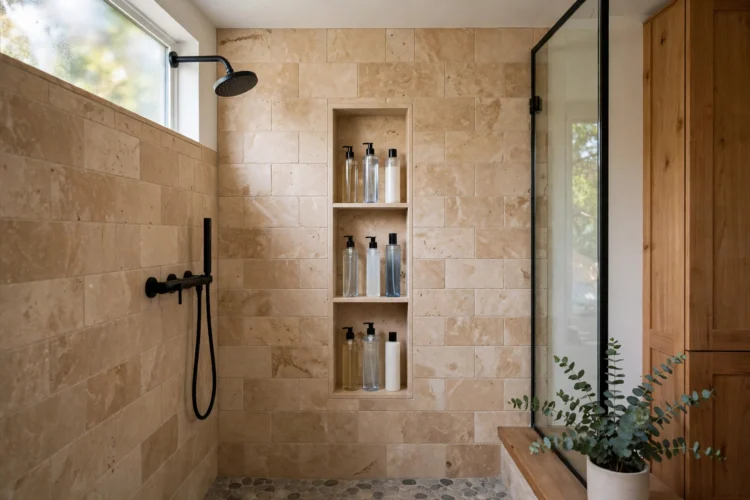
Two niches, one for washing and one for shaving or skin care, end the daily negotiation over shelf space. Stack them vertically on the same wall for a clean column, or place one at hand height and one lower for kids or a seated bather. Splitting by use also keeps razors and small items from sliding behind tall bottles.
When you plan a double niche, keep the widths consistent so the tiling stays simple and the grout lines align. A pair of niches in the same tile as the wall reads as architecture, while mismatched sizes draw the eye to the odd one out. If wall space is tight, a single wide niche with a tiled divider shelf gives the same split without cutting a second opening.
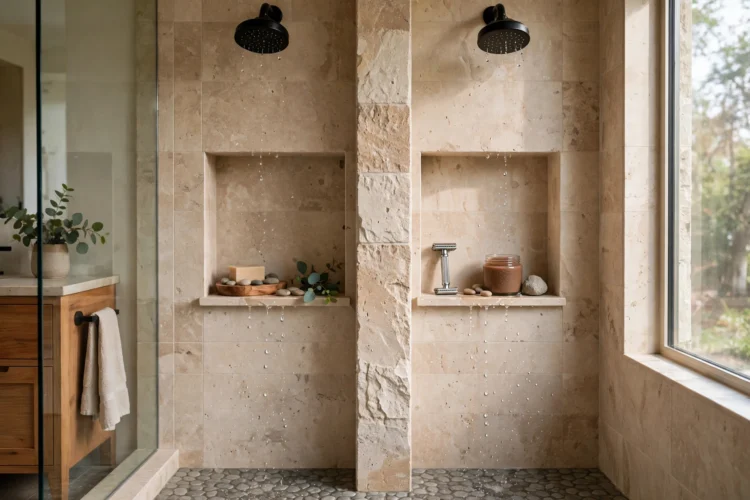
Running the wall tile straight through a tiled shower niche makes it disappear into the room, which suits calm, hotel-like bathrooms. The tiler wraps the same tile around the niche edges, so the recess reads as a shadow line rather than a feature. This approach works best with large format tile, where fewer grout lines keep the wrap tidy.
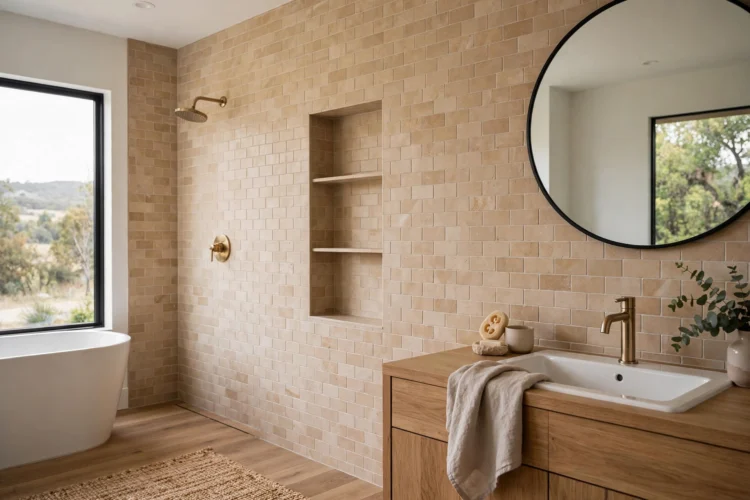
Edge trim decides whether the niche looks finished or rough. A slim metal profile in chrome or brushed nickel protects the tile edge and matches the shower fittings, while a bullnose tile edge gives a softer, more traditional finish. Agree the trim choice before tiling starts, because changing it mid-job means re-cutting tile. For wall tile patterns that suit this treatment, see these subway tile bathroom ideas beyond the basic brick pattern.
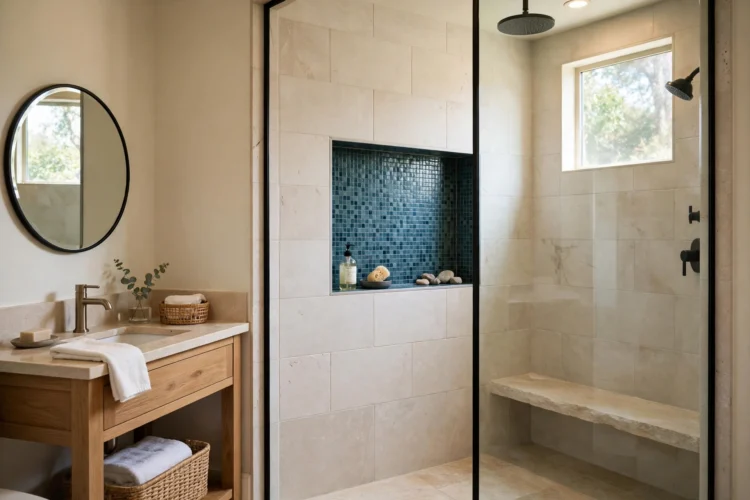
Tile the back of the niche in a different material and the niche becomes a small piece of art in the shower. Mosaic, a patterned cement look, or a single bold color behind the bottles draws the eye without committing the whole wall to that tile. This is a good place to use a leftover feature tile, since the area is small and the cost stays low.
Keep the contrast in one element only: either color or pattern, not both. A busy mosaic plus a bright color fights with the bottles and turns the niche into visual noise. Seal mosaic grout well, because small joints in a niche see constant water and soap, and pick a grout color close to the tile so stains stay less visible.
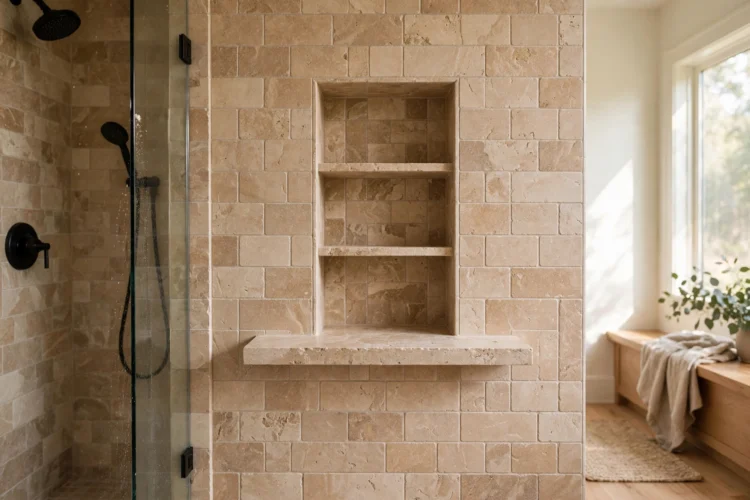
A slim ledge below the niche gives oversized items a home without enlarging the recess. A tiled shelf that runs the width of the shower wall holds a foot for shaving, a washcloth, or a tall pump bottle that would not fit inside. The ledge also catches drips from bottles lifted out of the niche, keeping the floor drier.
Slope the ledge slightly toward the shower so water runs off instead of pooling, and round the front edge so it does not catch bare shins. A ledge works especially well in a shower with a bench, where the two surfaces share a height and create one continuous line. For broader storage planning beyond the shower, these bathroom storage ideas that hide the everyday clutter cover vanities, cabinets, and wall units.
Shower niche lighting starts with a short LED strip under the top edge of the niche, turning a dark recess into a visible shelf, which matters in showers with no window or a single overhead light. Warm white light flatters tile and skin tones, while cool white can make grout look gray. Choose a strip rated for wet locations and wired to the bathroom lighting circuit, not a battery puck that dies mid-shower.
Hide the driver outside the shower zone, in the vanity cabinet or ceiling void, so a future replacement does not mean opening tile. A dimmer or a motion sensor keeps the light subtle at night, and the glow doubles as a night light for the whole room. Keep the strip recessed behind the niche lip so you see light, not hardware.
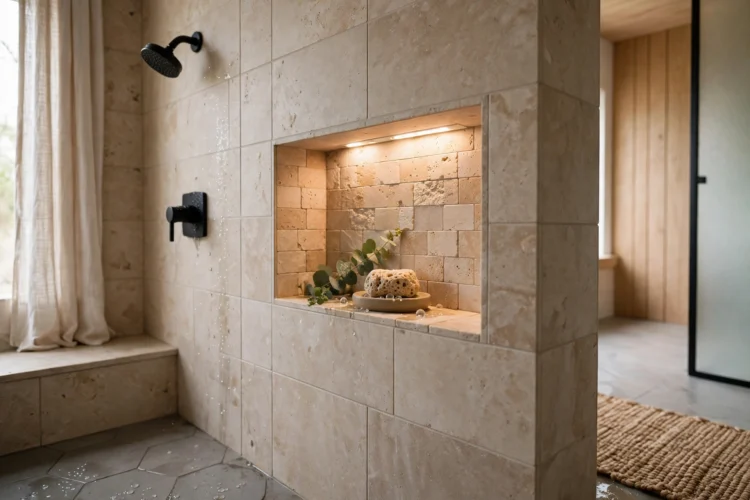
Shower niche placement decides whether bottles stay dry or sit in the direct spray. The showerhead wall takes the full force of water, so bottles there get blasted and soap washes down the tile. A side wall, roughly at elbow height and within arm’s reach of the showerhead, keeps items accessible and out of the main stream.
Height matters too. Set the main shelf between 1000 and 1200 mm from the floor for standing adults, with a lower shelf near 600 mm if kids or a seated bather use the shower. Check the stud layout before you commit, since a niche must sit between studs or the wall needs reframing. A niche placed well feels effortless; one placed badly gets used once and ignored.
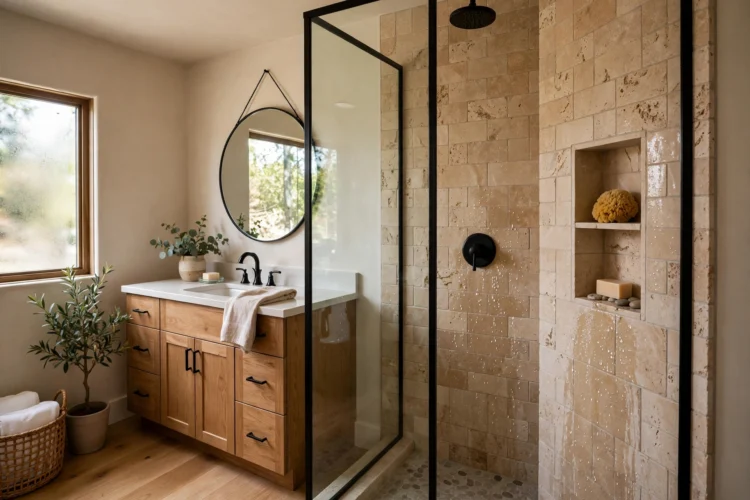
Small showers often lack a full wall for a niche, but a corner recess uses dead space where two walls meet. A triangular or square niche tucked into the corner holds two or three bottles without eating into elbow room, and it suits showers under 900 mm wide where a flat wall niche would crowd the bather.
Corner niches need careful waterproofing, since two wall planes and a drain path meet there. Confirm the tanking membrane wraps the corner fully before tiling, and use a preformed niche insert if your installer offers one, because it seals the recess in one piece. Pair a corner niche with a compact shower layout like those in walk-in shower ideas with tile you will want to copy, and keep the rest of the walls clear so the small space feels open.
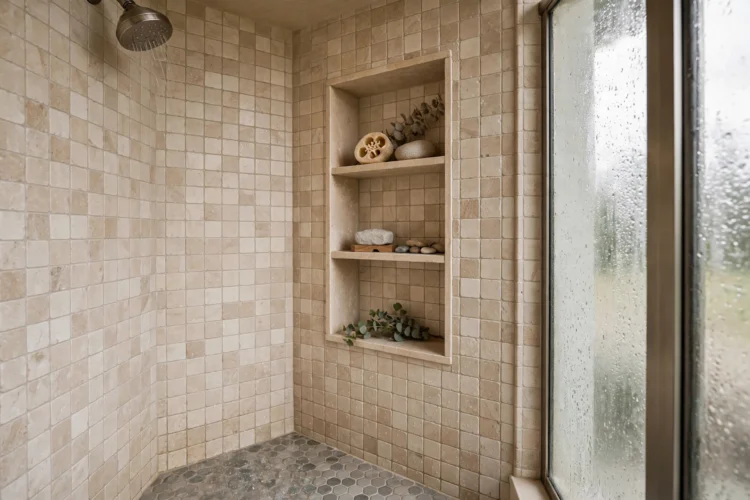
Measure your bottles, pick the wall that stays driest, and tile the niche like it belongs to the room. Storage built into the wall outlasts every caddy, and it looks better from the first shower onward.