Physical Address
304 North Cardinal St.
Dorchester Center, MA 02124
Physical Address
304 North Cardinal St.
Dorchester Center, MA 02124

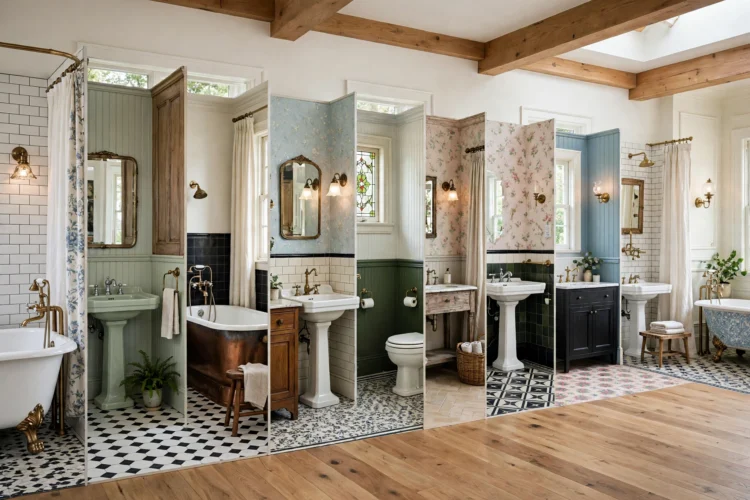
Clawfoot tubs, hex floors, and pedestal sinks give a bathroom instant period character. These ten ideas show how to use classic fixtures with modern plumbing for a room that feels collected, not staged.
Vintage bathrooms work because their fixtures were designed before plastic and chrome took over, and the shapes still feel right a century later. A clawfoot tub, a pedestal sink, and a hex tile floor do not need a theme to look good together; they share a language of curves, weight, and simple materials. These vintage bathroom ideas show how to use classic fixtures without turning the room into a museum, mixing period character with modern plumbing that actually works.
In a clawfoot tub bathroom, the tub is the anchor, and its placement decides the room. Set it against a wall with a freestanding filler, or pull it into the center of a larger room so the curved silhouette reads from the door. Cast iron holds heat longer than acrylic, which makes long soaks genuinely warmer, but it needs a floor that can carry several hundred kilograms of tub, water, and bather.
Pair the tub with a deck mounted or floor mounted filler in polished nickel or unlacquered brass, and let the finish age naturally for a lived-in patina. A shower ring and curtain can add a shower function without hiding the tub shape, though a separate shower keeps the tub cleaner in daily use. For tub styles and proportions, browse these freestanding tub ideas for a spa-style soak before you commit to a size.
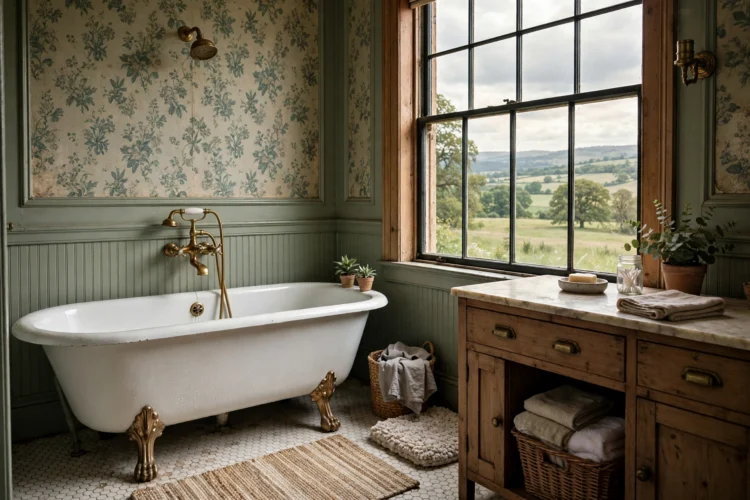
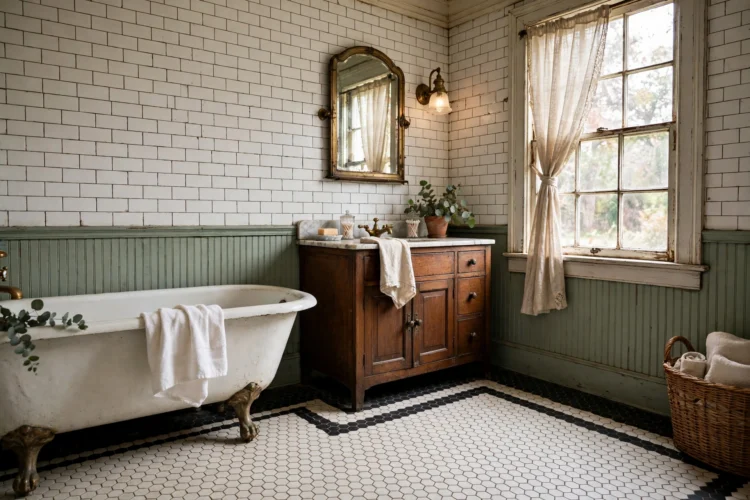
A white hex tile vintage bathroom floor with a black border is the most recognizable vintage bathroom floor, and it suits rooms of every size. The small hexagons add grip underfoot, the border defines the room edge, and the pattern stays quiet enough to let fixtures take the spotlight. One inch hexagons suit period accuracy, while two inch versions read slightly more modern and need less grout care.
Run the border as a single row of black hex tiles, or add a Greek key style band for a grander touch in a larger room. Dark grout on the white field hides dirt but outlines every tile, while light grout looks cleaner and needs more scrubbing. Seal the grout after install, since a hex floor has many joints in a wet room, and keep wall tile simple so the floor pattern stays the star.
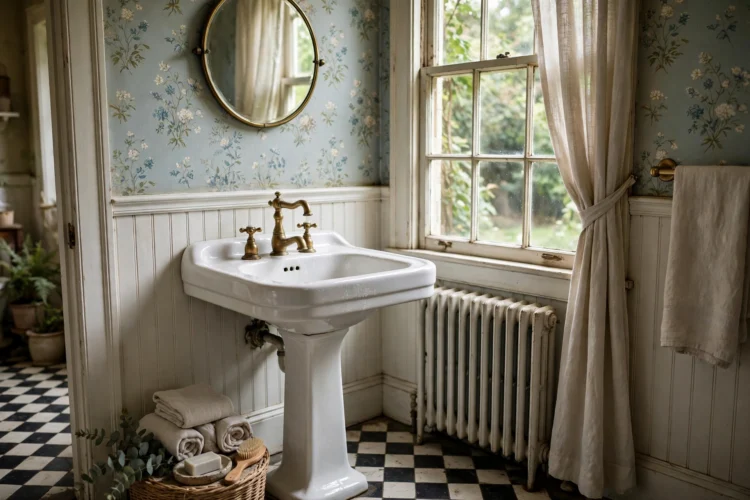
In a pedestal sink bathroom, the sink leaves the floor visible beneath the basin, which makes a small vintage bathroom feel larger than a vanity cabinet would. The slim column and curved basin suit period rooms, and the open space underneath makes cleaning easy. Choose a sink with a generous basin depth, since shallow period reproductions splash more than modern designs.
Storage is the trade off: a pedestal gives you none. Solve it with a mirrored medicine cabinet, a wall mounted shelf, or a small stool holding a basket, rather than crowding the sink with a cabinet that fights the look. Pair the pedestal with wall mounted taps or a backsplash mounted faucet for a true period feel, and match the finish to the tub filler so the metals read as one set. More sink and vanity pairings appear in bathroom vanity ideas from floating to double sink.
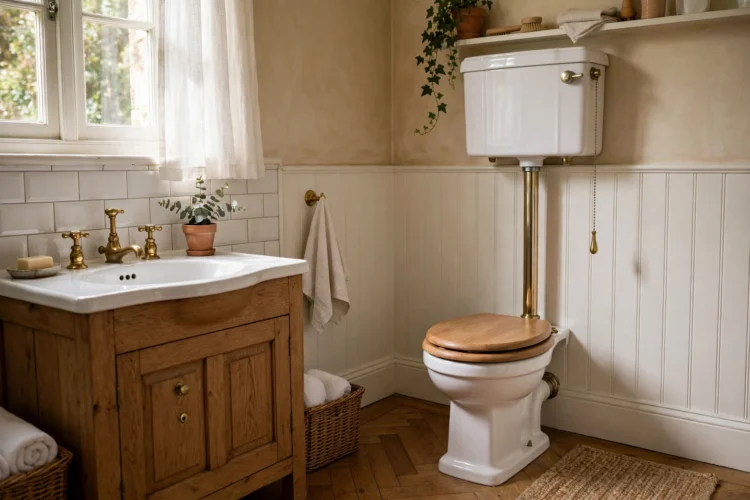
A high tank toilet, with its cistern mounted on the wall above, is the boldest period statement a bathroom can make. The long pull chain and exposed pipe give a Victorian feel that a standard close coupled toilet cannot match. Modern high tank models use standard flush mechanisms and water saving volumes, so the look no longer means a weak flush or a high water bill.
Cross handle taps complete the picture. The cross shape suits hands of all ages better than small lever handles, and it reads instantly as vintage against a ceramic basin. Pick one metal finish for taps, shower fittings, and accessories, since mixed metals break the period spell faster than any other mistake. Unlacquered brass ages to a soft patina, while polished nickel stays bright with regular wiping.
Subway tile is a vintage staple, but dark grout changes it from a safe default into a period feature. The dark lines outline each brick and give the wall a graphic quality that suits clawfoot tubs and pedestal sinks. Run the tile in a classic brick pattern to the ceiling in the shower, and stop at a chair rail height elsewhere for a traditional wainscot effect.
Handmade look subway tiles, with slight variation in glaze and edge, suit vintage rooms better than perfectly flat machine tiles, because the imperfections catch light like original installations. Keep the tile color warm white rather than stark white, since older bathrooms rarely used brilliant white. For more ways to lay this classic tile, see these subway tile bathroom ideas beyond the basic brick pattern.
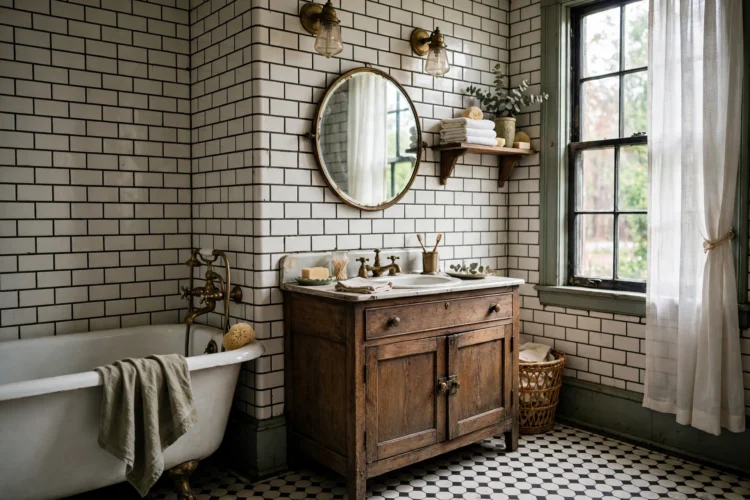
A wood vanity with a marble top bridges vintage charm and everyday storage, giving a period room the cabinet space a pedestal sink cannot. Oak, walnut, or painted pine bases suit the style, while a marble top with a soft veining pattern adds a cool, classic surface. An undermount basin keeps the marble line clean, while a vessel basin on top reads more decorative.
Protect the wood from water with a sealed finish and a habit of wiping splashes promptly, since marble stains and wood swells if water sits. A vanity with furniture style legs, rather than a plinth base, keeps the vintage silhouette and makes the floor easier to clean. Match the vanity knobs to the tap finish, and keep the mirror framed in wood or brass to complete the set.
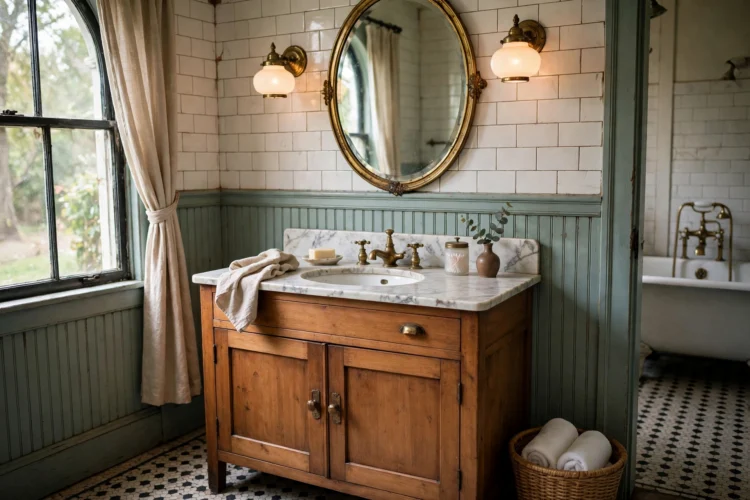
Brass bathroom fixtures signal a vintage bathroom more clearly than any other metal, and a soft patina beats a mirror shine for authenticity. Unlacquered brass darkens with age and water spots, developing a warm, uneven tone that looks collected rather than installed. If you prefer control, brushed brass gives a similar warmth with a more even finish and less upkeep.
Use brass consistently across taps, shower heads, towel bars, and mirror frames, since a single brass tap among chrome fittings looks accidental. In a room with black fixtures elsewhere, brass warms the palette, a balance explored in black fixture bathroom ideas that feel modern, not harsh. Clean unlacquered brass with mild soap only, and let the patina develop rather than polishing it back to new.
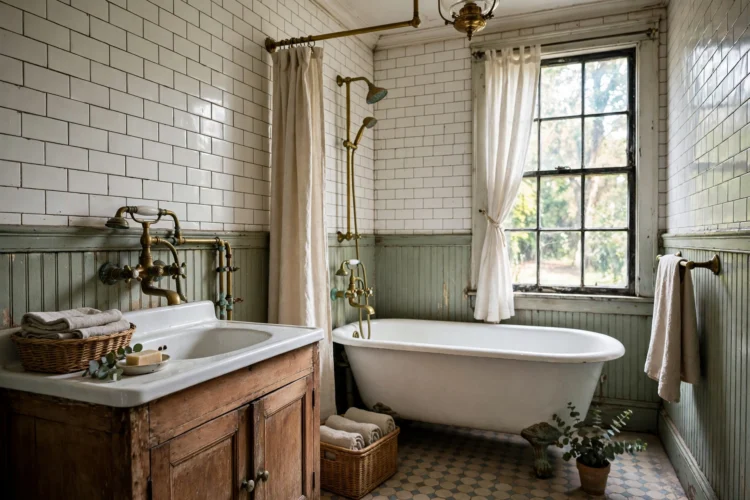
Light finishes a vintage bathroom, and framed mirrors with wall sconces give the most period-correct glow. An arched or oval mirror in a brass or wood frame softens the rectangles of tile and tub, while a pair of sconces at eye level flanks the face with even light, unlike a single overhead bar that casts shadows.
Choose warm white bulbs around 2700 Kelvin for a flattering tone, and dimmers so morning light can stay soft. Sconce shades in opal glass or linen diffuse the light and suit the era, while exposed filament bulbs add a decorative touch if glare stays low. For layered lighting that works beyond the mirror, these bathroom lighting ideas for vanity glow and ambience cover overhead, task, and accent light in one plan.
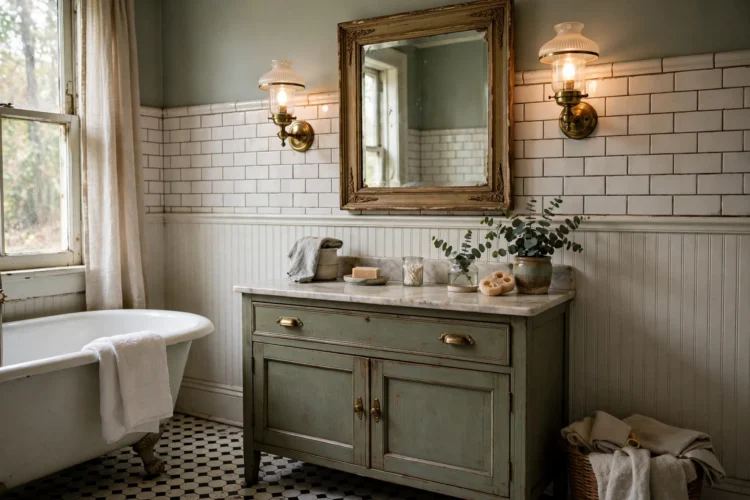
Start with one anchor fixture, a tub or a sink, and let the rest of the room follow its materials. Vintage character comes from consistent shapes and finishes, not from collecting every period detail at once.