Physical Address
304 North Cardinal St.
Dorchester Center, MA 02124
Physical Address
304 North Cardinal St.
Dorchester Center, MA 02124

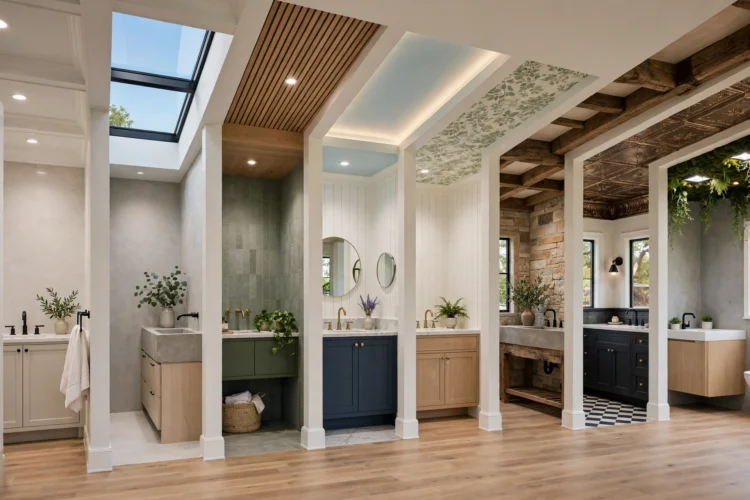
The ceiling is the most ignored surface in the bathroom. These eight ideas use beadboard, wallpaper, paint, wood, and daylight to turn the forgotten fifth wall into a real feature.
Walls get the paint, floors get the tile, and the ceiling gets ignored until a leak stain forces attention. That neglect is an opportunity: the ceiling is the largest unbroken surface in most bathrooms, and a treatment overhead changes how the whole room feels without taking a centimeter of floor space. These bathroom ceiling ideas cover beadboard, wallpaper, paint, wood, and light, so the fifth wall finally pulls its weight.
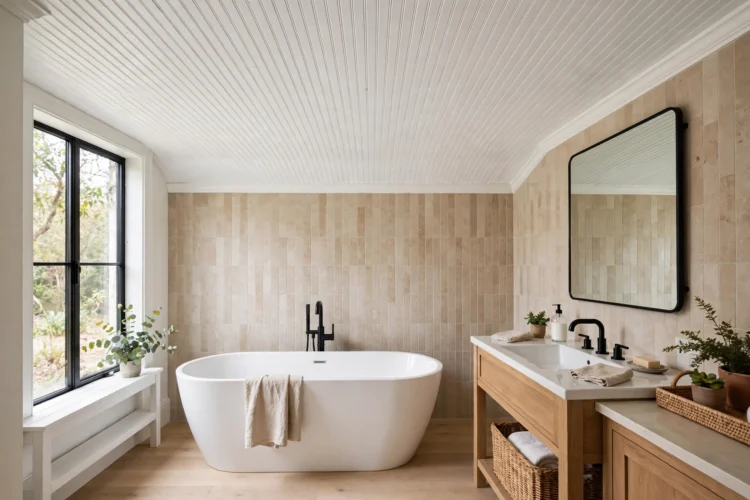
A beadboard bathroom ceiling adds rhythm and a cottage character that flat plaster cannot offer. Narrow tongue and groove boards, painted white or a soft color, draw the eye upward and make a low ceiling feel intentional rather than cramped. PVC beadboard suits bathrooms best, since it resists moisture without the swelling that can affect wood boards in a steamy room.
Run the boards in the direction that lengthens the room: along the longest wall for a corridor feel, or across the width to widen a narrow bath. Paint the beadboard the same color as the trim for a unified look, or go one shade lighter than the walls so the ceiling lifts visually. Seal the joints with a paintable caulk rated for bathrooms, so steam does not open gaps over time.
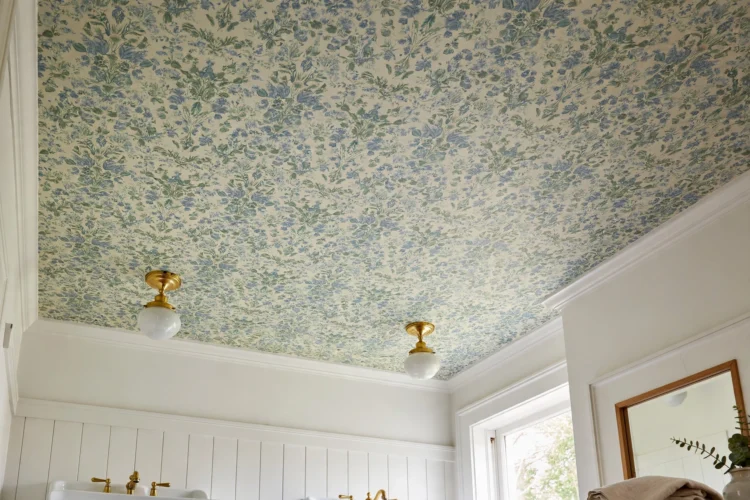
A wallpaper bathroom ceiling puts pattern where tile and paint rarely go, and it costs far less than a feature wall. A botanical print, a subtle stripe, or a small geometric pattern overhead adds personality that guests notice the moment they look up. Vinyl coated wallpaper handles bathroom humidity better than standard paper, and a ceiling install avoids the splash zone that damages wallpaper on walls.
Prep decides success: the ceiling must be smooth, primed, and dry, or seams will lift within months. In a bathroom with a shower and weak ventilation, add or upgrade the extractor fan before papering, since constant steam is the main enemy of paste. A wallpapered ceiling pairs well with plain walls, letting the overhead pattern carry the room without competition.
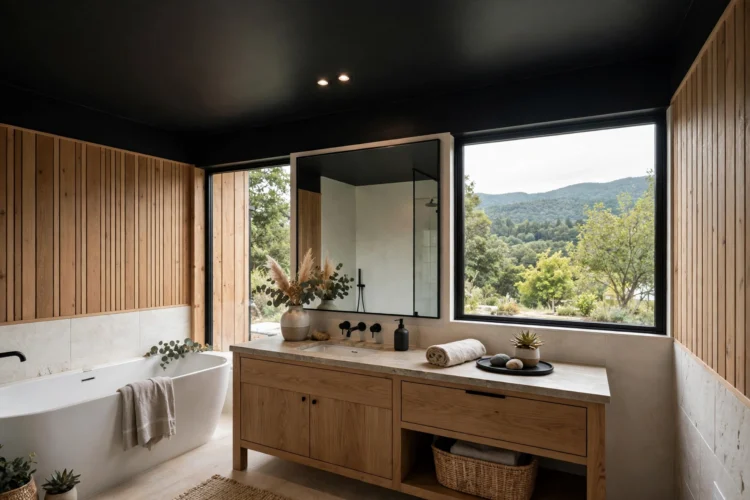
A painted bathroom ceiling in a bold color is the cheapest ceiling treatment and often the most striking. A deep green, navy, or warm charcoal overhead makes white walls feel crisp and gives a small bathroom a cocoon-like quality. The trick is commitment: a timid mid-tone looks like a mistake, while a confident dark color reads as a decision.
Use a paint formulated for bathrooms, with mildew resistance and a finish that wipes clean, since steam and splashes reach the ceiling more than people expect. Keep the walls light and the floor simple when the ceiling goes dark, so the room feels wrapped rather than closed in. If you worry about resale, a dark ceiling repaints in one coat, which makes it a low-risk experiment.
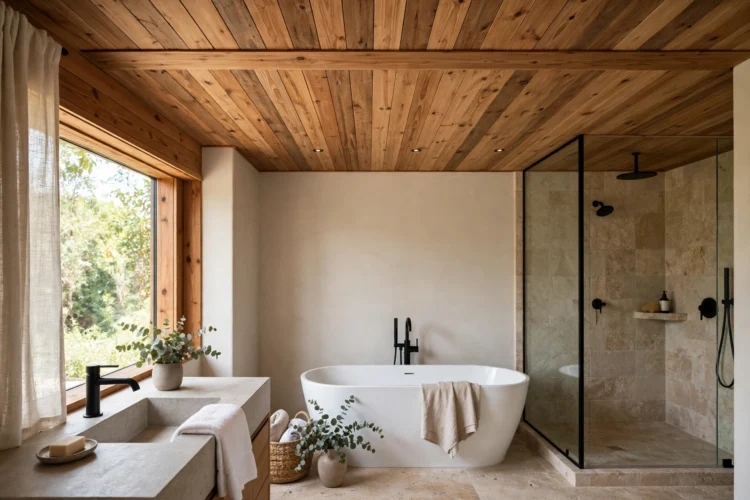
Wood planks on the ceiling bring warmth to rooms dominated by tile and porcelain. Pale oak or whitewashed pine suits a spa-like bathroom, while a darker stain adds cabin character to a rustic scheme. Tongue and groove planks install much like beadboard but with wider boards and visible grain, so the ceiling reads as timber rather than paneling.
Moisture is the main concern with real wood overhead. Seal every board on all sides before install, and confirm the bathroom fan moves enough air to clear steam after showers. In a high-humidity home, wood look PVC planks give the same warmth with none of the upkeep. Either way, run the planks in one direction and hide fixings in the grooves for a clean finish.
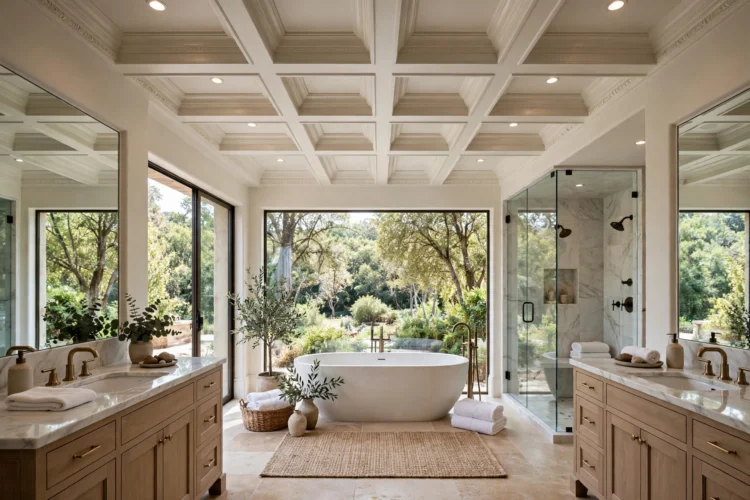
Coffered ceilings, with their grid of recessed panels and beams, suit larger bathrooms where a flat ceiling feels empty. The grid adds architectural weight and makes a big room feel designed rather than merely large. Paint the coffers the same color as the ceiling for a subtle effect, or paint the beams a contrasting trim color to define the grid.
Real coffered construction needs ceiling height, ideally 2700 mm or more, so the beams do not press down on the room. In a standard height bathroom, slim applied molding strips can suggest a coffered look without dropping the ceiling at all. The grid also gives you a natural place to hide a recessed light or a small speaker, since the beams mask the fittings. Keep the rest of the room simple when the ceiling carries this much detail, since a coffered ceiling plus patterned tile plus bold walls overwhelms a single room.
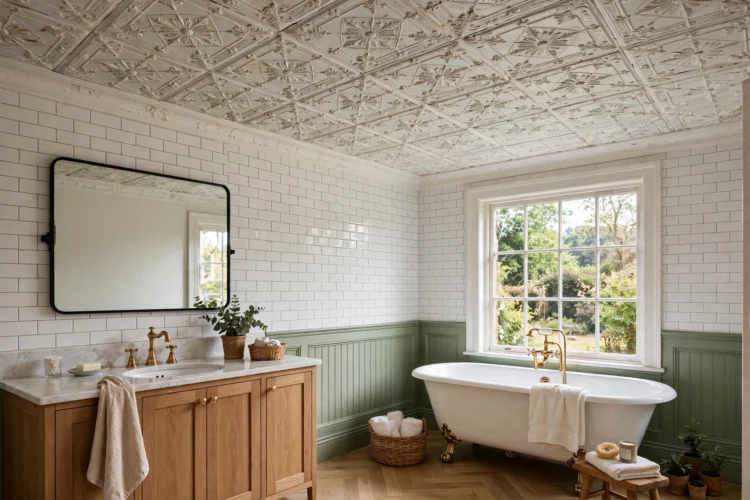
Pressed tin tiles on the ceiling bring a vintage character that suits older homes and period renovations. The stamped patterns catch light and shadow in a way flat paint never does, and a coat of paint in white, cream, or a soft metallic unifies the panels. Modern tin look tiles in lightweight PVC install with adhesive and trim, skipping the nailing and weight of real tin.
Check the ceiling height before committing, since tin tiles plus their trim drop the ceiling slightly. They also suit a powder room beautifully, where the small space lets one bold surface shine, as seen in powder room ideas with big style in a tiny footprint. Keep walls plain and fixtures classic so the ceiling reads as heritage, not theme park.
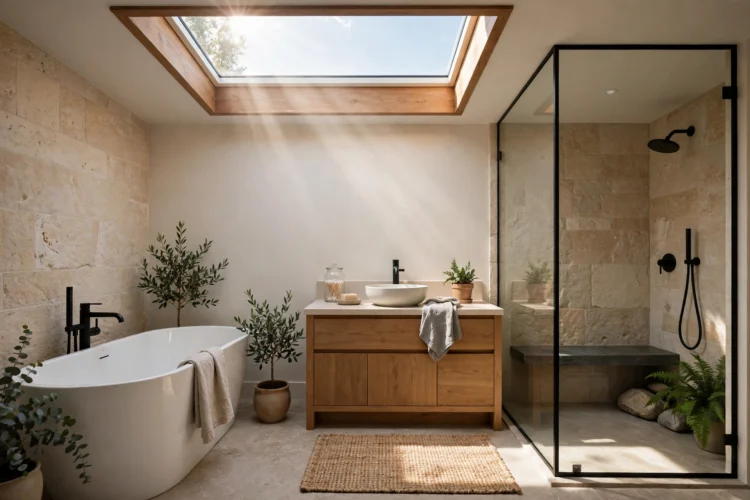
These bathroom skylight ideas start with one fact: nothing changes a bathroom ceiling like daylight. A skylight or a tubular light shaft brings sun into a windowless bath and makes tile, paint, and fixtures look better for free. Tubular shafts suit rooms where a full skylight will not fit, since they snake through roof space and deliver a surprising amount of light from a small roof dome.
Plan the skylight position around the shower and vanity, where light helps most, and choose a unit with a built-in blind for summer afternoons. Condensation matters in bathrooms, so pick a skylight with a sealed frame and confirm the installer flashes it for a wet climate. Pair new daylight with layered electric light, covered in these bathroom lighting ideas for vanity glow and ambience, so the room works after dark too.
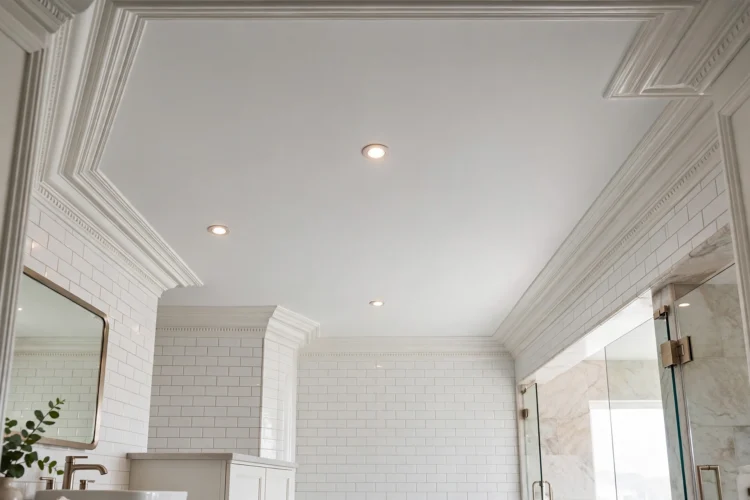
Crown molding where wall meets ceiling is the simplest way to make a plain ceiling feel finished. A slim profile suits a modern room, while a deeper, layered profile suits a traditional one. Painted the same color as the ceiling, molding disappears into a clean line; painted as trim, it frames the ceiling like a picture.
In a bathroom, use molding in a moisture-tolerant material such as PVC or primed hardwood sealed on all sides, and caulk the joints so steam cannot get behind it. A simple picture rail or a flat trim band can give the same framed effect at lower cost, and it pairs well with classic fixtures like those in bathroom vanity ideas from floating to double sink. Fit the molding before the final paint coat so the finish reads as one piece.
Look up before your next bathroom update and pick one treatment that suits the room you have. The ceiling covers the same area as the floor, and it deserves at least a fraction of the attention the floor gets.