Physical Address
304 North Cardinal St.
Dorchester Center, MA 02124
Physical Address
304 North Cardinal St.
Dorchester Center, MA 02124

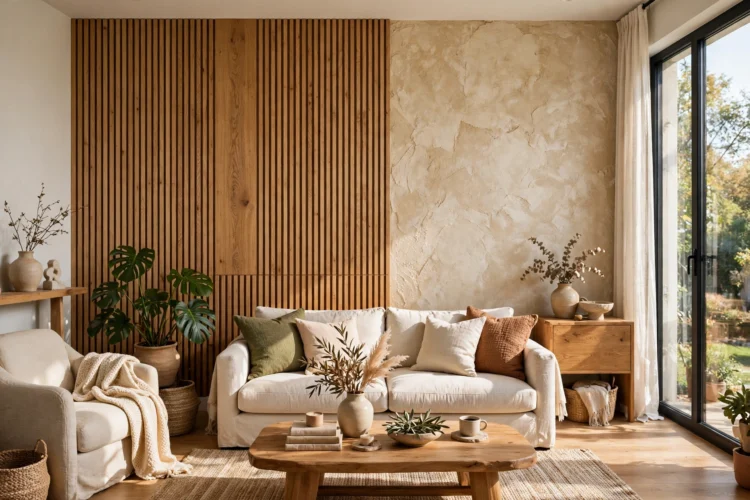
A flat painted wall is only the starting point. These twelve accent wall ideas use wood, plaster, fabric, and molding to give a room real depth and character.
Most accent wall ideas stop at a paint swatch. Paint works, but it only changes color. Texture changes how light moves across a room, how sound behaves, and how a flat surface reads from the doorway. The twelve ideas below skip the paint-only route and use wood, plaster, fabric, and molding to build focal walls with real depth. Most suit a confident weekend DIYer, and a few call for a pro. Pick the one that matches your room, your budget, and how much mess you can live with for a day or two.
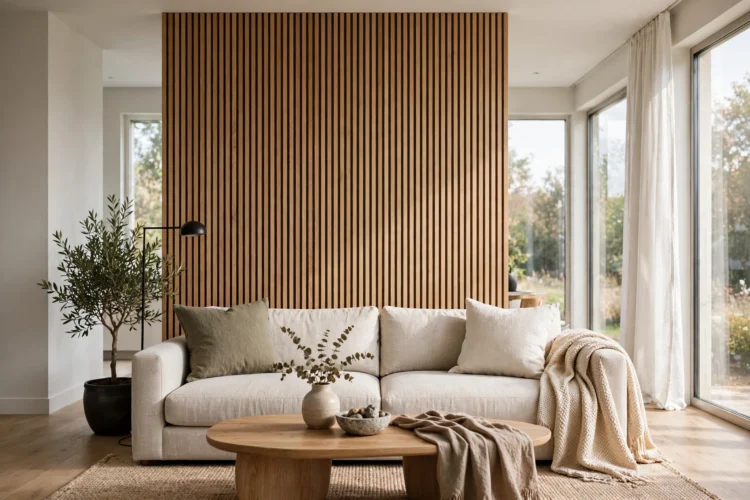
Thin wood slats fixed vertically pull the eye upward and make a low ceiling feel taller. Space them evenly on a dark backing board so the gaps read as shadow lines. Pine slats with a clear matte finish keep the look warm and modern, while walnut stain leans more formal. A wood slat accent wall like this suits living rooms and bedrooms alike. This treatment works best behind a sofa, a bed, or a TV, where the vertical lines frame the furniture instead of fighting it.
Measure the wall first and cut slats to identical lengths. A narrow gap of about half an inch keeps the pattern tight, and wider gaps suit larger rooms. If the wall is uneven, shim the backing board flat before you start, because slats show every wave in the surface behind them.
Run the same slats horizontally and the wall feels wider and calmer instead of taller. Horizontal slats suit wide living rooms and bedrooms with low ceilings, and they pair well with a low, long piece of furniture such as a sideboard. Keep the gaps even and the stain consistent, and the effect stays clean rather than busy.
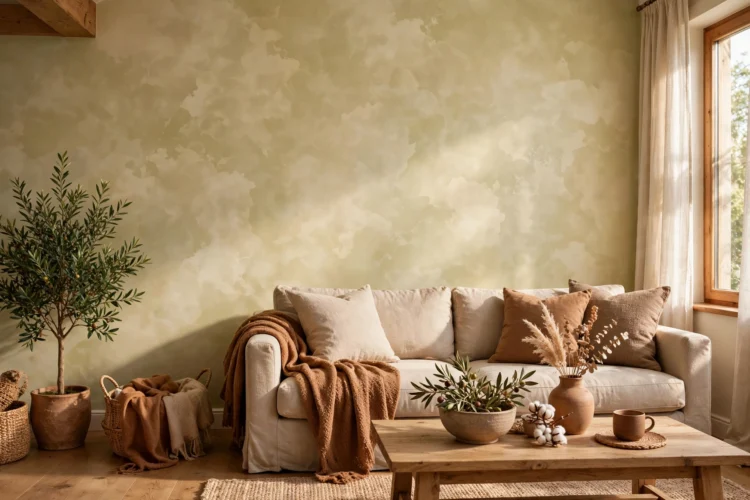
Limewash is a mineral paint that dries with soft, cloudy variation instead of a flat color. A limewash wall suits living rooms and bedrooms that need calm texture. It suits plaster and drywall, and it gives a wall the look of an old European interior without any pattern. Brush it on in loose, overlapping strokes and let each layer dry before the next. Two coats usually give full coverage with visible movement.
Choose a warm white or a pale clay tone for living rooms, and a deeper sage or terracotta for bedrooms. Limewash is not washable like acrylic paint, so keep it away from splash zones and sticky hands. Seal it with a mineral sealer if the wall sits near a hallway.
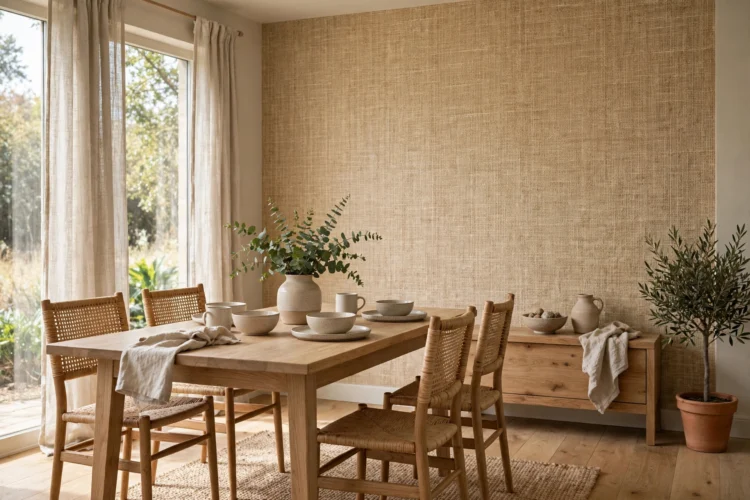
Grasscloth wallpaper is woven from natural fibers such as sisal, jute, and seagrass, and it brings a subtle woven surface to a wall. It reads as texture from across the room and as craft up close. Hang it in a dining room or a bedroom where people sit near the wall and can see the weave. The seams show by design, so treat them as part of the pattern and line them up carefully.
Order one extra roll beyond your calculation, because dye lots vary and a shortfall means a visible tone change. Grasscloth hates humidity, so skip it in bathrooms and laundry rooms. Pair it with simple wood furniture and let the wall do the talking.
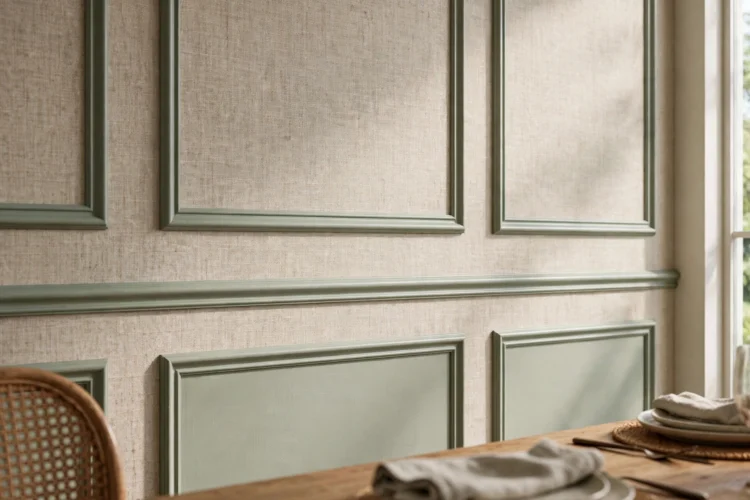
A grid of thin molding rectangles turns a plain wall into something that looks built in. The trick is proportion. Boxes should match the furniture below them, so a wide sofa gets wide rectangles and a narrow console gets tall ones. Keep the molding thin, about one and a half inches, for a modern look, and go wider for traditional rooms.
Paint the molding the same color as the wall for a quiet, tailored effect, or paint it a shade darker for contrast. This is one of the cheapest textured accent walls you can build, since it uses only trim, adhesive, and paint. A laser level is the tool that makes or breaks it, so borrow one before you start.
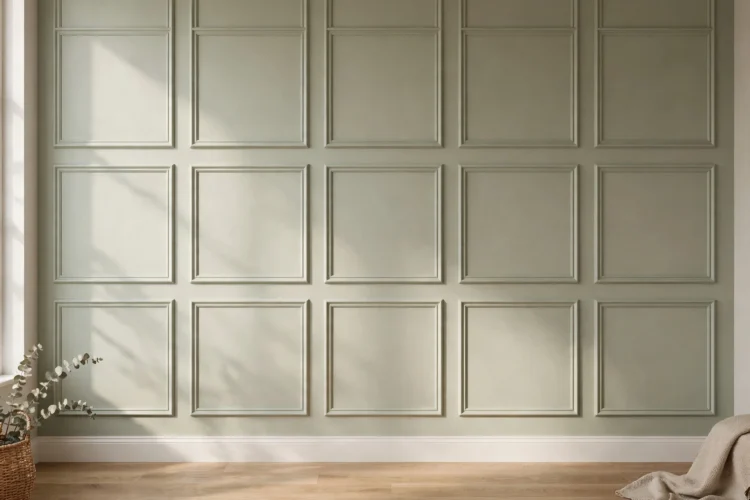
Reclaimed planks carry nail holes, saw marks, and color variation that new wood cannot fake. A wall of mixed planks suits farmhouse, rustic, and industrial rooms, and it warms up spaces that feel too new. Mix plank widths and tones for a collected look, and keep the finish matte so the surface stays honest.
Check every board for nails and staples before cutting, and seal the back of each plank if the wall faces a damp exterior. For a lighter version of the same idea, use new planks in varied stains. Our guide to wood panel accent wall ideas for the living room shows how different panel styles change the mood of a room.
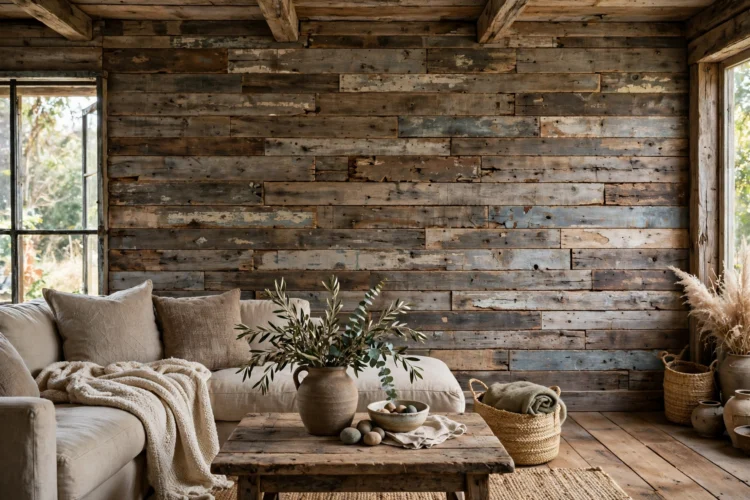
Fluted panels use narrow vertical ribs to add texture that catches light from the side. They suit modern and mid-century rooms, and they look sharp behind a bed or a media unit. Buy ready-made fluted panels in MDF or wood veneer, or build your own with half-round dowels glued to a backing board.
Run fluting only up to chair rail height and cap it with a slim ledge. This half-wall version adds texture without overwhelming a small room, and the ledge gives you a spot for small frames or plants. It works well in entryways and dining rooms where a full wall of ribs would feel heavy.
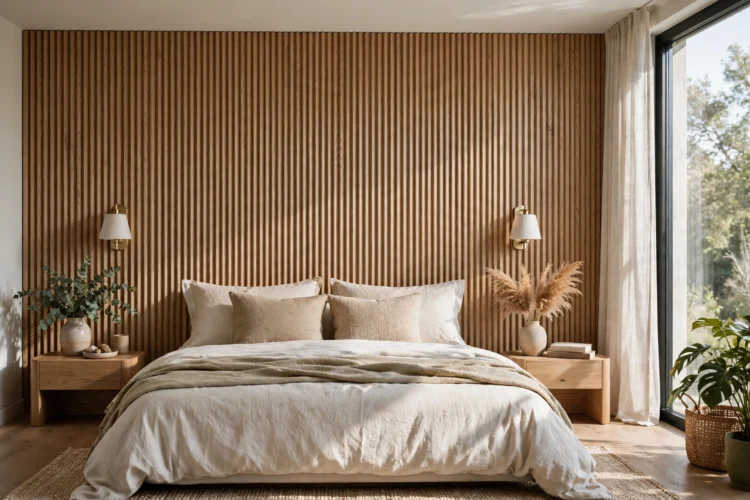
A skim coat of plaster applied with a trowel leaves soft ridges and valleys that shift with the light all day. Venetian plaster goes further, with multiple thin layers burnished to a smooth, stone-like sheen. Both suit living rooms and bedrooms, and both hide minor wall flaws better than flat paint.
This is the one idea on the list where hiring a plasterer pays off. A skilled hand finishes a wall in a day, while a first attempt can take a weekend and still show tool marks. If you want to try it yourself, practice on a spare board first and work in small sections.
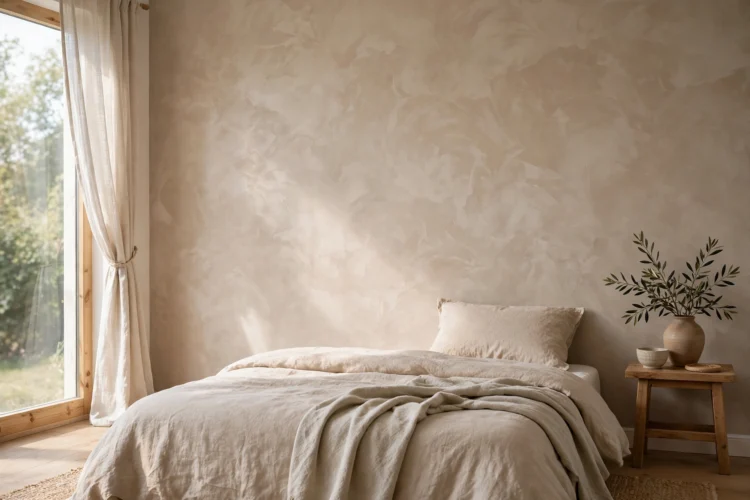
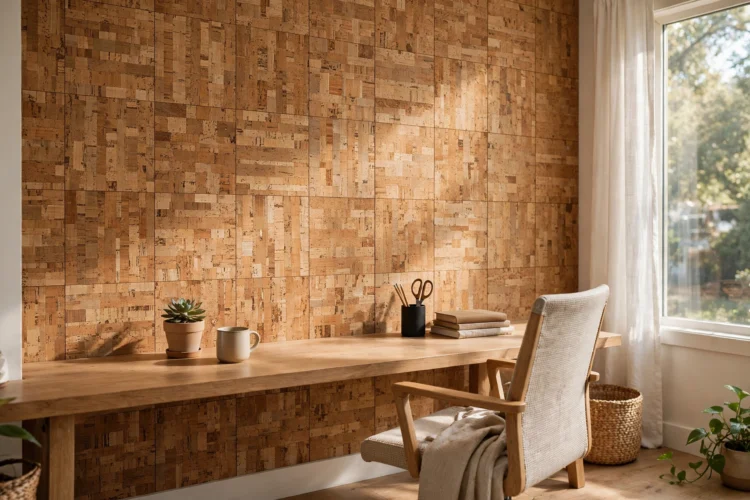
Cork tiles bring warmth, a soft touch, and real sound absorption to a wall. They suit home offices, nurseries, and bedrooms, where a quieter room is a better room. Natural cork has a speckled pattern that hides scuffs, and darker stained cork reads almost like leather from a distance.
Stick tiles on with contact adhesive and stagger the joints like brickwork so no long seams appear. Cork takes pins, so a cork accent wall in an office doubles as a pinboard. Keep it out of wet areas, and reseal it once a year if it sits in strong sun.
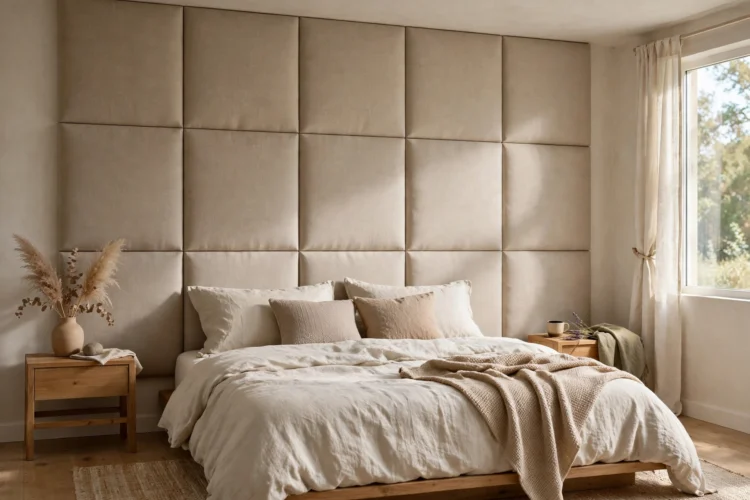
Fabric panels soften a room in a way hard surfaces cannot. Wrap acoustic panels or plywood in linen, velvet, or bouclé and mount them in a grid behind a bed or a reading chair. The fabric absorbs sound and adds a layer of comfort that makes a bedroom feel finished.
Choose a fabric with a tight weave so it stays smooth and resists dust. Removable covers are worth the extra sewing, since you can wash them when they fade. For a softer take on the same idea, see our bedroom accent wall ideas with paint, panels, and wood for more ways to dress the wall behind a bed.
Layer two techniques and the wall gains depth that neither gives alone. Hang a subtle textured wallpaper, then add molding boxes on top and paint everything one color. The wallpaper adds grain, the molding adds geometry, and the single color keeps the result calm. This works well in dining rooms and formal living rooms.
Use a heavyweight wallpaper that can take the weight of molding adhesive, and prime it before painting. Keep the molding slim so it does not fight the pattern underneath. If you want more ways to use paint as a texture tool, our paint techniques that add depth to flat walls cover sponging, ragging, and color washing step by step.
Whichever texture you choose, test a small patch first and live with it for a few days. Texture is harder to undo than paint, so the right choice is the one you still like after the novelty fades. For more ways to frame a focal wall with trim, our bedroom wall molding ideas for instant character show how simple molding layouts change a room.