Physical Address
304 North Cardinal St.
Dorchester Center, MA 02124
Physical Address
304 North Cardinal St.
Dorchester Center, MA 02124

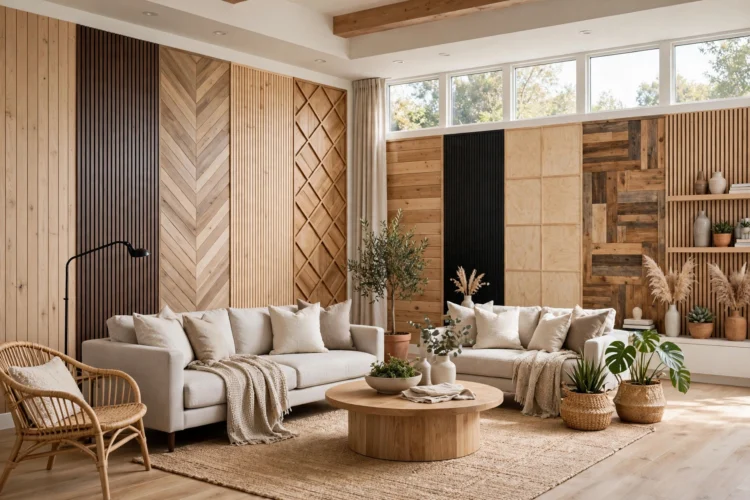
Ten wood panel wall styles, from vertical slats to herringbone, that add warmth and a focal point behind the sofa or TV.
A wood panel accent wall living room upgrade adds warmth, texture, and better sound in a single weekend project. Wood softens the hard surfaces that dominate most living rooms, and a panel wall gives the eye a clear focal point behind the sofa or the TV. The options range from thin slats to reclaimed barn wood, and each one changes the room in a different way. These ten ideas cover the styles that hold up over time, plus the mistakes that make a wood wall look dated fast.
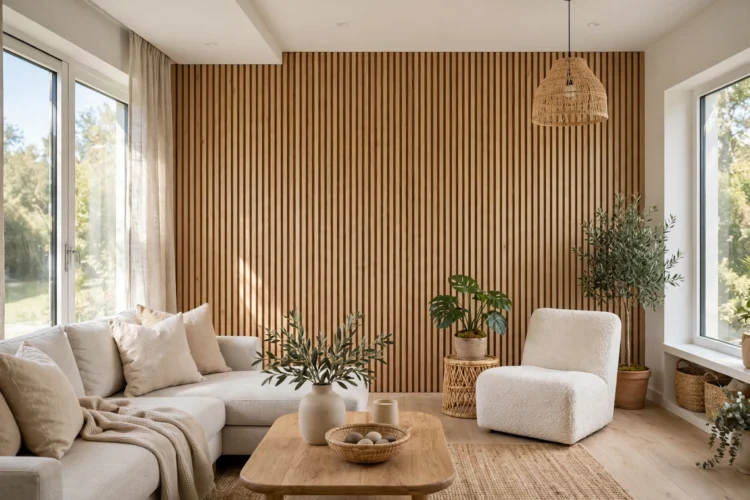
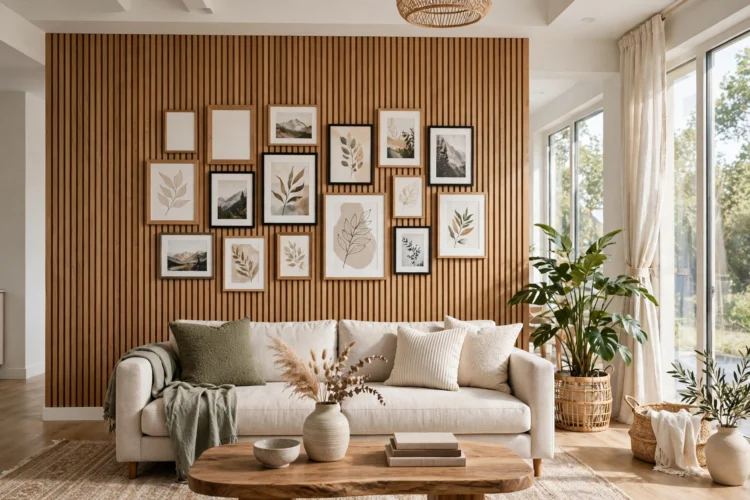
Vertical wood slats are the safest starting point, because the lines pull the eye upward and make the ceiling feel taller. A wood slat wall living room project starts with measuring the wall and choosing a spacing you can repeat without a calculator. Space the slats about half an inch apart and back them with a painted wall in a tone close to the wood, so the gaps read as shadow instead of holes. Oak and ash keep the look light, while walnut turns the same pattern dramatic. Run the slats floor to ceiling behind the sofa and stop there. A slat wall that wraps two walls starts to feel like a sauna, and the living room loses the contrast that makes the feature work.
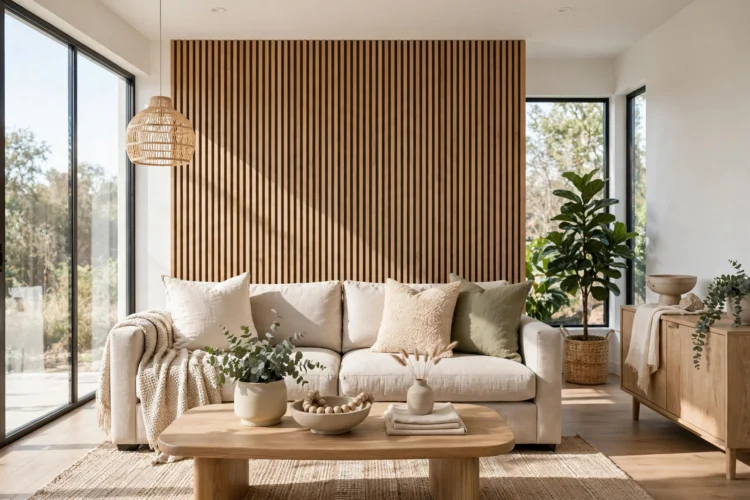
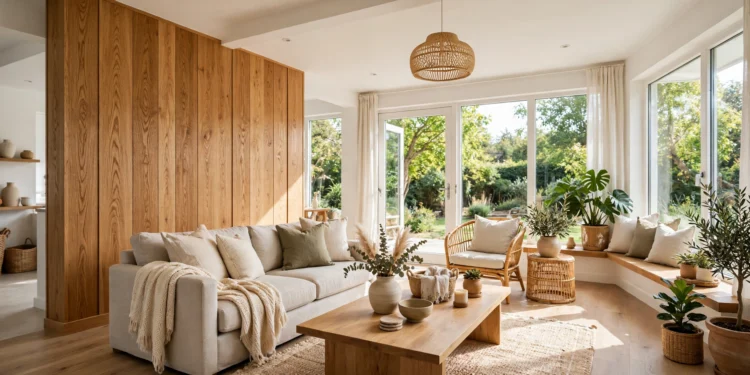
Warm oak is the wood that suits the most living rooms, because it sits between pale pine and dark walnut and works with both cool and warm palettes. A wood panel accent wall living room project in oak pairs well with linen sofas, black metal lamps, and cream rugs. The grain stays visible without shouting, which matters on a large wall. Seal the wood with a matte finish so it keeps its natural color instead of turning orange over time. If the room gets strong afternoon sun, pick a UV-stable finish or the side facing the window will age faster than the rest.
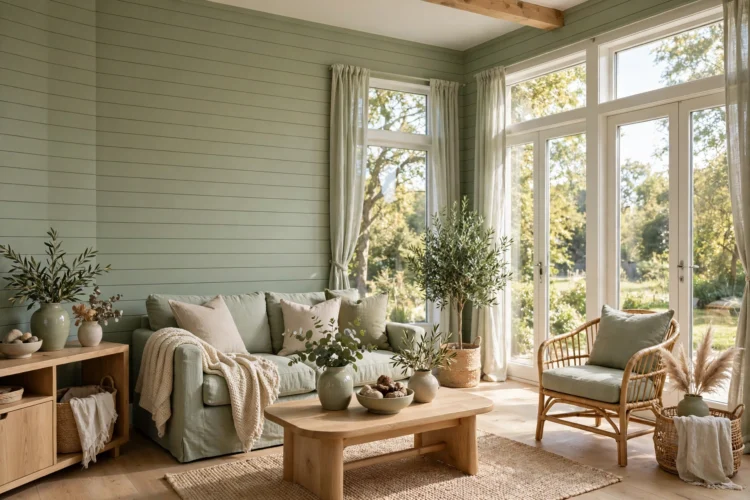
Shiplap does not have to look like a farmhouse. Painted the same color as the surrounding walls, it reads as quiet texture instead of a theme. A shiplap accent wall painted to match the room is the quietest option on this list, because the texture does the work and the color stays out of the way. The shadow lines between boards give a flat wall depth without adding a new color to the room. This is the best option when you want texture but the room already has strong furniture. Use a matte paint so the boards do not shine, and keep the board width consistent. A neutral living room palette with painted shiplap feels calm, and the wall still photographs well because the texture catches the light.
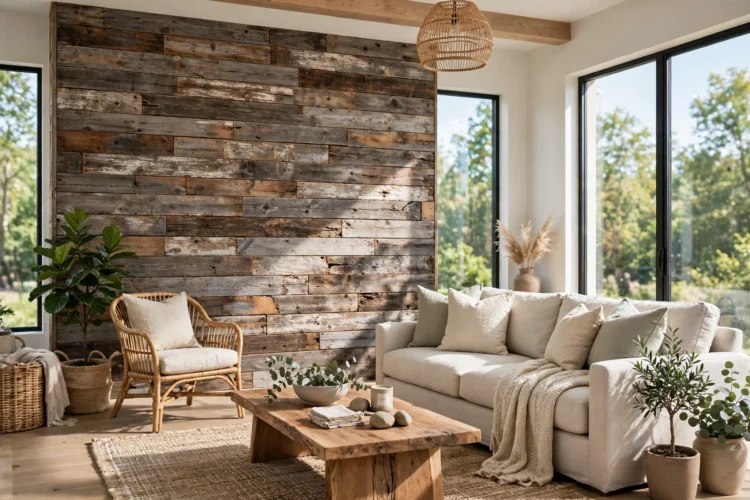
Reclaimed wood brings grain, nail holes, and color variation that new lumber cannot fake. The key is restraint: one wall, mixed tones, and no other rustic piece competing with it. A reclaimed wood wall needs sealing before it goes up, because old boards can carry dust and moisture that a new wall would not. Clean the boards, seal them, and check for a stable moisture level before installation, because old wood moves with the seasons. A reclaimed wall behind a modern sofa creates the contrast that makes both pieces look better. Pair it with simple furniture and let the wall carry the character. Two rustic features in one room, say a barn wood wall plus a wagon wheel mirror, tip the room into a theme park.
A wood wall does not have to reach the ceiling. Panels that stop at chair rail height, about 36 inches, with a slim ledge on top, add warmth at eye level and give you a display shelf for art and small plants. This works well in rooms where a full wall would feel heavy, and it protects the lower wall from scuffs in homes with kids. Paint the upper wall a pale tone so the room still feels tall. The ledge needs only a few objects, because a crowded ledge turns the feature into a shelf.
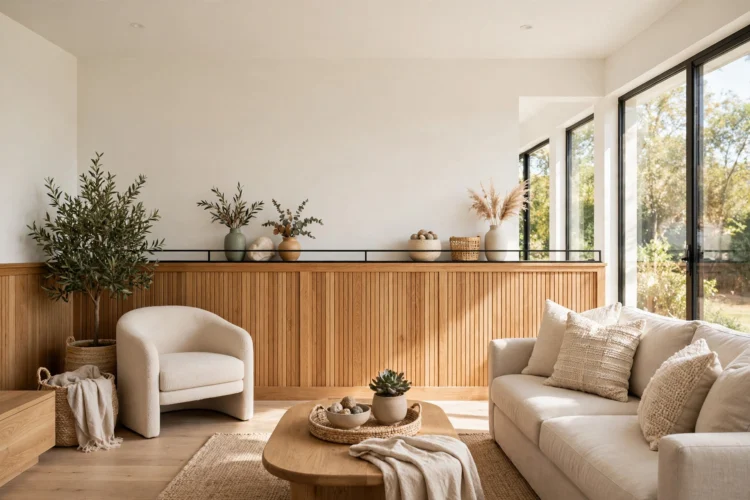
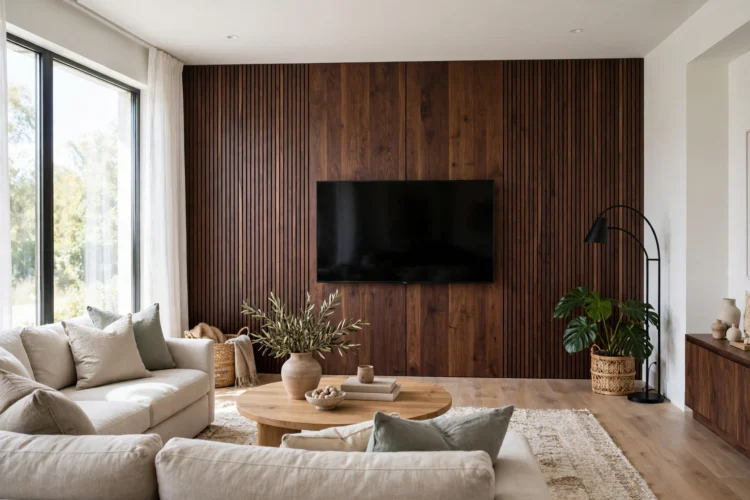
A dark walnut wall behind the TV does two jobs at once. It hides the black rectangle of the screen when the TV is off, and it makes the screen disappear into the wall when it is on. The contrast also makes the seating area feel like a proper media zone. Keep the rest of the room light so the dark wall reads as a feature, not a cave. If the wall also holds the corner fireplace, let the wood stop at the fireplace surround so the two features do not fight for attention. Plan the mount so a wood panel wall behind TV setup keeps a small gap for cables, and use a bracket that holds the screen off the panel.
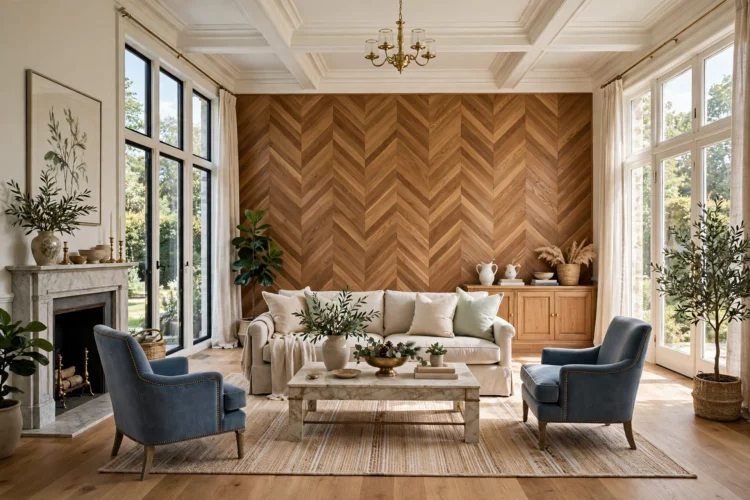
Herringbone turns wood panels into a pattern, and the pattern suits formal living rooms and dining-adjacent spaces. The zigzag catches light from different angles, so the wall changes as you walk past it. This is the most labor-heavy option on this list, because every cut has to match, so it suits a wall you plan to keep for years. Use it on one wall only and keep the furniture simple, because the pattern is already doing the decorating. A herringbone wall in a pale wood reads elegant, while the same pattern in dark wood reads heavy.
Thin battens, strips about an inch wide, add rhythm to a wall without the weight of full panels. Paint them the same color as the wall for a subtle grid, or stain them for contrast. Battens work well on a wall that already holds art, because the pattern sits behind the frames instead of competing with them. Space them evenly with a simple jig so the lines stay true. This is the cheapest wood wall on this list, and it is the easiest to remove later, which makes it a good first step if you are unsure about committing to wood.
An arched panel feature softens a boxy room in a way straight slats cannot. The curve can frame a reading nook, a bookshelf styling moment, or a single piece of art. Build the arch from thin flexible plywood or bendable battens, and keep the wood tone consistent with the rest of the room. Arches suit rooms with other curves, like a round mirror or an arched doorway, because the shapes echo each other. One arch is a feature. Two arches start to look like a pattern, so stop at one.
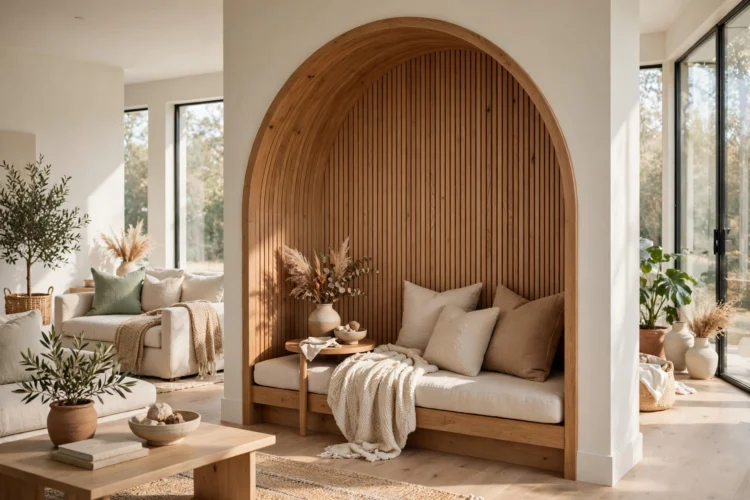
Wood walls date fast when they copy a trend too literally. The fix is to keep the wood simple and let the room around it change. Avoid heavy gloss, avoid mixing three wood tones on one wall, and avoid the exact slat spacing that every photo online shows this year. A gallery wall hung on a wood panel wall can refresh the whole feature without touching the wood, because the art becomes the focal point and the panels become the background. When in doubt, pick the wood tone that matches your floor within one shade, and the wall will look like it belongs to the house.
Pick the style that matches your furniture, not the one that photographs best online. A slat wall, a shiplap wall, or a reclaimed wall all work when the wood tone fits the room, and the right choice is the one you will still like in five years.