Physical Address
304 North Cardinal St.
Dorchester Center, MA 02124
Physical Address
304 North Cardinal St.
Dorchester Center, MA 02124


Fabric panels on ceiling tracks, tension rods, and freestanding frames can split a room without a wall. These nine curtain divider ideas keep the light, add privacy, and look planned.
Curtain room divider ideas work best when the fabric does the job a wall cannot. A curtain softens a hard edge, moves out of the way in seconds, and costs far less than framing a new partition. You can split a studio, carve a reading nook from a living room, or hide a desk at the end of the day without losing light or floor space. The trick is hardware that looks planned, fabric with enough weight to hang straight, and a hem that clears the floor by a small, even gap. This list covers nine ways to do it, from ceiling tracks to renter friendly rods, so you can pick the setup that fits your room and your budget.
A ceiling track is the cleanest way to run a fabric room divider across an open plan. Ceiling track curtains mount flat to the ceiling, then hang on gliders or roller hooks so they slide with one hand. A straight track suits a simple split. An L shaped track wraps a corner and turns it into a small room of its own. Measure the span, add extra width so the gathered fabric covers the track when closed, and pick a track rated for the fabric weight. Linen and cotton canvas glide well and hold a soft fold. In an open-plan living room, a ceiling track lets you close off a sleep or work zone at night and open the whole space again in the morning.
Keep the look intentional by matching the track finish to other metal in the room, such as black, brass, or brushed nickel. Add a ceiling mounted valance or a slim pelmet if you want to hide the track completely. Leave the panels long enough to skim the floor, and steam them after hanging so the folds fall straight.

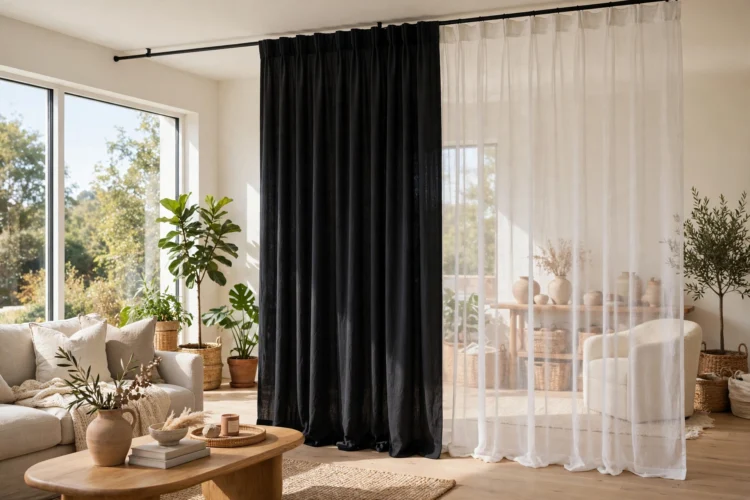
Sheer panels suit rooms where you want separation without darkness. A sheer curtain partition still marks a boundary, but daylight passes through it and the room keeps its airy feel. Choose linen look sheers or a fine voile with a little texture so the fabric reads as a design choice, not a shower curtain. Hang two panels on a slim rod or track, and let them overlap at the center so there is no gap when closed.
This setup works well between a living area and a dining table, or in front of a home office corner. It gives you privacy from across the room while keeping sight lines soft. Pair the sheers with a heavier side panel you can pull across when you need more cover. Wash sheers on a gentle cycle and hang them damp so wrinkles drop out on their own.

When you need real privacy and quiet, reach for weight. Velvet and heavy cotton duck block sight lines completely and dampen sound better than thin fabric. A pair of floor length velvet panels can turn one corner of a studio into a bedroom that feels separate at night. Choose a color close to your wall color for a calm effect, or a deep tone such as forest green or navy if you want the nook to feel like a distinct room.
Hang velvet on a sturdy track or a thick wooden rod with strong brackets, since the fabric is heavy when gathered. Use curtain rings with clips or a rod pocket that slides smoothly. A weighted hem helps the panels hang straight and stops them swinging when someone walks past. Tiebacks in matching fabric keep the panels open during the day and show off the nook as part of the room.

A double layer gives you two moods from one divider. Put sheers on the front track and blackout panels on a second track behind them. During the day, draw the blackout panels to the sides and let the sheers filter the light. At night, pull the blackout layer closed for privacy and a darker sleep zone. Double tracks are sold as kits, and the two layers sit close enough together to read as one unit.
This pairing suits a guest corner or a sleep space inside a narrow living room where a solid wall would make the room feel cramped. Keep the sheer layer light in color and the blackout layer in a tone that matches your bedding or sofa. Test the slide before you finish the install, since two layers add friction and the gliders need to move freely. A quick spray of silicone lubricant on the track, if the maker allows it, keeps both layers moving smoothly.
Renters can still split a room without drilling a single hole. A tension rod wedges between two walls, inside a door frame, or between a wall and a tall cabinet. Choose a rod rated for the span, twist it tight until it holds firm, then hang light to medium weight panels. Cotton, linen blends, and light canvas work well. Heavy velvet will pull a tension rod down, so save that fabric for a mounted track.
Tension rods suit short spans best, such as a hallway opening, a closet without doors, or a nook under a loft bed. Add a second rod near the floor if the panels swing too much. When you move out, the rod comes down in a minute and leaves no marks. For a neater look, pick a rod in matte black or white and panels with a simple rod pocket or tab top.

Not every divider needs solid fabric. Woven cotton, macrame, and crochet style panels add texture and let air and light pass through. They suit boho and relaxed rooms where a solid curtain would feel too heavy. Hang a macrame panel in a doorway or across a small span to mark a reading corner or a plant zone. The open weave keeps the room connected while still giving the eye a clear boundary. It is one of the simplest curtain room divider ideas for a small span.
Keep the rest of the room simple so the texture can stand out. A plain rug, a wooden stool, and one plant are enough. Dust woven panels with a soft brush or shake them outside, since washing can tangle the knots. If you want more privacy, layer a sheer panel behind the macrame so you get texture in front and cover behind it.

High ceilings call for full height fabric. Floor to ceiling panels make a loft corner feel like a room, even when the ceiling sits well above the divider. Measure from ceiling to floor, then order panels a touch longer and hem them to skim the floor. A track mounted tight to the ceiling gives the cleanest line. If the ceiling slopes, use a wall mounted track at the highest practical height and let the panels fall from there.
Room divider curtains in this style work well as a backdrop for a bed or a desk. Pick a fabric with a vertical stripe or a subtle weave so the eye travels up and the height feels intentional. Add a floor lamp behind the panels and the fabric glows softly at night. In a tall space, layered lighting matters as much as the fabric, so pair the divider with a warm lamp on each side of the split.

A freestanding frame gives you a divider you can move. Build or buy a simple frame from wood or metal pipe, add feet wide enough to keep it stable, then hang panels from a rod across the top. The frame stands on its own, so you can place it anywhere, angle it across a corner, or fold it flat and store it when guests leave. It suits renters, small flats, and rooms that change use through the week.
Keep the frame light enough to move with one person, but heavy enough at the base to stay upright. Flat feet or a low crossbar stop it tipping. Choose panels that match your sofa or bedding so the frame reads as furniture, not a temporary fix. Among curtain room divider ideas, a frame divider also works as a backdrop for video calls, since you can place it behind a desk and move it away after work.

A patterned curtain can do the work of both a divider and a wall hanging. Bold stripes, large scale florals, or a simple geometric print turn a plain span of fabric into a focal point. Pick one pattern and keep the rest of the room quiet so the curtain carries the color. In a neutral living room, a patterned panel adds color without paint or new furniture. The pattern also hides creases and everyday marks better than a flat solid color.
Match the pattern scale to the room. Large prints suit wide spans and tall ceilings. Small prints suit short spans and cozy corners. Repeat one color from the pattern in a cushion or a throw on the near side so the two zones feel linked. When the panels are open, the gathered fabric still shows the pattern, so the divider looks good in both positions.

These curtain room divider ideas all start with the split you need most, then pick the fabric and hardware to match it. A ceiling track suits a permanent open plan split. A tension rod or freestanding frame suits a rental or a room that changes often. Sheers keep the light, velvet gives privacy, and a double layer gives you both. Hang the panels straight, keep the hem even, and let the fabric do the quiet work of making one room feel like two.