Physical Address
304 North Cardinal St.
Dorchester Center, MA 02124
Physical Address
304 North Cardinal St.
Dorchester Center, MA 02124

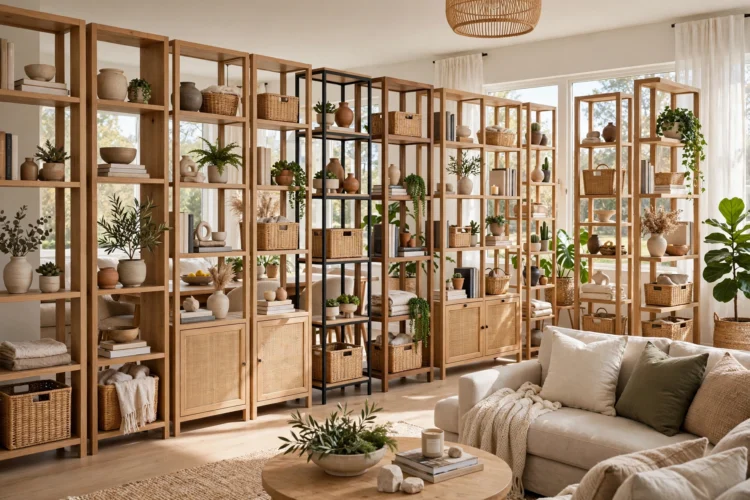
Open shelves can split a room and store books at the same time. These eleven bookshelf divider ideas cover low units, tall double sided shelves, cubes, and rolling units.
Bookshelf room divider ideas solve two problems at once. They split an open room into clear zones and they give you storage for books, plants, and display pieces. A good shelf divider does not need a wall behind it. It stands on its own, looks finished from both sides, and lets light pass through the gaps. This list covers eleven ways to use shelving as a partition, so you can find the version that fits your space.
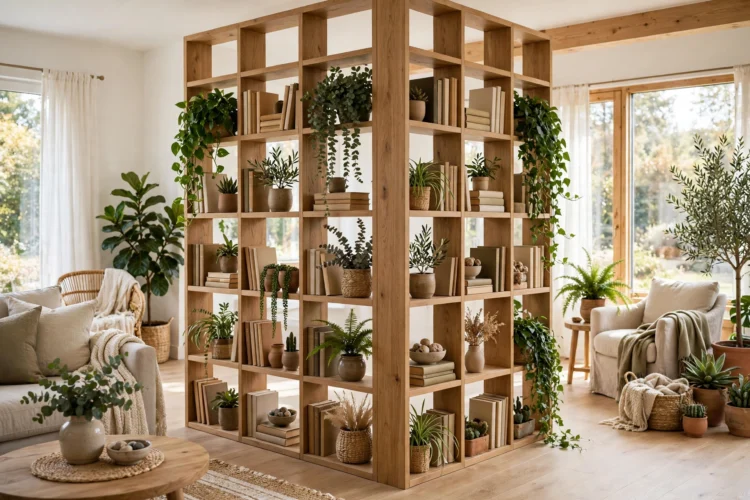
An open back shelf is the classic choice for a reason. With no back panel, light and air move through the unit and both rooms stay bright. Books sit on the shelves with their spines facing out on each side, or you can turn a row of books to face one side and leave display pieces facing the other. A shelf room divider with an open back works best when you style it loosely, with gaps between objects so the eye can travel through.
Anchor the unit to the wall or floor if it is tall, since a freestanding shelf can tip when loaded unevenly. Keep heavy books low and light objects high, and leave one cubby empty on purpose so the divider feels light. In an open plan, this is the easiest way to mark a living zone without losing the open feel.
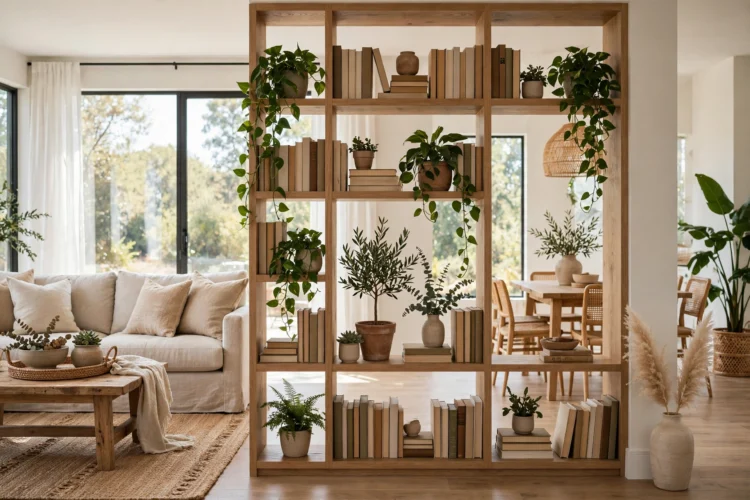
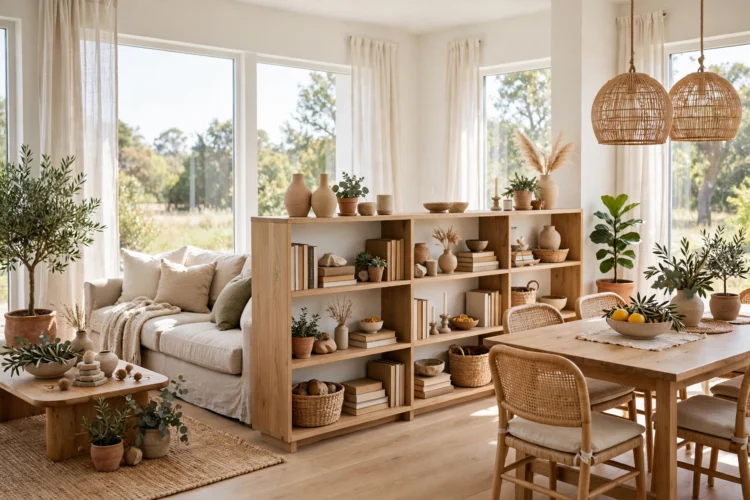
A low shelf, about waist high, marks a boundary while keeping sight lines open across the room. You can see over it from a sofa, talk across it easily, and still feel that the space has two parts. Use it between a living area and a dining table, or between a play zone and a reading corner. The top surface doubles as a display ledge for plants, framed photos, or a row of favorite books laid flat.
Pick a unit wider than it is tall so it reads as furniture, not a wall. Style the shelves with a mix of books and baskets so the lower half does not look cluttered. Keep the top clear except for two or three objects, and the divider will feel calm and deliberate.
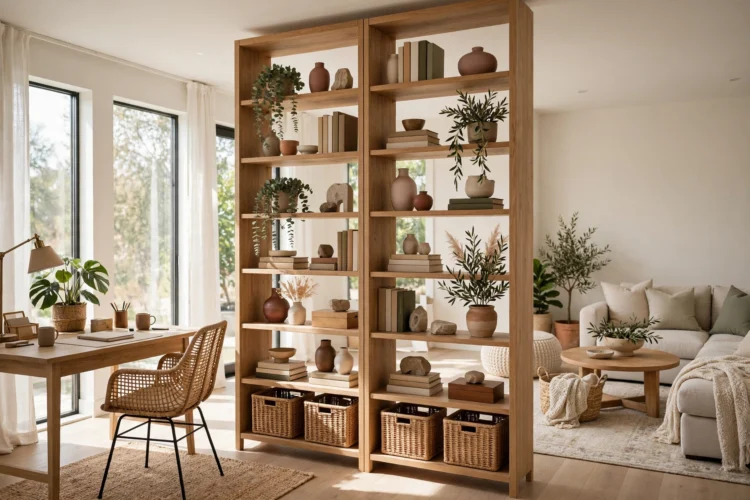
A tall double sided bookshelf can split a living room from a home office without closing either space off. Face one side toward the office with books, files, and work supplies. Face the other side toward the living room with plants, framed art, and a few favorite books. Each side gets a job, and neither side looks like the back of a shelf. This is the setup to pick when you work from home and need a clear line between work and rest.
Choose a unit at least six feet tall for a real sense of separation, and anchor it to the floor or ceiling for safety. Keep the office side practical, with boxes and baskets that hide cables and papers. Keep the living side softer, with objects you enjoy looking at. See a layout without a TV for ideas on keeping a seating area calm without a screen.
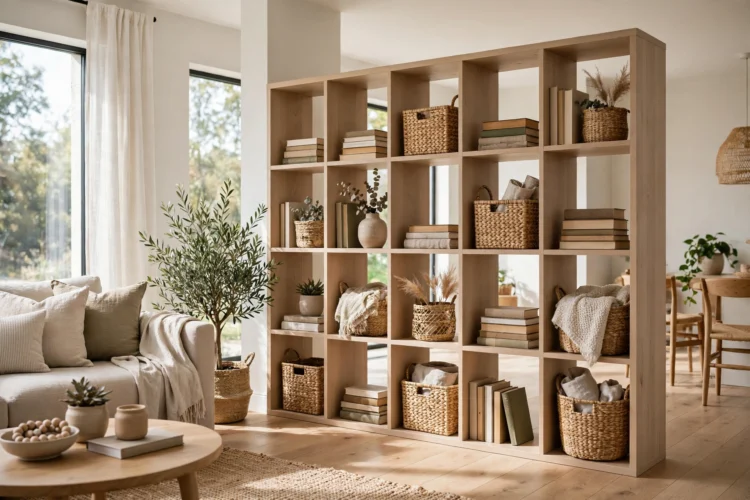
Cube shelves are the most flexible option on this list. The square cubbies take books, baskets, plants, and display pieces in any mix, and you can turn the unit on its side to change a tall divider into a low one. That flexibility suits renters and growing families, since the same unit can split a bedroom one year and a living room the next. A freestanding bookshelf partition made from cubes also breaks down into smaller units if you move to a smaller place.
Use fabric boxes in a few cubbies to hide clutter and keep the open cubbies for books and objects you like to see. Match the box color to your sofa or rug so the unit ties into the room. Do not overload the top row, since cube shelves are light and a top heavy load can make them wobble.
A full shelf wall with a wide opening in the middle splits a room while keeping the two sides connected. The opening acts like a doorway without a door, so you can walk through, pass a book across, or talk from one side to the other. Build the wall from two tall units with a gap between them, or use a single wide unit and leave the center cubbies empty as a serving hatch between a kitchen and a dining zone.
This layout suits long rooms where a solid shelf wall would feel like a dead end. Keep the opening at least as wide as a standard doorway so it feels natural to walk through. A gallery wall on the wall beside the opening can pull the whole composition together and give the eye a place to rest.
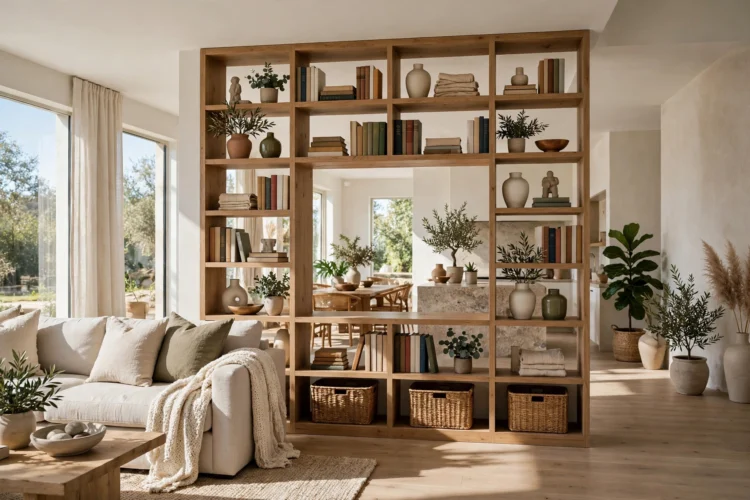
Ladder shelves lean against the wall or stand on a narrow base, with shelves that get deeper toward the bottom. The slim profile suits small rooms where a deep bookcase would eat too much floor. Use a ladder shelf as a soft divider at the end of a sofa or beside a desk. It marks the edge of a zone without blocking light or taking up a full shelf depth. It is one of the lightest bookshelf room divider ideas for a small room.
Style ladder shelves lightly, since the angled frame shows every object clearly. A few books, one plant per shelf, and a small basket are enough. Keep the bottom shelf for heavier books to lower the center of gravity. If the unit leans, fix the top to the wall with a strap so it cannot slip.
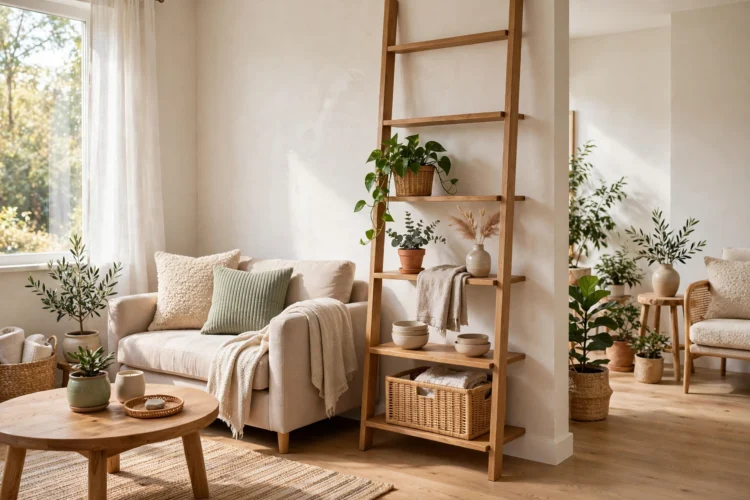
Built in shelving around a doorway turns a plain opening into a divider with storage on both sides. Shelves run up each side of the door frame and across the top, so the doorway becomes the pass through and the shelves become the wall. This setup suits a hallway opening between a living room and a bedroom, or a wide cased opening between two living zones. It uses space that would otherwise stay empty.
Paint the built ins the same color as the trim so they read as part of the house, not added furniture. Keep the shelves near the doorway shallow so people can pass without brushing books. Store everyday books at arm height and display pieces higher up.
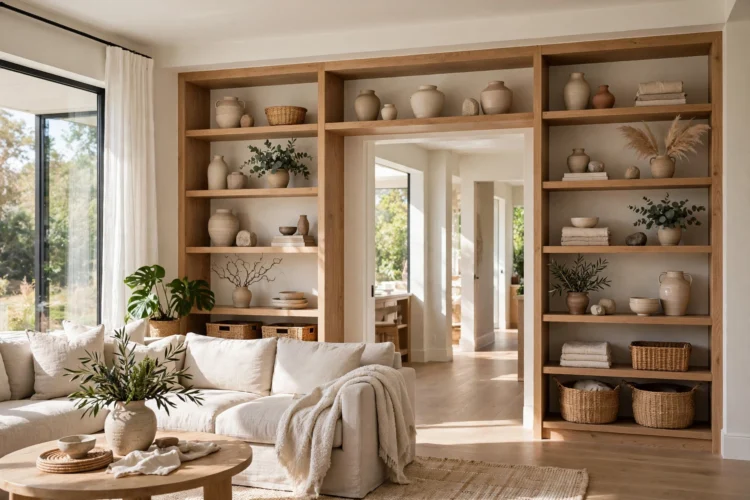
A bookshelf on casters gives you a divider that moves when the room needs to change. Roll it across a studio to close off a sleep zone at night, then roll it back in the morning to open the space for the day. Locking casters keep it still once it is in place. Pick casters rated for the loaded weight, and lock at least two wheels so the unit does not drift when someone leans on it.
Keep the unit low to medium height so it stays stable while rolling. A rolling shelf suits a cozy living room that doubles as a guest room, since you can wheel the divider into place when guests stay over and tuck it against a wall the rest of the time. Check the floor first, since casters roll best on hard floors and can catch on thick rugs.
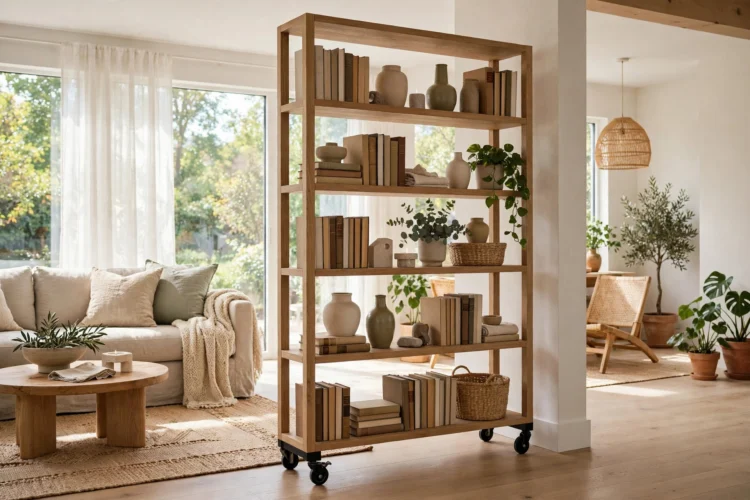
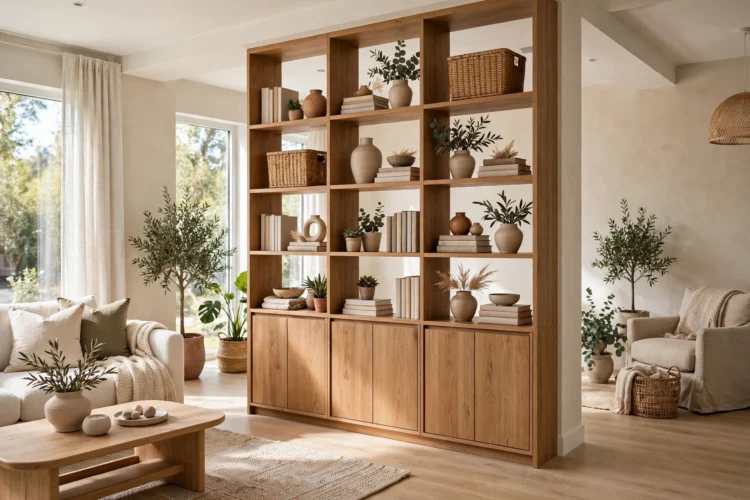
Open shelves on top and closed cabinets below give you display space and hidden storage in one unit. The open top keeps the divider light and lets you show books and objects. The closed base hides board games, cables, craft supplies, and anything else you do not want on show. This is one of the most practical bookshelf room divider ideas for family rooms, where the lower shelves would otherwise fill with clutter.
Choose doors that match the shelf finish so the base reads as one piece. Store heavy items in the cabinets, not on the open shelves, to keep the unit stable. Style the open shelves with breathing room between objects, and the whole divider will look tidy even when the cabinets behind the doors are full.
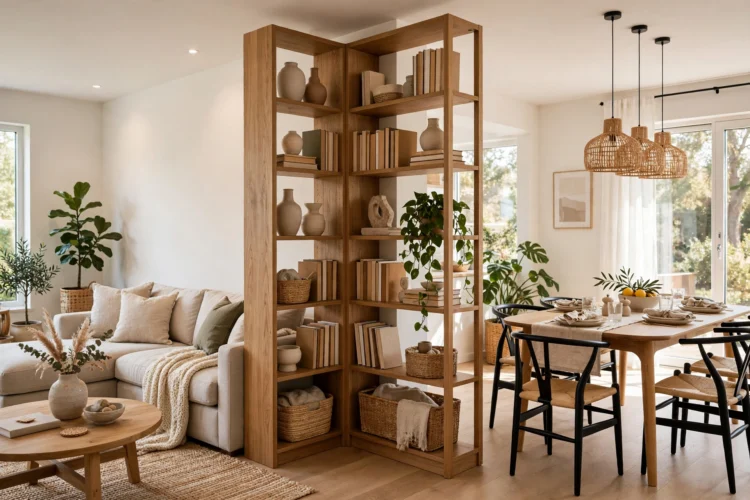
A corner shelf divider uses the angle where two zones meet and turns it into useful storage. Place an L shaped or angled unit in the corner between a living area and a dining area, and it marks the boundary while filling space that often stays empty. The corner position also braces the unit on two sides, which helps stability. An open shelf divider in a corner can hold books facing one room and plants facing the other, so each side gets something to look at.
Measure the corner carefully, since walls are rarely perfectly square. Leave a small gap behind the unit for cables or a floor lamp cord. Style the corner shelves with taller objects at the back and shorter ones at the front so nothing gets lost in the angle.
The last step is styling, and it matters as much as the shelf you pick. A divider has two faces, and the back of a shelf should never look like an afterthought. Give each face its own small arrangement. Books can face both sides, or face one side while plants and art face the other. Repeat one color or material on both faces, such as wood, black metal, or cream ceramic, so the two sides feel like one piece of furniture.
For bookshelf styling that works on a divider, see how to style a bookshelf with varied heights and breathing room, then apply the same rules to both faces. If one face looks bare, move a plant or a stack of books to that side. A divider that looks finished from both directions is what makes the split feel like a design choice, not a storage fix.
These bookshelf room divider ideas all start with the split you need. A low unit marks a boundary without blocking sight. A tall double sided unit gives a home office real separation. Cubes and rolling shelves suit rooms that change often. Style both faces, anchor tall units, and keep heavy books low.