Physical Address
304 North Cardinal St.
Dorchester Center, MA 02124
Physical Address
304 North Cardinal St.
Dorchester Center, MA 02124

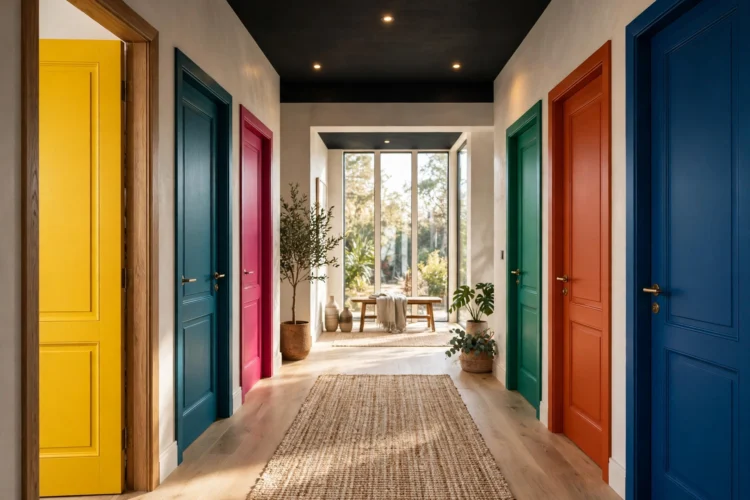
A plain white door disappears. A painted door does not. The right color turns a door into punctuation in a neutral room, a small moment of confidence that costs one can of paint and an afternoon. These eleven shades work across styles, from modern flats to old houses with tall skirting boards.
Most interior door paint colors get picked as an afterthought, usually the same white as the trim. That is a missed chance. A door is a large flat surface in every room, and color on it reads like a deliberate design decision. The bold door paint colors below work as punctuation in neutral rooms, and the door paint finish sheen guide at the end keeps the finish looking good after years of daily use.
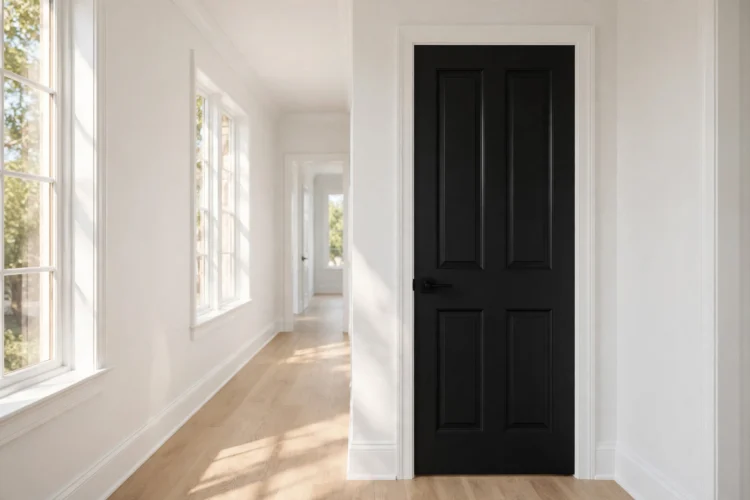
Black doors read as architecture, not decoration. They frame a doorway, anchor a pale hallway, and make white walls look cleaner by contrast. Ink black suits modern homes and period homes alike, because it behaves like a neutral with a spine. Paint both sides of the door and the edge, so the color holds when the door stands open.
Use a soft black with a warm undertone in rooms with warm wood, and a blue-black in rooms with cool gray walls. A satin finish hides fingerprints better than gloss and still wipes clean. If black feels too strong, try it on one door first, such as the pantry or the study door.
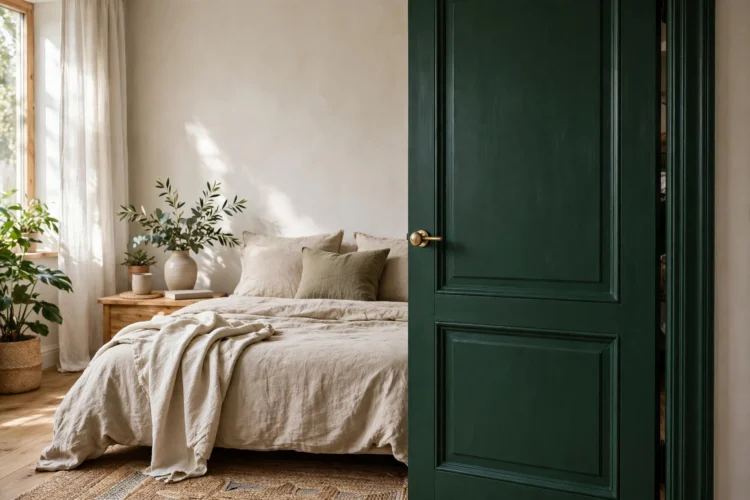
Forest green gives a door the feel of a library or a garden room without any pattern. It pairs well with brass hardware, oak floors, and cream walls, and it suits bedrooms and dining rooms where you want a calm, grown-up mood. Keep the rest of the room light so the door stays a single strong note.
Test the color at night as well as in daylight, because deep greens can turn muddy under warm bulbs. A green with a gray base stays truer in artificial light than a pure emerald. Match the door to a green accent elsewhere, such as a cushion or a plant pot, and the room will feel planned rather than random.
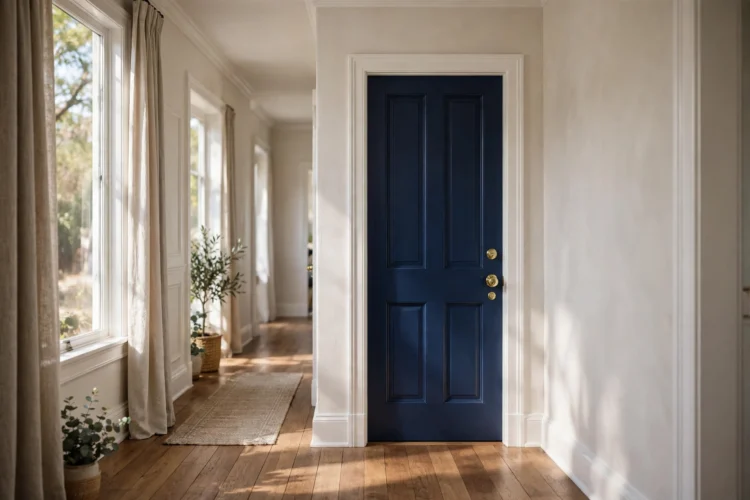
Navy is the safest bold choice for a door, and it has earned that reputation. It works with white trim, gray walls, wood floors, and almost any metal finish. In a hallway, a row of navy doors gives rhythm to a plain corridor. In a bedroom, one navy door adds weight to a soft, pale room.
Choose a navy with a hint of gray if the room gets little natural light, so the color does not turn to black in the corners. Satin or semi-gloss both work, and the finish matters more than the exact shade. For more color ideas that pair with navy, our kitchen cabinet color ideas beyond basic white show how deep blues behave next to wood and stone.
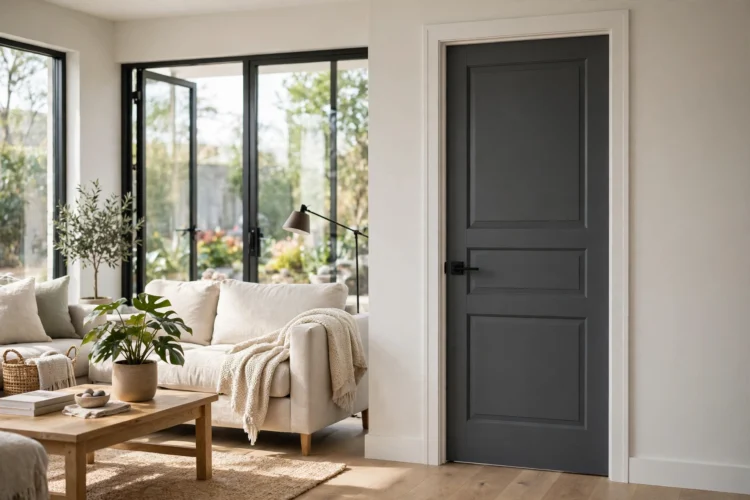
Charcoal gives you the graphic punch of black without the hard edge. It suits gray-toned interiors, concrete floors, and modern kitchens, and it hides scuffs better than true black. Pair it with matte black hardware for a tonal look, or with brass for contrast.
Charcoal doors look best when the trim stays white or pale, because the contrast is what makes the door read. If the walls are also gray, pick a charcoal at least three shades darker than the wall so the door does not vanish into it.
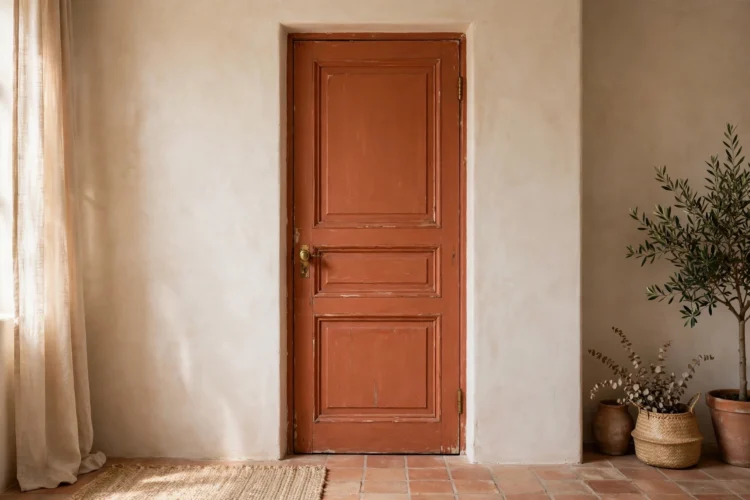
Terracotta warms a pale room the way a clay pot warms a windowsill. It suits Mediterranean and boho interiors, and it pairs with rattan, linen, and pale wood. Use it on a bedroom or bathroom door where you want the room to feel sunny even on a gray day.
Keep the tone muted rather than bright orange, and test it against your floor, because terracotta can clash with pink-toned wood. One door is enough in a small room. In a larger space, repeat the color on a second door or a piece of furniture so it feels intentional.
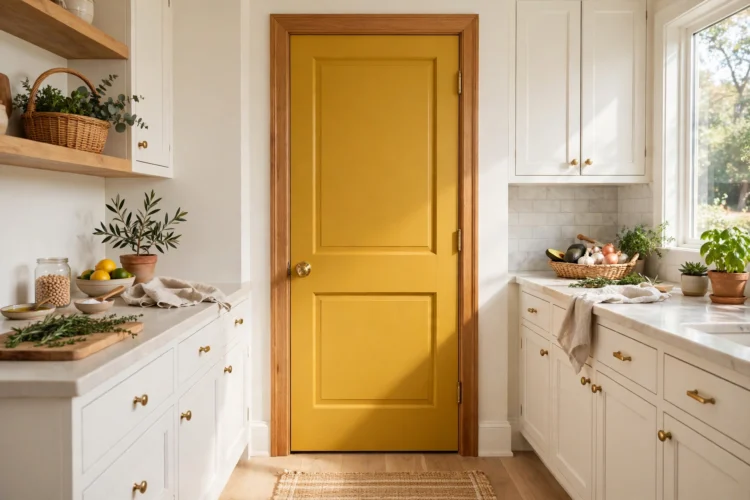
Mustard is the boldest color on this list, and it works best as a single accent door in an otherwise calm home. It suits kitchens, kids rooms, and creative spaces, and it pairs with navy, charcoal, and pale wood. A mustard pantry door or laundry room door adds cheer to a workhorse space.
Use it sparingly. One mustard door is a statement, and two can feel like a theme park. A satin finish keeps the color from looking chalky, and black hardware grounds it. If you want the color to feel less loud, pick a mustard with a brown base rather than a lemon one.
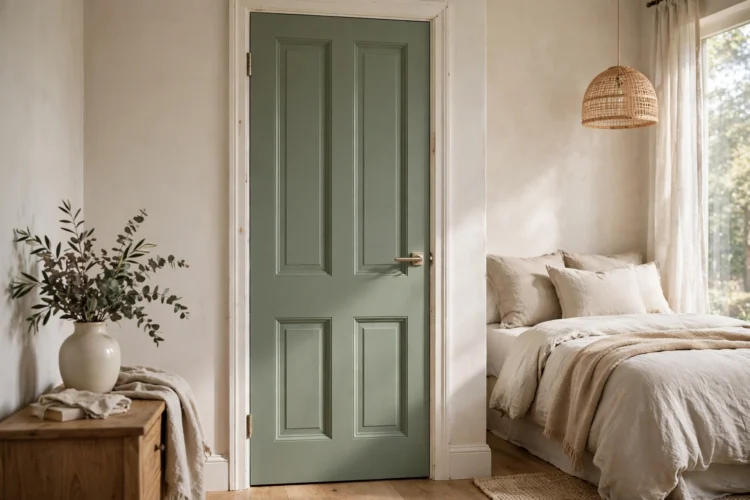
Sage is the gentle cousin of forest green, and it suits doors in bedrooms, bathrooms, and hallways where you want color without drama. It pairs with white trim, pale wood, and linen, and it works in both modern and cottage interiors. Sage doors age well, because the color never shouts.
Match the sage to the undertone of your walls. A gray-green sage suits cool rooms, and a yellow-green sage suits warm ones. For more ideas on using green as a room color, our green kitchen cabinet ideas from sage to forest show the full range from pale sage to deep forest.
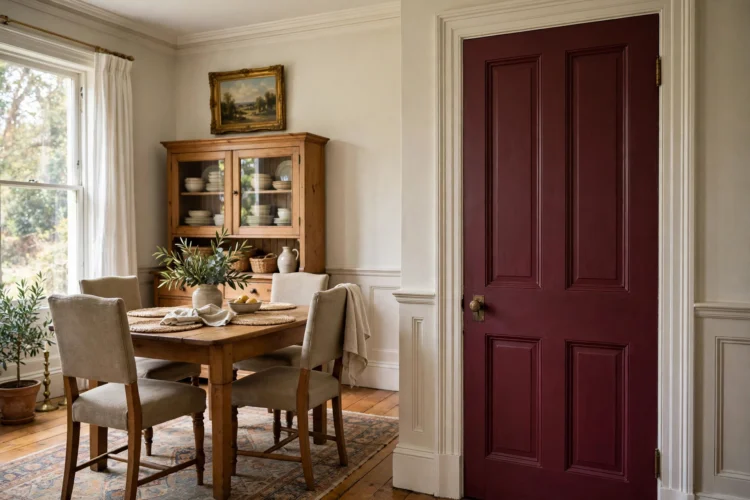
Burgundy suits doors in older homes with tall ceilings, dark wood floors, and traditional trim. Moody interior doors in this shade suit dining rooms and studies best. It reads as rich and formal, and it pairs with brass, cream, and deep green. Use it on a dining room or study door where you want the room to feel considered and a little grand.
Burgundy shows dust and brush marks more than lighter colors, so sand the door smooth and use a good brush or a small foam roller. Two thin coats beat one thick coat, and a semi-gloss finish makes the color glow in lamplight.
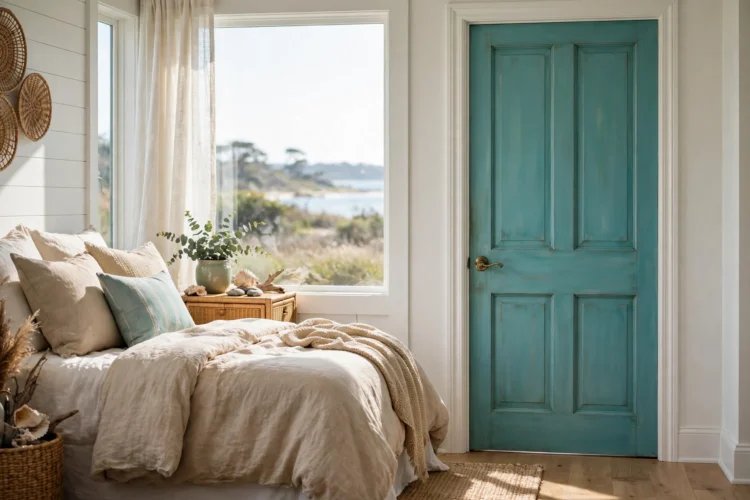
Teal sits between blue and green, and it gives a door a cool, confident character. It suits coastal and modern interiors, and it pairs with white walls, light wood, and rattan. A teal bathroom door or bedroom door adds color without the heat of red or yellow.
Teal changes a lot with light, so paint a test patch on the door itself and check it morning and evening. A teal with more blue reads cooler, and one with more green reads warmer. Keep the hardware simple, such as matte black or brushed nickel, so the color stays the focus.
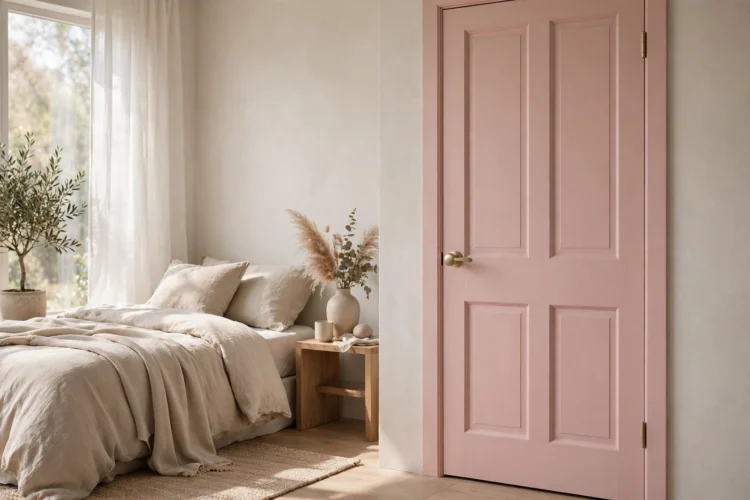
Blush pink on a door sounds daring, but a muted blush reads as a warm neutral in a modern bedroom or nursery. It pairs with white, gray, and pale wood, and it softens rooms that feel too stark. Use it on a closet door or a bedroom door where the color can stay private rather than public.
Pick a blush with a gray or beige base so it does not turn bubblegum pink in bright light. A satin finish keeps it soft, and brass hardware suits it better than chrome. If the room already has pink in the bedding or art, the door will tie the palette together.
Paint the door one color and the panels or the frame another for a custom look. A navy door with white panels suits a traditional hallway, and a charcoal door with a sage frame suits a modern one. Keep the two colors in the same family so the result reads as layered rather than split.
Before you commit, paint a large swatch on the door and live with it for a weekend. Painting interior doors is a weekend job, so a test swatch costs you little and saves you from a color you regret. Doors get touched, bumped, and stared at every day, so the right color is the one you still like on Monday morning. For more ways to change a door without replacing it, our interior door upgrade ideas without replacing the door cover trim, hardware, and panel swaps. And if you want to see how dark doors behave next to dark cabinetry, our black kitchen cabinet ideas that still feel bright show how to keep bold surfaces from closing a room in.