Physical Address
304 North Cardinal St.
Dorchester Center, MA 02124
Physical Address
304 North Cardinal St.
Dorchester Center, MA 02124

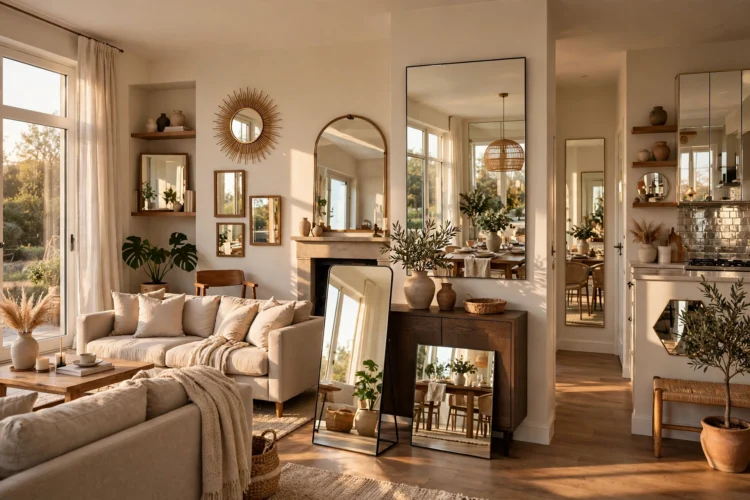
A mirror is the cheapest way to add light to a room, and the easiest to place wrong. These twelve placements bounce daylight and views where you need them, instead of reflecting a blank wall.
Mirror placement ideas matter because a mirror only helps when it reflects something worth seeing. Hang it opposite a blank wall and it doubles the blank wall. Hang it opposite a window and it doubles the daylight, the garden, and the sky, which is the whole point. The twelve placements below cover the spots where mirrors earn their keep: opposite windows, at the end of dark hallways, above sofas, and in the rooms where light never quite reaches. Each one includes the height, the size, and the small mistakes that turn a bright idea into a glare. Pick the placement that fits your darkest room, and the mirror will start working the same afternoon.
The mirror opposite window rule is the first one to learn: hang the mirror opposite the window, never beside it. A mirror opposite the window catches the daylight as it comes in and throws it back across the room, which makes the room feel brighter and larger at the same time. A mirror beside the window catches the light at an angle and throws it onto the nearest wall, which helps nobody. The best spot is the wall directly across from the largest window, centered on the window if you can, so the reflection frames the view instead of a slice of it.
The second idea is to angle the mirror slightly, so it reflects the garden or the sky instead of the fence or the neighbor’s wall. A tilt of a few degrees, achieved with a small wedge behind the top of the frame, changes what the mirror shows without changing where it hangs. Test the angle by holding the mirror in place and asking someone to stand where you will sit, since the reflection changes with the viewpoint. A mirror that shows the garden from the sofa is worth more than a mirror that shows the ceiling from the doorway. If the window has a view worth framing, our guide to bay window living room ideas for the alcove shows how to treat the window itself as the centerpiece, with the mirror as its echo across the room.
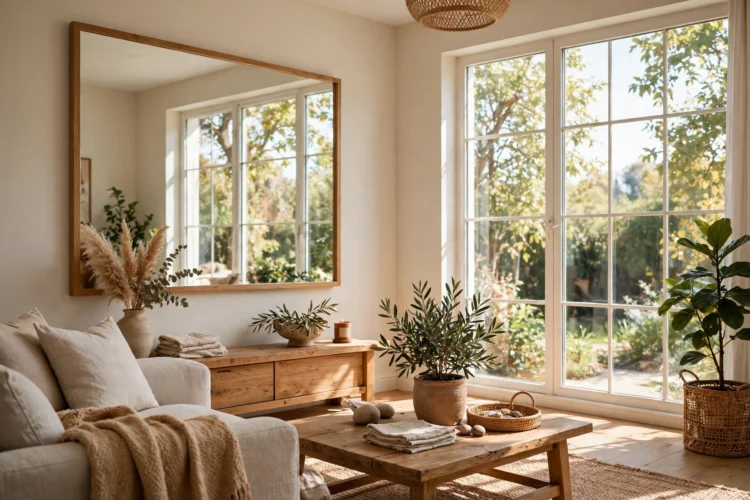
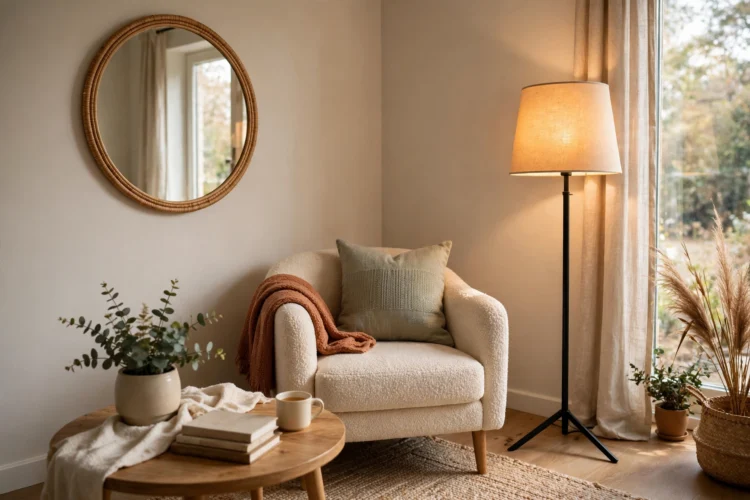
A mirror across from a lamp doubles the light after dark, which is when most living rooms need it most. Hang a mirror on the wall opposite a floor lamp or a table lamp, and the lamp’s glow bounces off the glass and fills the room instead of pooling on one side. The effect works with candles too, which is why dining rooms have hung mirrors opposite candelabras for centuries. The mirror does not need to be large. A medium mirror at eye level catches enough light to lift the whole corner.
Keep the mirror out of the direct line of the bulb, since a bare bulb reflected in a mirror creates a glare that hurts the eyes. The lamp should sit to one side of the mirror’s reflection, so the glass shows the warm glow of the shade rather than the bulb itself. This placement suits a reading corner, where a lamp and a mirror together make a small pool of light feel like a whole room.
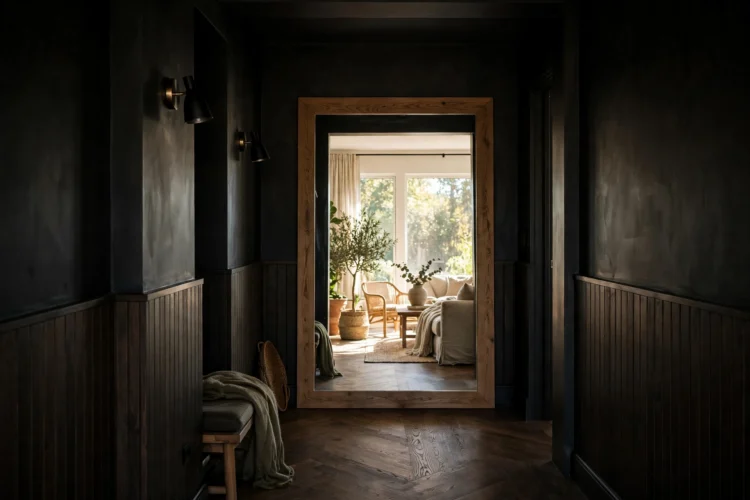
Hanging mirrors for light works best in a hallway, because a hallway has no furniture to arrange and no art to hang, just a long tunnel of wall. Hang a large mirror at the end of the hall, and it reflects the light from the room behind you, which makes the hall feel shorter and brighter. The mirror also gives the hallway a destination, so the eye travels to the end instead of stopping halfway. Choose a mirror that fills most of the width of the end wall, since a small mirror in a long hall looks lost.
The fifth idea is the leaning mirror, which suits a wide hallway or an entryway where drilling is not an option. Lean a tall mirror against the wall at a slight angle, and it reflects the light from the front door while doubling as a last check before you leave. A leaning mirror needs a secure footing, so place it on a rug or a non-slip pad, and anchor the top to the wall with a small bracket if you have kids or pets.
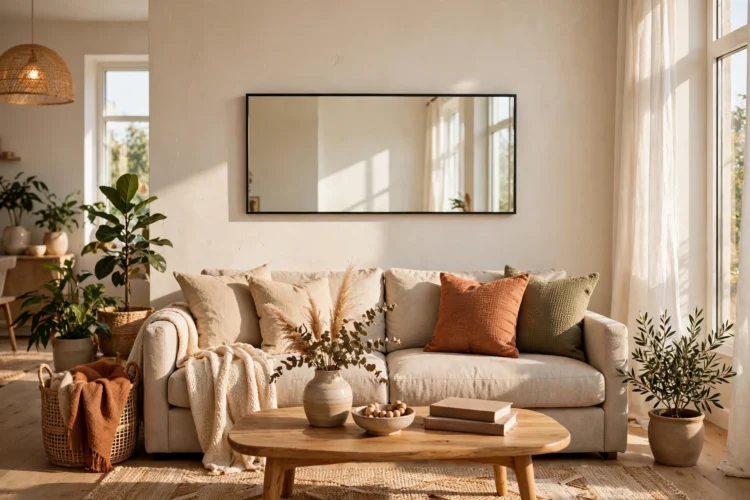
A mirror above the sofa widens a room because it adds a second window where there is none, and the eye reads the reflected room as extra space. Mirror placement living room guides start here for a reason: the sofa wall is the largest blank wall in most homes. Hang the mirror so its center sits at eye level when you stand, which is usually about 150 centimeters from the floor, and keep it about two-thirds the width of the sofa. A horizontal mirror suits this spot best, since it echoes the line of the sofa and stretches the wall. A round mirror works too, and it softens a room full of straight lines.
The mistake to avoid is hanging the mirror too high, which is the most common mirror error in any room. A mirror hung near the ceiling reflects the ceiling, and nobody needs a better view of the ceiling. Sit on the sofa and check what the mirror shows from there, since that is the view that matters. If it shows a blank wall, move it or angle it until it shows the window or the art on the opposite wall. For the curtains that frame the window the mirror faces, our guide to living room curtain ideas for height and light covers the lengths and fabrics that keep the light coming in.
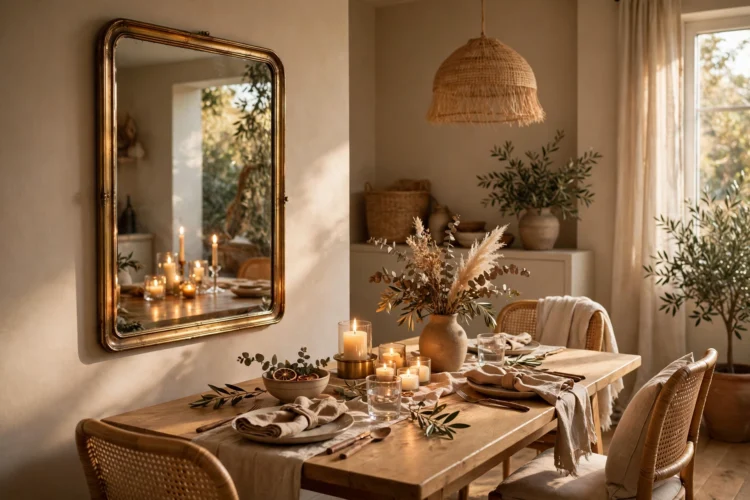
A dining room mirror earns its place at dinner, when it doubles the candlelight and makes a small table feel like a celebration. Hang the mirror on the wall beside the table, not behind the diners, so it reflects the candles and the food rather than the backs of heads. A mirror with a warm-toned frame, brass or wood, suits a dining room better than a cold chrome frame, since the warm frame picks up the candlelight and the chrome fights it. The mirror should sit at eye level for a seated diner, so the reflection shows the table, not the ceiling.
Keep the mirror away from the direct glare of a chandelier, since a bright bulb reflected in glass is the one thing that ruins a dinner. If the chandelier is the main light, hang the mirror on the wall opposite the sideboard or the window, where it catches the softer light instead. The reflection adds depth without adding furniture, and a room that seats four starts to feel like it seats six.
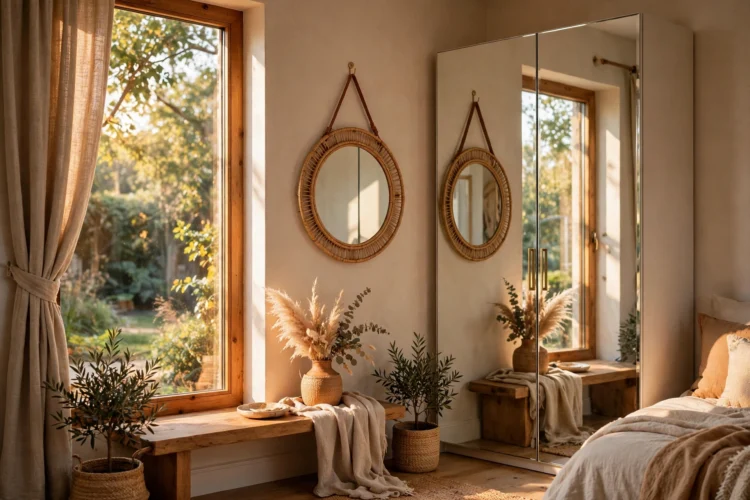
Mirror placement bedroom advice starts with this rule: the mirror belongs beside the window, not facing the bed, and the reason is sleep as much as light. A mirror beside the window catches the morning light and throws it across the room, which helps you wake up, while a mirror facing the bed catches the first light of dawn and throws it onto your face, which wakes you too early. Hang the mirror on the wall next to the window, at the height where you can see yourself standing, and it serves both purposes: light in the morning and a full-length check before you leave.
The ninth idea is mirrored wardrobe doors, which suit a small bedroom because they replace a wall with a reflection and make the room feel twice as wide. Sliding mirrored doors work best in a tight room, since they need no swing space, and they double as the dressing mirror. For the bathroom mirror that starts the same morning routine, our guide to bathroom mirror ideas from backlit to arched covers the shapes and lighting that work over a vanity.
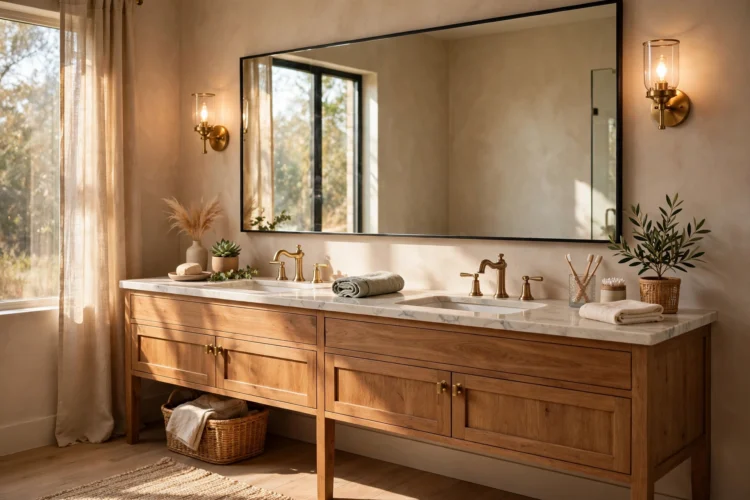
A bathroom mirror should run the full width of the vanity, because a mirror narrower than the sink looks like an afterthought and leaves the edges of the room dark. A full-width mirror reflects the light from the window and the vanity lights across the whole wall, which makes a small bathroom feel larger and brighter. If the vanity has two sinks, a single wide mirror suits the space better than two small ones, since the single mirror reads as one clean surface.
Light the mirror from the sides rather than from above, since a light above the mirror casts shadows on the face while side lights fill them in. Two sconces at eye level, one on each side of the mirror, give the most flattering light for shaving and makeup. For bathrooms where the window is high and small, our ideas for bathroom skylight ideas for natural light and privacy show how a skylight and a mirror together can light a windowless-feeling room.
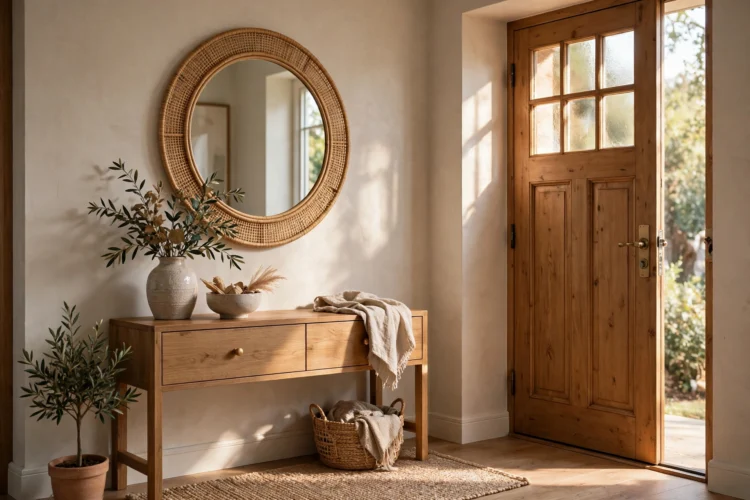
The eleventh idea is the entryway mirror, which does three jobs at once: it bounces the light from the front door into the hall, it gives you a last check before you leave, and it makes a narrow entry feel wider. Hang it at eye level beside the door, not opposite it, so it reflects the hall rather than the street outside. A round mirror suits a small entry, since it softens the hard lines of the door and the console table, while a tall rectangular mirror suits a narrow hall because it stretches the wall.
The twelfth idea is mirrored panels on closet doors, which suit a bedroom or a hallway where a full mirror would take up a wall. The panels reflect the window across the room and make the closet disappear into the wall, which is useful in a small bedroom where every centimeter counts. Keep the panels on the doors you open least, or use sliding doors, since a swinging mirrored door needs clearance and a soft close. Together, the entryway mirror and the mirrored closet doors put a reflective surface in the two places where light is hardest to reach, and the whole home reads brighter for it.
Start with the darkest room and one mirror opposite its best window. Stand where you sit, check what the mirror shows, and move it until the reflection is worth doubling.