Physical Address
304 North Cardinal St.
Dorchester Center, MA 02124
Physical Address
304 North Cardinal St.
Dorchester Center, MA 02124


A bathroom skylight brings daylight in from above, where no neighbor can see in, and the right type also vents steam.
Bathroom skylight ideas solve the oldest bathroom dilemma: how to get daylight without giving neighbors a view inside. A window at eye level trades light for privacy, but a skylight brings sun in from above, where sightlines cannot follow. The result is a brighter room that still feels private, even in a home with close neighbors.
Skylights also change how a bathroom feels at different times of day. Morning light from above feels fresh, midday light makes small tiles and fixtures look cleaner, and a venting model clears steam after a shower. Use the ideas below to choose the right type, size, and placement for your roof and your room.
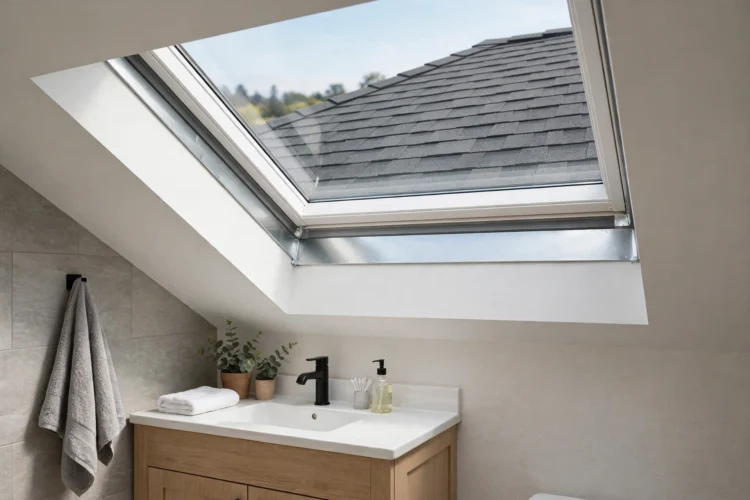
A fixed skylight is the simplest option: a sealed window in the roof that lets light in and never opens. It suits bathrooms that already have a good exhaust fan, and it costs less than a venting model because there are no moving parts to maintain. In a small bathroom, one fixed skylight over the center of the room can transform the space from dim to daylight-filled.
Place a fixed skylight where the light will fall on the area you use most, often the vanity or the shower, rather than centering it by habit. A skylight over a dark corner wastes its best light, while one over the vanity helps with morning routines. Check the roof structure first, because rafter spacing and roof pitch decide what sizes fit without major framing work.

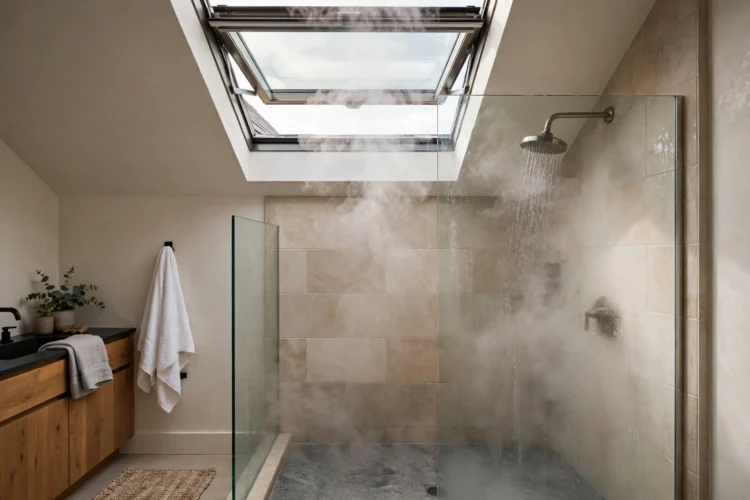
A venting skylight opens, either by hand or with a motor, and gives a bathroom a second way to release steam. In a bathroom without a good window, that airflow matters: steam escapes upward through the roof instead of lingering on mirrors and painted walls. Some models include a rain sensor that closes the skylight automatically when rain starts, which removes the worry of leaving it open.
Venting models suit shower rooms and windowless bathrooms best, where moisture builds up fast. Pair the skylight with the exhaust fan rather than replacing it, because the fan still clears odors and humidity on cold days when opening the roof feels wrong. A venting skylight over the shower clears steam at the source, which keeps mirrors clearer for the next person.
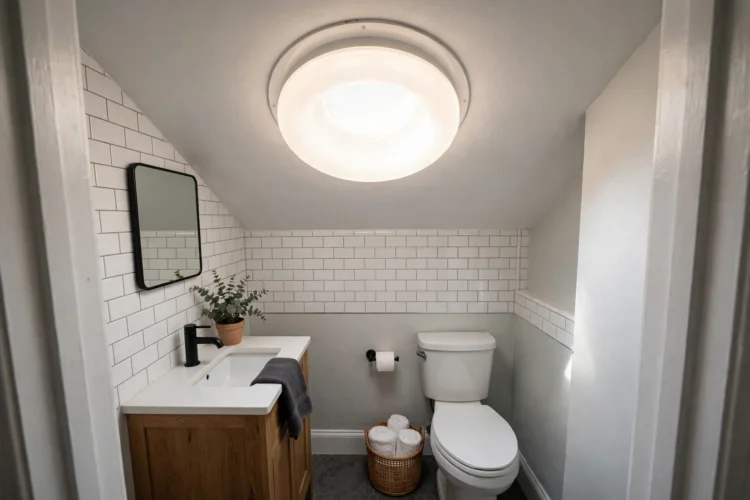
A tubular skylight, sometimes called a sun tunnel, fits where a full skylight cannot. A small dome on the roof captures daylight and sends it down a reflective tube to a diffuser on the ceiling. The result is a soft pool of daylight in a small bathroom, a hallway bath, or a powder room with no roof access for a large window.
Tubular models install with less framing work and suit rooms with attic space between the ceiling and the roof. The light feels more diffused than a direct skylight, which suits a bathroom because it avoids harsh glare on mirrors. If your bathroom is dark but the roof above is far from the ceiling, a tubular model is often the practical answer.
Skylight size should follow the room, not the biggest unit that fits the roof. A skylight that is too large can overheat a small bathroom in summer and create glare on the mirror, while one that is too small leaves the room dim and disappoints. As a rough guide, the skylight area should feel generous over the main use zone without dominating the whole ceiling.
Two smaller skylights often beat one large one in a long bathroom, because they spread light evenly instead of creating one bright patch. Space them over the vanity and the tub or shower so both zones get daylight. A ceiling plan drawn on paper, with furniture and fixtures marked, helps you see where light will actually land before anyone cuts the roof.
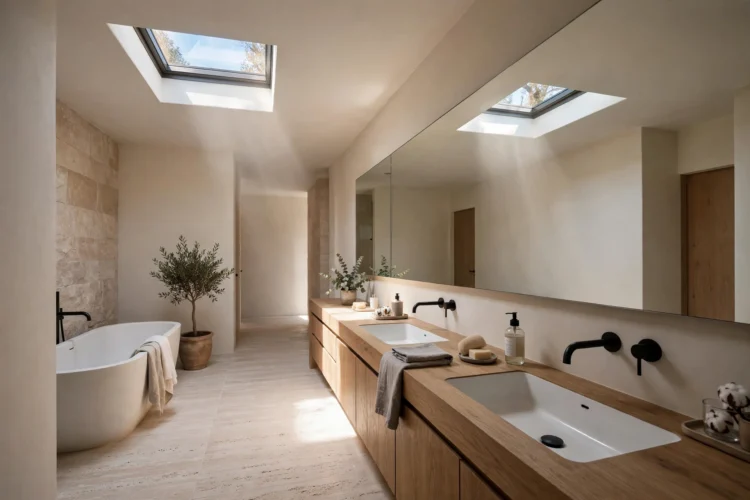
Placement decides whether skylight light helps or hinders. Over the vanity, daylight from above gives even, shadow-free light for faces, which pairs well with sconces at mirror height. Over the shower, a skylight makes the wet zone feel open and spa-like, and it gives steam a direct path out when the model vents.
Avoid placing a skylight where its light hits the mirror at a harsh angle and creates glare, and avoid centering it over the toilet by default, since that zone needs the least light. Light placement and mirror placement work together, and these bathroom mirror ideas from backlit to arched help you pair a well-lit mirror with the daylight coming from above.
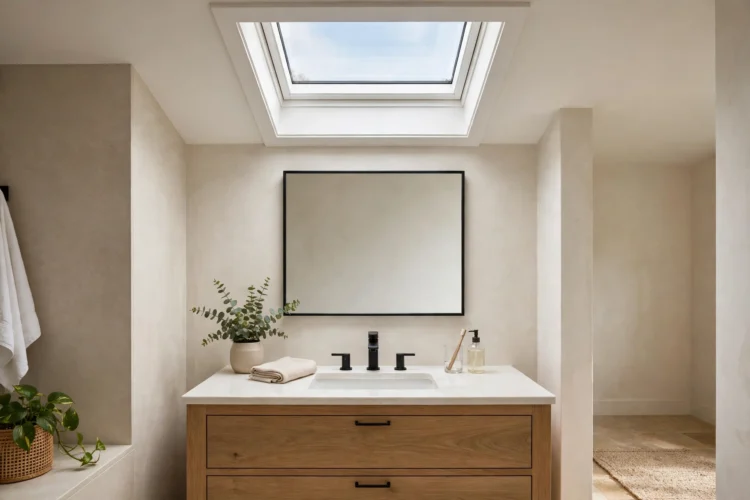
Privacy is the skylight advantage, but glass choice still matters. In a bathroom, frosted or diffused glass softens the light and hides the roof view from below, so the skylight reads as a glowing panel rather than a clear window to the sky. Diffused glass also reduces glare, which matters when the sun sits high at midday.
For a room that also needs a view of the sky, clear glass with a built-in blind gives you both options: open for stargazing, closed for soft light. Keep blinds simple and moisture-resistant, since bathroom humidity damages fabric shades fast. Either way, the overhead position means neighbors cannot see in, which is the privacy win that wall windows cannot match.
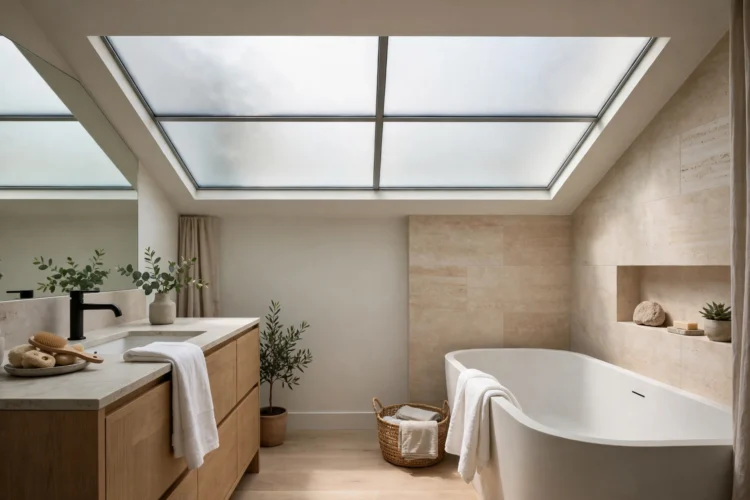
Daylight from a skylight does not replace evening light, so plan both together. Sconces beside the mirror handle face light at night, a dimmable overhead light covers general use, and the skylight covers the day. When the layers work together, the bathroom feels good at 7 in the morning and at 10 at night, not just at noon.
Use warm bulbs for evening layers so the room does not flip from soft daylight to cold artificial light after sunset. A dimmer on the overhead light lets you match the artificial level to whatever daylight remains, which keeps the room comfortable on cloudy days. For evening layer ideas, these bathroom lighting ideas for vanity glow and ambience cover sconces, dimmers, and mirror light in practical detail.

The shaft between the roof and the ceiling shapes how skylight light spreads. A straight, light-painted shaft sends light directly down, while a flared shaft spreads it wider across the ceiling. In a bathroom with a high attic, a flared shaft makes one skylight feel larger, because the light washes across more ceiling area.
Paint the shaft white or a very pale tone to bounce light rather than absorb it, and keep the shaft free of ducts or wiring that cast shadows. Ceiling details around the shaft matter too, and these bathroom ceiling ideas people always overlook show how a finished ceiling turns a skylight from a hole in the roof into a designed feature.
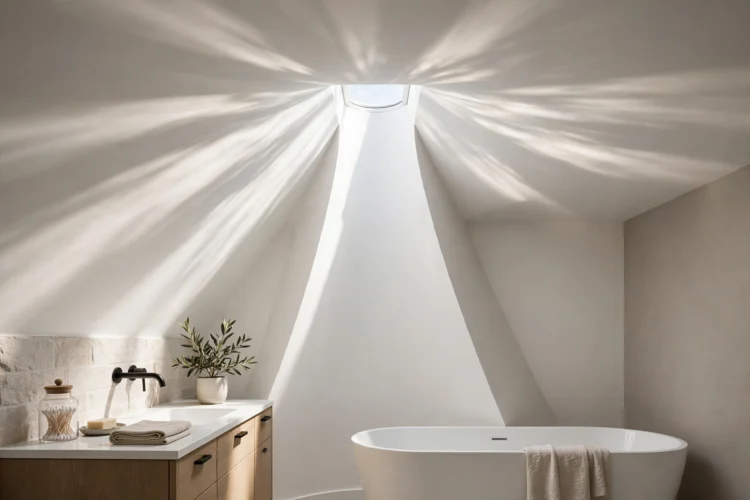
A skylight only earns its keep if it stays dry. Proper flashing, fitted to your specific roofing material, keeps rain out, and a professional install matters more here than with most bathroom projects, because a roof leak damages ceilings far beyond the bathroom. Ask the installer about the flashing kit for your roof type, and check that the warranty covers both the unit and the flashing.
Maintenance is simple but worth scheduling: clear leaves from the roof dome, check the seal once a year, and wipe the interior diffuser so dust does not dim the light. In a small bathroom, a skylight can change the whole feel of the room, and these small bathroom layout ideas that make every inch count help you place that new daylight where a compact plan needs it most. A well-sealed skylight gives you daylight and privacy for years, with little more care than a regular window.