Physical Address
304 North Cardinal St.
Dorchester Center, MA 02124
Physical Address
304 North Cardinal St.
Dorchester Center, MA 02124

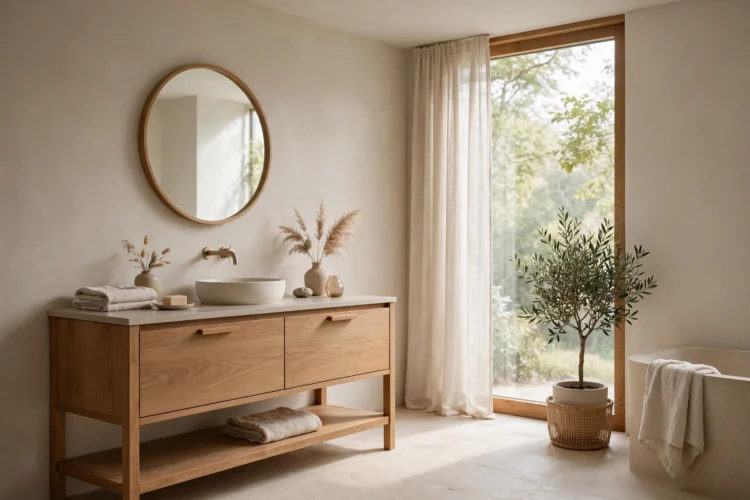
Japandi style brings Japanese restraint and Scandinavian warmth into the bathroom: warm wood, soft neutrals, and surfaces with nothing extra on them. These 9 ideas show how to get the calm without a full renovation.
Japandi bathroom ideas start from a simple promise: a bathroom that calms you down instead of adding noise to the morning. This japandi bathroom design blends Japanese minimalism with Scandinavian warmth, so rooms feel clean but never cold. Expect warm wood, soft neutrals, matte finishes, and surfaces kept clear on purpose. Nothing in a Japandi bath is there by accident, and that restraint is exactly what makes the room feel restful. These 9 ideas show how to bring that calm into a real bathroom, whether you are renovating or just editing what you already own.
Warm wood is the heart of Japandi design. A teak vanity, a cedar bath mat, or oak open shelving adds the warmth that pure minimalism often lacks. The wood should look natural rather than glossy, with visible grain and a matte or oiled finish. In a small bath, one wood tone is enough. That restraint is what makes a warm wood bathroom feel calm rather than busy. Mixing too many wood species breaks the calm, so pick one dominant wood and repeat it in two or three spots.
Wood in a bathroom needs protection from constant water. Choose teak or properly sealed oak for items near the sink, and keep wooden accessories out of direct shower spray. A wooden stool beside the tub works as a seat and a towel perch, and a wood framed mirror ties the vanity zone together. If a full wood vanity is out of reach, a wood tray on the counter or wooden shelving gives you the same warmth for far less.
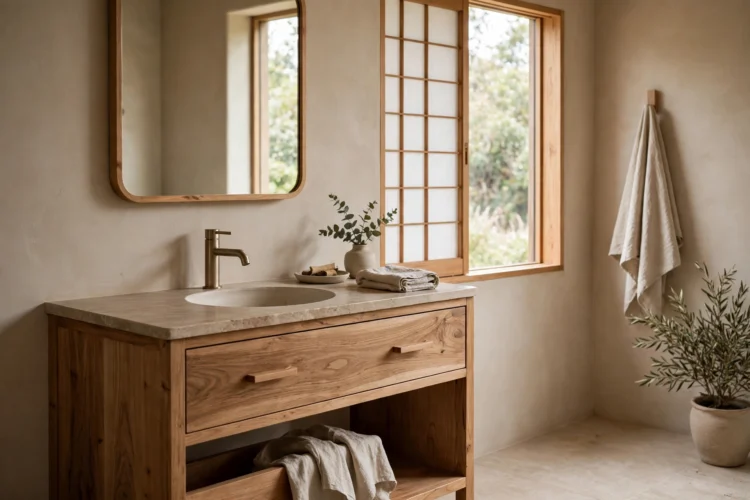
Japandi palettes favor warm whites, soft beige, pale gray, and muted stone tones over bright clinical white. These colors make the room feel soft in morning light and restful in the evening. Paint walls in a warm off-white, choose tiles in a sandy or greige tone, and let the wood provide the contrast. The result reads calm rather than blank, which is the difference between Japandi and a plain white box.
Layer neutrals instead of using one flat color. A slightly darker tile on the floor grounds the room, while lighter walls lift it. Textiles add another layer: cream towels, a natural linen shower curtain, and a stone colored bath mat. For paint inspiration that suits this palette, see these bathroom paint color ideas for fresh, clean tones that pair well with wood and stone.
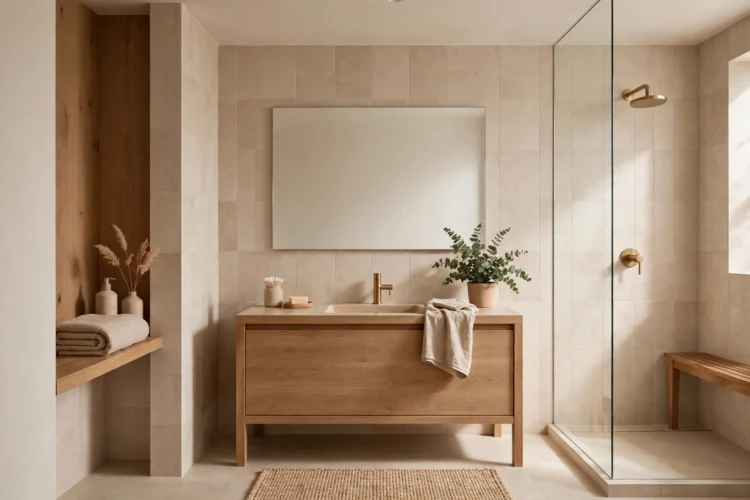
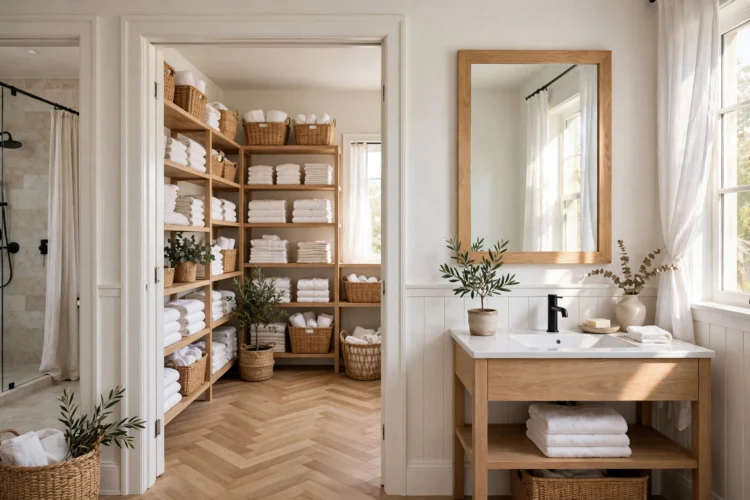
A Japandi bathroom keeps counters nearly empty. That means closed storage for everything except one or two beautiful objects, such as a ceramic soap dish or a small vase with a single stem. A wall hung vanity with drawers hides toiletries, and a mirrored cabinet stores daily items at eye level without adding visual weight. The rule is simple: if you use it daily, it gets a home behind a door.
Editing is an ongoing habit, not a one-time purge. Once a month, remove anything that crept onto the counter and return it to its spot. Keep a small tray for the few items that must stay out, such as hand soap and a candle, so they read as a group rather than clutter. For more ways to hide everyday items, these bathroom storage ideas show cabinets and shelves that keep a bath looking calm.
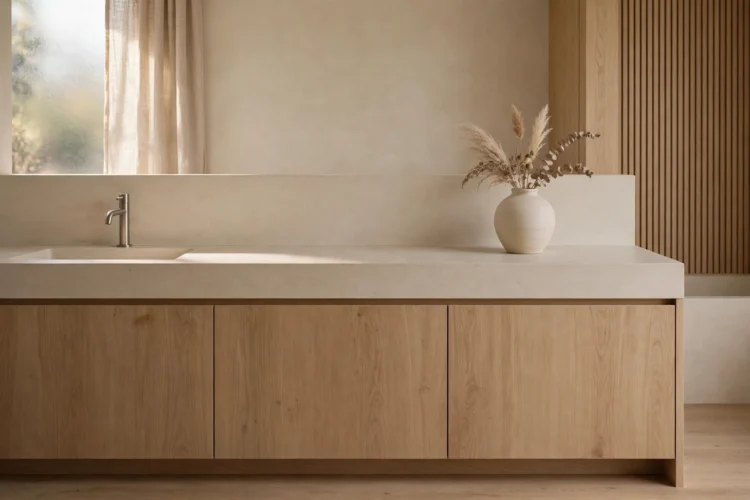
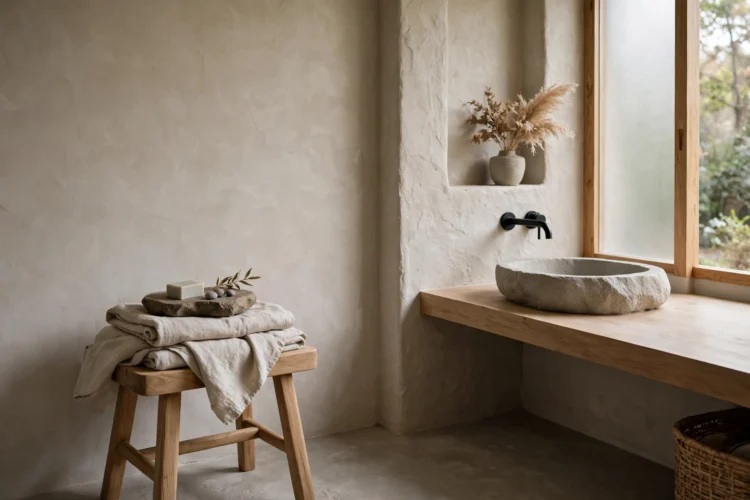
Japandi style leans on honest materials. Stone sinks, ceramic basins, linen towels, and cotton rugs feel good to touch and age gracefully. A pebble textured tile or a matte stone-look floor adds quiet variation without pattern noise. The goal is texture you notice with your hands more than your eyes, which keeps the room interesting while it stays visually quiet.
Mix no more than three natural materials in one room. Wood plus stone plus linen is a classic Japandi trio that never feels busy. Avoid shiny chrome overload by choosing brushed or matte finishes for faucets and hardware. A handmade ceramic soap dispenser or a stone tray adds the slight imperfection that makes minimalism feel human rather than showroom stiff.
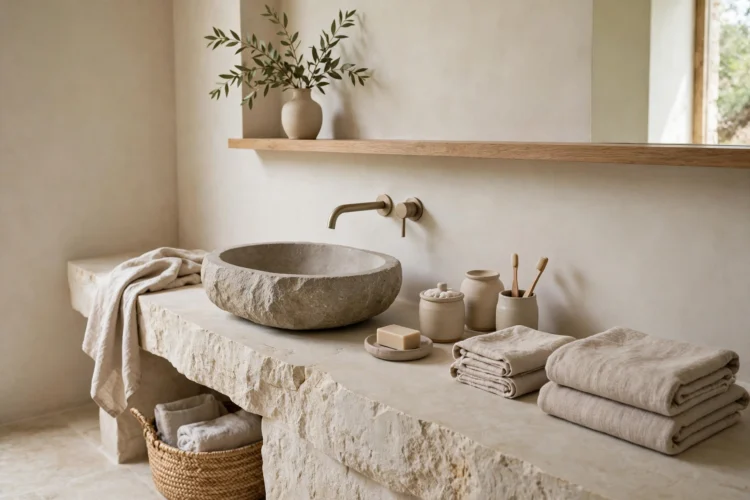
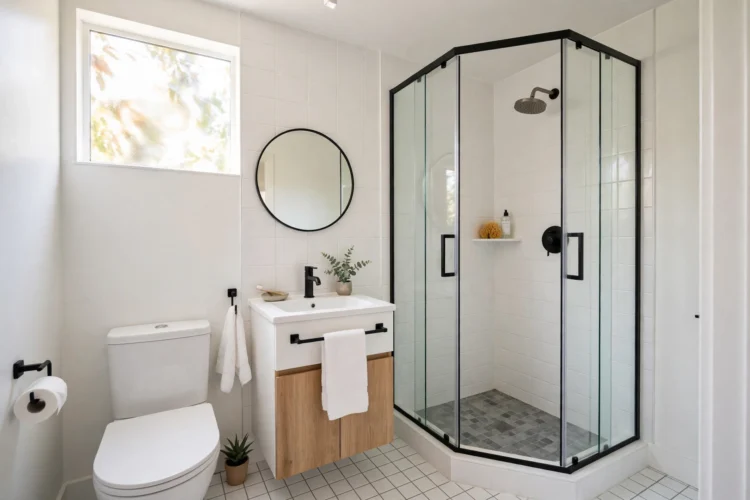
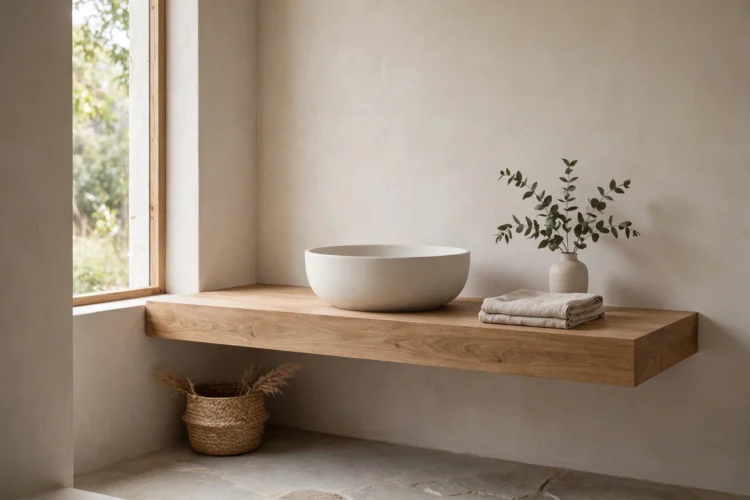
Japandi vanities sit low and simple. A floating wood vanity with a clean front, a vessel basin in matte ceramic, and a single wall mounted faucet create a quiet focal point. Open space beneath a floating vanity keeps the floor visible, which helps a small bath feel larger and makes cleaning easier. Skip ornate handles in favor of simple wood pulls or push-to-open drawers.
Pair the vanity with a round or arched mirror rather than a sharp rectangle to soften the lines. A backlit mirror adds gentle light without extra fixtures, and its glow suits evening routines. Keep the vanity zone to one mirror, one light source, and one small decor item, and the whole wall will feel composed instead of crowded.
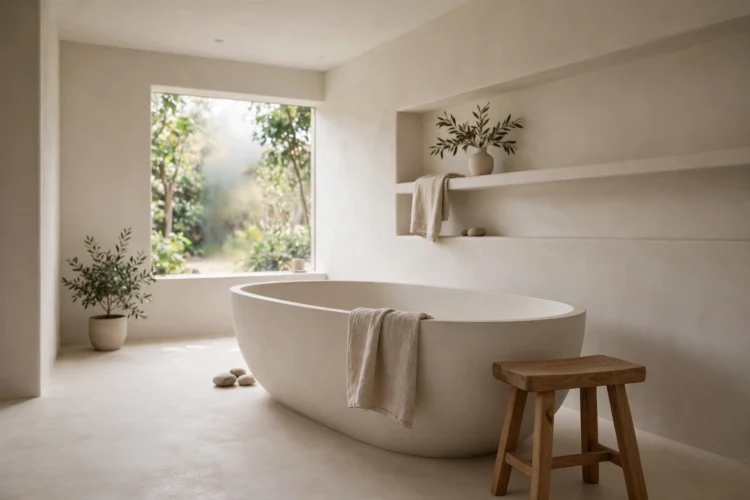
Nothing says calm like a freestanding tub, and Japandi baths often center the room around one. An oval tub in matte white or stone resin suits the style better than a fussy clawfoot, and its simple shape leaves the eye free to rest. If a full tub swap is not possible, a deep soaking tub insert or a wooden bath caddy can bring some of the same slow ritual to an existing tub.
Place a wooden stool or a small teak bench beside the tub for a towel and a book, and keep the surround free of bottles. A single plant that tolerates humidity softens the corner without adding clutter. For tub styles that fit a spa-like mood, browse these freestanding tub ideas for shapes and placements that suit calm, uncluttered bathrooms.
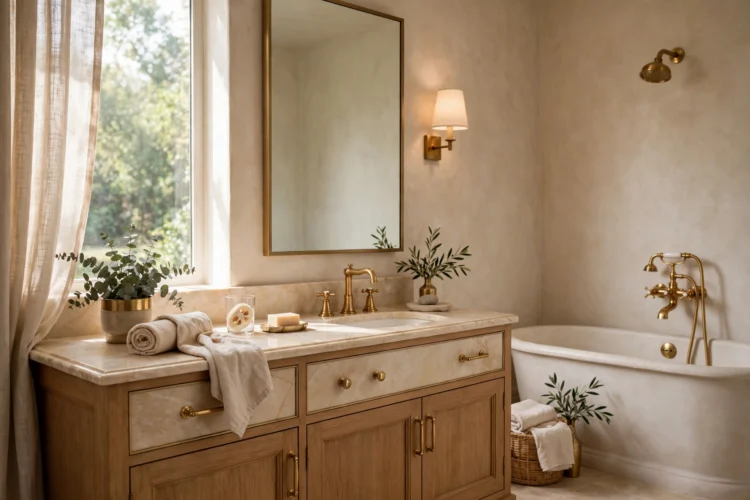
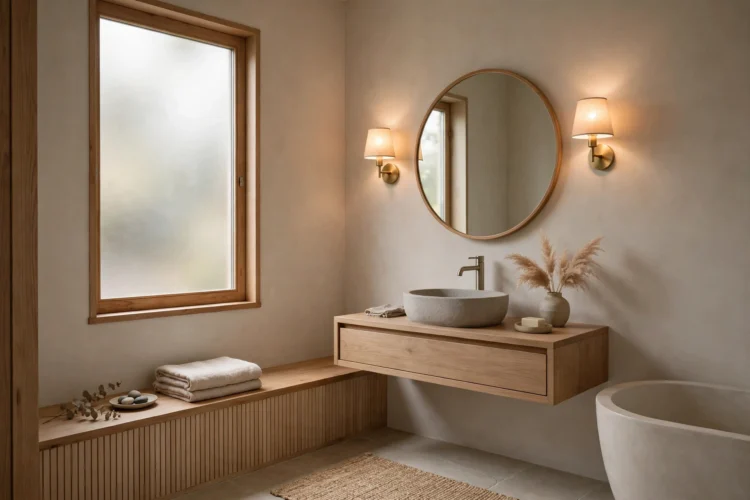
Lighting makes or breaks a Japandi bathroom. Harsh overhead light kills the mood, so layer gentle sources instead: a dimmable ceiling light, warm sconces beside the mirror, and perhaps a small lantern style light for evening baths. Warm white bulbs flatter wood tones and skin, while dimmers let one room serve both brisk mornings and slow evenings.
Natural light deserves a clear path. Sheer linen or frosted glass on the window keeps privacy while letting daylight in, and a skylight over the tub turns an ordinary soak into a quiet ritual. If your bath has no window, a backlit mirror and warm LED strips under a floating vanity mimic daylight without glare. More options live in these bathroom lighting ideas for vanity glow and ambient warmth.
A single plant does more for a Japandi bathroom than a shelf of decor. Choose one or two humidity loving plants, such as pothos, ferns, or a small bamboo, and give them a simple ceramic or stone pot. Trailing greenery softens a high shelf, while a floor plant fills an empty corner without furniture. The plant should look like it belongs, not like decoration added at the last minute.
Keep plant care simple. Pick species that tolerate low light and damp air, water them on a schedule, and wipe leaves during your regular clean. If real plants struggle in a windowless bath, a single high quality faux stem in a ceramic vase keeps the look without the upkeep. Either way, one strong plant beats five small ones crowded on a windowsill.
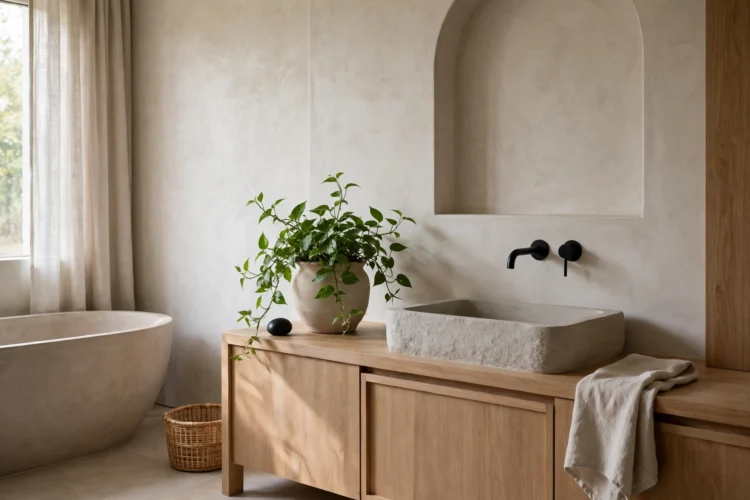
The final Japandi test is simple: does each object earn its place? A stone soap dish, a folded linen towel, a wooden stool, and one piece of art are enough for most baths. Choose decor in the same neutral palette so nothing shouts, and favor objects with a use as well as a look. A beautiful towel is decor. A pretty basket that holds washcloths is decor. A purely ornamental object needs a stronger reason to stay.
Minimalist bathroom decor also means honest maintenance. Wipe wood dry after splashes, reseal stone surfaces as needed, and replace worn textiles before they fray. A Japandi bath stays calm because someone keeps it that way, not because the style does the work alone. Start with one change, such as clearing the counter or swapping in wood accessories, and the rest of the room will follow. For the full spa mood that pairs with this style, see these spa-like bathroom ideas for calm layouts and soothing details.