Physical Address
304 North Cardinal St.
Dorchester Center, MA 02124
Physical Address
304 North Cardinal St.
Dorchester Center, MA 02124

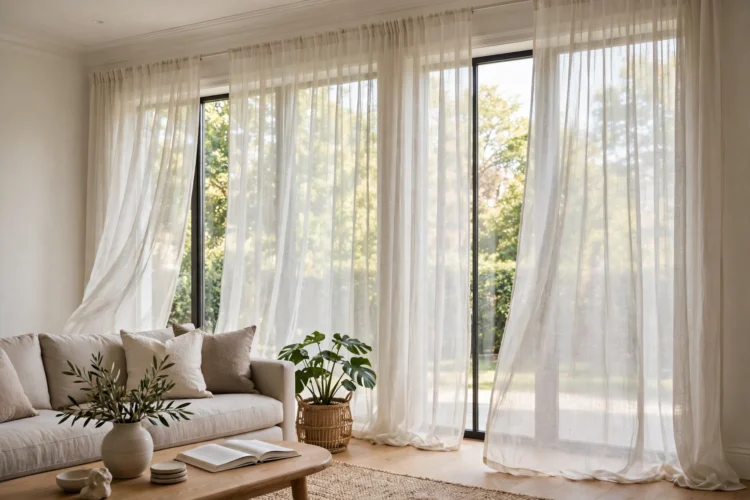
Hanging curtains higher and wider than the window frame is the cheapest way to make a room feel taller and brighter. These eleven ideas cover rod placement, fabric weight, length, and layering.
Living room curtain ideas matter more than most people expect, because curtains control two things at once: how tall the room feels and how much light gets in. A rod hung at the wrong height can shrink a generous window, while the right fabric can turn harsh afternoon sun into a soft glow. The good news is that most curtain mistakes come from placement, not price. Move the rod, widen the span, and match the fabric to the light you actually get, and even a modest panel can change the whole room.
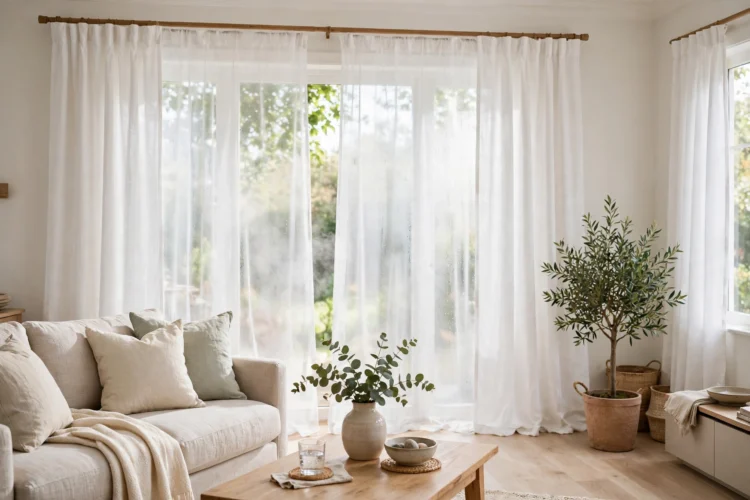
The single most effective curtain move is hanging the rod close to the ceiling and extending it well past the window frame on both sides. Hanging curtains high and wide draws the eye upward, which makes the wall read taller, and it lets the panels stack over wall instead of over glass, so the full window stays visible when curtains are open. A practical rule: mount the rod 10 to 15 centimeters below the ceiling, or at least 15 centimeters above the frame, and extend it 15 to 25 centimeters beyond each side of the frame. This one move costs nothing beyond a longer rod and a few extra centimeters of fabric, yet it changes how the whole wall reads. For narrow windows, extend further; the wall space the curtain covers becomes part of the window visually, and the room gains width it does not actually have.
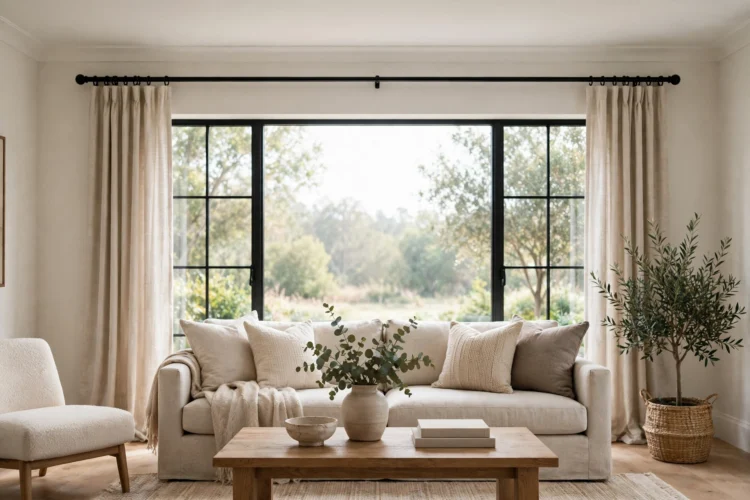
Small windows benefit most from the high-and-wide trick, because they need the illusion more. Use a single wide panel per side rather than skimpy narrow ones, and choose a rod that runs nearly wall to wall so the window reads as part of a larger composition. Light fabrics help here: a linen-look panel in a color close to the wall color blurs the boundary between window and wall, which stops the eye from measuring the window at all. Avoid heavy patterns on small windows, since a bold print shrinks the glass visually by drawing attention to the fabric edge. If the window sits above a sofa or radiator, floor-length panels still work; let them fall beside the furniture, not behind it, so the line stays clean.
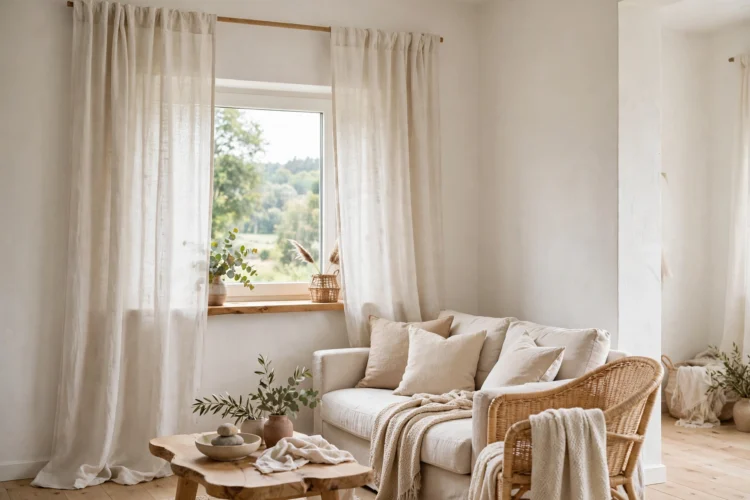
Fabric weight is a light filter, and choosing it is the most practical curtain decision you will make. Sheers soften direct sun while keeping the room bright, making them right for east-facing rooms that get strong morning light. Medium-weight linen or cotton blends give privacy while still passing daylight, which suits street-facing living rooms. Heavy drapes block glare and insulate, which helps west-facing rooms that catch hot afternoon sun. Curtain fabric weights also affect how the room feels at night: a sheer alone leaves the room exposed after dark, so pair sheers with a heavier layer if the window faces neighbors. The same fabric logic behind bedroom curtain ideas applies in the living room, since light direction, not room type, decides what the fabric must do.
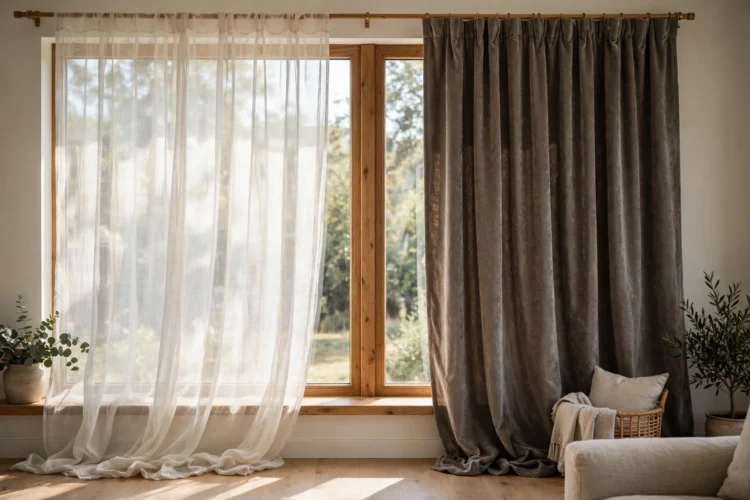
Curtain length rules are simple once you pick one finish and commit to it. Floor-length panels that just kiss the floor look tailored and suit most living rooms. A slight break, where the fabric pools a few centimeters on the floor, looks relaxed and works in rooms with soft furnishings and thick rugs. Sill-length curtains belong in kitchens and above radiators, not in living rooms, where they cut the wall in half visually. Measure from the rod, not from the top of the frame, and measure twice: rod placement varies, and a panel that is five centimeters short looks like a mistake, while one that is five centimeters long just looks relaxed. If floors are uneven, hem to the longest point and let the shorter side float slightly.

Sheer curtain layering gives you two rooms in one: bright and open by day, private and warm by night. Mount a slim inner rod or a double rod, hang the sheer closest to the glass, and hang the heavier panel in front. During the day, draw the heavy panels back and let the sheer filter the sun. In the evening, close the heavy layer for privacy and insulation. This combination also solves the television glare problem, since you can close the sheer alone to cut glare without darkening the room. Lighting works the same way in layers: a room with one overhead light feels flat, while layered lamps create depth, and the same layering instinct in bedroom lighting ideas shows how multiple light sources at different heights change a space after dark.
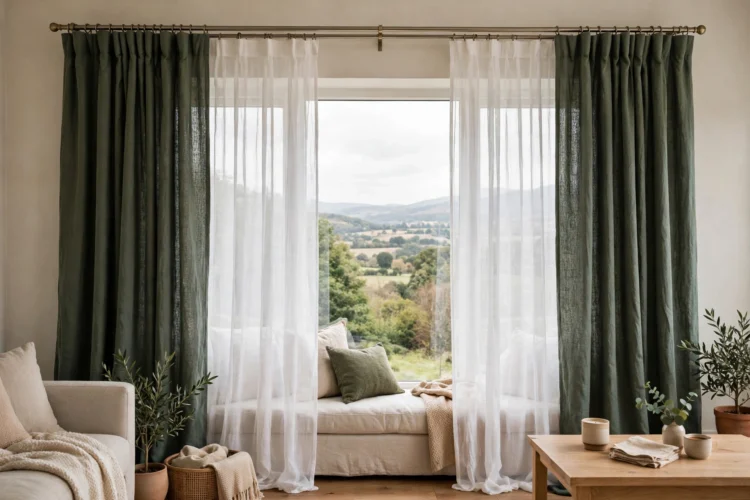
Curtain color decides whether windows disappear or become the feature. Panels close to the wall color recede, which makes the room feel larger and calmer, and this is the safest choice for small or busy rooms. Panels in a contrasting color frame the window like art, which works when the view deserves attention or the room needs one strong vertical accent. If the room already has a strong sofa color, echo it faintly in the curtain rather than matching it exactly; a tone lighter or darker reads as intentional, while an exact match reads as a set. A neutral bedroom palette demonstrates the receding approach well, and the same restraint keeps a living room calm when the furniture already carries pattern and color.
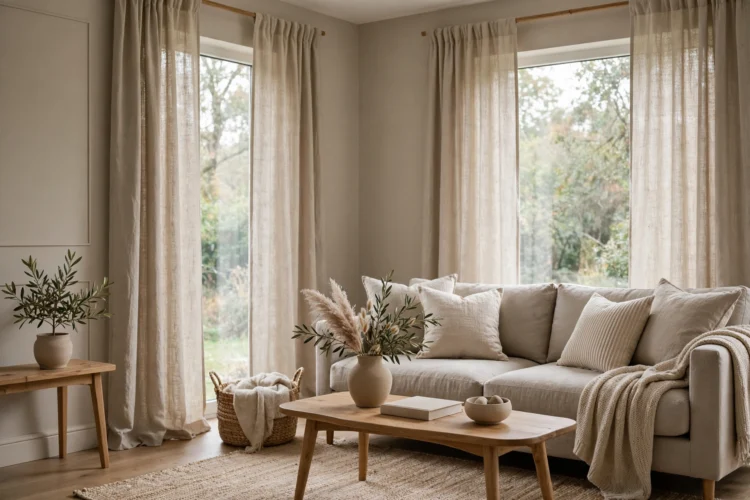
Three hanging mistakes undo good curtains. First, a rod mounted on the frame itself, which shrinks the window and blocks light; raise it and widen it. Second, panels too narrow to cover the window when closed, which leaves a gap of light at the center; each panel should be at least one and a half times the width it must cover, so the fabric still folds when drawn. Third, a rod that sags, which happens when spans exceed about two meters without a center support; add a bracket in the middle. The same sizing discipline applies on the floor: a rug that is too small strands furniture the way a narrow curtain strands a window, and the logic in bedroom rug placement mirrors the curtain rule of sizing generously rather than exactly.
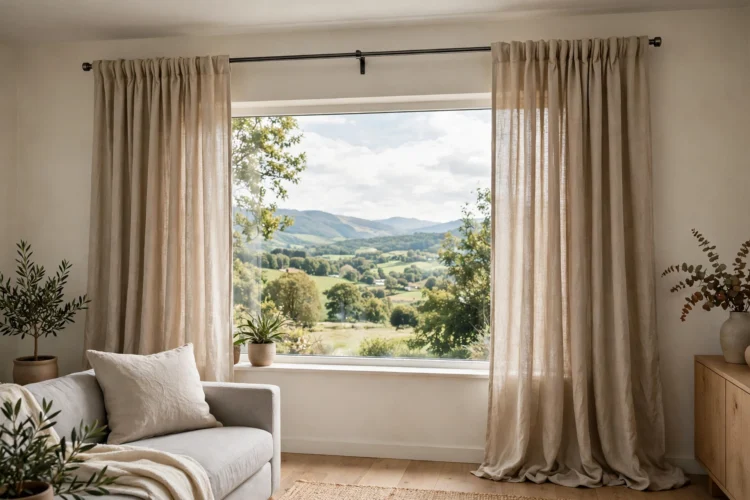
Curtains collect dust faster than any other soft furnishing in the room, and dusty fabric dulls light. Vacuum panels monthly with an upholstery attachment, working top to bottom so dust falls away from cleaned fabric. Wash or dry-clean according to the label at least twice a year, and more often in homes with pets or open windows. Clean panels also hang better, since dust adds weight that drags hems unevenly over time. Check rings and hooks seasonally: a stuck ring tears fabric, and a bent hook drops a panel. When curtains start to fade on the sun side, rotate panels left to right so fading evens out, or add a sheer layer to filter the harshest sun. Well-kept curtains last years longer, and they keep doing the quiet work of making the room feel taller and brighter.
Start with the rod, not the fabric. Raise it, widen it, then choose weight and color for the light your room actually gets. The window will look bigger, the ceiling will look higher, and the light will finally behave. If one window still looks short after the rod moves, check the panel width next, since narrow panels undo the height gain, and add a second layer only after the basics sit right.