Physical Address
304 North Cardinal St.
Dorchester Center, MA 02124
Physical Address
304 North Cardinal St.
Dorchester Center, MA 02124

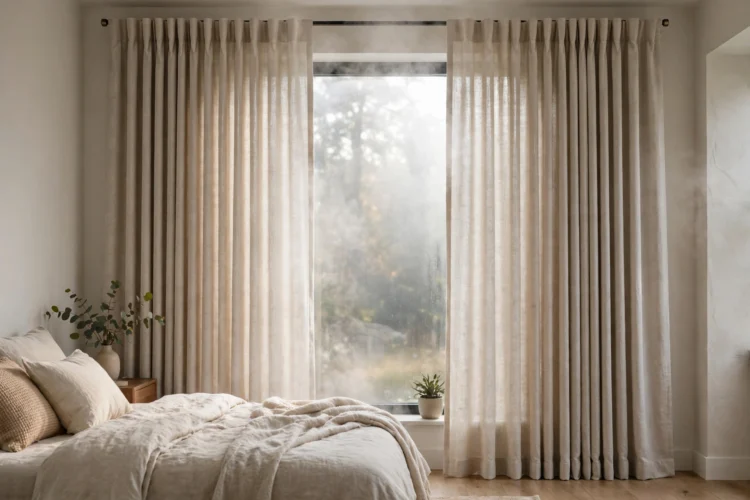
Curtains do two jobs at once: they manage light and they finish the look of a room. These 11 ideas help you get both right without blocking the window you paid for.
Bedroom curtain ideas should start with how much light you want at 7 in the morning, not with fabric color. A room that faces east needs a different setup than a north-facing room, and a light sleeper needs more coverage than someone who wakes with the sun.
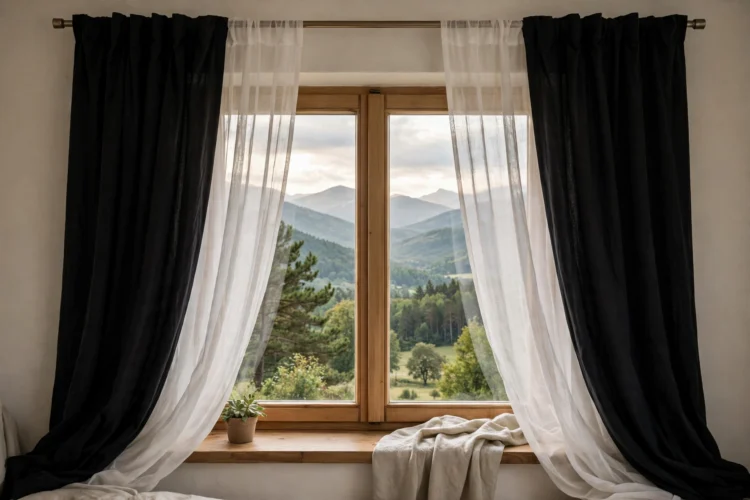
Sheers soften daylight and keep privacy during the day, while blackout panels on top block morning sun and streetlights at night. Hang both layers on a double rod so you can use either layer alone. This combination suits shift workers and light sleepers best, and it works with nearly any decor because the sheer layer stays neutral.
If you fall for a patterned cotton or linen, you do not have to give up light control. Sew or clip a blackout lining behind it and you keep the look with the darkness you need. Lining also protects the face fabric from sun fading, which matters on south-facing windows.
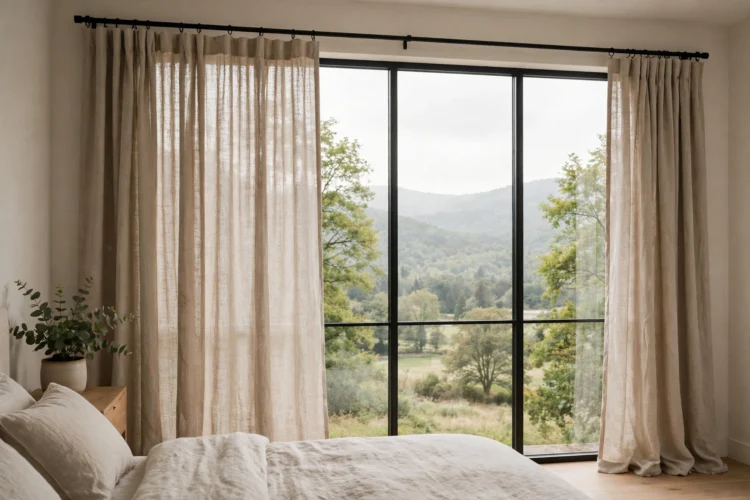
Curtains hung just above the window frame make the window look small. Moving the rod up and out changes the proportions of the whole wall.
A rod mounted 4 to 6 inches below the ceiling draws the eye up and makes the ceiling feel taller. The curtain then covers the wall above the window, which hides an odd gap and gives the room a finished edge. This trick works even in rooms with standard 8-foot ceilings.
Extending the rod 8 to 12 inches past each side of the frame lets the panels stack off the glass when open, so you lose no daylight. When closed, the wider span makes the window look larger. Measure the full span before you buy panels so the fabric covers the rod end to end.
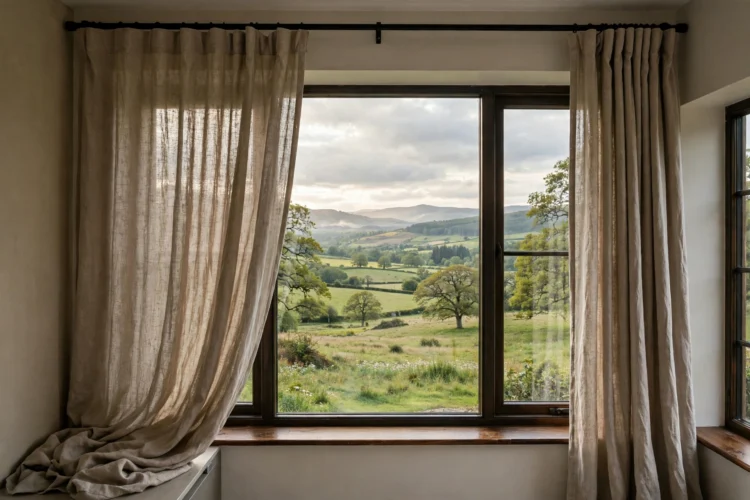
Fabric weight decides how a curtain hangs, how much light it blocks, and how often you need to clean it. Match the fabric to the window’s job.
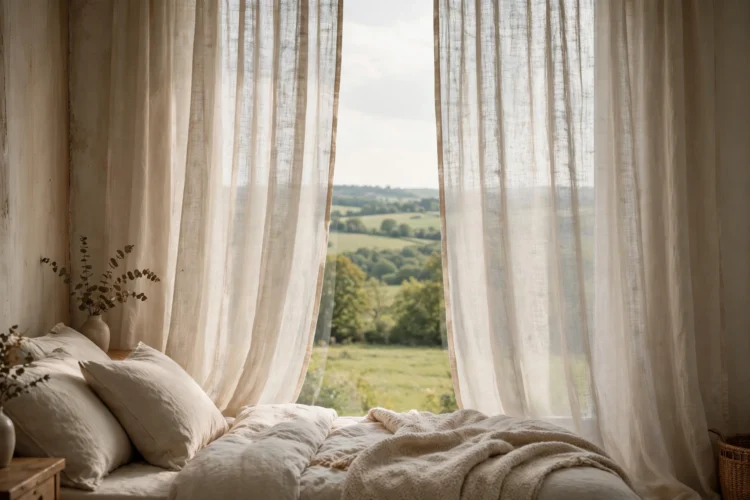
Linen and linen-look fabrics filter light into a soft glow and hang with a relaxed drape. They suit bedrooms where you want brightness without glare, and they pair well with natural wood and neutral bedding. Expect some wrinkling, which is part of the look rather than a flaw.
Velvet blocks more light than most fabrics and absorbs sound, which helps bedrooms near a busy street. The weight also helps panels hang straight without stiffening. Dust velvet with a vacuum brush attachment every few weeks to keep it fresh. For the rest of the room’s lighting plan, bedroom lighting ideas with sconces and pendants show how lamps and curtains work together after dark.
Some bedrooms need light control without the weight of full drapes, especially small rooms where heavy fabric crowds the wall.
A shade that lowers from the top lets daylight in above eye level while keeping privacy below, and a sheer curtain over it softens the whole window. This setup suits street-facing bedrooms where you want light but not a view in. Operate the shade by cord, wand, or motor depending on the window height.
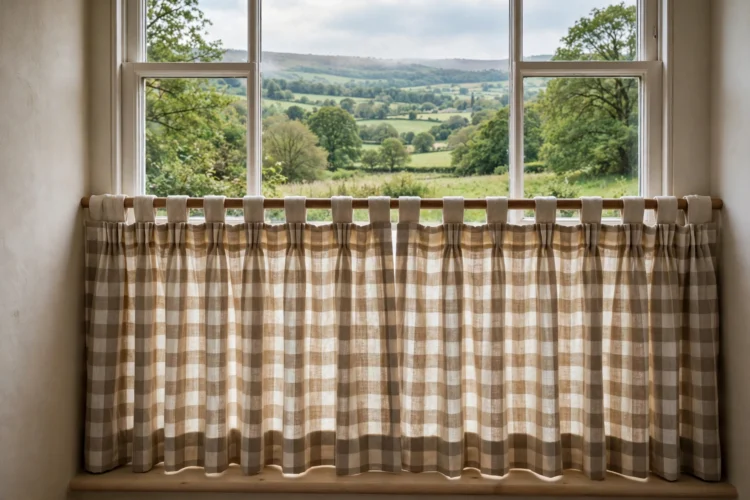
Cafe curtains cover only the lower half of the window, which keeps privacy at eye level while the top half stays open to the sky. They suit cottage and farmhouse bedrooms and work well on windows beside a bed where full panels would tangle with pillows.
Curtains cover a large area of wall, so their color sets the tone of the room more than most decor pieces. A wrong color here pulls the whole room off balance.
Panels in a shade close to the wall color blend in and make the room feel larger, which suits small bedrooms. The texture of the fabric still adds interest up close, so the wall does not look flat. This calm approach fits neutral bedroom ideas and rooms where the bedding carries the color.
In a plain room, patterned curtains can act as the main artwork and save you from buying wall pieces. Pick one color from the pattern and repeat it in a throw or cushion so the room feels tied together. Keep the rest of the walls plain so the pattern has room to breathe.

Curtains last years longer with basic care, and neglected panels fade, sag, and collect dust that worsens allergies. Check the care label before you wash anything: cotton and polyester panels usually survive a gentle machine cycle, while linen and velvet often need dry cleaning or a careful hand wash. Wash panels twice a year, and vacuum them with a brush attachment between washes to keep dust down.
Sun is the other enemy. On south-facing windows, rotate panels end to end once a year so fading spreads evenly instead of hitting one edge. Check the rod brackets and rings at the same time, since a loose bracket lets panels drag and wear unevenly. Tighten screws, replace bent rings, and steam out creases after washing so the panels fall straight again. These small jobs take under an hour and keep the window looking like it did on installation day.
Good care also protects your light control. A panel that hangs straight seals better at the edges, so blackout layers keep working instead of leaking light through gaps and wrinkles. If a panel shrinks slightly after washing, rehang it while still slightly damp so gravity pulls the length back. Keep spare rings and a small steamer in the closet so quick fixes do not wait for a shopping trip.

The last details decide whether curtains look custom or thrown up in a hurry. A few small choices make a big difference.
New panels arrive creased, and creases ruin the drape. Steam or iron them before hanging, then tie the folds loosely with fabric strips for a day so the pleats set. After that, the panels fall in even folds every time you close them. A tidy window also frames a cozy corner better, as seen in bedroom reading nook ideas where the window seat depends on clean curtain lines. Dark rooms need extra care with light gaps, and dark bedroom ideas show how to seal edges so blackout panels actually block light.
Start with the light you need, then pick fabric and hanging height. Get those three right and the style follows easily.