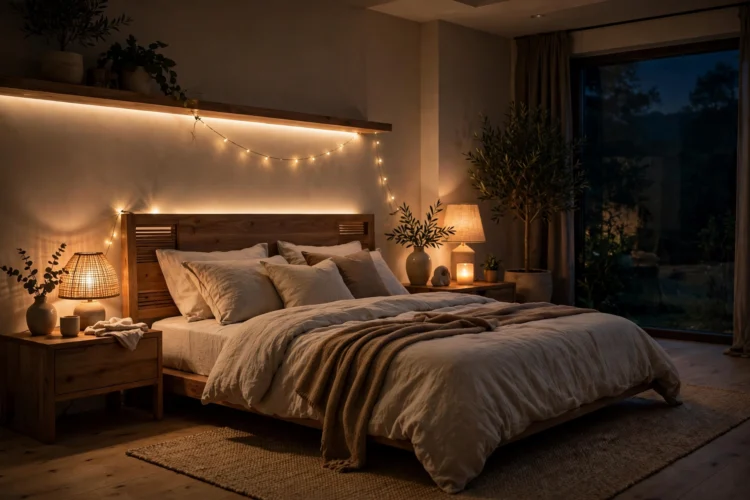
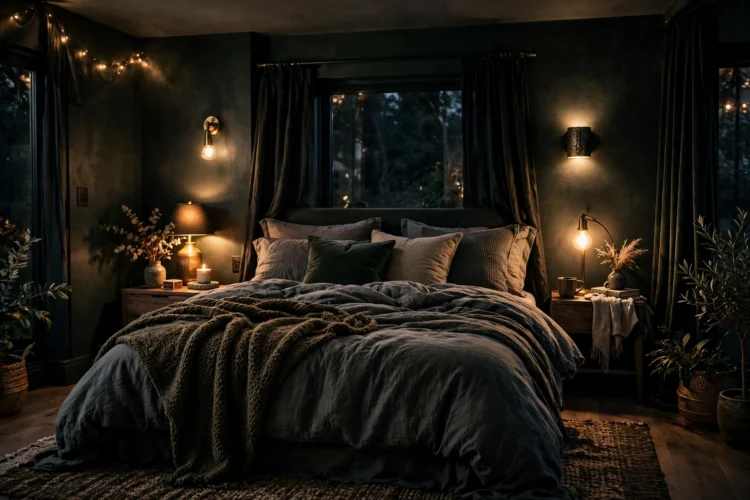
Physical Address
304 North Cardinal St.
Dorchester Center, MA 02124
Physical Address
304 North Cardinal St.
Dorchester Center, MA 02124

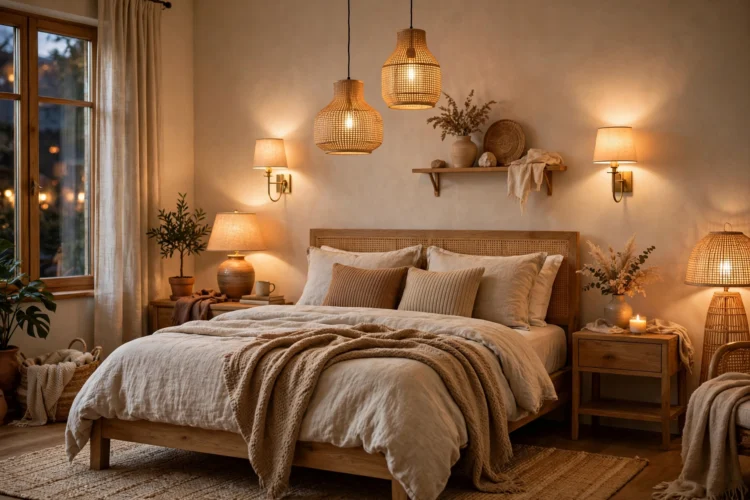
A bedroom needs more than one ceiling light. These ten bedroom lighting ideas layer sconces, pendants, lamps, and dimmers so the room works for reading, dressing, and winding down.
Bedroom lighting ideas start with a simple question: what do you actually do in the room after dark? Most bedrooms need three kinds of light, and one ceiling fixture cannot provide all three. Reading light needs to be bright and close to the book. Ambient light needs to fill the room softly without glare. A dim evening layer helps the body wind down. When you plan those layers separately, the room stops feeling either too harsh or too dark, and it starts feeling finished.
Place lights where you use them, not where the ceiling junction box happens to be. A pendant that hangs too high over a nightstand becomes decoration, while a sconce placed too far from the bed forces you to stretch for the switch. Before buying, mark positions with painter’s tape on the wall, sit in bed, and check the height with a book in hand. Small placement tests save you from rewiring regrets later.
Wall sconces beside the bed are the most practical bedroom lighting idea for small rooms, because they give you reading light without taking nightstand space. Swing-arm sconces adjust to each reader, while fixed shades with a warm bulb give a steady pool of light for one side of the bed. Mount them at shoulder height when you sit up in bed, and slightly outside the pillow edge so the light falls on the page rather than on your face.
Choose plug-in sconces if you rent or want to avoid an electrician, and hardwired versions if you are renovating and want a clean wall. A dimmer on each sconce matters more than a fancy shade, since partners often read at different times. Pair sconces with a low, warm ceiling light and the room will feel calm even when one side is still reading. This layered approach works in any size room, including the tight plans in these small bedroom layout ideas.

Pendants hanging beside the bed do the same job as sconces with a lighter visual footprint. A slim glass or metal pendant draws the eye upward and leaves the nightstand clear for a book, water glass, and phone. Hang pendants low enough to read by, usually with the bottom of the shade near head height when seated, and keep the pair at the same height so the bed looks balanced from the doorway.
Pendants suit bedrooms with higher ceilings, where a long drop looks intentional rather than lost. In low rooms, choose a short drop and a small shade so the fixture does not crowd the headboard. Cord length is easy to adjust on most pendants, so test the height before trimming. Warm bulbs keep the light cozy, and a frosted shade softens glare better than clear glass at bedside.

Table lamps remain the easiest bedroom lighting upgrade, because they need no installation and they move with you. A lamp with a linen drum shade spreads light evenly, while a smaller metal lamp gives a focused pool for reading. Match lamp height to the nightstand and bed: the bottom of the shade should sit near shoulder height when you sit up, so the bulb stays hidden and the light lands where you need it.
Do not buy a matching pair out of habit if your nightstands differ. Two lamps in the same finish family but different shapes can look collected rather than staged, especially in rooms with vintage furniture. A three-way bulb or a smart bulb adds control without rewiring, letting one lamp serve as a bright reading light and a soft night light. Lamps also anchor the bed visually, a trick that pairs well with the soft structure in these upholstered headboard ideas.
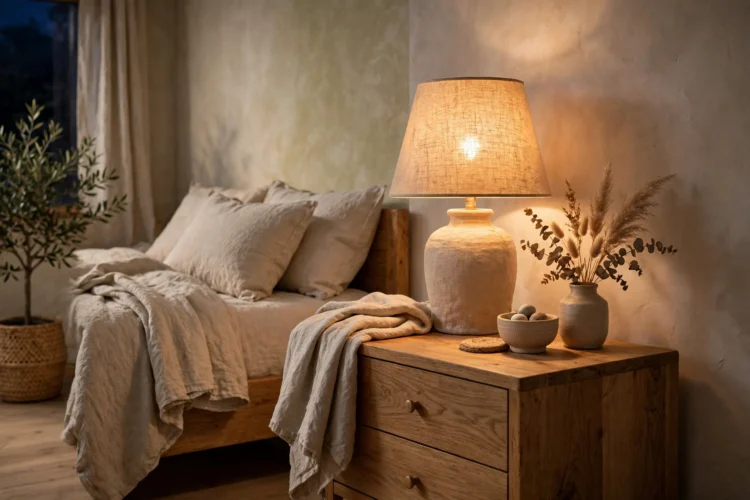
Overhead light should fill the room, not spotlight the bed. A flush mount with a frosted diffuser, a simple drum pendant, or a small chandelier with dimmable bulbs can all work, as long as the light spreads evenly and dims low. Avoid a bare bulb fixture in the center of the ceiling, since it creates harsh shadows and makes the room feel like a hallway at night.
If the room has one ceiling fixture, put it on a dimmer first before buying anything else. A dimmer turns a basic fixture into a flexible evening light, and it costs far less than a new fixture. In larger bedrooms, add a second ceiling light over a dressing area or reading chair so one fixture does not have to light the whole room. The goal is even light you can turn down, not a single bright source you avoid using.
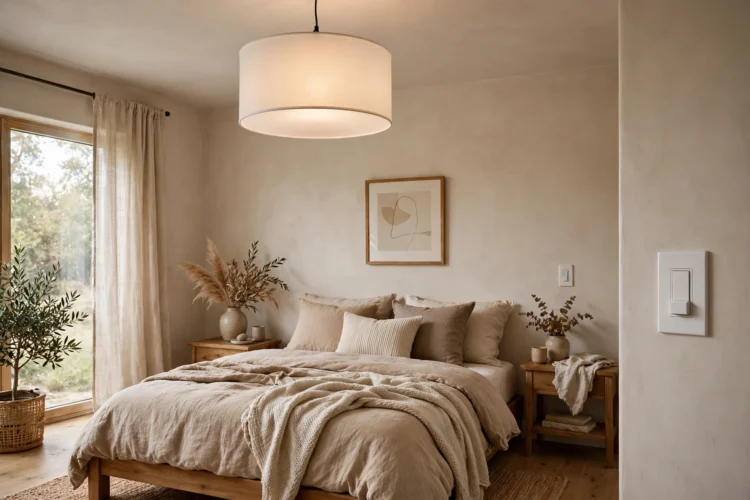
Dimmers are the cheapest way to make bedroom lighting feel intentional. A room that is bright for folding laundry at six in the evening should not stay that bright at ten at night. Dimmer switches, smart bulbs, and plug-in dimmers for lamps all let you step the light down gradually, which helps the room feel restful without leaving you in the dark.
Smart bulbs add scenes without rewiring: one scene for getting dressed, one for reading, and one low scene for winding down. Set the winding-down scene to warm light, since cool white light at night feels clinical in a bedroom. Keep controls simple, with a switch by the door and one by the bed, so you never have to cross a dark room to turn lights off. Good control placement matters as much as the fixtures themselves.
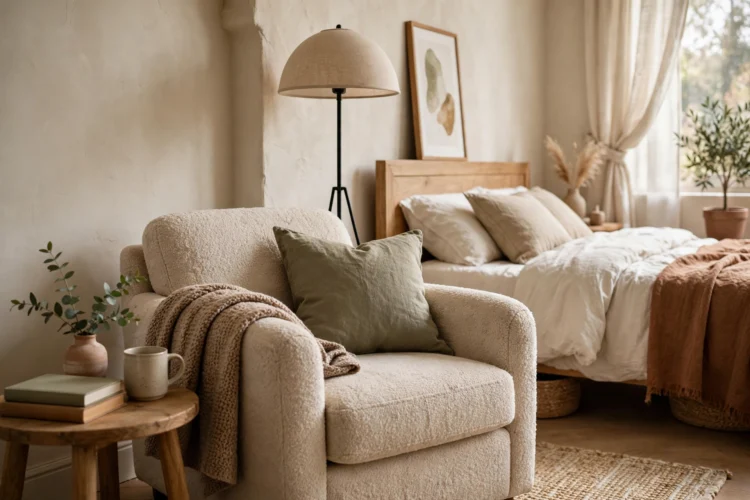
A reading chair needs its own light, separate from the bed lights. An arc lamp or a tall floor lamp placed behind the chair puts light over the shoulder without glare, while a small table lamp beside the chair works in tighter corners. Test the position with a book before committing, since a lamp placed in front of the reader creates shadows on the page.
Dressing areas need bright, even light at face height, not just overhead light. A pair of sconces flanking a mirror, or a well-placed table lamp near the dresser, prevents the shadowed face that a single ceiling light creates. If the bedroom doubles as a dressing room, treat the mirror zone as its own lighting task rather than hoping the bed lights will cover it. This is where a calm, hotel-like room comes together, the same feeling behind these guest room ideas.
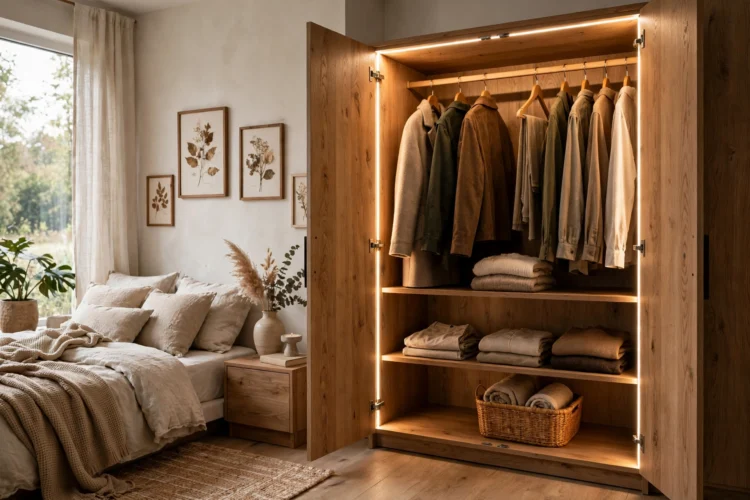
Closet lighting is often forgotten until you are choosing between two dark shirts in a dim corner. Battery-powered LED strips or puck lights inside a wardrobe make clothes readable without an electrician, and motion sensors mean the light turns on when the door opens. Place strips along the top front edge of the shelf so light falls down over hanging clothes rather than shining into your eyes.
For walk-in closets, a small ceiling fixture plus strip lighting under shelves gives even coverage. Keep the color temperature consistent with the bedroom, so the closet does not glow cold white while the room glows warm. If you are planning storage without a built-in closet, pair good wardrobe lighting with the freestanding storage in these small closet organization ideas for a system that works at night as well as in daylight.
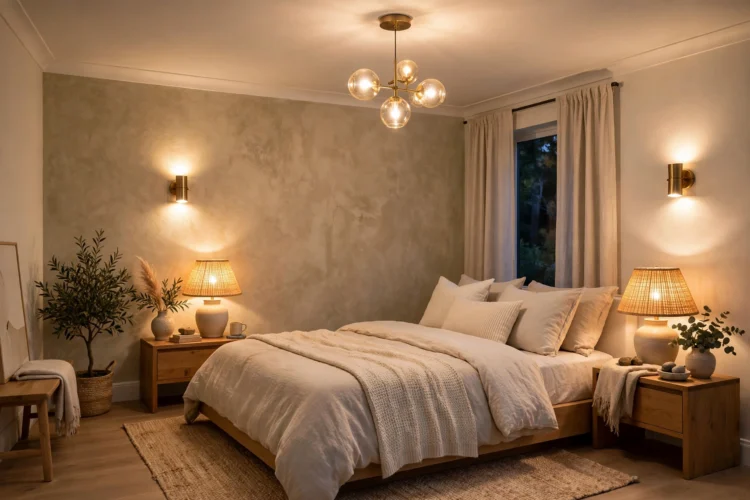
Start with the ceiling light on a dimmer, add bedside sconces or lamps for reading, and finish with one accent layer such as closet strips or a chair lamp. Three layers are enough for most bedrooms, and each layer should have its own switch or dimmer so you can use them independently. Walk through an evening in the room: getting dressed, reading, then winding down, and check that each moment has light without glare.
Finally, check bulb warmth across all fixtures. Mixing warm bedside bulbs with cool ceiling bulbs makes a room feel patched together, even when the fixtures match. Pick one warm temperature for evening layers and keep brighter, neutral light only where you dress or read. When every layer agrees, the bedroom shifts smoothly from morning bright to evening calm, which is the whole point of planning light in layers.