Physical Address
304 North Cardinal St.
Dorchester Center, MA 02124
Physical Address
304 North Cardinal St.
Dorchester Center, MA 02124

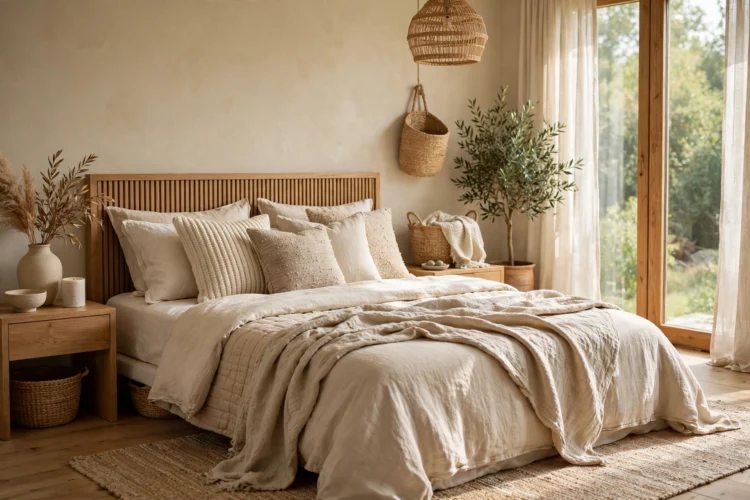
Beige does not have to mean bland. These neutral bedroom ideas use texture, layered tones, and one strong focal point to make a calm room feel interesting.
Neutral bedroom ideas get a bad reputation. People hear beige and picture a blank room with nothing to look at, but a well done neutral bedroom is the opposite of empty. It feels calm, warm, and finished, and it gives your eye places to rest instead of competing for attention. The trick is that neutral does not mean one flat color. It means a family of soft tones, mixed textures, and one clear focal point that holds the room together. This guide walks through twelve practical ways to build that kind of room, from choosing a warm neutral palette to layering bedding so the bed looks inviting every day.
The fastest way to make a neutral room interesting is to change what things feel like, not what color they are. A smooth cotton sheet, a nubby wool throw, a woven basket, and a velvet cushion show how neutral bedroom texture works in the same beige range and still look completely different from each other. That contrast is what keeps the eye moving. Start with the largest surfaces first. Choose bedding with some visible texture, such as washed linen or a quilted coverlet, then add smaller textured pieces around it. A rattan tray on the dresser or a boucle cushion on the bed adds depth without adding a new color. If your room still feels flat, count the textures in it. Most boring neutral rooms have only two, while interesting ones have four or five working together.
Texture also helps a neutral room feel warm in winter and fresh in summer. Swap a heavy knit throw for a light cotton one when the weather changes, and the whole room shifts with it. That flexibility is one reason neutral rooms age so well.
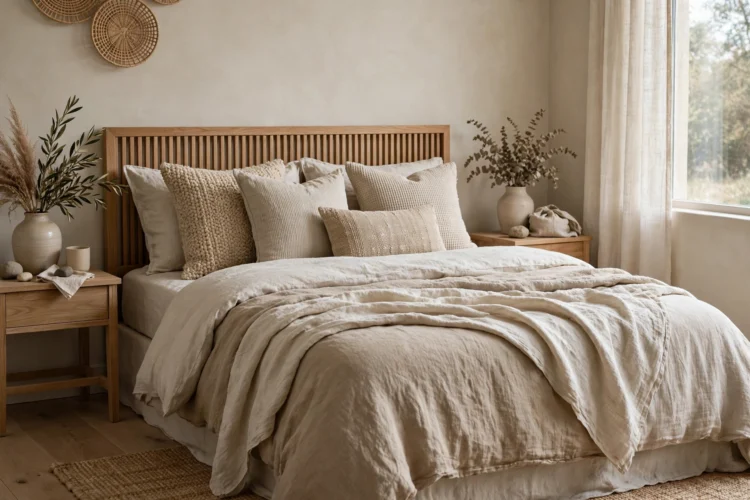
Tone-on-tone layering means using several shades of the same color family instead of one single shade. Pick a base tone you like, such as warm sand or soft greige, then add one shade lighter and one shade darker. Paint the walls the middle tone, choose bedding in the lighter tone, and use the darker tone for cushions, a throw, or curtains. The result reads as one calm color story, but it has enough variation to feel deliberate. Avoid pairing a warm beige with a cold gray in equal amounts, since the two can fight each other and make the room feel muddy. Instead, let one temperature lead and use the other only as a small accent.
Test your palette in daylight and at night before you commit. Paint swatches on the wall and live with them for a few days, since artificial light can pull a neutral warmer or cooler than it looks in the store.
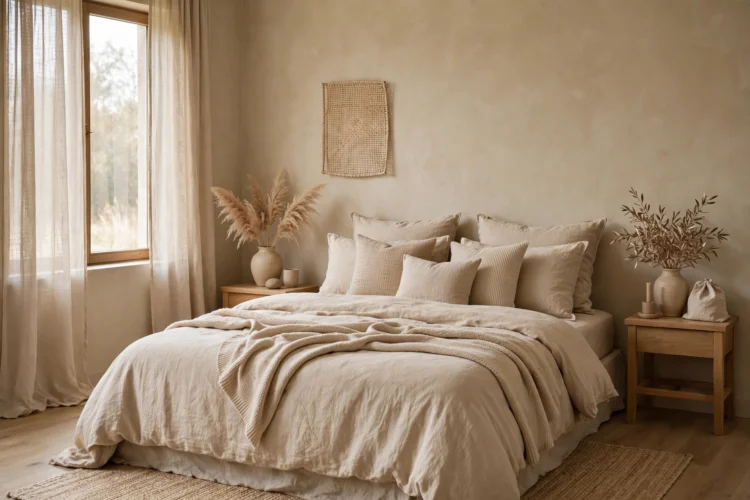
Every calm room needs one place for the eye to land. In most bedrooms that spot is the bed, and the headboard does most of the work. A tall upholstered headboard, a wood panel wall, or a large piece of art above the bed can serve as the beige bedroom focal point that anchors the whole room. Choose just one of these and keep the rest of the room quieter. If the headboard is bold, keep the bedding simple. If the art is large and graphic, keep the wall color soft. A room with three competing focal points feels busy, while a room with one feels settled. If you want ideas for the bed itself, these upholstered headboard ideas show how a soft statement headboard can carry a neutral scheme.
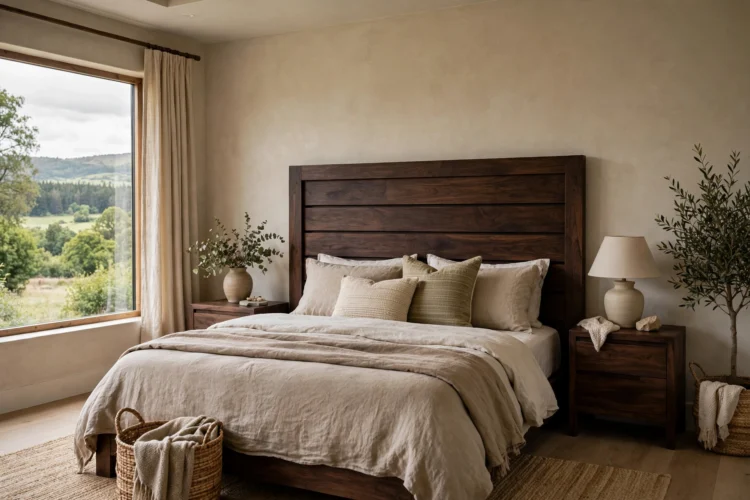
A focal point does not have to be expensive. A dark wood headboard, a woven wall hanging, or a pair of matching lamps can all do the job if they are large enough to read from the doorway.
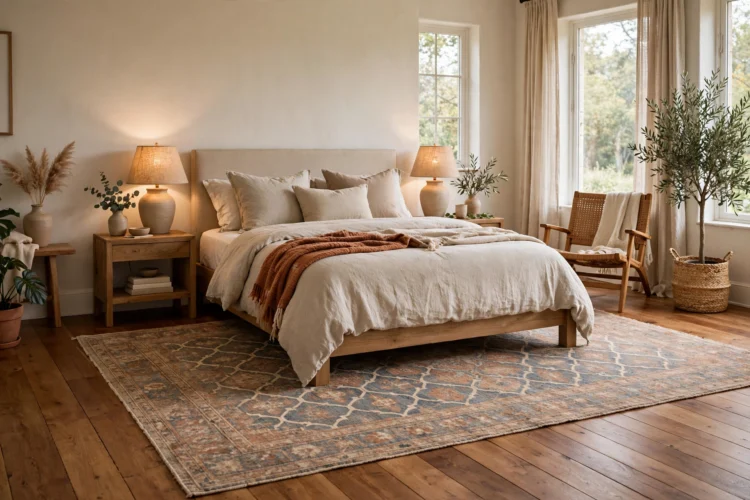
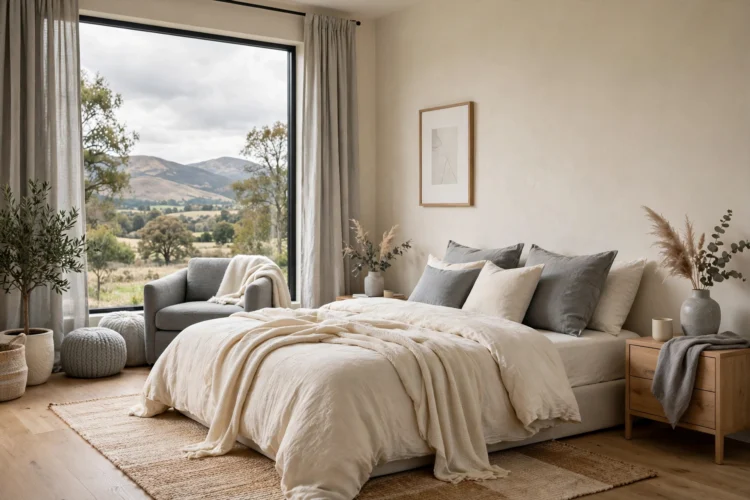
A warm neutral palette leans toward cream, camel, and terracotta undertones, while a cool one leans toward gray, stone, and pale blue gray. Most rooms look best when one side leads by about seventy percent and the other fills the remaining thirty percent. For example, warm cream walls and oak furniture can take a cool gray throw and a stone colored cushion without losing their warmth. The small cool notes keep the room from looking yellow or dated. The mistake is splitting the room evenly, which makes it look undecided. Pick your lead temperature, then add the other in cushions, art, or a rug that you can swap easily if it does not work.
Natural light changes this balance through the day. A north facing room may need warmer tones to feel cozy, while a sunny room can handle cooler grays without feeling cold.
Bedding is where a neutral bedroom either comes alive or falls flat. Start with sheets in a light neutral, add a duvet or quilt in a slightly deeper tone, then fold a throw across the foot of the bed. Finish with cushions in at least two textures, such as linen and knit, rather than two shades of the same smooth fabric. The layers should look touchable, not staged. A bed that looks too perfect feels like a showroom, while a bed with a casually folded throw invites you to climb in. For more layering combinations, these bedding layering ideas show how to build a cozy, finished bed step by step.
Keep the number of cushions realistic. Four to six on a queen bed is plenty, and fewer is better if you hate clearing the bed every night. The goal is a bed you actually enjoy making in the morning.

Pattern is allowed in a neutral room, but scale and contrast matter. Choose patterns in the same tonal range as the rest of the room, such as a cream stripe on a beige background or a soft gray geometric print on white. Keep large patterns to one item, like a rug or a curtain, and use smaller patterns on cushions or a throw. If every piece has a different pattern, the room turns busy. If nothing has a pattern, it turns flat. One or two quiet patterns give the eye something to follow without shouting. Stripes, small checks, and simple botanical prints all work well because they read as texture from across the room.
When in doubt, step back to the doorway and squint. If the pattern still reads clearly from there, it may be too strong for a calm neutral scheme, and a softer version will serve you better.

When color stays quiet, materials do the talking. Wood adds warmth, metal adds a clean edge, and stone adds weight. A bedroom that mixes all three feels collected rather than decorated from a single catalog page. Try an oak nightstand, black metal lamp bases, and a stone or ceramic vase on the dresser. The contrast between rough wood grain and smooth metal keeps a neutral room from feeling soft all over. This material mix also connects the bedroom to the rest of the house. A similar approach to choosing finishes appears in these master bedroom ideas for a calm retreat, where natural materials carry much of the warmth.
Do not overdo the metal. One or two metal finishes are enough, and mixing too many can make the room feel like a hardware display. Pick one dominant metal and repeat it in small places.
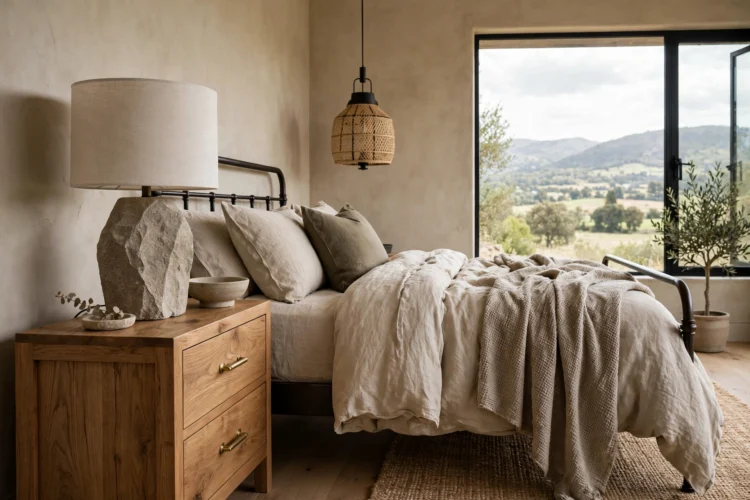
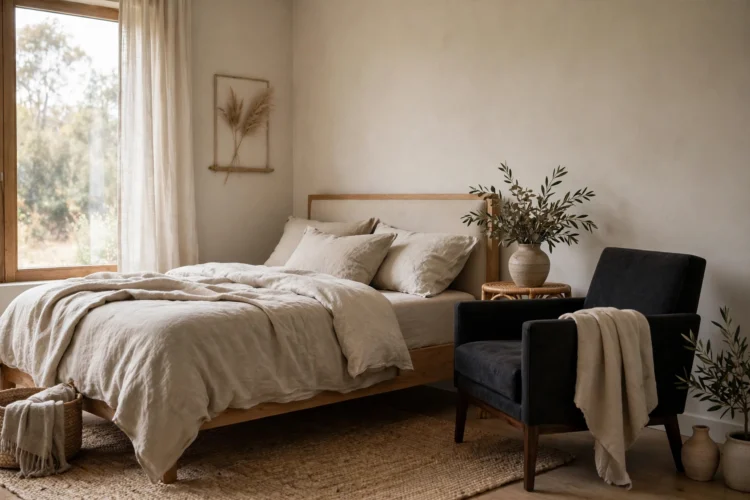
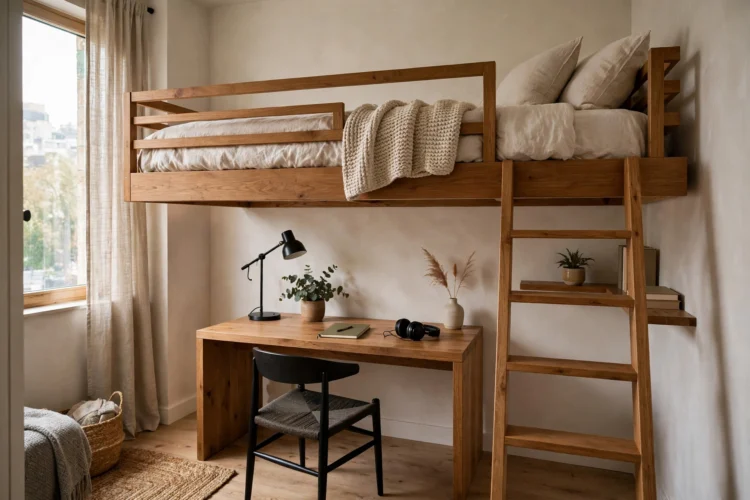
A fully pale room can float, with nothing to anchor it. One dark accent solves that problem. It could be a charcoal cushion, a dark wood bench at the foot of the bed, a black framed print, or a deep brown leather chair. The dark piece gives the eye a resting point and makes the lighter tones look brighter by comparison. Keep it to one or two items, and repeat the dark tone in a small way elsewhere, such as a picture frame or a lamp base, so it looks intentional rather than random. Small bedrooms benefit from this trick too, and these small bedroom layout ideas show how a single grounding piece can free up floor space instead of crowding it.
Start with the bedding, then the focal point, then the dark accent, and your neutral bedroom will feel calm without ever feeling boring. Change one layer with the seasons, and the room will keep feeling fresh without a full redecoration.