Physical Address
304 North Cardinal St.
Dorchester Center, MA 02124
Physical Address
304 North Cardinal St.
Dorchester Center, MA 02124


Ten kitchen ideas for entertaining a crowd, from drink stations away from the stove to seating that keeps guests close without blocking the cook.
Hosting a crowd in a home kitchen is a traffic problem before it is a cooking problem. Guests drift toward the cook, the cook needs the stove, and the drinks always end up in the busiest corner. These kitchen ideas for entertaining fix the flow first, then the food, because an entertaining kitchen layout that works starts with traffic, not recipes. Each one creates a clear path for guests, a protected zone for cooking, and enough seats that nobody eats standing in a doorway. You do not need a bigger kitchen to host well. You need a layout that tells people where to go without anyone having to say it.
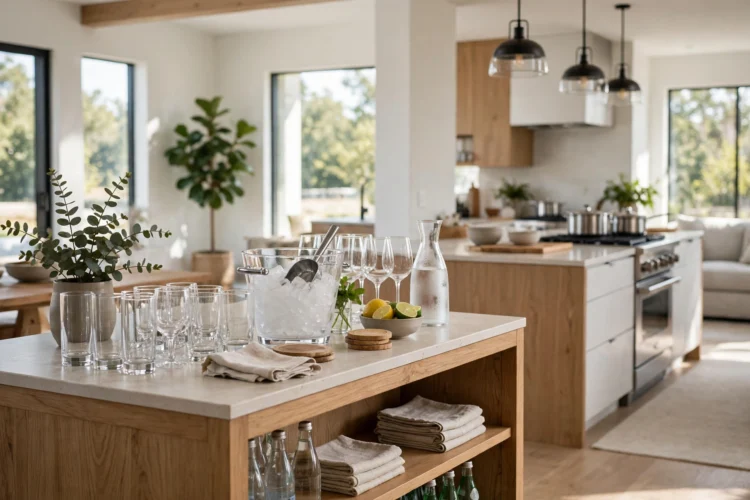
Drinks cause most kitchen traffic jams, because every guest returns to the same spot all evening. Move the drink station to the far end of the room, a sideboard in the dining area, or a cart near the entrance, and the crowd spreads out on its own. A kitchen drink station works best when it holds everything in one place, so stock it with glasses, a bottle opener, ice, and a small bin for empties, and nobody has to cross the kitchen for a refill. A second small station with water and non-alcoholic options near the seating area keeps kids and non-drinkers out of the line too. The cook keeps the stove, the sink, and the counter beside them, and guests get a destination that feels generous instead of exiled. Set the station up before the first guest arrives, and refill it in batches so you are never stuck behind the bar all night.
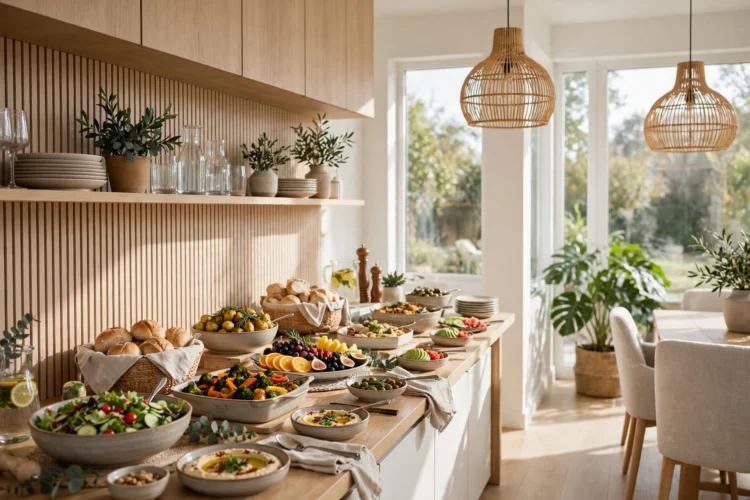
A buffet along a single wall turns serving into a one-way line instead of a crowd circling the island. Put plates first, then mains, then sides, then cutlery and napkins at the end, so the line moves in order and nobody doubles back. Keep hot dishes on warming trays or in the oven on low, and label anything with common allergens so guests can serve themselves without asking. Leave the island free for eating and talking, not for food, because a loaded island blocks the room and turns the cook into a server. If the wall is short, use a folding table with a cloth that matches the room, and stack serving dishes by height so the table reads as a display rather than a pile. A kitchen island with seating can hold the dessert course later, once the main buffet clears.
The work triangle between stove, sink, and fridge only works when guests are not standing in it. Mark the zone with a simple rule: if you are not cooking, you sit, and the cook says it once with a smile at the start of the night. A physical cue helps more than words, so place a stool or a plant at the edge of the zone to narrow the entrance without blocking it. Keep the tools the cook needs inside the triangle, including cutting boards, oils, and a towel, so there is no reason to cross the room mid-recipe. If your kitchen opens to the living room, set the seating so guests face the cook across a counter or island, which keeps them close and talking without stepping into the work space. The best compliment a host kitchen gets is that the cook looked relaxed, and a protected triangle is what makes that possible.
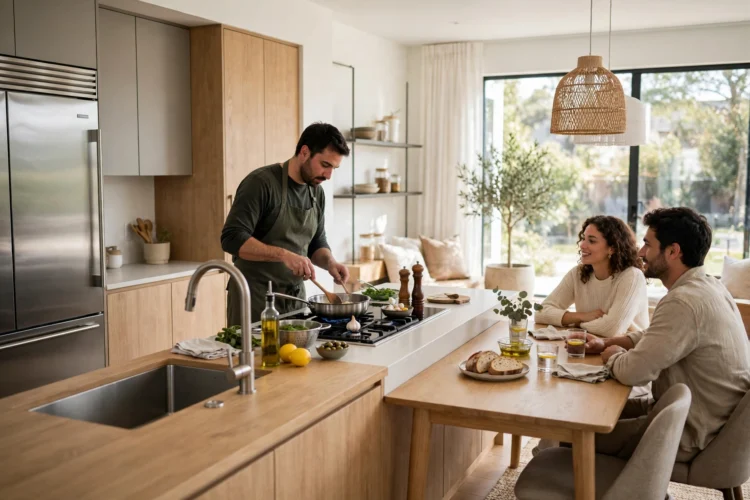
Guests want to be near the action, and the cook wants elbow room, so seating has to sit on the edge between the two. Counter stools along the far side of the island let guests watch and chat without entering the work zone, and the right stools matter more than the count. Choose backless stools that slide fully under the counter, so the walkway stays clear when nobody is sitting. The roundup of counter stool ideas for islands and breakfast bars covers heights and materials that suit different counters. For larger crowds, add a bench along the dining wall, since a bench seats more people per meter than chairs and slides away when the party ends. Keep one chair free near the kitchen entrance for the guest who always wants to help, and give them a real job like topping up the bread basket.

One oven is the bottleneck at every big gathering, because the main dish, the sides, and the dessert all want different temperatures. A double oven solves it directly, but a warming drawer is the cheaper fix that handles the same problem in most homes. It holds finished dishes at serving temperature while the oven stays free for the next course, and it doubles as a plate warmer, which makes a visible difference to a plated meal. If neither is an option, plan the menu around the oven you have: choose one oven dish, one stovetop dish, and one cold dish, so nothing queues for the same heat. Slow cookers and countertop roasters count as extra ovens too, and they can live on the buffet table once the food is ready. Cook the menu to fit the equipment, not the other way around.
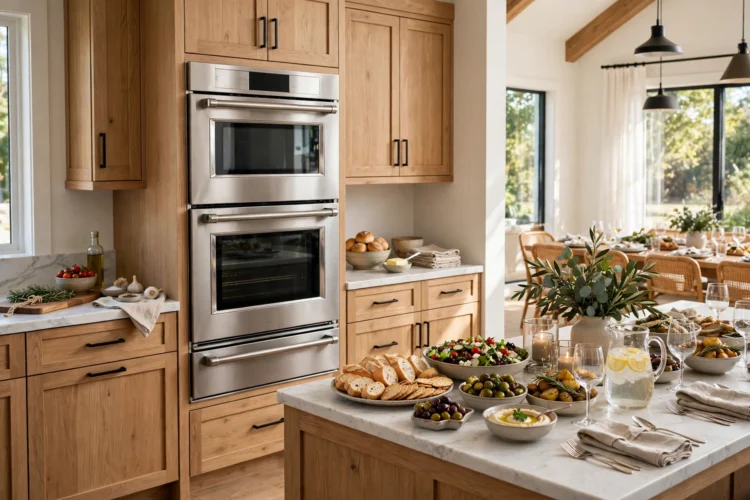
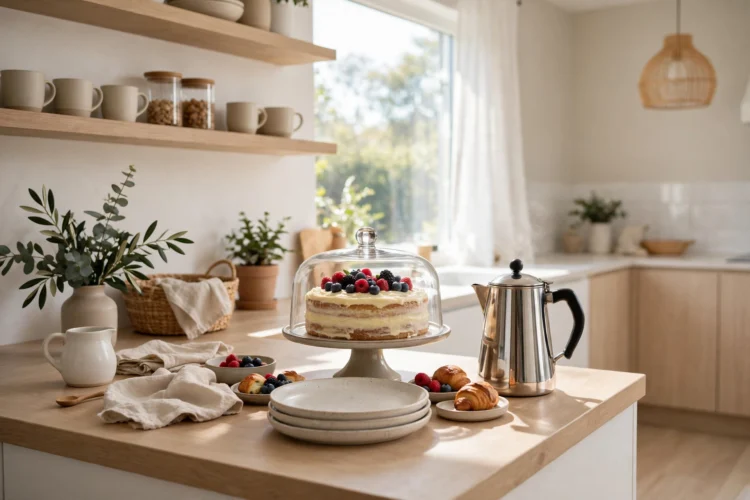
Dessert deserves its own corner, because it arrives when the main courses clear and the crowd needs a reason to move. Set a small table or a cleared stretch of counter with the cake, plates, forks, and a coffee pot, and let guests serve themselves while the cook finally sits down. A baking station layout works well here, since it already groups the tools and dishes a dessert course needs. Keep the coffee simple: one pot, milk, sugar, and mugs, with decaf beside the regular pot and clearly labeled. If the party runs late, the dessert corner becomes the late-night snack spot with little extra effort, and that second act is often the part guests remember. Clear the dinner plates first, wipe the surface, and let the new course feel like a fresh start rather than leftovers.
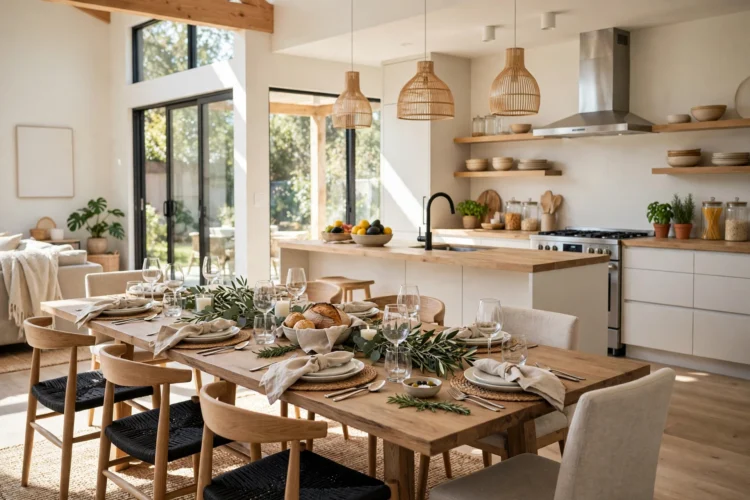
When the kitchen fills up, the dining table should take the overflow instead of sitting empty in the next room. Extend it fully before guests arrive, even if you expect a few empty seats, because a full-length table invites people to sit and stay. Set it the same way you set the kitchen, with water, napkins, and a simple centerpiece already in place, so the first guests to sit down do not have to ask for anything. Hosting a crowd at home gets easier when the table is ready before the doorbell rings, not after. Keep the path between the kitchen and the table clear of bags, coats, and the dog bed, since that path gets used dozens of times in an evening. If the table seats fewer people than the guest list, stagger the meal: serve the first group, then reset for the second while the first group moves to the living room with dessert. Nobody minds eating in shifts when the food and the company are good.
Wine service slows a party when every glass needs the host. Set out open bottles on the drink station with a small tag for each one, and keep spare glasses stacked beside them so guests help themselves. A wall rack or a cleared shelf near the station keeps bottles visible and off the work counter, and the ideas in kitchen wine storage ideas show storage that looks intentional rather than improvised. Chill white wine in an ice bucket on the station, not in the fridge, so the fridge stays free for food. Keep a tray for empty glasses near the sink so used glasses collect in one place instead of spreading across every surface. When the host stops pouring, the host starts enjoying the party, and that is the point of the whole evening.

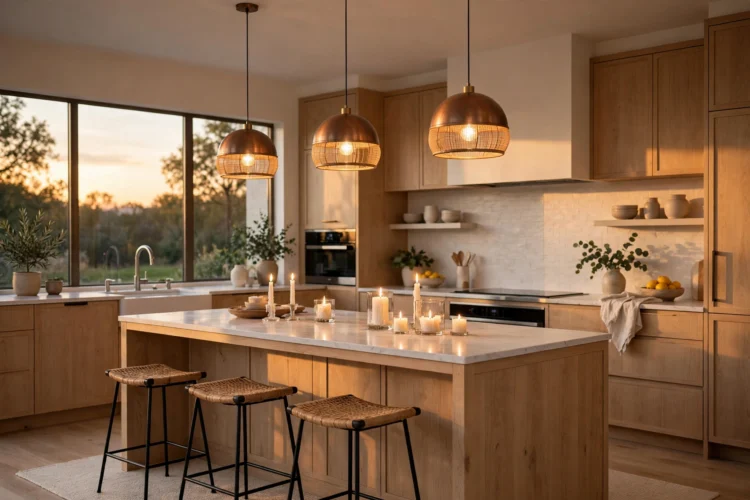
Bright overhead light is right for chopping and wrong for dinner. Put the main lights on a dimmer, or swap in a lower-wattage bulb for the evening, and let pendant lights over the island or table carry the room. Candles on the table and a small lamp on the sideboard add the warm glow that makes everyone look relaxed, but keep flames away from the buffet line and the drink station. If the kitchen has under-cabinet strips, dim them or switch them off once cooking ends, so the work zone fades and the eating zone takes over. The shift in light tells guests the cooking is done and the eating has begun, which is a nicer signal than any announcement. Test the levels the night before, because a room that is too dark is as awkward as one that is too bright.
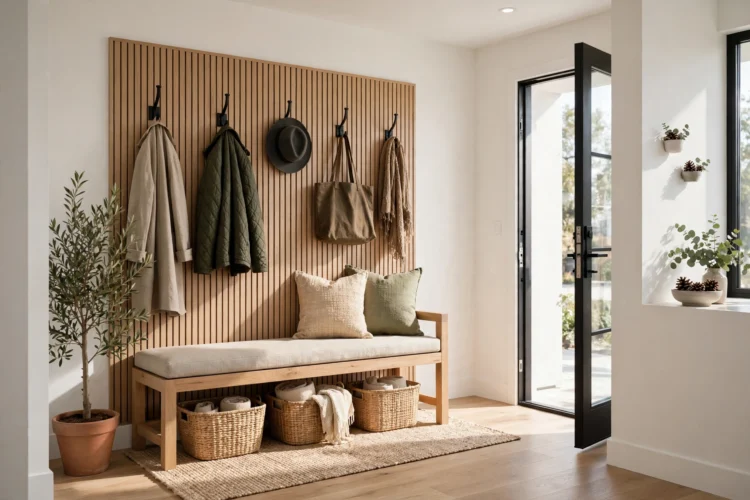
Every crowd brings coats, bags, and at least one child who needs to run somewhere. Decide where those things go before the doorbell rings: a bedroom for coats, a bench or hooks near the entrance for bags, and a corner with a few toys for kids. A blocked entrance turns the first ten minutes into a shuffle, and a clear one sets the tone for the night. Keep the hallway to the bathroom free of shoes and chairs, and put a small sign or a basket where guests can leave things without asking. If kids are coming, set their table or their snacks slightly apart from the adult food, so the adults can talk and the kids can be kids without a collision at the buffet. A party flows well when the unglamorous logistics are solved before anyone arrives.
Entertaining a crowd is mostly a layout job with a menu attached, and good party kitchen flow is what lets the host enjoy the evening instead of managing it. Move the drinks away from the stove, give the cook a protected zone, seat guests on the edge of the action, and let the food serve itself along one wall. Do those four things and the kitchen handles twenty people almost as easily as six. The host who plans the flow gets to enjoy the party, and that is the real measure of a kitchen built for entertaining.


