Physical Address
304 North Cardinal St.
Dorchester Center, MA 02124
Physical Address
304 North Cardinal St.
Dorchester Center, MA 02124

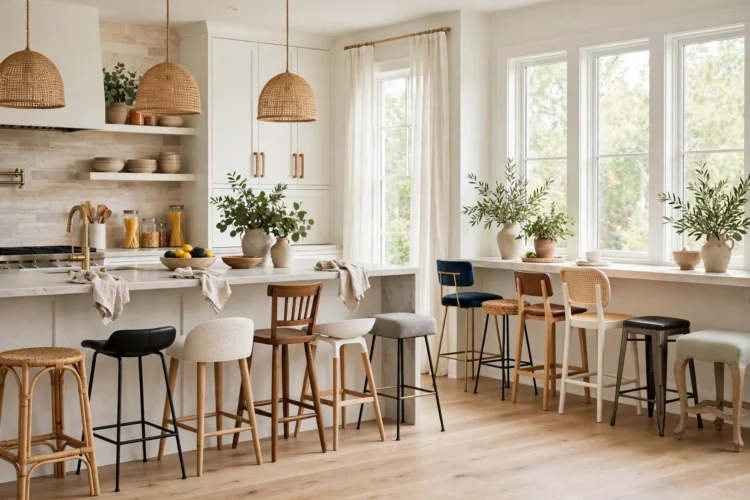
Twelve counter stool styles for islands and breakfast bars, plus the seat height and spacing numbers that decide whether a stool actually works.
Counter stool ideas matter more than most people expect, because the wrong seat turns a kitchen island into a place nobody sits. The right stool fits the counter height, leaves room for knees, slides away cleanly, and survives daily spills. This guide covers twelve styles for islands and breakfast bars, from backless stools that disappear under the counter to upholstered seats built for long, slow mornings. It also covers the measurements that decide whether a stool works: seat height, spacing, and the gap between the seat and the counter. Get those numbers right first, then choose a style you like looking at.
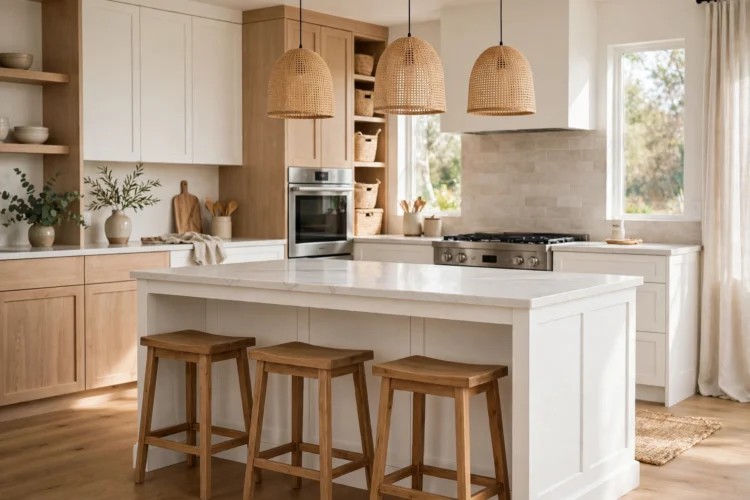
Backless counter stools are the simplest choice for a busy island. With no back to bump into, they slide fully under the counter when not in use, which keeps walkways clear and the kitchen looking tidy. They suit narrow islands and kitchens where people pass behind the seats. The trade-off is comfort: without a back, nobody lingers for an hour. That is fine for quick breakfasts and homework, and less fine for long dinners. Choose a seat with a slight curve or a padded top if you want more comfort without adding a back.
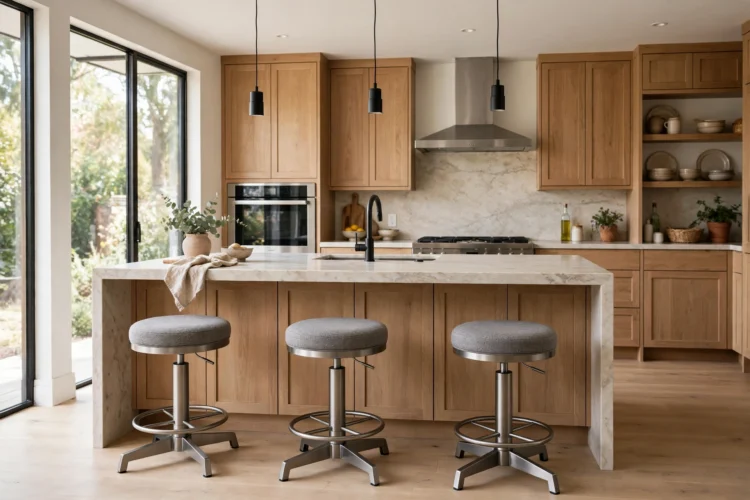
Swivel counter stools make it easy to turn toward the cook, the room, or the television without dragging the stool across the floor. That small freedom matters at a busy island, where people arrive from different directions and leave again just as fast. A full swivel suits family kitchens, while a return swivel that glides back to center keeps the island looking tidy after everyone leaves. Check the swivel mechanism before you buy: it should turn smoothly without wobbling or squeaking.
Swivel stools need a stable base, since the turning motion puts more stress on the legs than a fixed stool. A round disc base or four splayed legs both work, as long as the stool does not tip when someone leans to one side. Keep swivel stools away from walls and cabinet corners, where the turning seat can scuff paint. For a kitchen that opens into the living room, swivel seats let one island serve both zones, much like these open kitchen and dining room combo ideas that treat the island as the link between rooms.
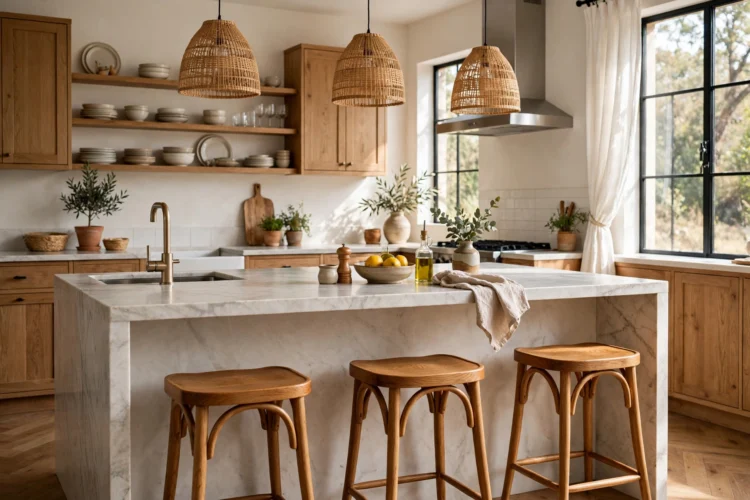
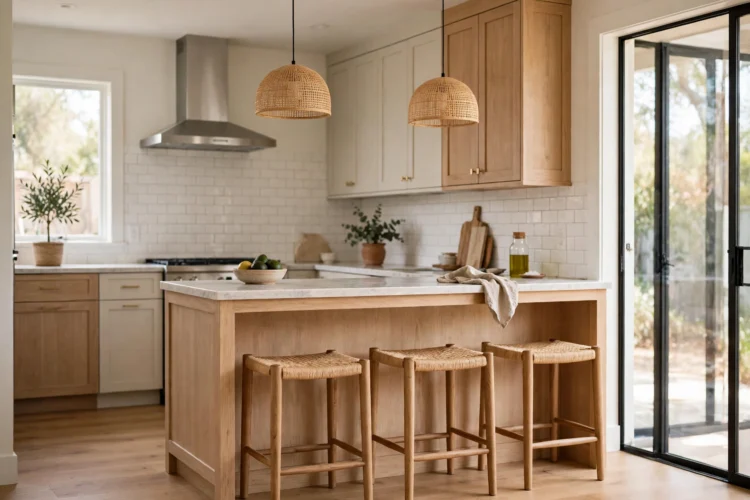
Wooden stools bring warmth to kitchens full of stone and steel. Oak, walnut, and ash all age well, and a scuff on wood reads as character rather than damage. A wooden stool with a shaped seat feels comfortable without a cushion, and it suits farmhouse, traditional, and Scandinavian kitchens alike. Choose a finish that matches the floor or the island base, so the stools look like part of the room rather than an afterthought. A matte oil finish shows fewer marks than a high gloss lacquer.
Wooden stools need occasional care: tighten the joints once a year, and wipe spills quickly so water does not sit on the seat. Avoid placing them in direct sun for long stretches, since the finish can fade unevenly. A wooden stool with a woven rush seat adds texture, but check the weave for comfort before you buy a set of four. If you like the warmth of wood elsewhere in the kitchen, these cream kitchen cabinet ideas for a softer take on white pair well with oak stools and pale counters.
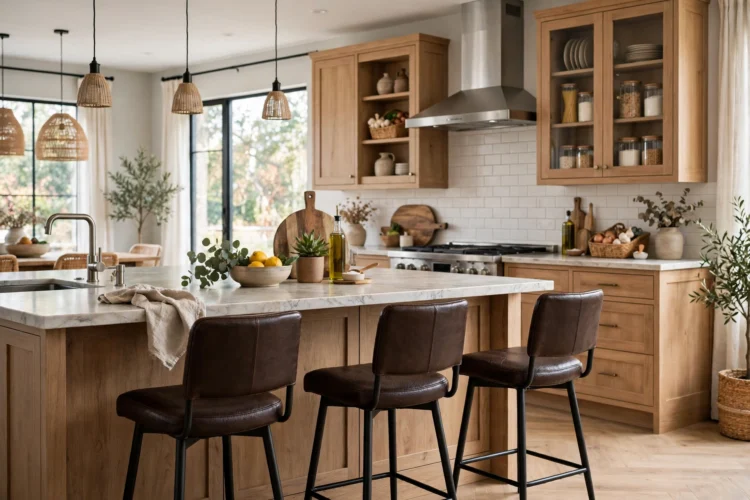
Leather seats suit kitchens where the island doubles as a workspace and a dining spot. The material feels warm in winter, wipes clean after spills, and develops a richer look as it ages. Choose a protected or semi-aniline leather for a kitchen, since it resists stains better than soft, untreated leather. Dark brown and black hide marks best, while tan leather brightens a dark kitchen but shows wear sooner. A leather seat with a wooden or metal frame suits both modern and traditional rooms.
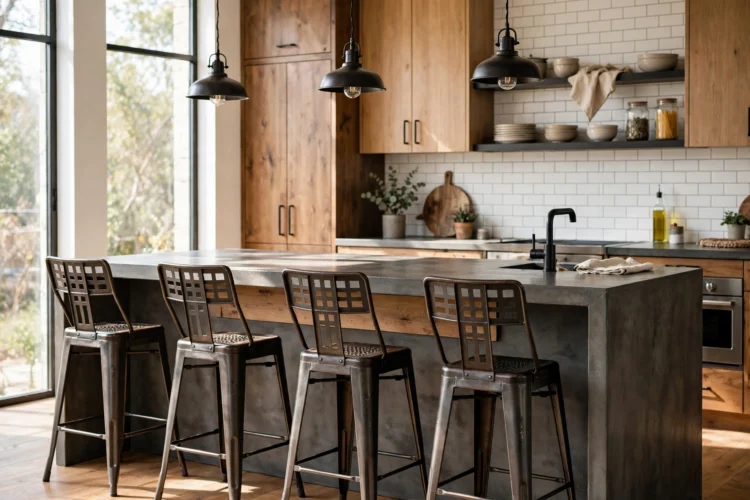
Metal stools bring a sharp, industrial note to a kitchen island. Steel, iron, and aluminum all work, and each has a different feel: steel feels sleek, iron feels heavy and solid, aluminum feels light and easy to move. A metal stool with a round seat and a footrest ring suits modern and industrial kitchens, and it pairs well with concrete counters and open shelving. Check the weight before you buy, since a heavy iron stool is hard for children to pull out, while a light aluminum one slides too easily on a slick floor.
Metal seats can feel cold in winter and hard after a long sit, so add a thin cushion or a sheepskin pad if people linger at the island. Look for a powder-coated finish, which resists chips better than plain paint, and wipe the stool down regularly to keep it free of dust and grease. A metal stool also suits a kitchen with a half-wall or a divider, where the seating zone needs a clear visual edge, as in these half-wall divider ideas between kitchen and living spaces.
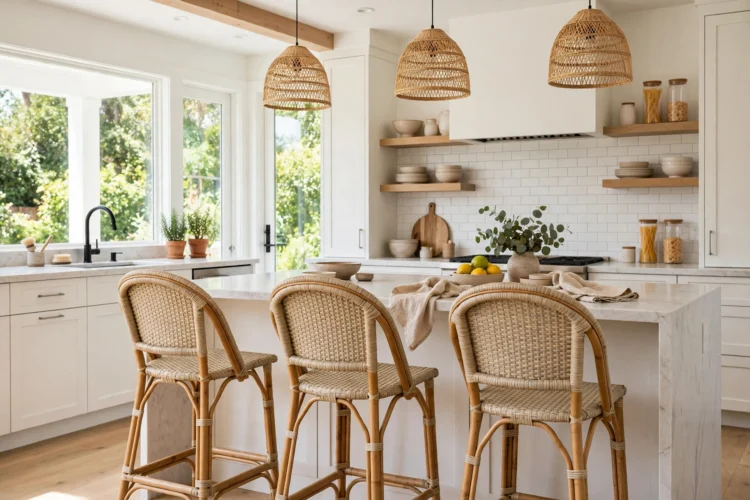
Rattan and cane stools lighten a kitchen visually, which helps in rooms with dark cabinets or heavy stone. The woven texture adds pattern without color, and the open weave lets light pass through, so the stools never look bulky. They suit coastal, boho, and transitional kitchens, and they pair well with light wood floors and white cabinets. Check the weave for strength: a tightly woven seat holds its shape longer than a loose one, and a solid frame underneath the cane prevents sagging.
Rattan needs protection from water and steam, so wipe spills quickly and keep the stools away from the sink splash zone. A cushion on the seat adds comfort and protects the weave from wear. Rattan stools are lighter than wood or metal ones, so they move easily, but they can also slide on hard floors, so add felt pads to the feet. For a calm, light kitchen that suits woven textures, these minimalist kitchen ideas that hide the clutter keep the focus on a few natural materials.
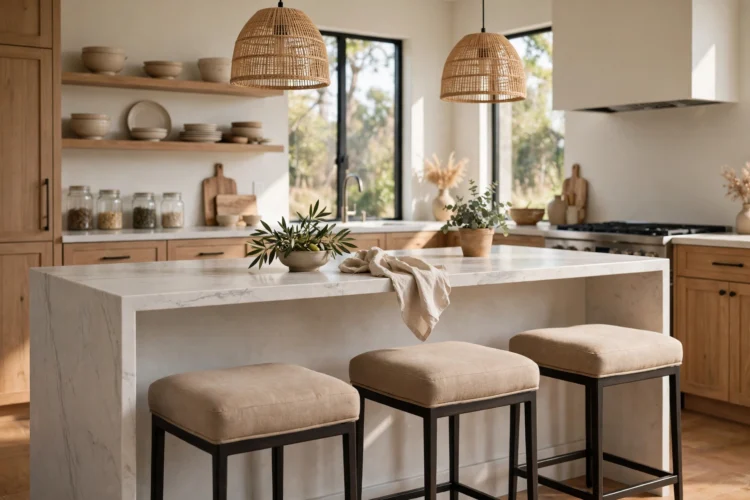
Upholstered stools are the most comfortable choice for an island where people sit for a long time. A padded seat and a low back support the body during slow breakfasts, homework, and long chats. Choose a performance fabric or a wipeable vinyl for a kitchen, since plain linen stains fast near food. A neutral fabric suits most kitchens, while a patterned fabric can repeat a color from the backsplash or the rug. Removable seat covers are worth the extra cost, because they can be washed after a spill.
Small kitchens need stools that earn their floor space. Backless stools that slide fully under the counter are the safest choice, since they disappear when not in use. Foldable stools that hang on a wall hook are another option, though they suit occasional seating better than daily use. Choose a light color and a slim profile, so the stools do not make the island look crowded. Two stools often serve a small kitchen better than four cramped ones, since people sit more comfortably with room to spare.
Island stool height matters even more in a small kitchen, because there is no room to fudge it. For a standard 36-inch counter, a seat height of 24 to 26 inches works for most adults. For a taller 42-inch bar, look for a seat height of 30 to 32 inches. Measure your counter before you shop, and test one stool before you order a full set. Kitchen counter stools that fit well make a small island feel generous, while stools that are too tall or too wide make the same island feel cramped.
A footrest sounds like a small detail until you sit on a stool without one. Feet dangle, legs tire, and people slide forward to find support. A good footrest sits about seven to nine inches above the floor for a standard counter stool, roughly where the foot naturally rests. A ring footrest suits round-based stools, while a bar footrest suits four-legged stools. Check the footrest height in person if you can, since a rest that is too high forces knees up, and one that is too low offers no support at all.
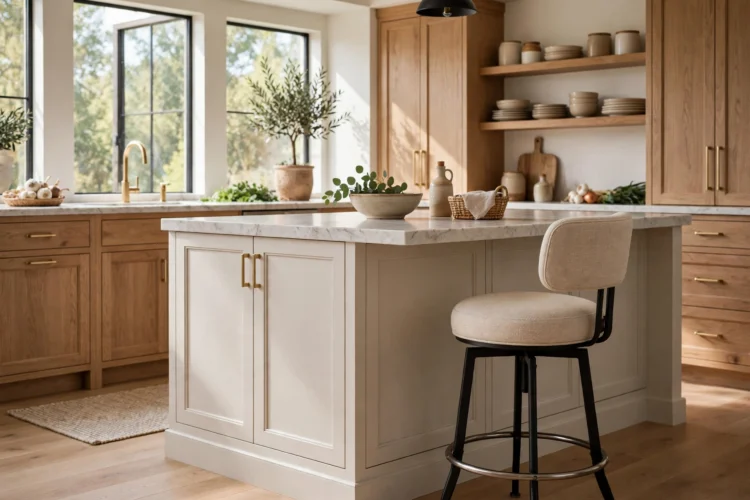
Mixing two stool styles at one island adds character without looking messy, as long as the pair shares something in common. Try two upholstered stools with backs at the ends and two backless stools in the middle, all in the same wood tone. Or pair a metal stool with a wooden one, keeping the seat height identical. The shared element, whether material, color, or height, ties the mix together. The difference, whether back height or texture, keeps the island from looking like a furniture showroom.
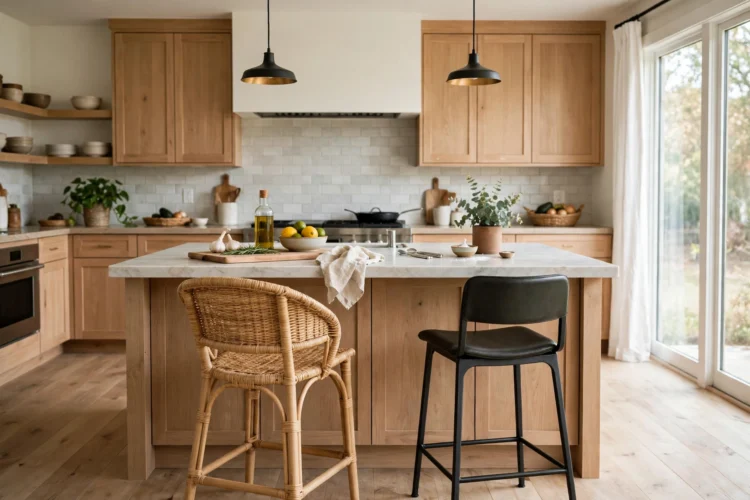
Foldable and stackable stools suit kitchens where seating needs appear and disappear. A stack of four stools in a pantry or a garage means you can seat extra guests without keeping four chairs out all week. Look for a folding stool with a locking hinge that feels solid when open, not one that flexes under weight. Stackable stools should nest neatly without scratching each other, so check for rubber bumpers or a stacking gap between seats.
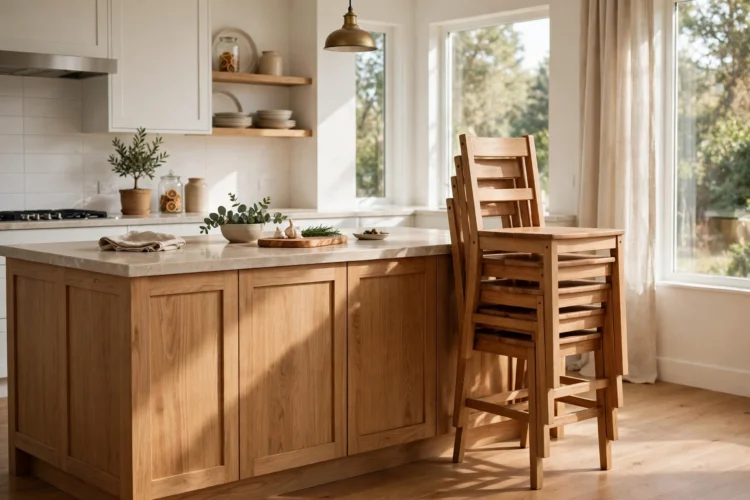
A bold color on the stools can anchor an island in a plain kitchen. Deep green, navy, or mustard seats draw the eye and give the room a clear focal point, especially when the cabinets and counters are white or pale wood. Keep the rest of the island quiet: a plain countertop, simple pendant lights, and no other strong color nearby. The stools carry the color, and the kitchen stays calm around them. A painted wood stool is the easiest way to try this, since paint can be changed later.
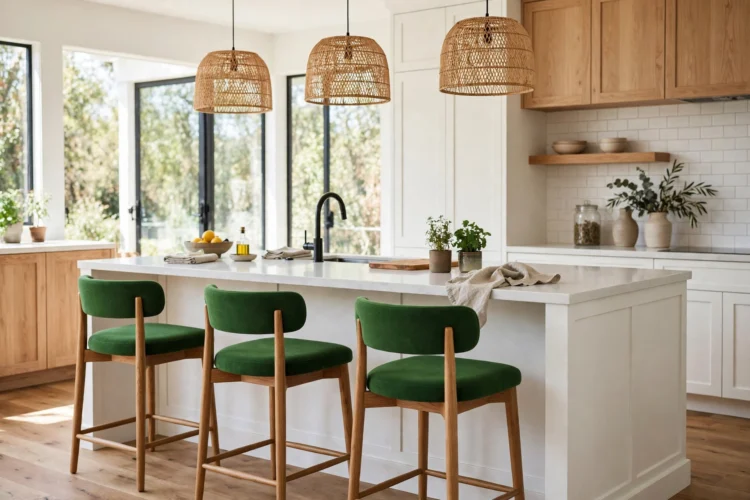
Measure first, then shop. Seat height, spacing, and the gap under the counter decide whether a stool works, and no style can fix a stool that is too tall or too wide. Once the numbers fit, choose the material and shape that suits how your household actually sits, and buy one stool to test before you order the set.