Physical Address
304 North Cardinal St.
Dorchester Center, MA 02124
Physical Address
304 North Cardinal St.
Dorchester Center, MA 02124

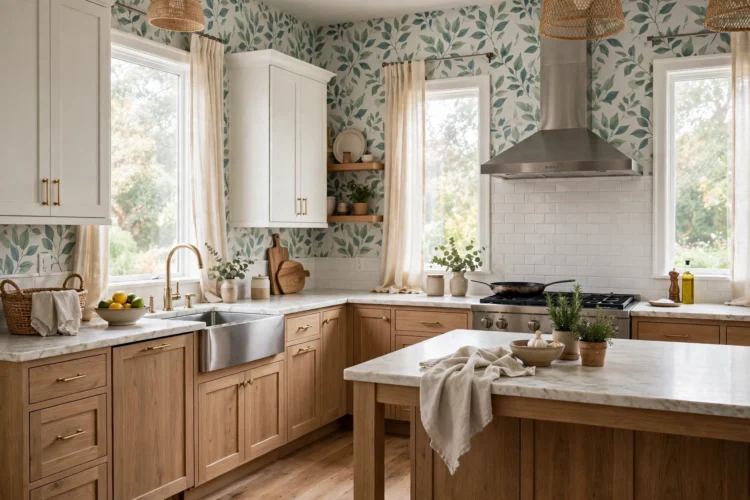
Modern vinyl and peel-and-stick wallpaper can handle steam and splatters when placed right. These ten ideas show where to paper, which types last, and how to seal the edges.
Wallpaper in a kitchen sounds risky until you pick the right kind. Steam from a pot, grease from a pan, and splashes from the sink all reach the walls, and ordinary paper would peel in a season. But modern kitchen wallpaper ideas use vinyl, coated paper, and peel-and-stick backing that wipe clean and hold their grip in humidity. The trick is choosing the right material for each wall and keeping it away from direct water. These ten ideas show where wallpaper works in a kitchen, which types survive the room, and how to place each one so it lasts.
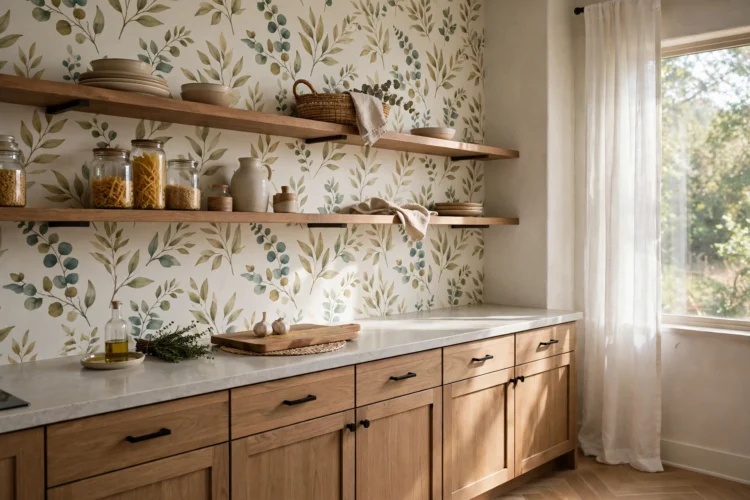
Peel-and-stick wallpaper turns the wall behind open shelves into a backdrop for dishes and glassware. It goes up without paste, peels off without damage, and comes in patterns that would cost far more in tile. Because it sits above the counter and away from the stove, it sees steam but not direct splashes.
Clean the wall first so the adhesive grips, and smooth each strip from the center out to push air bubbles to the edge. Pick a pattern with a small repeat so a mistake costs one strip, not a whole roll. If a strip loosens near the kettle, press it back with a dry cloth or replace that strip alone. Peel and stick wallpaper suits a rented home too, since it leaves no paste behind. For a room that ties together, pair the pattern with one of these kitchen color scheme ideas for the cabinets and walls.
Vinyl wallpaper is the workhorse of kitchen walls. Its coated surface shrugs off splashes and wipes clean with a damp cloth, which is why it is the standard choice for the wall behind the stove and sink. Modern vinyl comes in tile looks, plaster textures, and bold prints, so it does not have to look like plastic.
Use it on the backsplash wall only where it sits behind a worktop, and seal the edges with a clear caulk line so water cannot creep behind the paper. Keep it a few inches above the hob if the stove has no extractor hood, since direct heat softens adhesive. A tile pattern in vinyl gives the look of a tiled backsplash at a fraction of the work, and a single damaged strip is easy to replace. Check the heat rating on the roll before you buy, since not every vinyl suits a stove wall.
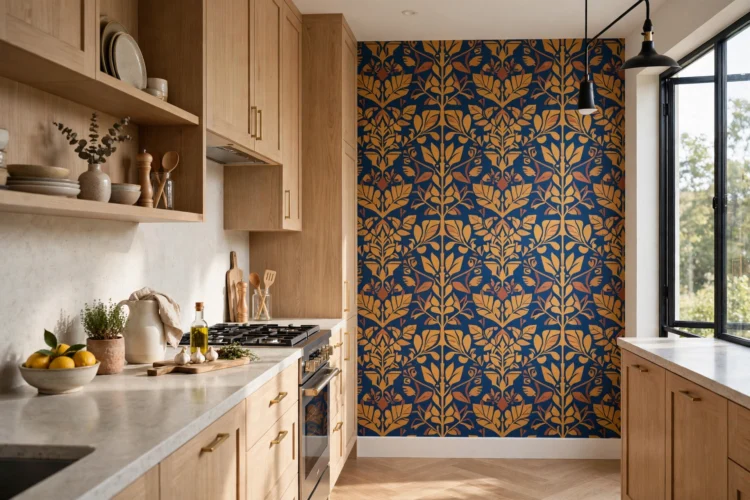
One patterned wall gives a plain kitchen a focal point without papering the whole room. Pick the wall you see first when you walk in, usually the one opposite the door, and keep the other walls plain. A large scale floral or a strong geometric print works best here, since the wall reads as a feature rather than a background.
Keep the accent wall away from the stove and the sink so the paper never faces direct steam. Match one color from the print to a cabinet, a rug, or a set of dishes so the room feels planned. If the cabinets are white, almost any pattern works. If they are colored, pull the print from the same color family. This single wall approach also keeps the cost low, since one wall needs only a few rolls. Sage green cabinets pair well with soft botanical prints, as these sage green kitchen ideas show.
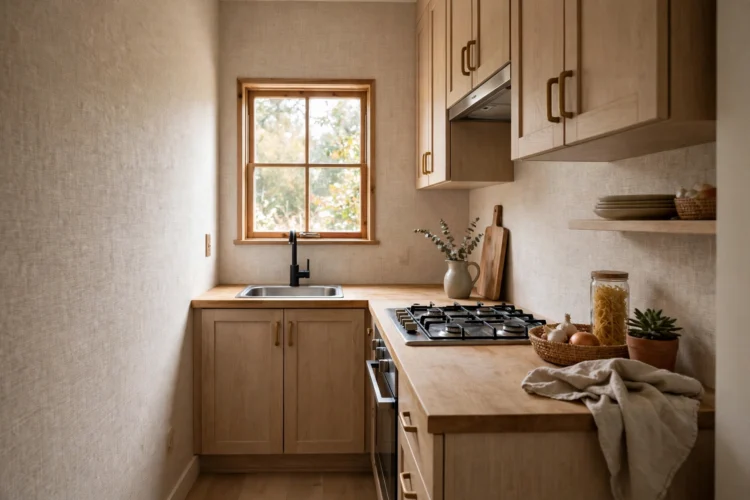
A small kitchen does not need a loud pattern. A subtle textured paper, like grasscloth look vinyl or a fine linen weave, adds depth without shrinking the room. Texture catches light and gives plain walls a finish, which matters in a kitchen with few decorative surfaces.
Choose a light color so the room stays bright, and keep the texture fine rather than deep, since deep grooves collect grease. A textured paper works well on the wall behind the table or the dining end of the kitchen, away from the cooking zone. Pair it with simple hardware and plain cabinet fronts so the wall does the quiet work. In a small space, one textured wall is enough. Two textured walls start to feel busy, so leave the rest painted.
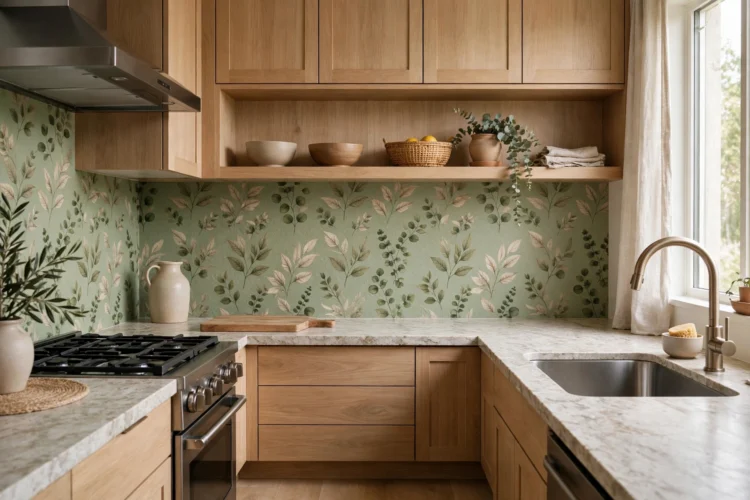
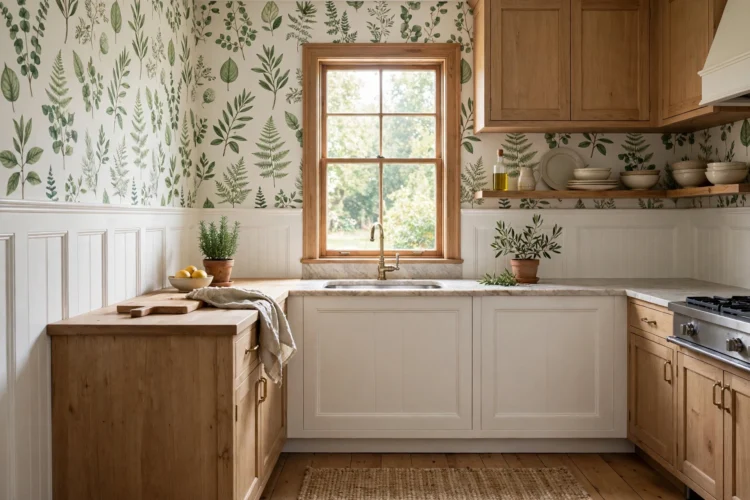
Wainscot or a tile dado protects the lower wall, which leaves the upper wall free for a botanical print. Leaves and stems suit a kitchen because they echo the herbs and plants that live on the sill, and a green print ties the room to the garden outside. The wainscot takes the splashes, the paper takes the praise.
Set the wainscot at least a meter high so the paper starts above the splash zone. A chair rail in a painted finish gives a clean edge between the two surfaces. Choose a washable vinyl with a botanical print so steam does not mark it, and keep the print scale in proportion to the room. A large leaf print suits a tall wall, while a small sprig print suits a low ceiling. This pairing works in traditional and cottage style rooms alike. Pastel prints keep the look soft, as these pastel kitchen ideas show.
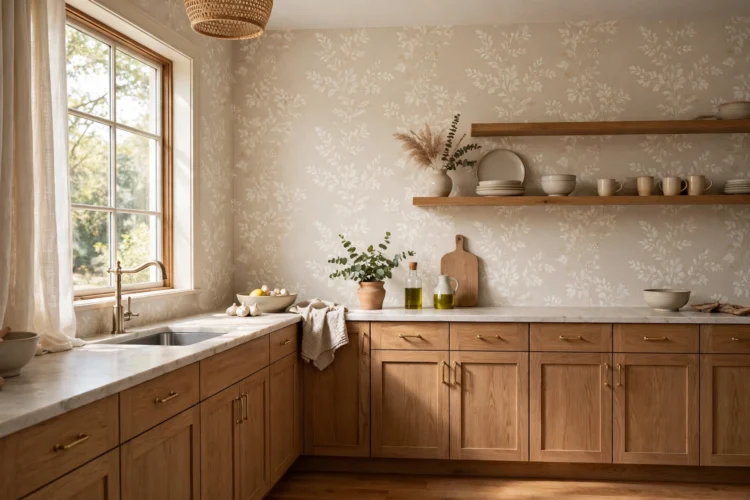
Warm neutrals are the safest kitchen wallpaper ideas when you want pattern without a color commitment. A beige, warm grey, or soft clay print adds interest to a plain cabinet kitchen and suits any hardware finish, from brass to black. Neutrals also age well, since they do not date the way a bright color can.
Pick a print with a warm undertone that matches your worktop, not your cabinet color, since the worktop is the largest fixed surface. A subtle stripe or a small geometric in a warm neutral reads as texture from a distance and as pattern up close. This is a good choice for a rental, since a neutral print suits the next tenant too. Seal the edges near the sink with clear caulk so steam cannot lift the seams. Earthy tones work the same way, as these earthy kitchen ideas in clay, wood, and stone tones show.
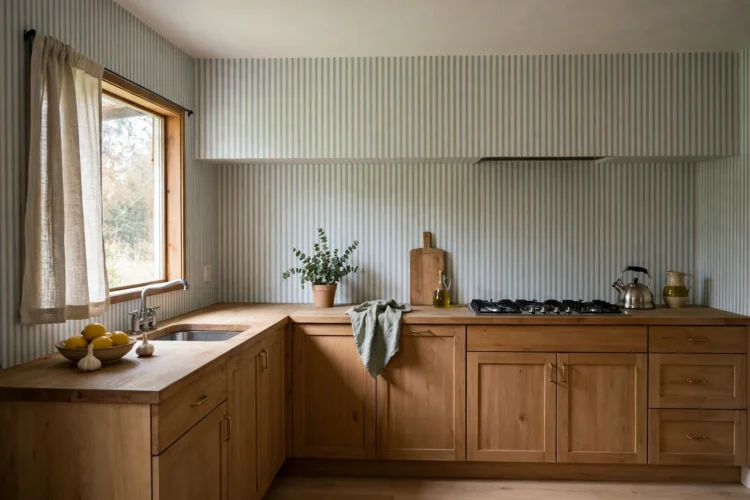
Vertical stripes pull the eye upward, which helps a kitchen with a low ceiling feel taller. A narrow stripe in two close tones is enough. A strong contrast stripe can feel busy in a small room, so keep the tones near each other and let the line do the work.
Paper the wall with the most visible height, usually the wall beside the tall cabinets or the fridge. Keep the stripe running straight from floor to ceiling, and match the pattern at the seams so the lines stay continuous. A peel-and-stick stripe is forgiving here, since you can lift and reposition a strip until the lines line up. Avoid horizontal stripes in a low room, since they widen the wall and make the ceiling feel lower. This trick works best with a pale stripe on a white ground.
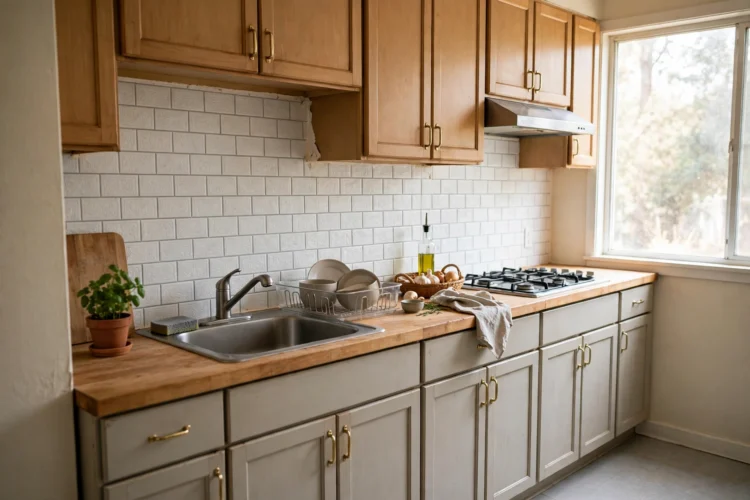
Tile-look wallpaper gives a rental kitchen the feel of a tiled backsplash without drilling, grouting, or asking the landlord. Modern prints copy subway tile, zellige, and patterned cement tile closely enough to fool a glance, and peel-and-stick versions come off clean at the end of a tenancy.
Apply it on the backsplash wall and trim it neatly around sockets and the cooker hood. A small scale tile print suits a small kitchen, while a large scale print needs a wide wall to show the pattern. Wipe it down with a damp cloth after cooking, since grease settles on the print the same way it settles on real tile. Keep a spare strip in a drawer so a stained section can be swapped in minutes. Check the tenancy rules first, since some landlords still want written permission for any wall covering.
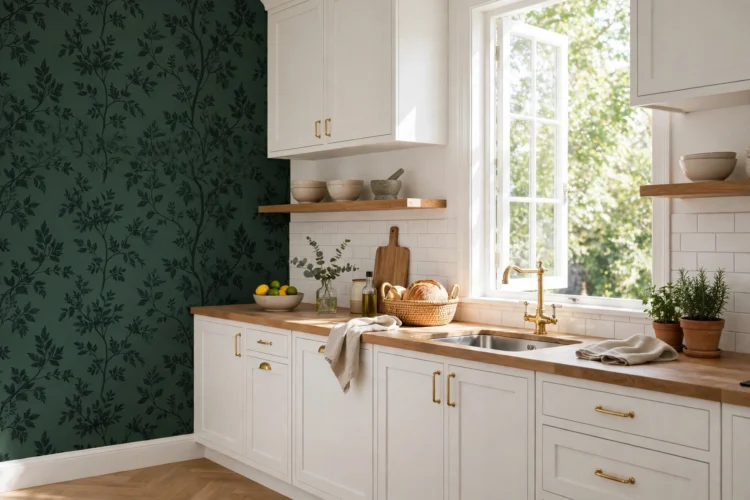
A dark wallpaper sounds wrong in a kitchen until you see it in a bright room. Deep green, navy, or charcoal on one wall adds depth and makes white cabinets and light worktops stand out. It works best where the kitchen gets strong daylight, since the light keeps the dark wall from closing the room in.
Use dark paper on the wall farthest from the window so it reads as a backdrop, not a shadow. Keep the cabinets and worktops light to hold the contrast, and add warm lighting under the cabinets so the dark wall does not go flat at night. A washable wallpaper in a dark tone hides cooking marks better than a pale one, which is a practical bonus. One dark wall is enough. Two dark walls need more light than most kitchens have.
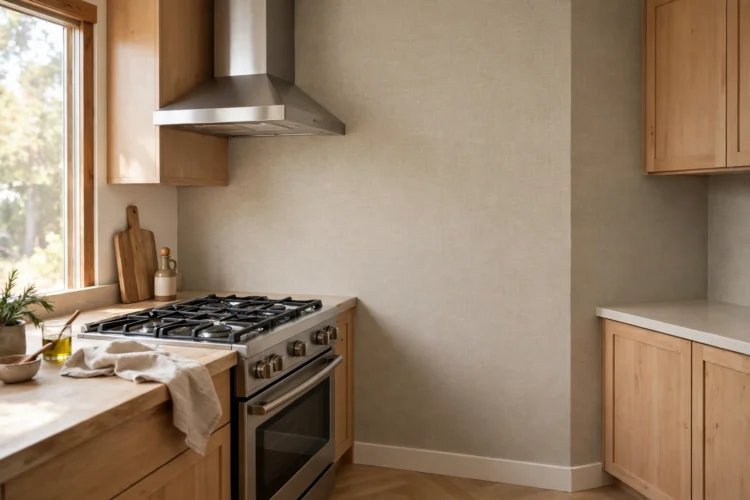
The stove wall is the hardest place for wallpaper, since it faces heat, grease, and steam at once. A vinyl paper sealed at every edge can still work, but only if the stove has a working extractor hood and the paper stays clear of the hob. A clear sealant over the seams stops steam from lifting the edges.
Choose a paper rated for high humidity and check the maker guidance on heat before you buy. Keep the paper at least a hand span above the hob, and use a stainless steel or glass splashback directly behind the burners where the heat is strongest. Clean the wall after heavy frying, since grease film builds up fast near the stove. If the wall is small, a single strip of bold paper behind a shelf can give the effect without covering the whole cooking zone.
Wallpaper earns its place in a kitchen when the material fits the wall. Vinyl and peel-and-stick papers handle steam and splashes, sealed edges stop water getting behind the print, and smart placement keeps paper away from direct heat. Start with one wall, live with it through a month of cooking, and paper the next wall only when the first one proves itself.