Physical Address
304 North Cardinal St.
Dorchester Center, MA 02124
Physical Address
304 North Cardinal St.
Dorchester Center, MA 02124

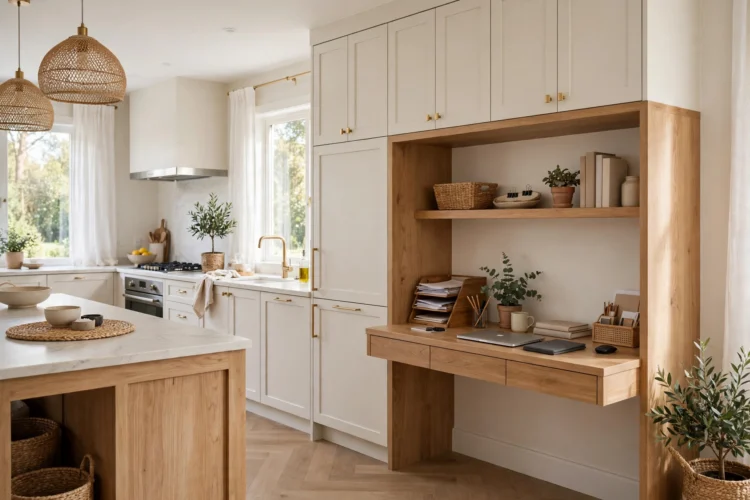
A small desk built into the cabinet run keeps bills, homework, and laptops off the counter. These seven ideas show how to carve a work nook out of almost any kitchen.
A kitchen desk sounds like a luxury until the bills pile up on the counter and homework spreads across the table at dinner time. Kitchen desk ideas solve this by carving a small work nook out of the cabinet run, with a surface for a laptop, a drawer for files, and a socket for a charger. The desk stays in the kitchen, where the family already gathers, but it keeps paper out of the cooking zone. These seven ideas show how to build one in, whatever space you have.
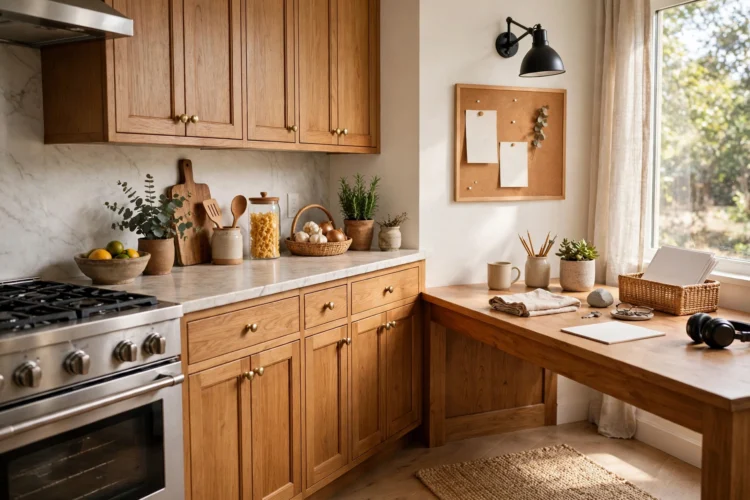
The end of a cabinet run is the natural spot for a kitchen command center. It sits outside the cooking triangle, so paperwork never lands in the prep zone, and it is close enough to the family that the desk gets used. A worktop at desk height, a shallow drawer, and a pinboard above it are all this nook needs.
Fit a socket into the wall above the desk so a laptop or a phone charges without a cable trailing across the counter. Add a small shelf for keys, mail, and the school calendar, and keep the surface clear with a tray for incoming paper. A kitchen command center works best when it has one job, which is catching the paper that would otherwise cover the kitchen. Give every item a home in the nook, and the rest of the kitchen stays clear. A pale wood desk and white cabinets give the nook the calm feel of these scandinavian kitchen ideas built on light wood and simplicity.
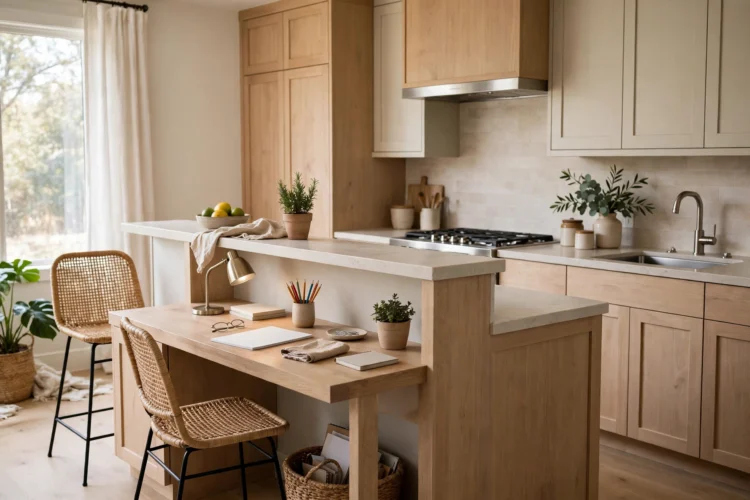
A homework station with a raised counter lets children work at the kitchen counter while a parent cooks nearby. The raised section sits a few inches above the worktop, which marks it as a work zone and keeps books out of the food prep area. Two stools fit under it, so siblings can work side by side.
Build the raised counter at a height that suits a stool, not a chair, so the surface feels like a bar rather than a table. Add a socket at each end so a laptop charges without a cable crossing the work zone. A small shelf under the counter holds textbooks and pencil cases out of sight. This is a kitchen homework station that works because it sits in the room where the family already is, not in a separate study that nobody visits. If the desk sits beside the dining table, a built-in banquette gives the same seating for meals and homework, as these built-in banquette ideas for kitchens and dining rooms show.
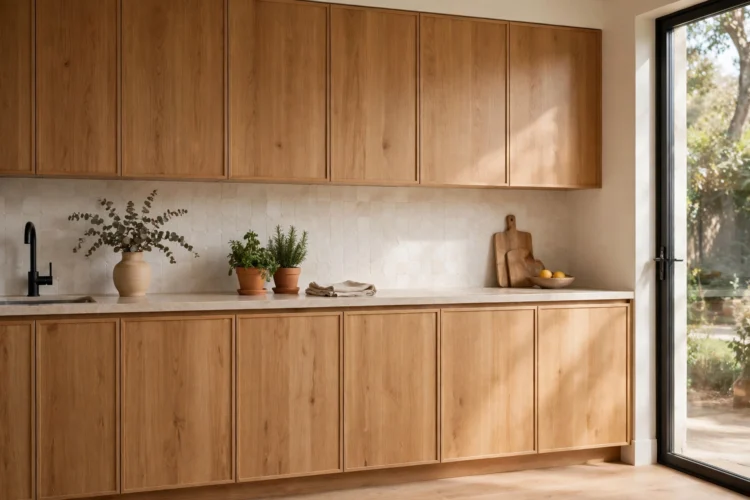
A desk that hides behind cabinet doors gives you a full work surface that vanishes at dinner time. The doors close over the desk, the monitor, and the paper, and the kitchen looks like a kitchen again. These kitchen desk ideas suit a household that works from the kitchen but does not want to see the office all evening.
Use pocket doors or bifold doors that slide or fold away, so the doors never block the walkway while you work. Fit the desk with a pull-out keyboard tray and a cable hole in the worktop, so the surface stays clear. A small light inside the cabinet makes the nook usable after dark. A small fan inside the cabinet keeps the air moving when the doors stay shut on a warm day. When the doors close, the desk disappears, which is the point. Measure the depth carefully, since a laptop needs more room than a closed cabinet usually gives.
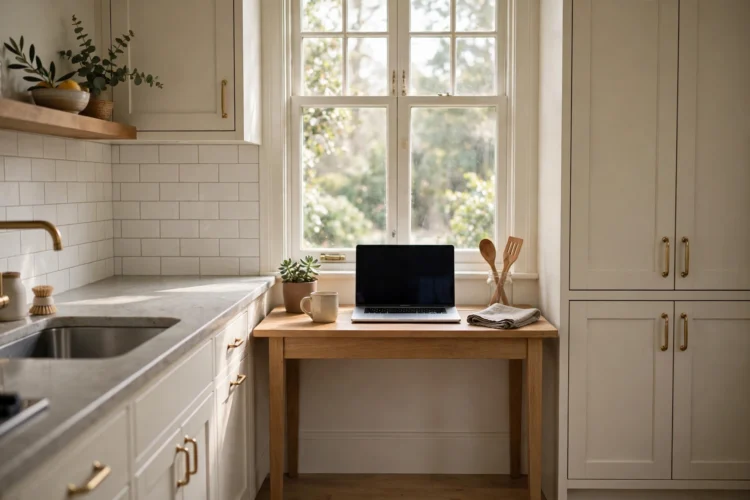
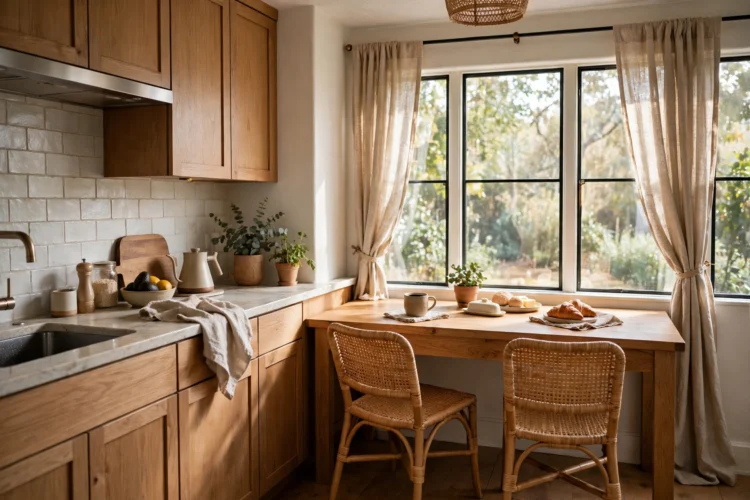
A desk under a window gives the best seat in the kitchen. Natural light falls on the work surface, the view breaks up a long stretch of paperwork, and the desk stays out of the cooking zone. A simple worktop on brackets, with a drawer unit at one end, is all it takes to build one.
Keep the desk shallow so it does not block the window or crowd the room. A depth of about half a meter suits a laptop and a notebook without pushing the chair into the walkway. Add a socket beside the window so a laptop charges without a cable across the sill. A small plant on the sill softens the work surface without taking room from the laptop. A window desk also works as a breakfast spot, since the same surface serves coffee in the morning and homework in the afternoon. To keep the desk from crowding the room, these half-wall divider ideas between kitchen and living show how a small change in layout can open up a tight space.
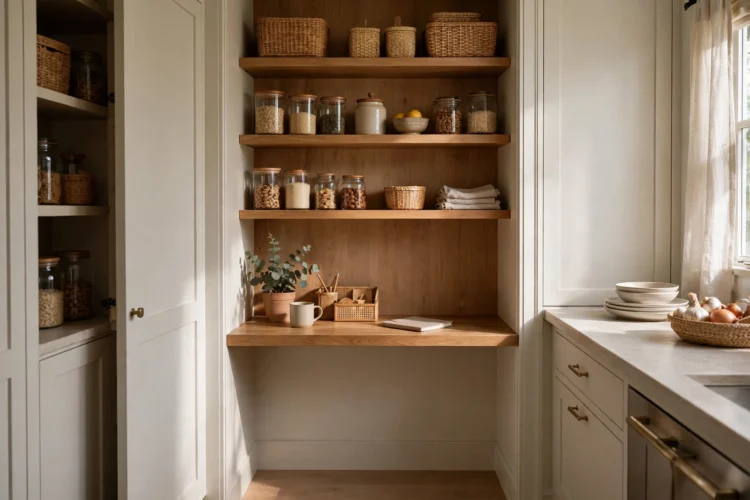
A pantry nook with a desk turns a storage corner into a work spot. The nook already has shelves, so files and stationery sit above the desk, and a door or a curtain closes it off when work ends. It suits a kitchen where the cabinet run has no spare length for a desk.
Fit a worktop across the nook at desk height and add a light under the shelf above it, since a pantry nook gets little daylight. Keep the desk narrow so the door still closes, and use the shelves for files rather than food. A desk nook in a pantry works because it is out of the way, which suits a household that wants the office hidden. Add a socket inside the nook so a laptop never needs an extension lead. Keep a small bin under the desk for paper recycling, so old bills leave the nook instead of piling up. This is a good use of a pantry that is too small for a full larder.
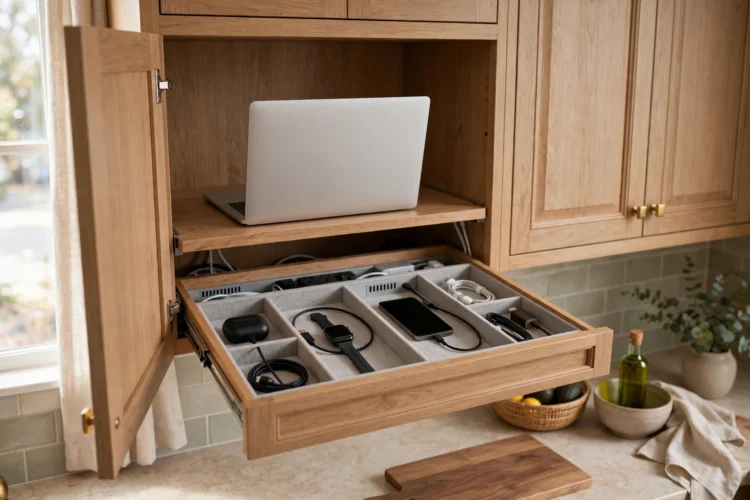
A charging drawer and a laptop shelf give a kitchen desk without a desk. The drawer holds phones, tablets, and laptops on charge, while a shallow shelf above it holds the laptop when it is not in use. The setup needs only a drawer and a socket, so it fits into almost any cabinet run.
Fit the drawer with a power strip and a cable hole so devices charge inside the drawer, out of sight. Add a small shelf or a pull-out tray above the drawer for a laptop, so the worktop stays clear. This is the smallest of these desk ideas, and it suits a kitchen where a full desk will never fit. It also works as a landing spot for school bags and keys, as long as the drawer stays organized. A labeled tray inside the drawer stops cables from tangling. Label the shelf for each person in the house, so laptops and chargers always return to the same spot.
A two-seat desk gives two people room to work side by side in the morning rush. One parent answers email while a child finishes homework, and both stay in the kitchen where breakfast is happening. A desk about 1.2 meters wide fits two laptops without crowding, and a pair of stools tucks underneath when the work ends.
Place the desk where it faces the room, not the wall, so both seats can see the kitchen. Add a socket at each end and a shared shelf above for books and files. Keep the desk at the dining end of the kitchen, away from the hob, so steam never reaches the laptops. A corkboard above the desk holds the school calendar and the shopping list where everyone sees them. A two-seat desk also doubles as a serving surface at dinner, which makes it earn its floor space twice. For a room that flows into a dining area, these open kitchen and dining room combo ideas show how to keep the two zones connected.
A kitchen desk works when it has a clear job and a clear boundary. Give it a surface, a socket, and a drawer, keep it out of the prep zone, and set a rule that paper lives there and nowhere else. The desk will not make the bills go away, but it will keep them off the counter, which is the whole point.