Physical Address
304 North Cardinal St.
Dorchester Center, MA 02124
Physical Address
304 North Cardinal St.
Dorchester Center, MA 02124

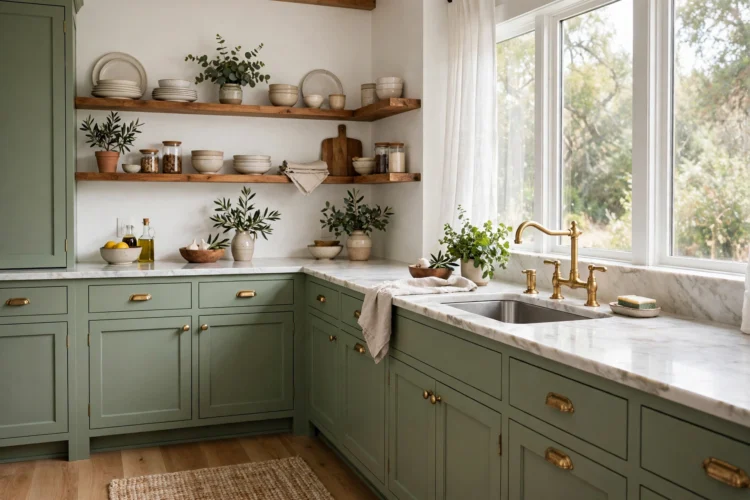
Sage green works far beyond the cabinet run. These ten ideas carry it onto tile, walls, textiles, and islands, with guidance for north- and south-facing light.
Sage green has become the default green for kitchens, and most of the attention goes to sage cabinets. That leaves a lot of the room untouched. These sage green kitchen ideas carry the color past the cabinet run into tile, walls, textiles, and islands, with shade-pairing guidance for north- and south-facing light. The goal is a kitchen where sage feels like a thread running through the whole room, not a single painted surface.
A sage tile backsplash is the easiest way to add the color without repainting anything. Square or subway tiles in a soft sage read as calm and handmade, especially with a slight glaze variation from tile to tile. The color sits well against white cabinets and a pale stone counter, and it pairs naturally with wood shelves and brass hardware. Keep the grout light so the tile pattern stays visible, or match the grout to the tile for a quieter wall.
Tile is also the most forgiving place to test sage, because a backsplash is a small surface and easy to change later. If you like the color after a few months, you can extend it to a wall or an island. For more handmade tile looks, see these zellige tile backsplash ideas for handmade texture.
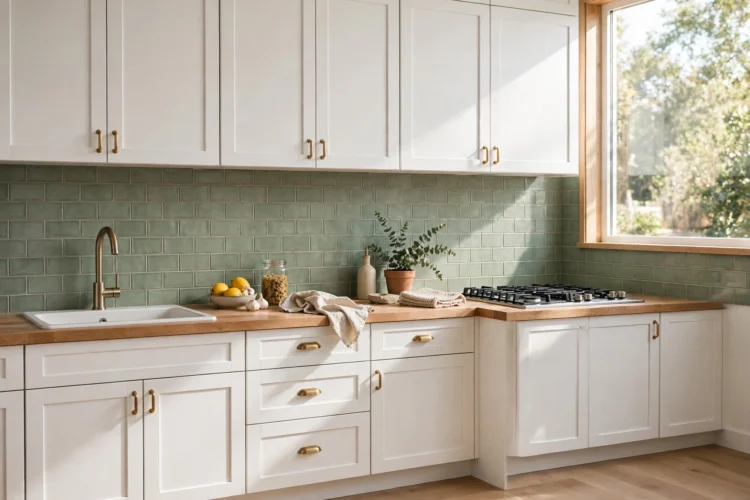
Sage walls with white cabinets flip the usual formula and it works beautifully. The walls carry the color while the cabinets stay bright, which keeps the room light even though the color covers a large surface. A warm sage with a gray-green undertone suits this role best, because it reads as a soft neutral rather than a statement color. Paint the walls in a matte or eggshell finish so the color stays soft and does not shine.
This approach suits kitchens with good natural light, since the walls get the sun and the color shifts gently through the day. In a darker kitchen, keep the sage on one wall only and leave the rest white. Add wood open shelves or a wood stool so the room has a warm element against the cool wall color.
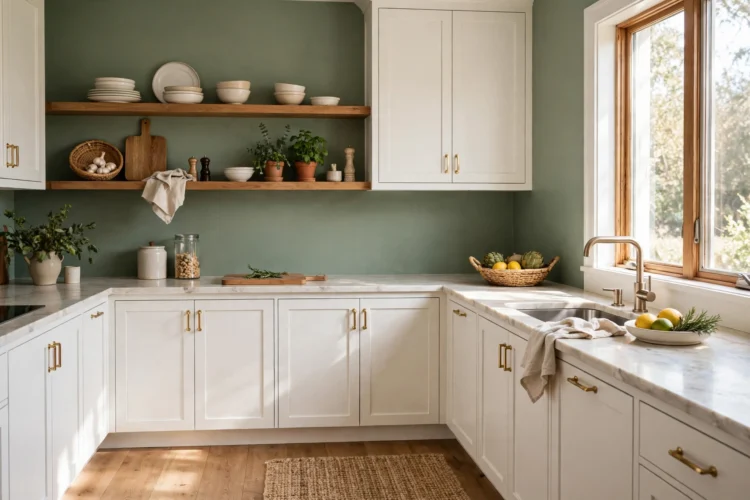
A sage island puts the color exactly where people gather, and it leaves the rest of the kitchen neutral. The island becomes the focal point of the room without any wall or cabinet repainting. Pair it with white or cream perimeter cabinets, a pale countertop, and wood or black stools. Brass hardware on the island ties it to the faucet and the light fixtures.
Choose a sage that is a shade deeper than the one you would use on a wall, since the island is a piece of furniture and can carry a stronger color. A deeper sage also hides scuffs from shoes and chairs better than a pale one. For island shapes and sizes that suit different floor plans, see these kitchen island ideas for every size of kitchen.
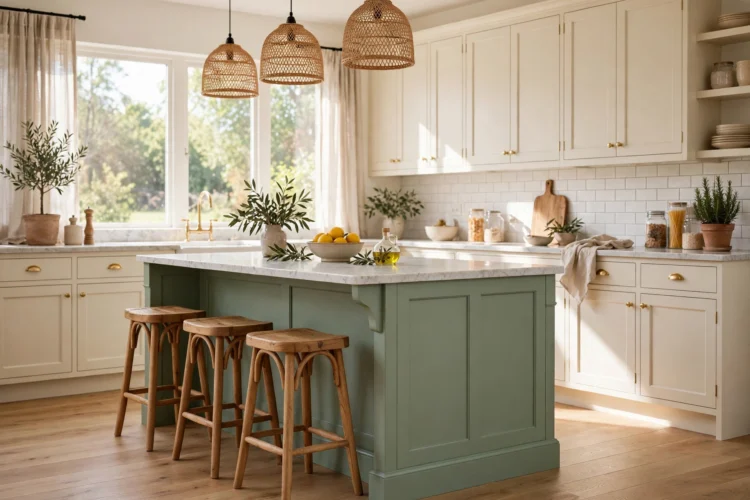
Textiles are the lowest-commitment way to bring sage into a kitchen. Linen curtains in sage soften a window, a flat-weave runner in sage and cream warms the floor, and a set of sage tea towels adds color to a neutral counter. Because these pieces are cheap and easy to swap, they are the right place to test whether you actually like living with the color before you paint anything.
Keep the textiles in the same sage family as your cabinets or tile so the room feels connected. A runner with a sage border and a cream center, for example, ties the floor to the cabinets without adding a second green. Wash linen curtains before you hang them, since linen shrinks, and choose a runner you can shake out and wash in a machine.
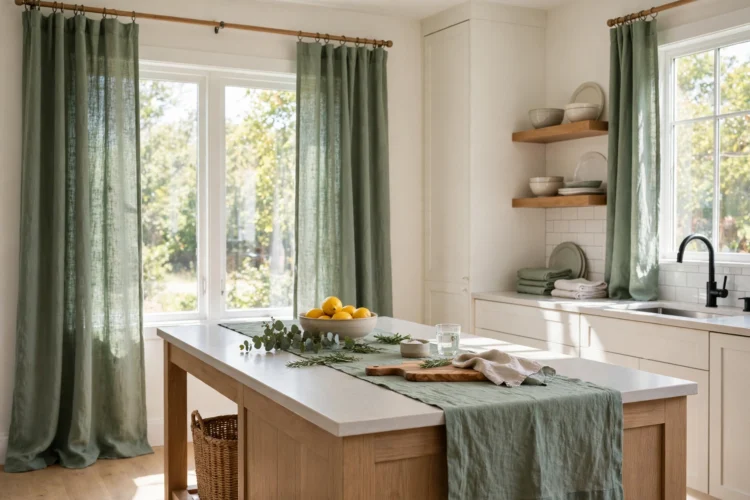
Sage and warm wood belong together because both come from nature. Honey oak floors, a walnut island top, or raw wood shelves stop sage from feeling cold or flat. The wood adds grain and warmth that the soft green cannot provide alone. This pairing suits kitchens that lean rustic, modern farmhouse, or Scandinavian, and it works with both painted and natural wood cabinets.
One wood surface is usually enough to warm the room. A wood countertop on a sage island, for instance, gives you the pairing in a single piece of furniture. If your cabinets are already sage, wood shelves above the backsplash add the same warmth at eye level. For the full range of green cabinet looks, see these green kitchen cabinet ideas from sage to forest.
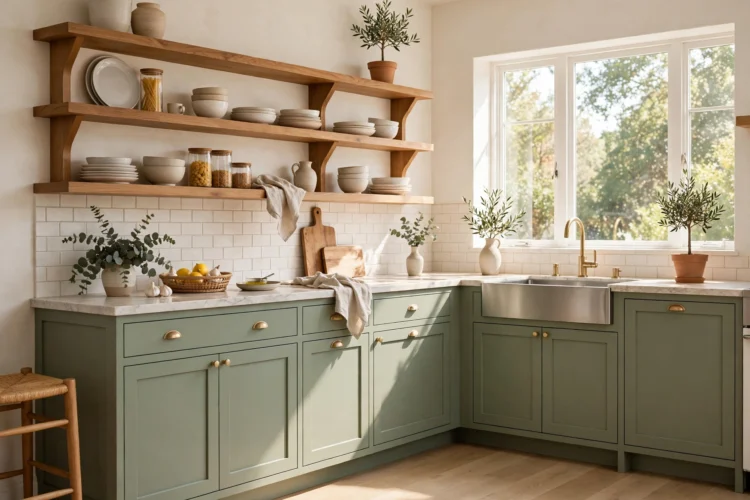
Sage and brass are a quiet combination that feels warm without trying hard. Brass handles, a brass faucet, and a brass pendant shade catch the light and add a soft gold note against the muted green. The metal should be warm and slightly aged rather than bright and polished, so it matches the calm feeling of the sage. Brushed or unlacquered brass suits this role best.
Repeat the brass at least three times in the room, such as on the cabinet pulls, the faucet, and a light fixture, so it reads as a deliberate choice. A single brass piece in a sage kitchen can look like an accident. Keep the rest of the hardware consistent too, since mixing too many metals in one small room can feel busy.
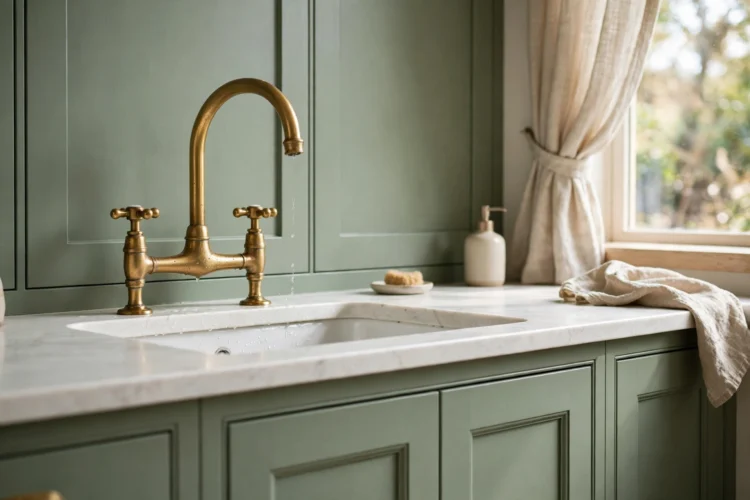
Light direction changes how sage looks more than most colors. North-facing kitchens get cool, steady light that pushes sage toward gray and blue. In these rooms, choose a warmer sage with a yellow undertone and pair it with warm wood and brass so the room does not feel cold. A warmer sage keeps its green identity under cool light instead of sliding into gray.
South-facing kitchens get warm, strong sun that pushes sage toward yellow and makes it look brighter. In these rooms, choose a cooler sage with a gray undertone and pair it with white cabinets and chrome or black hardware. Test your shade on a large board in the actual room and check it at morning, noon, and evening, since sage shifts more through the day than white or gray paint does.
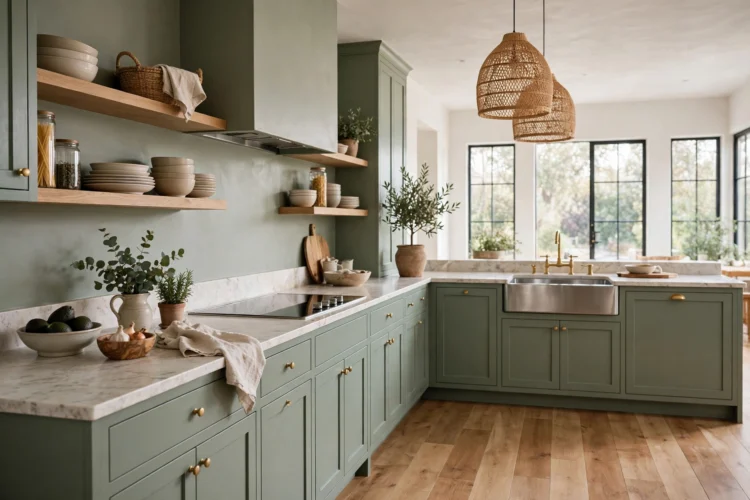
You do not need a sage cabinet or wall to have a sage kitchen. A sage kettle, a row of sage canisters, a sage-painted stool, or a small herb garden in sage pots can carry the color in a room that is otherwise white or wood. These small doses work best when they cluster in one zone, such as the counter by the stove or the open shelf by the window, so the eye reads them as a group.
Small doses also let you change the color with the seasons. Swap sage towels for cream ones in summer, or trade a sage runner for a natural jute one, and the kitchen feels different without any painting. Good lighting helps small sage details show up, and these kitchen lighting ideas beyond the basic flush mount show how to layer light so colors read true.
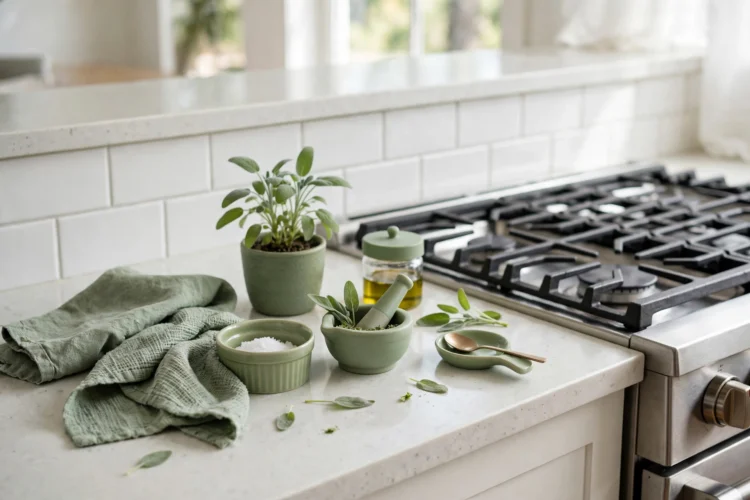
Start with the smallest surface, a backsplash or a set of towels, and see how the color behaves in your light. Sage rewards patience. Once you find the shade that holds its green through the day, the rest of the room is easy to build around it.