Physical Address
304 North Cardinal St.
Dorchester Center, MA 02124
Physical Address
304 North Cardinal St.
Dorchester Center, MA 02124

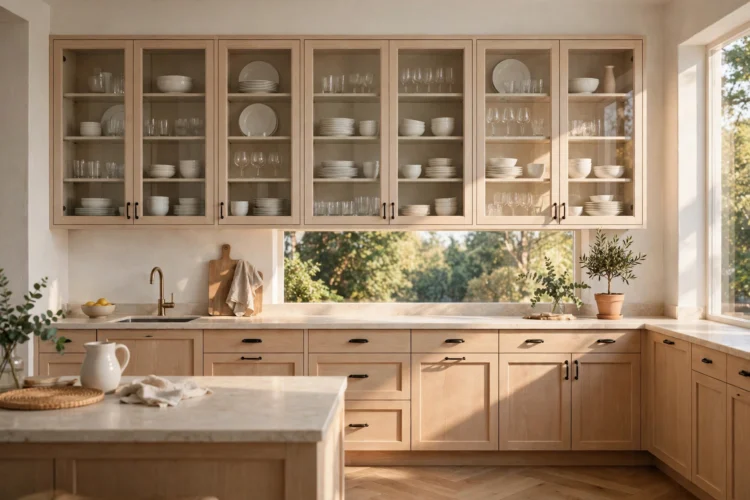
Glass doors turn everyday dishes into decor, but only when the glass, the placement, and the styling all pull in the same direction. These nine ideas show how.
Glass front kitchen cabinets turn the dishes you already own into the decoration. A stack of plain white bowls, a row of amber drinking glasses, or a set of plates in a single color can carry a whole wall of cabinets once the doors stop hiding them. The catch is that glass shows everything, including the chipped mug and the smudged fingerprint. Three decisions decide whether the result looks collected or cluttered: which glass you pick, which cabinets you glaze, and how you style what sits behind the glass. These nine ideas walk through all three, starting with the glass itself.
Start with the cabinets you open every day. The ones holding breakfast bowls, coffee mugs, and the plates you reach for at dinner are the best candidates for glass, because the contents stay in rotation and nothing sits long enough to gather dust. A cabinet full of dishes you use once a year is a poor choice. It will look staged for a week and neglected after that.
Walk your kitchen and sort the uppers into two groups: daily use and occasional use. Glaze the daily group. Keep the occasional group behind solid doors, where a jumble of serving platters and holiday pieces can stay out of sight. This split also keeps the project affordable, since you glaze three or four doors instead of twelve. If you want the open look without committing to glass everywhere, open shelving over the sink or the coffee station gives you the same display effect on one small stretch of wall.
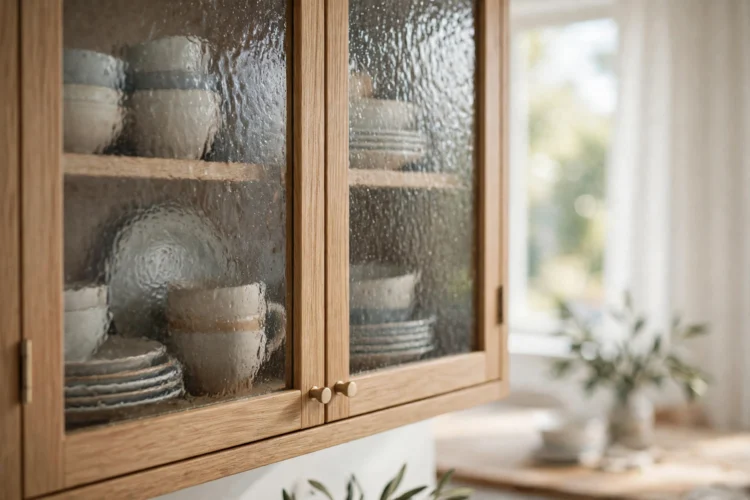
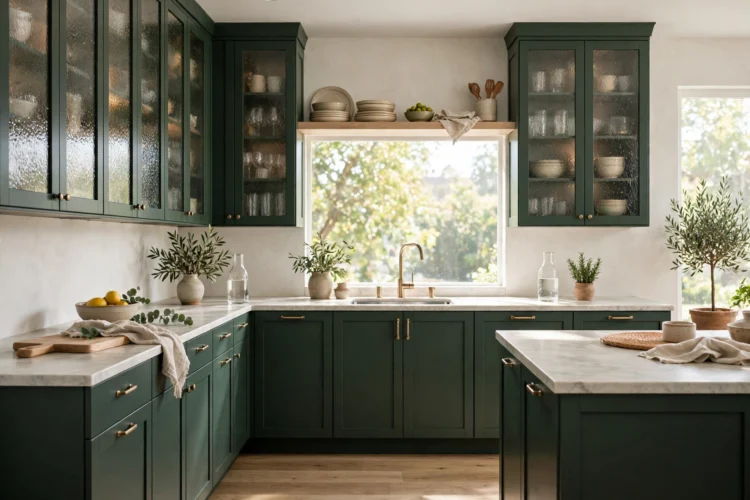
Seeded glass is made with tiny bubbles trapped in the surface, and those bubbles do two useful things. They soften whatever sits behind the glass, so a shelf of mismatched mugs reads as a pleasant blur instead of a mess, and they catch the light in a way flat glass never does. In a kitchen with warm wood or brass, seeded glass feels old in the best sense, like something salvaged from a farmhouse pantry.
The tradeoff is visibility. You will not see the dishes clearly, so seeded glass cabinets suit kitchens where the goal is glow and texture rather than showing off a collection. It also hides fingerprints better than clear glass, which matters on glass cabinet doors you touch ten times a day. Ask your cabinet maker for a sample and hold it up against the dishes you plan to display. If the shapes behind it turn to soft blobs, that is the point. If you wanted to show a specific set, pick clear glass instead.
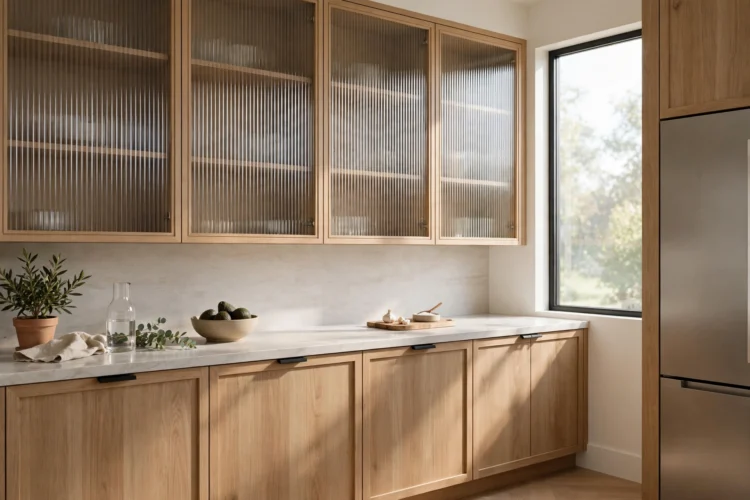
Fluted glass carries thin vertical ribs that bend the light and turn the contents behind it into soft vertical stripes. You can tell there are plates and glasses back there, but you cannot count them or judge their arrangement. That makes fluted glass cabinets the forgiving middle ground between clear glass, which shows everything, and seeded glass, which shows almost nothing.
The ribs also add a pattern of their own, so the door looks finished even when the shelf behind it is half empty. Fluted glass pairs well with slab doors and plain hardware, where the glass supplies the only texture in the room. One caution: the ribs run in one direction, so the glass needs to sit straight in the frame or the lines will look crooked from across the room. Check the alignment before the installer leaves, because a tilted rib pattern is hard to unsee.
Upper cabinets sit at eye level, which is exactly where glass earns its keep. Lower cabinets sit at knee level, where glass shows the contents from a strange angle and takes kicks, scuffs, and spills from everything that happens at counter height. A glass door on a base cabinet also shows the underside of shelves and the feet of dishes, which is rarely a pretty view.
The rule is simple: glaze the uppers, keep the lowers solid. The one exception is a low hutch or a glass-fronted sideboard in a dining area, where the cabinet reads as furniture and people look at it from a chair rather than standing over it. In a working kitchen, solid lowers also give you a place to hide the plastic containers, the cleaning supplies, and the pots with the dented lids. Every kitchen needs that hiding place.
Glass does not have to live on the wall. The back of an island, the side facing the dining table or the living room, is one of the best spots for a glazed cabinet, because it faces the room instead of the cook. A run of glass doors there turns the island into display kitchen cabinets that face the room, and it looks intentional in a way that glass on every wall cabinet never does. See how the island itself can carry the feature in these kitchen island ideas for every size of kitchen.
A freestanding hutch works the same way. One glazed hutch against a dining room wall gives you the display you want without touching the kitchen cabinets at all, which makes it the right move for renters and for kitchens where the cabinets are still in good shape. The principle in both cases is restraint. One glazed feature reads as a choice. Glass on every door reads as a showroom.
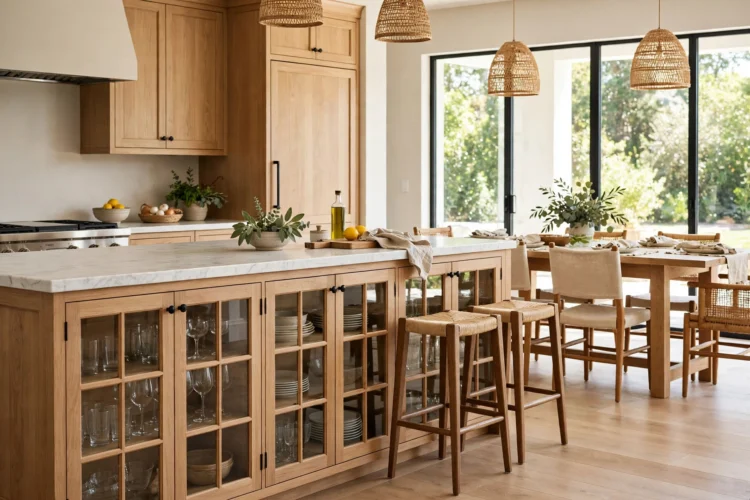
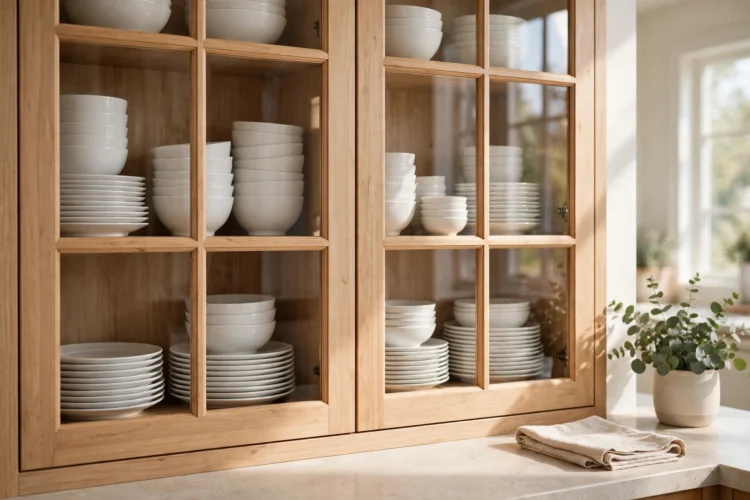
The fastest way to make glass cabinets look cluttered is to fill every shelf edge to edge. The fix is boring and it works: group dishes in threes, stack plates in short piles of six or eight, and leave one stretch of each shelf empty. The empty space is what tells the eye the arrangement was chosen rather than crammed in.
Stick to one or two colors per cabinet. White dishes with one accent color, clear glassware with a single row of amber tumblers, or a set of stoneware in the same glaze will always look calmer than a mix of every color you own. Put the tallest items at the back and the shortest at the front, so each row stays visible. Then step back and look from the doorway, which is the view that matters. If one shelf looks crowded from there, pull two pieces out and try again.
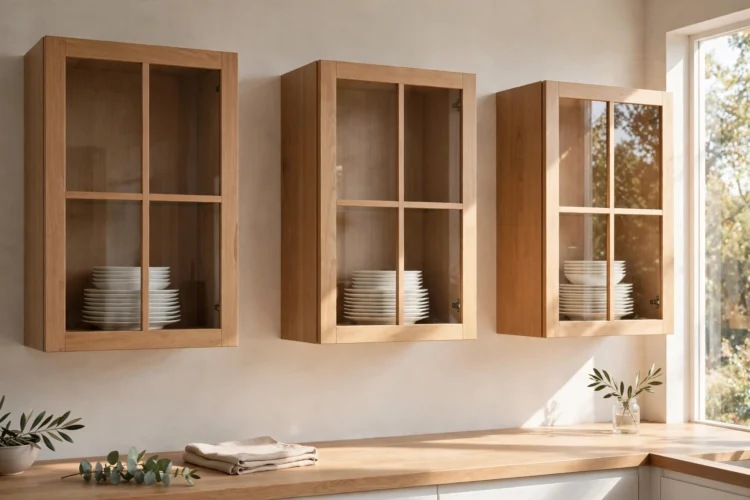
Clear glass against dark cabinets is the highest contrast combination in this list, and it is also the most demanding. Every plate edge and every gap shows, so the styling has to be exact. Seeded or fluted glass softens that contrast and lets dark cabinets keep their mood without turning the display into a test of your tidiness. Your cabinet color choice should drive the glass choice, not the other way around.
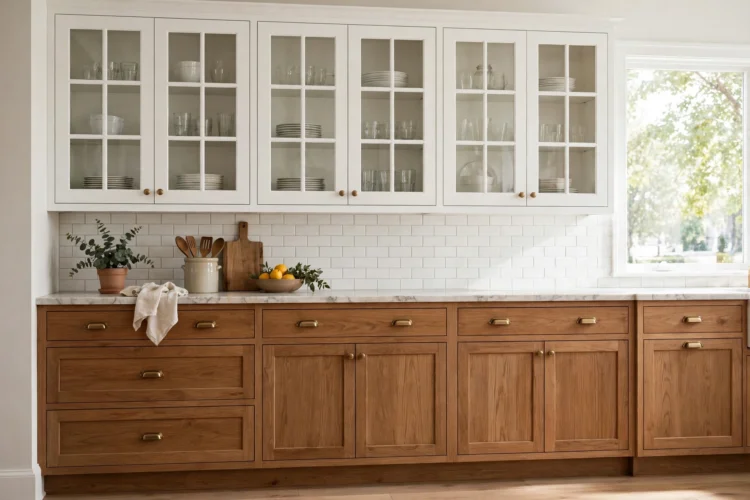
On white cabinets, clear glass is the easy default, because white dishes disappear against white shelves and the glass itself becomes invisible. That is the moment to add contrast inside the cabinet instead: a painted interior in sage or navy, a wood-toned shelf, or a row of colored glasses that reads clearly against the pale background. On wood cabinets, avoid tinted glass in a competing tone. A smoky bronze pane next to warm oak can turn muddy, while plain clear glass lets the wood do the talking.
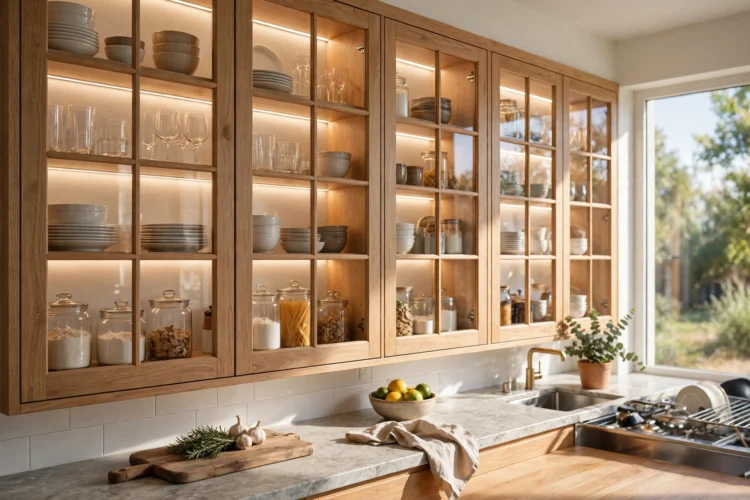
Glass cabinets without light look flat once the sun goes down, and the dishes turn into dark shapes. A slim LED strip along the top of each cabinet, or a small puck light on the underside of each shelf, fixes that for very little money. Warm light suits wood and cream cabinets. Cool light suits white and gray. Keep the light inside the cabinet rather than shining on the glass from outside, which only shows fingerprints. These under cabinet lighting ideas cover the same warm, low-glare approach for the work zones below.
Cleaning is the part nobody photographs. Plan on wiping the glass once a week with a damp microfiber cloth, and keep a second dry cloth for the streaks the first one leaves behind. Glass cleaner works, but plain water and a good cloth do the same job without the smell. Do the inside of the doors at the same time as the shelves, and the whole job takes ten minutes. Skip a month and the grease film from cooking will need a real scrub, so the weekly wipe is the habit that keeps the habit easy.
Pick one run of uppers, choose the glass that fits how tidy you really are, and style only the dishes you like looking at. The rest can stay behind solid doors, doing their job out of sight. That split is what makes glass front cabinets feel like a decision instead of a dare.