Physical Address
304 North Cardinal St.
Dorchester Center, MA 02124
Physical Address
304 North Cardinal St.
Dorchester Center, MA 02124


Eleven family-friendly kitchen ideas built for real family traffic, from kid-height snack zones to surfaces that survive spills, homework, and chaos.
A family kitchen gets more traffic before 8 a.m. than most rooms get all day. Backpacks land on chairs, cereal spills on the counter, and homework spreads across the island while dinner cooks beside it. These family friendly kitchen ideas are built for that reality, not for a showroom, and good kid friendly kitchen design starts from the mess, not from a magazine photo. Each one makes the room tougher, easier to clean, or simpler for kids to use on their own, so the kitchen works for the whole family instead of fighting it. Start with the change that fixes your worst daily mess, then add the rest one at a time.
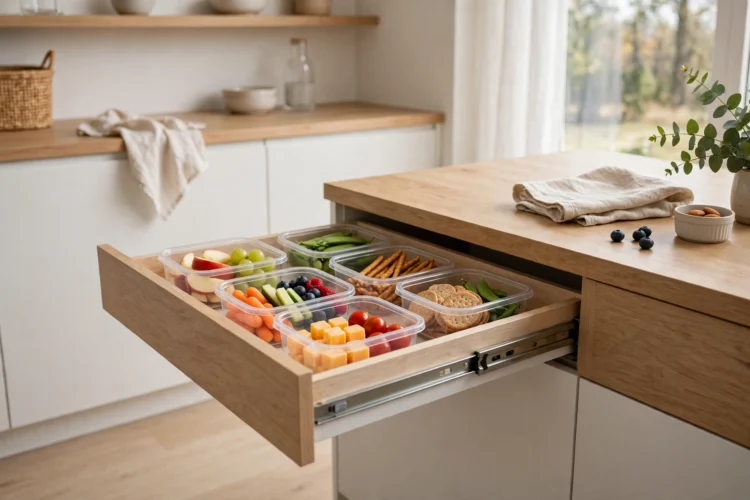
Kids ask for snacks constantly, and a low drawer or shelf they can reach ends the interruptions. Dedicate one low drawer to approved snacks in clear containers, with cups and small plates beside it, so a child can help themselves without climbing or asking. Keep the heavy glass and the sharp tools up high, and keep the snack drawer stocked at the start of each week so the system holds. Label the drawer with a picture for younger kids who cannot read yet. The zone also teaches independence, because a child who can pour their own water and pick their own apple stops needing a parent for every small hunger. Refill the drawer on Sunday night and it runs itself for the rest of the week.
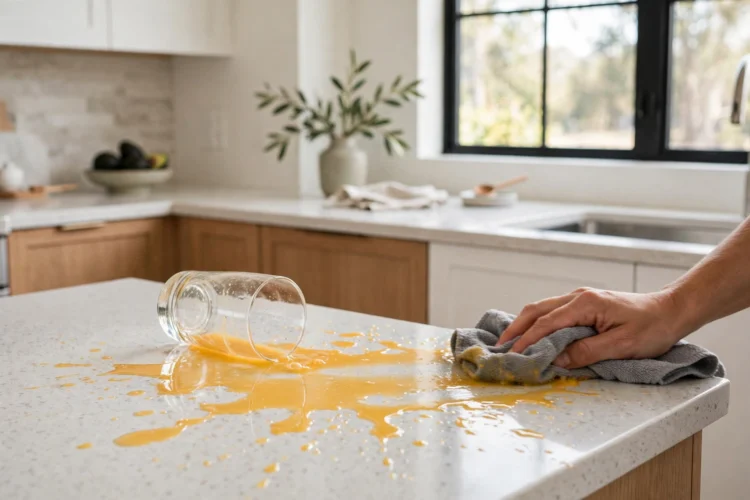
Family kitchens need durable kitchen surfaces that survive juice, tomato sauce, and marker pens without a panic. Quartz counters resist stains and do not need sealing, which makes them a practical pick for a busy household, while a matte or honed finish hides fingerprints better than polished stone. For floors, large-format tile or luxury vinyl handles dropped plates and wet feet, and a single grout color that matches the tile hides the dirt that collects in busy homes. Skip open-pore wood counters near the sink, since standing water marks them fast, and keep a roll of paper towels in the same spot every day so cleanup starts in seconds. A surface that forgives a spill keeps the kitchen calm, because nobody has to gasp when the milk tips over.
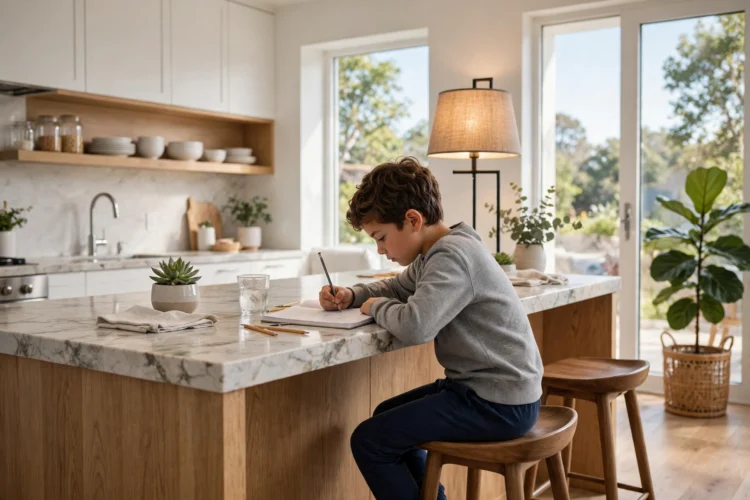
Homework happens in the kitchen whether you plan for it or not, so give it a proper perch. A kitchen homework station can be a stretch of counter at the far end of the island, or a small desk built into the end of a cabinet run, and either one keeps schoolwork visible to a parent and out of the cooking zone. Add two outlets and a task lamp, and keep a basket underneath for pencils, chargers, and the school folder, so the perch clears in one move at dinner time. A built-in kitchen desk does this job neatly when space allows, with storage built in. Set a simple rule with the kids: homework lives on the perch, dinner lives on the table, and the swap takes two minutes. The kitchen stays a family hub without turning into a permanent classroom.
Sharp counter corners sit exactly at head height for a running toddler, so rounding them is one of the highest-value safety changes in a family kitchen. Rounded or bullnose counter edges, soft-close drawers, and cabinet doors without pointed handles all reduce the bumps that come with daily chaos. If replacing a counter is out of reach, add clear silicone corner guards to the worst spots and swap bar pulls for recessed or knob handles that do not catch clothing. Check the island corners first, since that is where kids run past most often, then the table and the open dishwasher door. These changes cost little and prevent the injuries that turn a normal evening into a trip for ice packs and bandages.

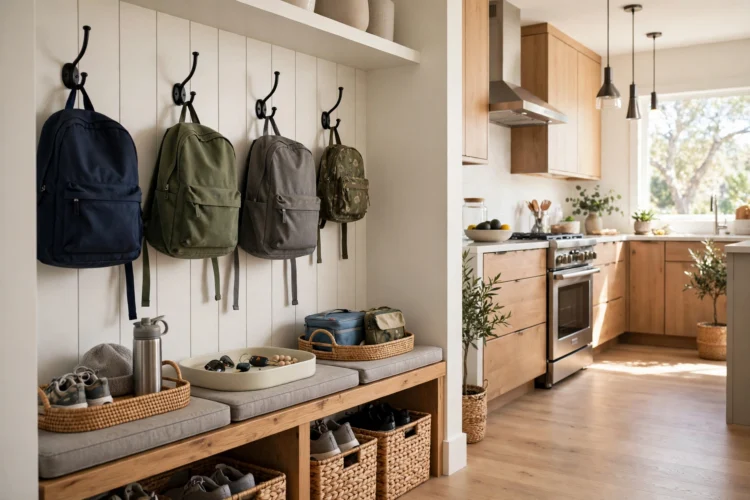
Clutter in a family kitchen usually means things have no home, not that the family owns too much. Smart family kitchen storage starts with a named spot for each person, not with more cabinets. Give every person a landing spot near the entrance: a hook for the school bag, a tray for keys and lunchboxes, and a shelf for the mail. When each item has a named place, the counter stops collecting the whole day in one pile. Use a different hook color or label for each child so there is no argument about whose bag is where. Keep the landing zone shallow, no deeper than a backpack, so it cannot grow into a second closet. A weekly five-minute reset on Sunday keeps the spots honest, and the kids learn the habit faster when their own hook is the one that stays tidy.
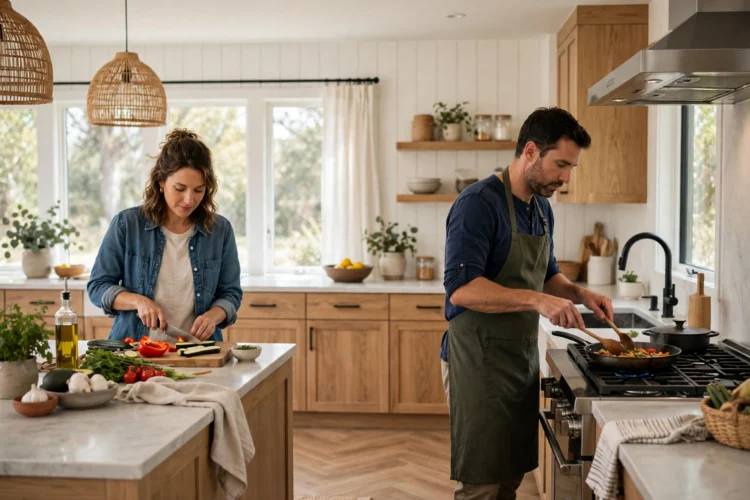
Two adults making breakfast and lunch at the same time need two work zones, not one wide counter. Split the kitchen into a cooking zone around the stove and a prep zone around the sink, each with its own board, knife, and towel, so nobody crosses the other to reach a tool. A second small sink or a large single basin with a divider helps, but the real fix is duplicate basics: two cutting boards, two peelers, and a second set of measuring cups. The guide to two-cook kitchen ideas with dual work zones shows layouts that keep two cooks out of each other’s way. In the morning rush, the zones let one parent pack lunches while the other cooks breakfast, and the kitchen stops feeling like a one-lane road at rush hour.
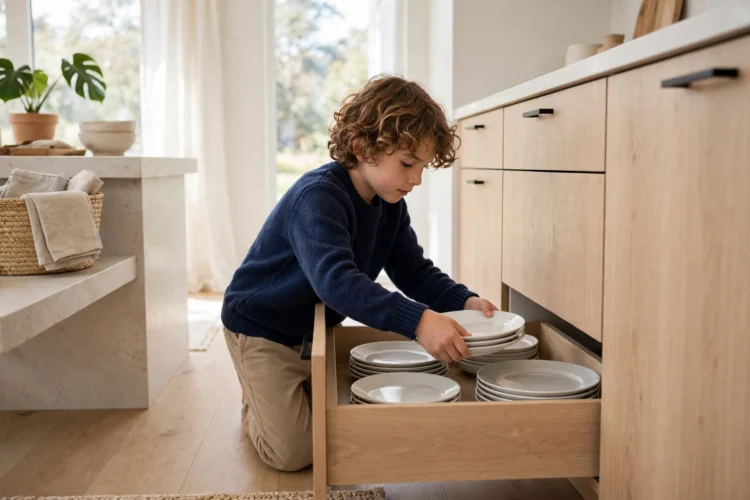
Kids clean up when the job is easy and the target is obvious. Store the plates, bowls, and cups they use in a low drawer or cabinet they can reach, so setting the table and unloading the dishwasher become jobs they can actually do. Use open bins for lunchbox parts, water bottles, and snack containers, and label each bin with a picture or a word. Keep the dishwasher at a height they can load safely, and teach the rule that sharp knives go in a separate spot only adults handle. A step stool that lives in one fixed place helps smaller kids reach the sink to rinse a plate. When cleanup takes two minutes and needs no lifting, kids stop treating it as a chore and start treating it as part of the meal.
Glossy dark cabinets show every fingerprint, and soft wood dents under every toy, so family kitchens need finishes that hide daily wear. Matte or satin cabinet paint in a mid-tone hides smudges far better than high gloss, and a light wood grain hides small dents that would stand out on a flat painted door. Choose recessed or slab doors without raised panels, since flat surfaces wipe clean in one pass and do not collect crumbs in the corners. Add soft-close hinges everywhere, because slammed doors are both noisy and the fastest way to loosen a hinge. If the cabinets are due for paint, pick a washable finish made for kitchens and keep a small pot of the same paint for touch-ups. A cabinet that still looks good after a year of kids is a cabinet that was chosen for real life.

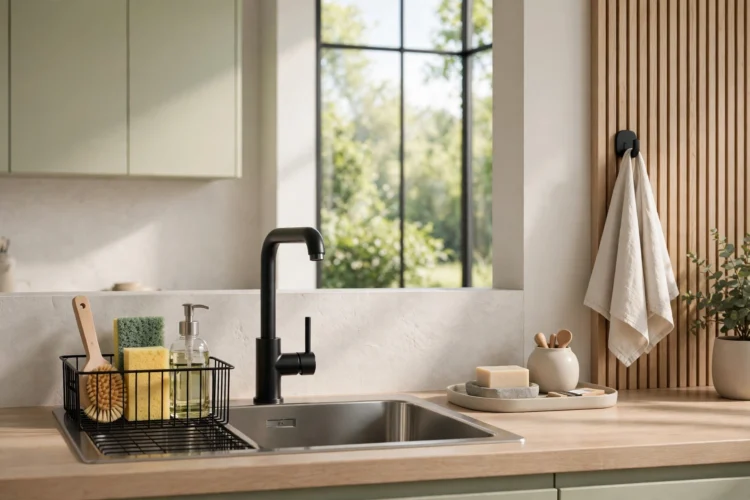
The family sink runs all day, from breakfast bowls to water bottles to muddy hands, so the area around it needs its own system. A caddy under the sink holds soap, sponges, and a brush, while a small tray on the counter catches the items that always sit out. A dish rack that drains into the sink keeps the counter dry, and a hook for the hand towel stops it from landing on the floor. The ideas in kitchen sink organization ideas around the basin cover more ways to keep this hardworking spot tidy. Keep a step stool nearby so kids can wash their own hands without help, and put the soap dispenser where small hands can reach it. A sink area that resets in thirty seconds after each use never builds up into a mess that needs an hour.
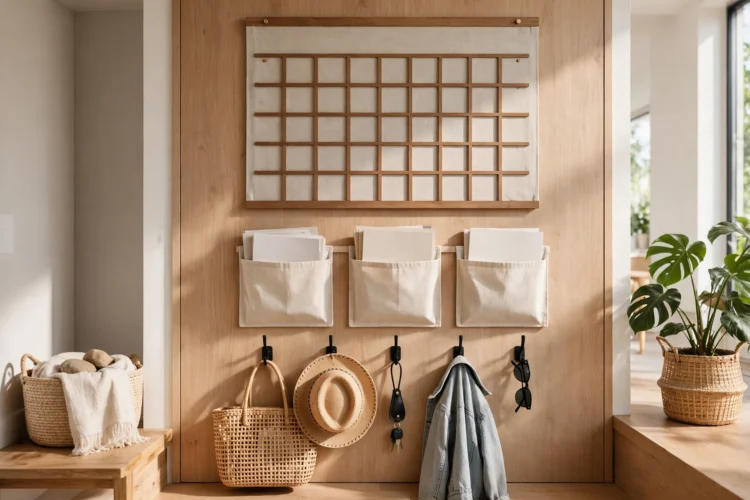
School notes, permission slips, and the weekly schedule need one visible home, or they spread across every surface. Turn one wall or the side of a tall cabinet into a command center with a calendar, a few hooks, and a pocket for papers. Keep it at adult eye level for the calendar and kid eye level for the hooks, so everyone can use it. A chalkboard or whiteboard panel lets the family write the dinner plan and the shopping list in the same place, and a magnetic strip holds the permission slip that needs signing tonight. Clear the board every Sunday and the system stays useful instead of turning into a wall of old paper. One organized wall saves more time than any gadget in the kitchen.
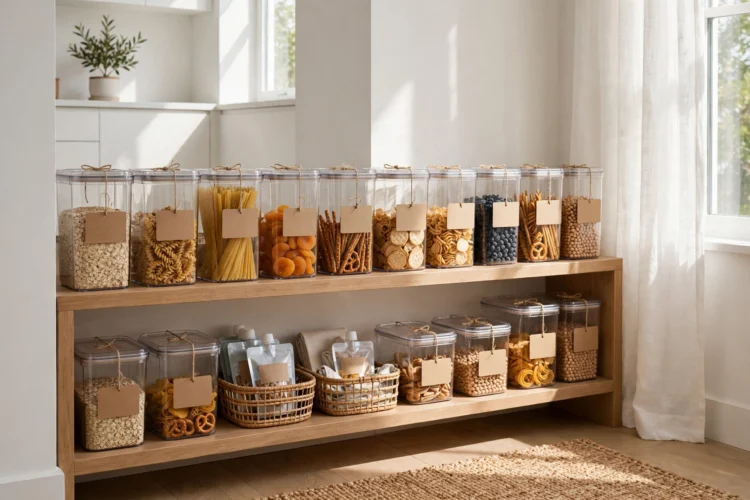
A pantry that only adults can use slows every meal, so put the family staples where kids can reach them. Low shelves hold cereal, pasta, and snack ingredients in clear containers with scoop lids, while the heavy cans and the baking supplies stay higher up. The roundup of kitchen storage ideas for small spaces has more ways to fit a working pantry into a tight kitchen. Label the containers with both a word and a picture for younger kids, and keep a small basket for the lunchbox items that get packed every morning. A pantry that kids can use means they can help make their own lunch, pour their own cereal, and find the crackers without emptying every shelf. That independence is worth more than a perfectly tidy pantry.
A family kitchen does not need to look perfect. It needs to survive breakfast, homework, and a spilled smoothie without a crisis, and to let kids do more for themselves each year. Start with the snack zone and the landing spots, then fix the surfaces and the sink area. The chaos will not disappear, but it will stop living on the counter, and the kitchen will finally feel like it belongs to the whole family.


