Physical Address
304 North Cardinal St.
Dorchester Center, MA 02124
Physical Address
304 North Cardinal St.
Dorchester Center, MA 02124

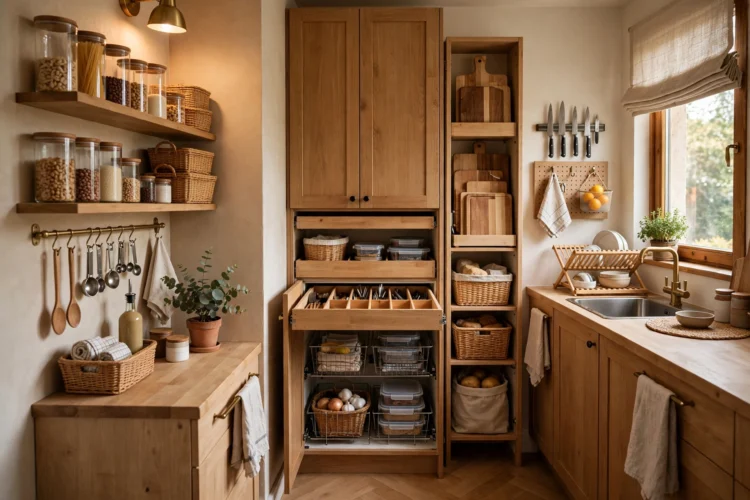
Twelve ways to multiply storage in a compact kitchen: vertical walls, toe-kick drawers, hidden compartments, and double-duty pieces that make a small kitchen feel twice its size.
Small kitchens do not need less stuff; they need storage that works harder. The tricks that multiply capacity in a compact kitchen are vertical thinking, hidden compartments, and pieces that do two jobs at once. These small kitchen storage ideas cover all three, from toe-kick drawers you never knew you had to wall space doing the work of a whole cabinet. Pick the three that fit your layout and your cooking, and a tight kitchen starts feeling twice its size.
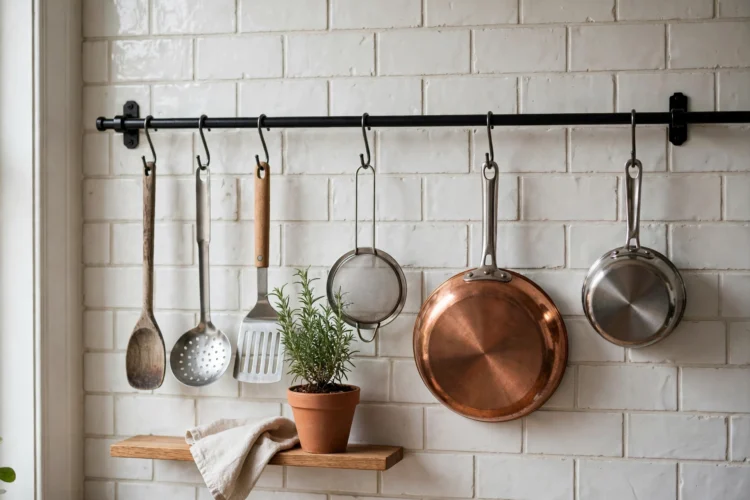
Vertical kitchen storage turns blank wall into cabinet-equivalent space. A wall-mounted rail with hooks holds utensils, small pans, and colanders above the counter; open shelves display everyday dishes where upper cabinets would crowd a narrow room. Keep the lowest rail within easy reach and reserve high shelves for occasional pieces. Mount the rail about 18 inches above the counter so hanging utensils clear your prep work but stay grabbable. In galleys under eight feet wide, wall storage can replace a full run of uppers without losing capacity.
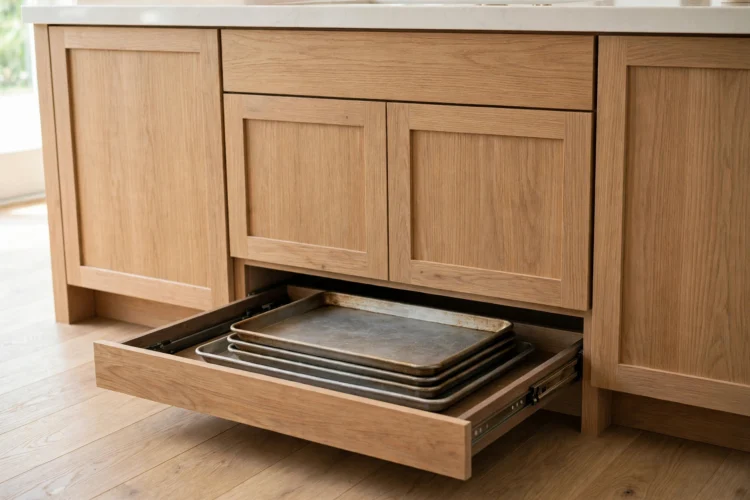
The toe kick, that recessed strip under every base cabinet, hides 3 to 4 inches of usable depth across the whole kitchen run. A toe kick drawer kit converts it into shallow drawers for sheet pans, placemats, serving trays, and other flat items that otherwise lean awkwardly. They open with a toe tap and close flush, invisible when shut. Most kits retrofit existing cabinets with screws and brackets in under an hour. This is pure found space. No layout change, no lost cabinet, only storage that was already there.
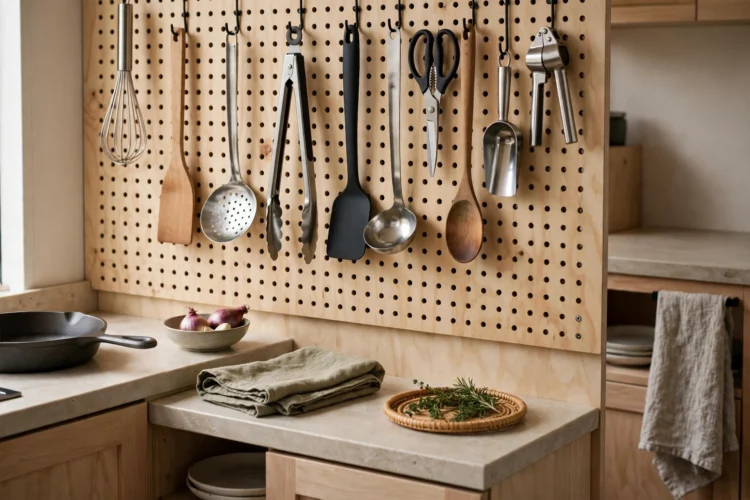
A pegboard panel or stainless rail on an open wall section puts your most-used tools at eye level and off the counter. Arrange hooks by task: cooking utensils near the stove, measuring tools near the prep zone. Unlike a drawer, everything stays visible, which cuts the duplicate-buying that clutters small kitchens. Leave six inches of clearance below hanging items so the counter stays usable for chopping and mixing. Paint the pegboard to match the wall and it reads as intentional design rather than garage overflow.
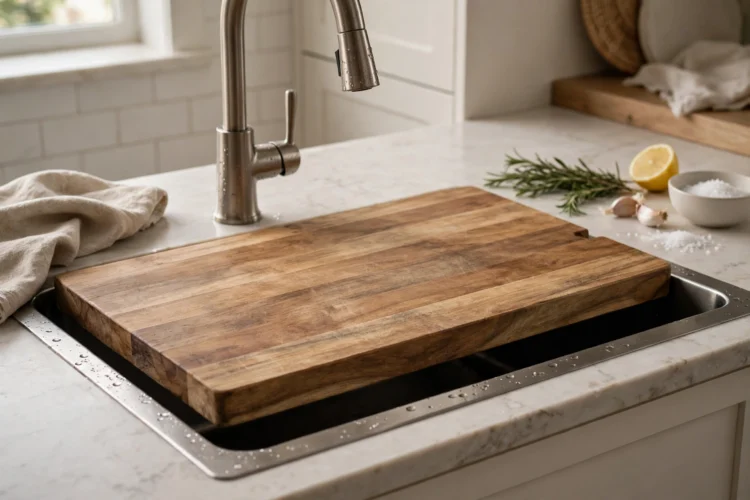
The sink basin is the largest unused surface in a small kitchen between meals. A fitted over-the-sink cutting board turns it into extra prep space, and a roll-up dish rack over one bowl frees the counter beside it. Choose a board that covers at least two-thirds of the basin so it stays stable while you chop. Pair the board with a single deep basin so the setup works hardest; the comparison in these 7 single vs. double basin kitchen sink ideas compared shows which layouts suit over-sink accessories best. Store the board upright in a vertical divider when the sink needs to be a sink.
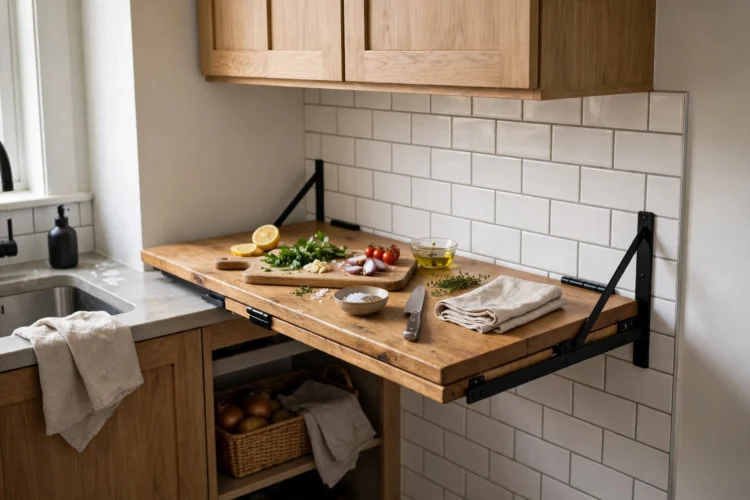
A fold-down table mounted to the wall gives you a breakfast spot or extra prep surface that disappears when dinner is done. Drop-leaf counters work the same way on islands and peninsulas: leaves up for cooking, leaves down for walking space. Mount at standard counter height, 36 inches, so the surface doubles as genuine prep space. Sturdy folding brackets keep the surface steady under a full prep load. For kitchens that also serve as dining rooms, no other piece adds this much function per square foot.
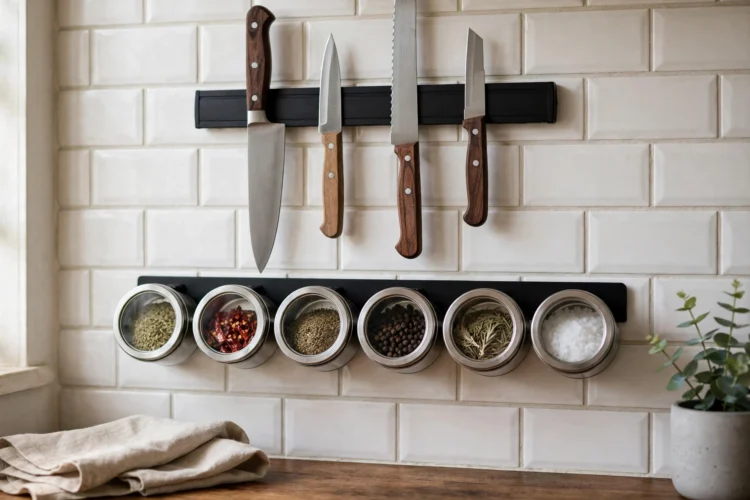
A magnetic strip on the wall or inside a cabinet door holds knives safely without surrendering a drawer to a block, and a second strip with small metal tins organizes spices in a footprint of zero shelf space. Mount the knife strip away from the main walkway at a height children cannot reach. Keep a small gap between knives so blades do not knock against each other when you grab one. For spices, label the tin lids so the strip reads like a menu. Both free the exact drawers and shelves small kitchens cannot spare.
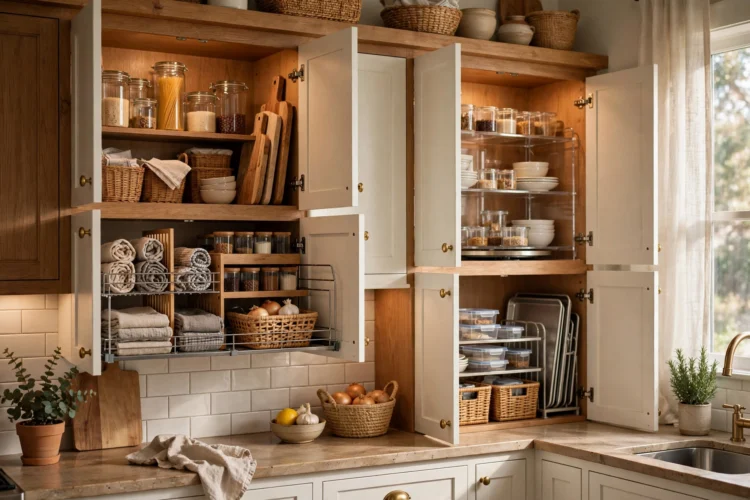
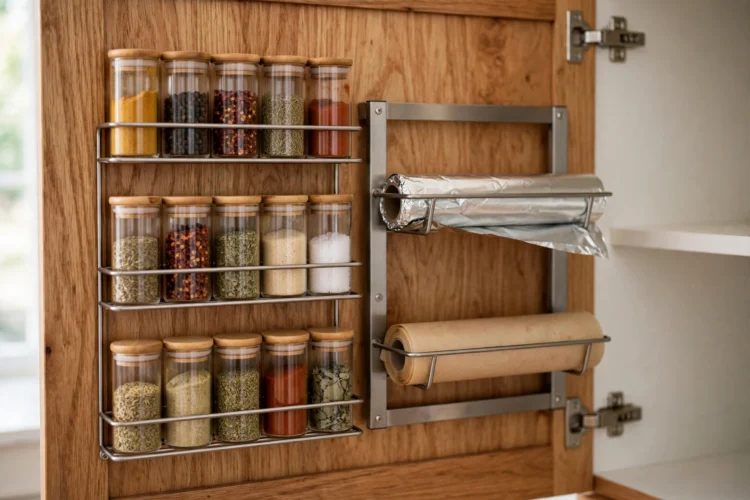
Inside every cabinet door sits a few inches of hidden kitchen storage. Slim racks hold spices, foil, and wraps; small bins catch packets and lids; a mounted paper towel holder frees counter space entirely. Measure the door’s interior depth and check that organizers clear the shelves when closed. Adhesive-mounted bins work for renters, while screwed racks hold heavier items for the long term. Combined with the systems in these 15 kitchen organization ideas for cluttered cabinets, door interiors can absorb a surprising share of daily clutter.
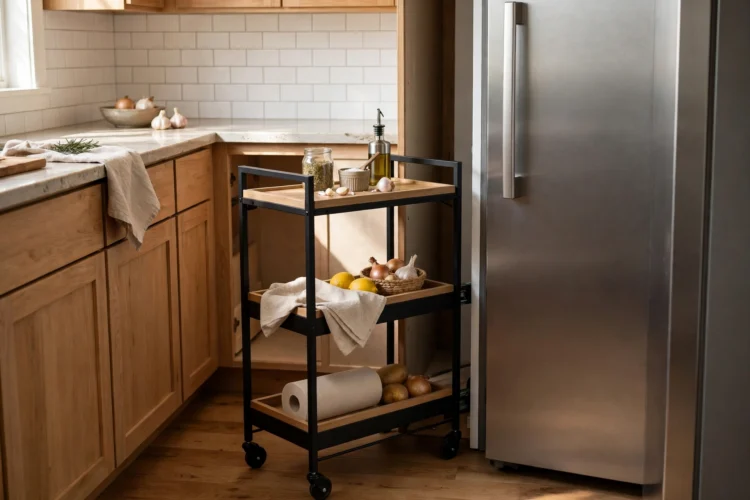
Most kitchens have a dead gap of 6 to 8 inches between the fridge and the wall or counter. A narrow rolling cart slides into exactly that slot and holds cans, oils, spices, or cleaning supplies on tiered shelves. Pull it out like a drawer when you need something, roll it back when you do not. Use the top tier for daily cooking oils and the lower tiers for cans and backup supplies. Measure the gap before ordering; carts come in 5, 6, and 8 inch widths and the fit needs to be snug but smooth.
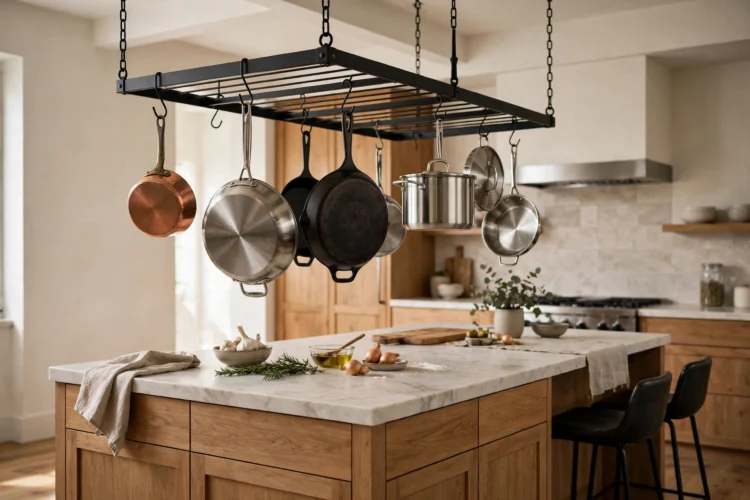
Pots and pans are the bulkiest items in any kitchen, and hanging them overhead removes a whole cabinet’s worth of volume. A ceiling-mounted rack over an island or a wall-mounted rail near the stove keeps cookware visible and reachable. Hang only what you use weekly; the fondue pot from 2019 can live in high storage. S-hooks in two sizes let you hang everything from ladles to colanders on the same rack. Check ceiling joists before mounting, since a loaded rack is heavy, and keep hanging pans clear of head height over walkways.
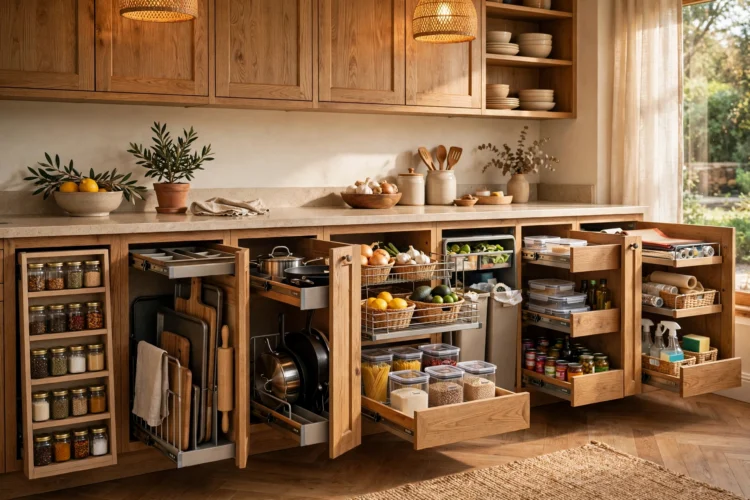
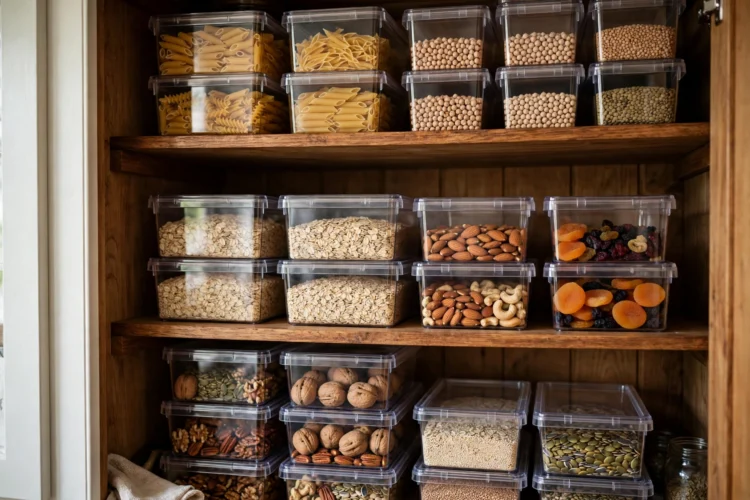
Deep shelves waste their back half because items vanish behind the front row. Stackable clear bins turn each shelf into pull-out zones: one bin for baking, one for snacks, one for canned goods. You pull the whole bin forward instead of excavating. Front-facing labels turn the bins into a filing system the whole household can follow. Label the bin fronts so the system survives other household members. For shelves deeper than 20 inches, consider the hardware in these 10 pull-out kitchen storage ideas for deep cabinets instead.
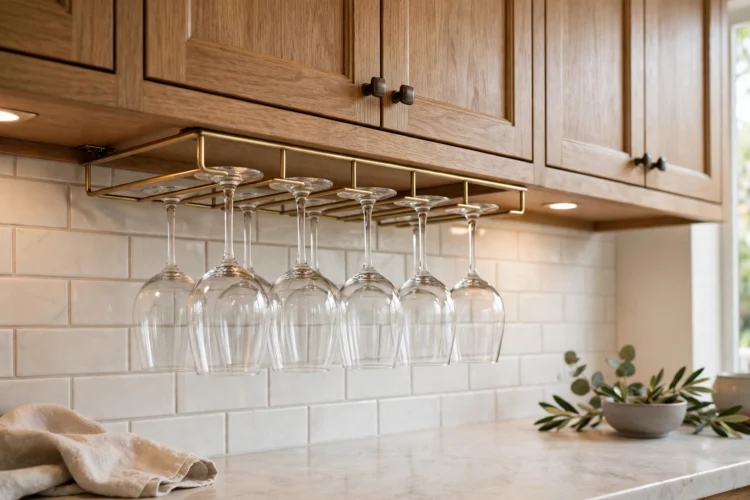
The underside of upper cabinets is another free surface. A stemware rack screwed underneath holds wine glasses by their bases, safe and dust-free; simple hooks underneath do the same for mugs. Both keep fragile items out of crowded shelves where chips happen. Install the rack toward the front of the cabinet so glasses slide in and out without deep reaching. Reserve this for pieces you use often enough to stay dust-free, and keep rarely used glassware in closed storage instead.
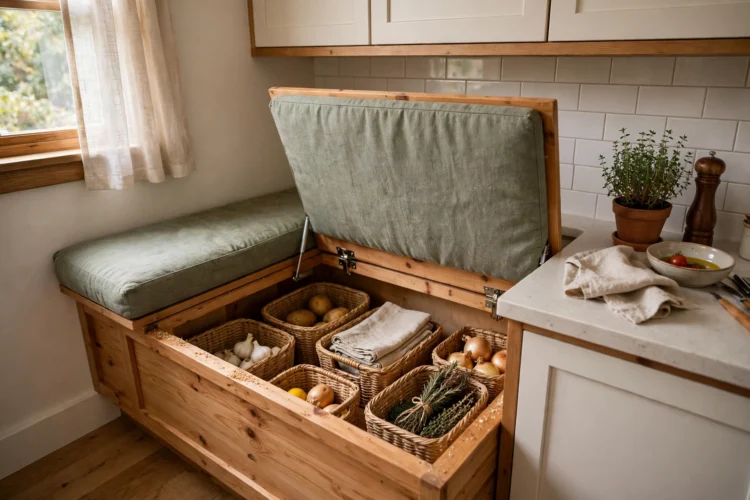
If your small kitchen has an eat-in corner, make the seating earn its footprint. A banquette bench with a hinged top or pull-out drawers swallows small appliances, table linens, pet supplies, and bulk pantry overflow. Build the seat at 18 inches high with a cushion for dining comfort. Lift-up lids work better than drawers here, since the bench top opens fully for bulky items. This single piece can replace a whole closet’s worth of overflow storage while giving the kitchen its dining spot back.