Physical Address
304 North Cardinal St.
Dorchester Center, MA 02124
Physical Address
304 North Cardinal St.
Dorchester Center, MA 02124

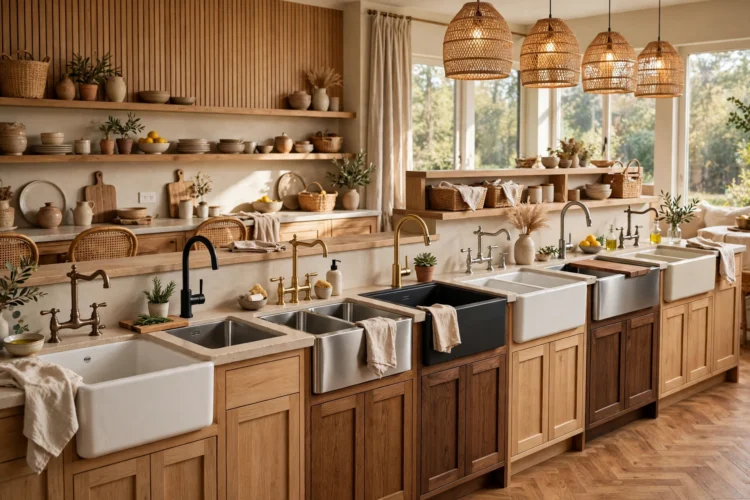
Single or double basin? This honest comparison walks through seven real sink setups, from baker-friendly single bowls to low-divide doubles, so you can match the basin to how you actually cook.
Picking between a single vs double kitchen sink sounds like a small decision until you live with the wrong basin for a year. The layout decides whether your half-sheet pans lie flat, whether you can soak a roasting pan while rinsing vegetables, and how much counter space goes to plumbing instead of prep. Standard single bowls run 25 to 33 inches wide with bowls 8 to 10 inches deep, while classic doubles land at 33 to 36 inches wide, split 50/50 or 60/40. Those numbers matter, but daily habits matter more. These seven setups compare the real trade-offs, with honest notes on which cook each one serves: the baker, the hand-washer, the dishwasher devotee, and the small-kitchen owner counting every inch.
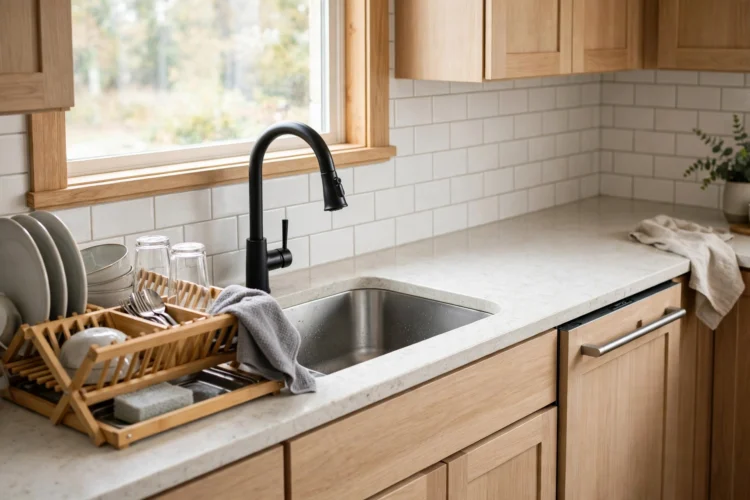
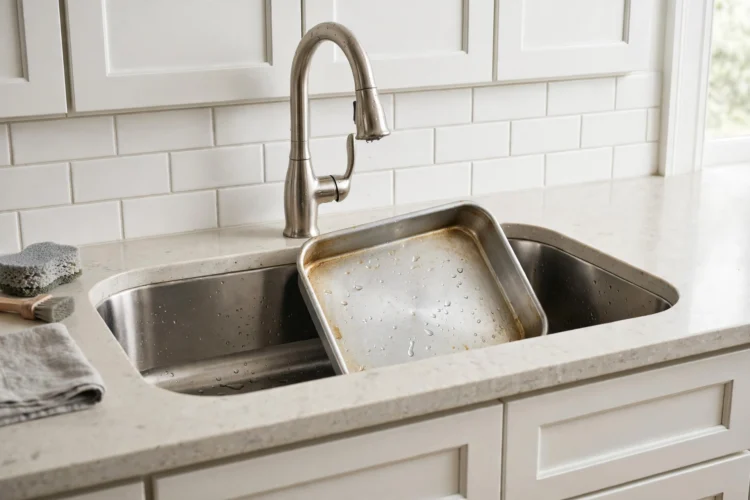
A wide single bowl, usually 30 to 33 inches, gives you one uninterrupted basin. An 18 by 13 inch half-sheet pan lies flat for soaking, stockpots sit fully underwater, and there is no center divider to bang pans against when you scrub. If you bake weekly or batch-cook on Sundays, the single bowl sink benefits show up immediately: fewer awkward angles, faster soaking, and room to stack a whole meal’s worth of prep bowls off to one side. The trade-off is sharing space. Dirty dishes, soaking pans, and rinsed produce all occupy the same basin, so the sink looks busier between cleanups. A dish rack on the counter beside it absorbs most of that overflow. For a classic look in this generous size, browse these 9 farmhouse sink ideas for classic kitchen charm and notice how many choose one deep basin over two.
The 50/50 double has two equal bowls, each around 14 to 16 inches wide, and it exists for one workflow: wash in one side, rinse in the other. Cooks who hand-wash everything, from wine glasses to skillets, get a real assembly line instead of one crowded basin. One side can hold hot soapy water while the other stays clear for rinsing produce or draining pasta, which keeps food prep and dirty dishes from colliding. The cost is width without depth of use. Neither bowl fits a half-sheet pan flat, and large stockpots straddle the divider, which makes soaking the biggest items awkward. In the single vs double kitchen sink debate, this layout wins for households that wash by hand daily and lose for anyone whose largest pan defines the sink. Measure your widest pan against a 15 inch bowl before committing.
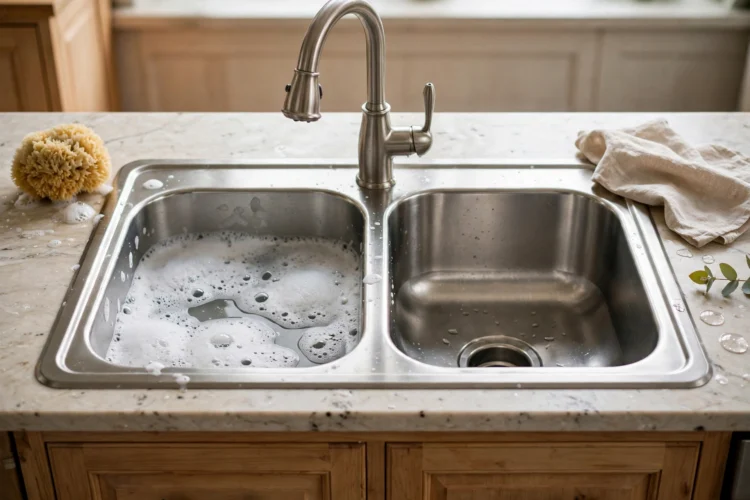
The 60/40 split answers the most common complaint in the double basin sink pros and cons list: neither bowl is quite big enough. Here the larger bowl, often 17 to 20 inches wide, handles sheet pans and stockpots with far less wrestling, while the smaller side stays free for rinsing vegetables, thawing meat, or parking a dish rack. It is the most popular compromise for a reason. You keep the two-zone workflow of a double without giving up the whole basin to small compartments. Watch the divider height, though. Some 60/40 models keep a full-height divider, which still blocks wide pans from lying across both bowls. Pair the smaller side with smart habits from these 10 kitchen sink organization ideas around the basin so the rinse bowl stays clear instead of becoming a second junk drawer for dirty dishes.
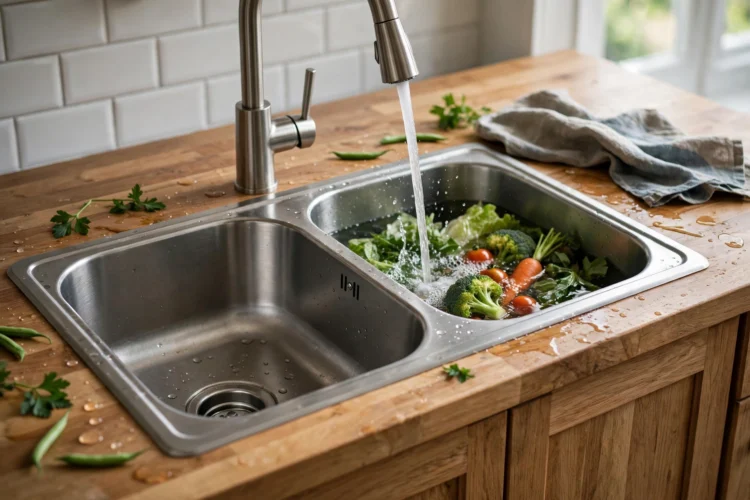
A workstation sink takes a single bowl and cuts a ledge into the rim so accessories slide across it: cutting boards, colanders, drying racks, and prep trays. The basin stops being only a washing spot and becomes a prep station, which matters in kitchens where counter space is tight. Chop vegetables over the colander insert and scraps fall straight through; slide the cutting board aside and rinse underneath without moving anything off the counter. Most workstation models run 27 to 36 inches wide with 9 to 12 inch deep bowls, giving serious capacity for both jobs. The catch is accessory dependence. Without the fitted pieces, it is an ordinary single bowl at a premium price, so buy the bundle with the accessories you will actually use weekly. Finish the setup with a faucet that reaches every corner, like the options in these 11 kitchen faucet ideas from brass to matte black.
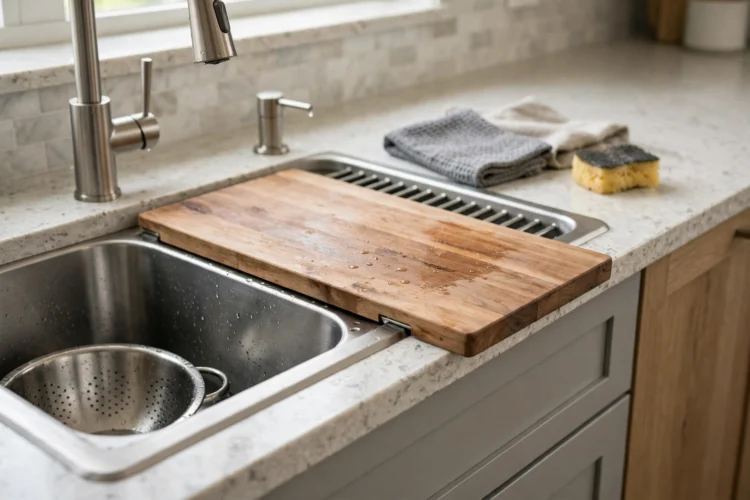
Low-divide doubles keep two basins but drop the center divider a few inches below the rim. Wide items like baking sheets and roasting pans can lie across the top of the divider, resting on both bowls at once, while the lower section still separates wash water from rinse water for everyday dishes. It is the quietest compromise among kitchen sink basin types, and it suits cooks who want two zones on weekdays and one big soaking area on baking days. Cleaning takes slightly more attention since the divider creates an extra edge to wipe, and the bowls still run narrower than a true single, so the very largest stockpots may not sit flat. Check the divider height in person if you can. A divider that sits only an inch below the rim behaves almost like a single bowl; one that drops four inches feels like a standard double.
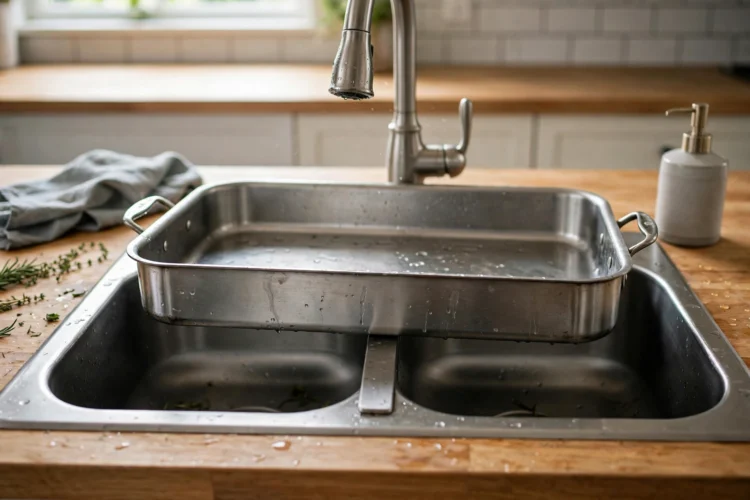
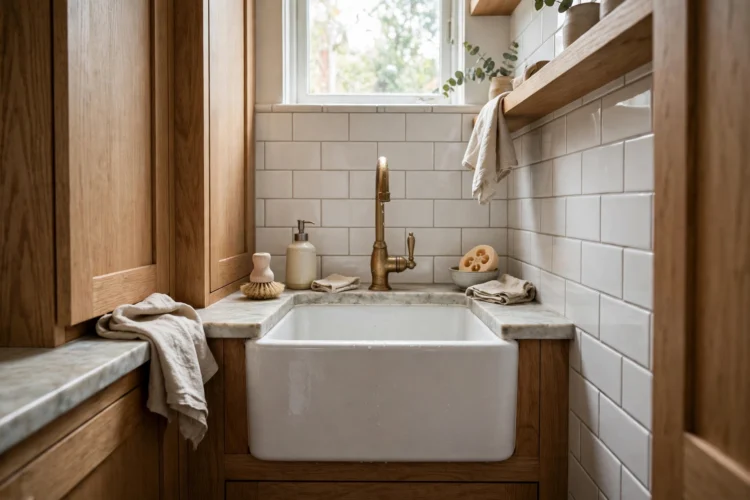
Not every kitchen can spare 33 inches. Compact single bowls at 22 to 25 inches wide fit a standard 24 inch sink base and leave the surrounding counter free for prep, which in a galley kitchen is worth more than a second basin. One deep bowl still swallows a stockpot and a stack of dinner plates; it asks you to wash in sequence instead of in parallel. This is the right call for solo cooks, couples with a dishwasher, and anyone whose kitchen measures its counter in inches rather than feet. Style does not have to suffer at this size. These 8 apron-front sink ideas for small kitchens show how a compact basin with an exposed front becomes a design feature instead of a compromise. Skip the double at this width. Two tiny bowls serve nobody well.
Settle the single vs double kitchen sink question by auditing your own week. Hand-wash most dishes by hand every night? A 50/50 or 60/40 double keeps the assembly line moving. Own a dishwasher that handles the plates while you cook big? A single bowl gives the prep and soaking space you actually use. Bake with half-sheet pans weekly? Nothing beats one wide, deep basin. Work in a galley kitchen under 100 square feet? The compact single protects your counter. There is no universally better basin, only the one that matches how water, dishes, and food move through your kitchen on a Tuesday night. Pick the layout for the cook you are, measure your largest pan against the bowl dimensions, and choose the divider height deliberately. The right basin disappears into your routine; the wrong one nags you at every meal.