Physical Address
304 North Cardinal St.
Dorchester Center, MA 02124
Physical Address
304 North Cardinal St.
Dorchester Center, MA 02124

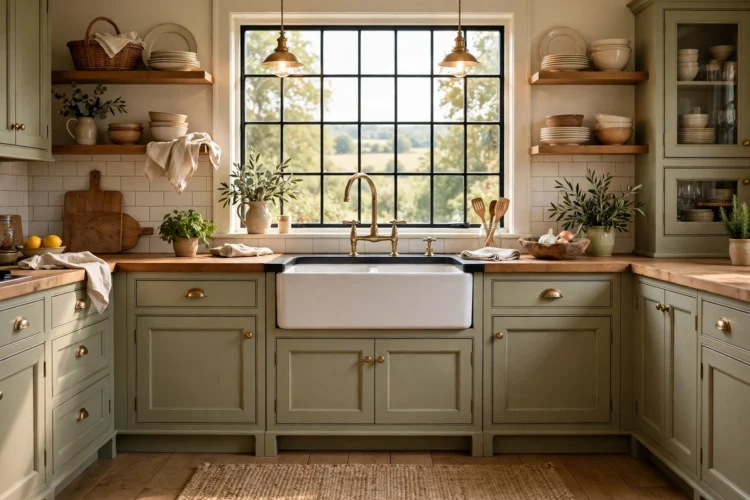
An apron-front sink sets the tone for a whole farmhouse kitchen. These nine farmhouse sink ideas pair materials, cabinets, and faucets by style.
Nothing says farmhouse kitchen like an apron front that faces the room. These farmhouse sink ideas span fireclay, copper, stainless, and composite, with cabinet and faucet pairings for each one. Before you fall for a look, check the fit. A full-size apron front kitchen sink usually needs a 36-inch sink base cabinet with a cutout front, and fireclay basins are heavy enough to need extra support blocking inside the cabinet. Pick your material, confirm your cabinet, then style around it.
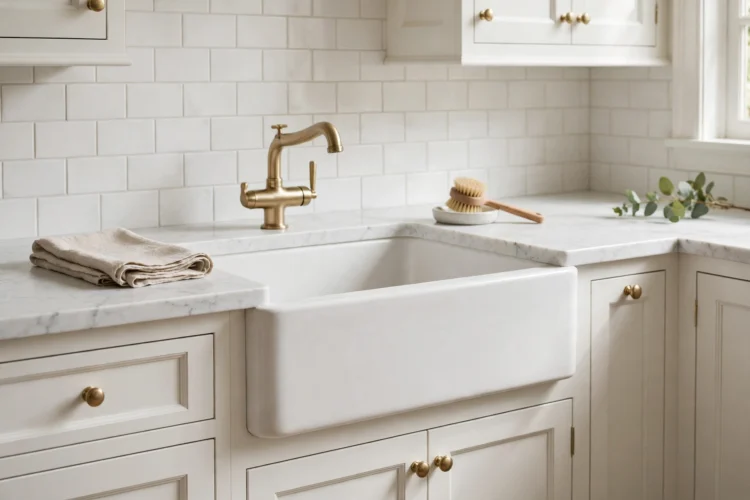
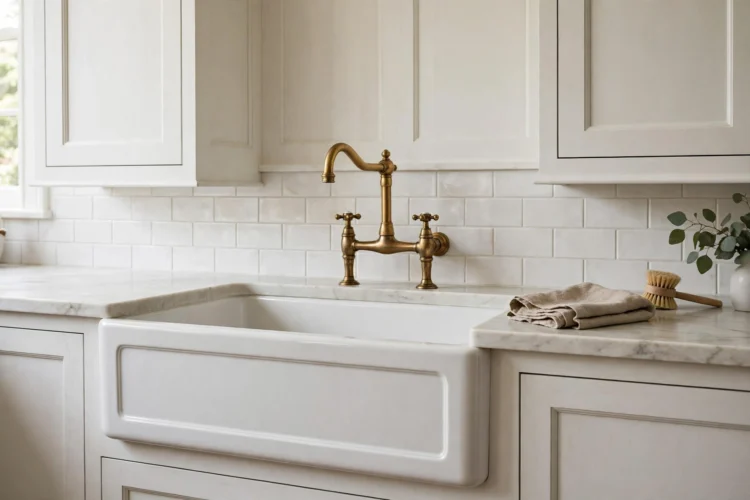
This is the farmhouse sink look most people picture. A glossy white fireclay farmhouse sink set into white or cream shaker cabinets, finished with an unlacquered brass bridge faucet. The combination is timeless because every element is simple. Nothing fights for attention.
Fireclay resists stains and heat well, but the glaze can chip if you drop a cast iron pan. A stainless bottom grid protects the basin and is worth the small extra cost. If you are choosing the faucet too, our kitchen faucet ideas guide walks through brass finishes that age gracefully next to white fireclay.
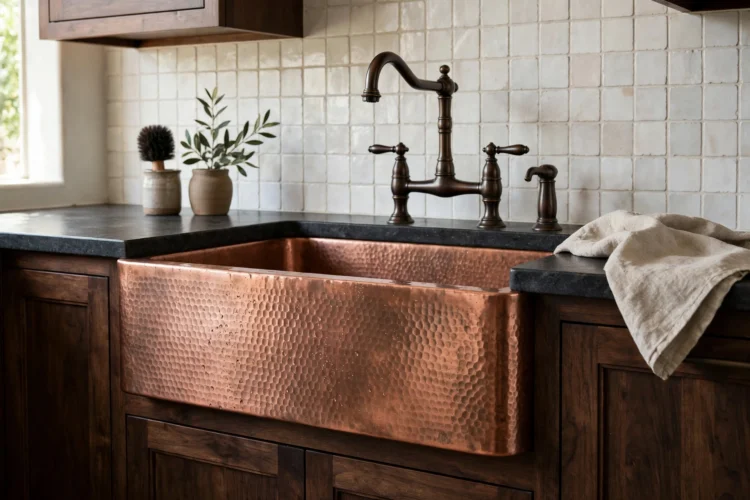
A copper farmhouse sink brings warmth that white basins cannot. The hammered texture catches light and hides water spots, which makes it forgiving in a hardworking kitchen. Set it against dark walnut or espresso-stained cabinets and the copper glows like jewelry.
Copper develops a living patina, so expect the color to deepen and vary over time. That is the appeal, not a flaw. Clean it with mild soap only. Harsh chemicals and abrasive pads strip the finish unevenly. Pair it with an oil-rubbed bronze or antique copper faucet so the metals harmonize instead of clashing.
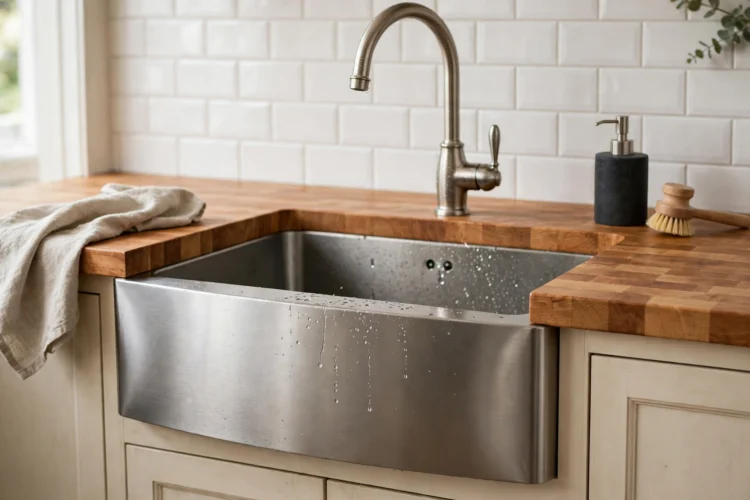
An apron front kitchen sink in stainless steel gives you the farmhouse shape with a workhorse material. It shrugs off heavy pots, resists staining, and costs less than fireclay. With a warm butcher block countertop, the industrial edge of stainless softens into something that feels right at home in a farmhouse kitchen.
Choose 16-gauge steel over thinner 18-gauge. The thicker basin dents less and sounds quieter when the disposal runs. Brushed finishes hide scratches better than mirror polish. A simple gooseneck faucet in stainless or matte black keeps the look clean. This pairing also suits a transitional kitchen that is not fully committed to the farmhouse label.
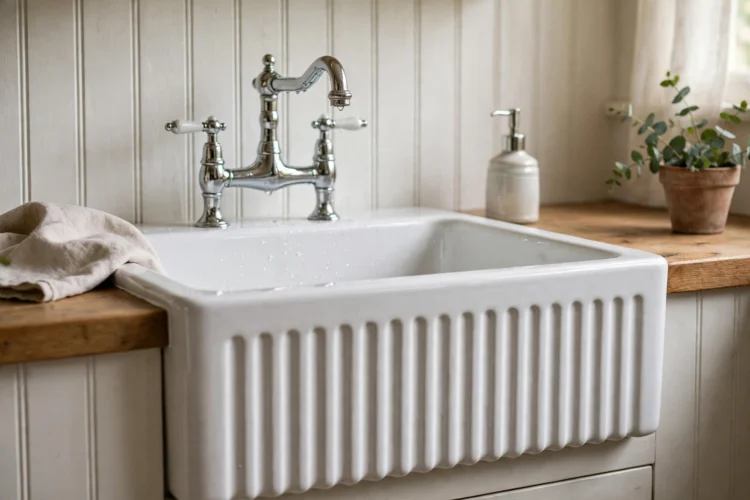
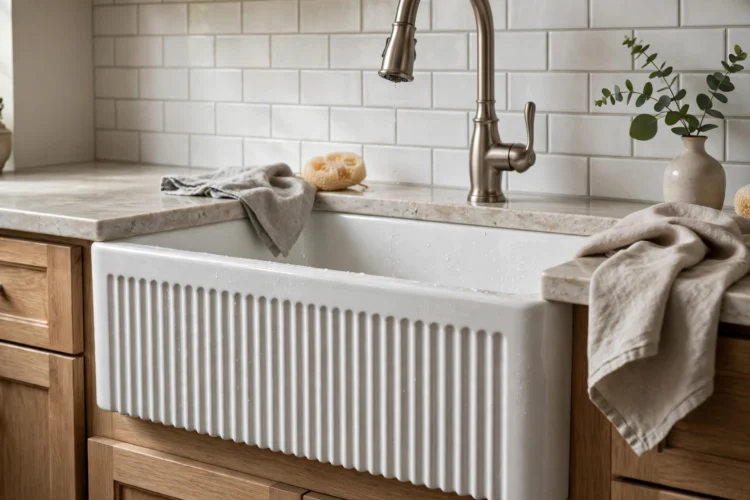
A fluted apron front adds a furniture feel that a smooth front cannot match. The vertical grooves catch shadows and give the sink presence, which makes it a strong pick for cottage kitchens with beadboard, open shelving, and vintage touches. White fireclay is the classic material for this style.
Fluting does collect dust in the grooves, so keep a soft brush handy for the weekly wipe-down. The style pairs naturally with chrome or polished nickel faucets, which echo the crisp cottage look. Keep the surrounding palette light. Fluted fronts look heaviest when the cabinets around them go dark. Finish the vignette with warm kitchen sconce lighting above the beadboard to keep the cottage glow going after dark.
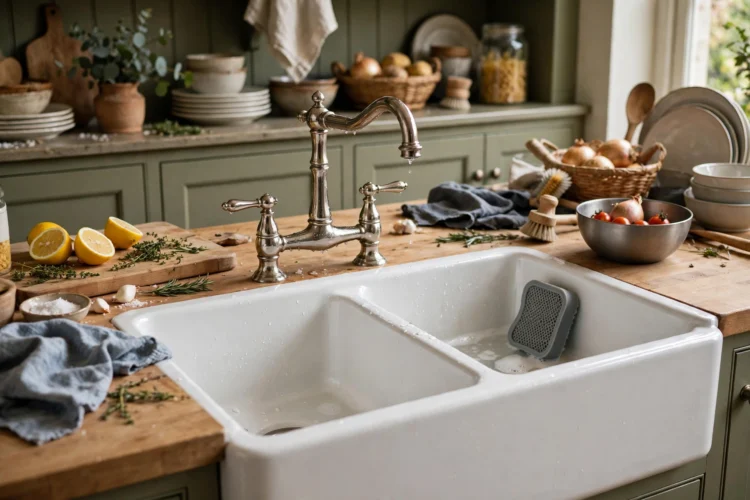
Single bowls dominate farmhouse style, but a double-bowl fireclay sink suits a cook who soaks on one side and rinses on the other. You keep the classic apron front while gaining a workflow that a big single basin cannot offer. Families that hand-wash most dishes will feel the difference daily.
Each bowl runs smaller than a single-bowl basin, so check that your largest sheet pan fits before committing. A low divider helps here, giving you two zones without fully splitting the space. Not sure which layout fits your habits? Our single vs. double basin comparison breaks down the tradeoffs in detail.
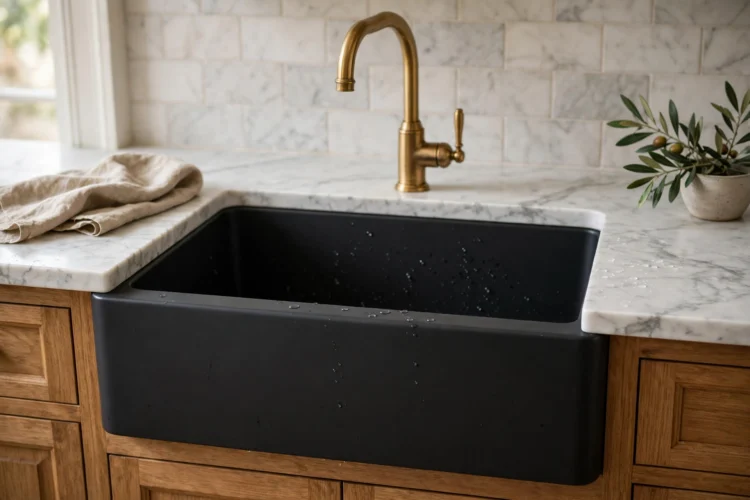
Of all the farmhouse sink ideas here, matte black composite is the boldest. A black apron front against white cabinetry creates a graphic focal point that reads modern farmhouse rather than vintage. Granite composite shrugs off scratches and heat, and the dark color hides the wear that shows on white basins.
Water spots show more on black, so keep a squeegee or microfiber cloth nearby if your water is hard. Pair it with a brushed brass or gold faucet for contrast, or go all black for a moody, cohesive look. White marble-look counters keep the combination from feeling too heavy.
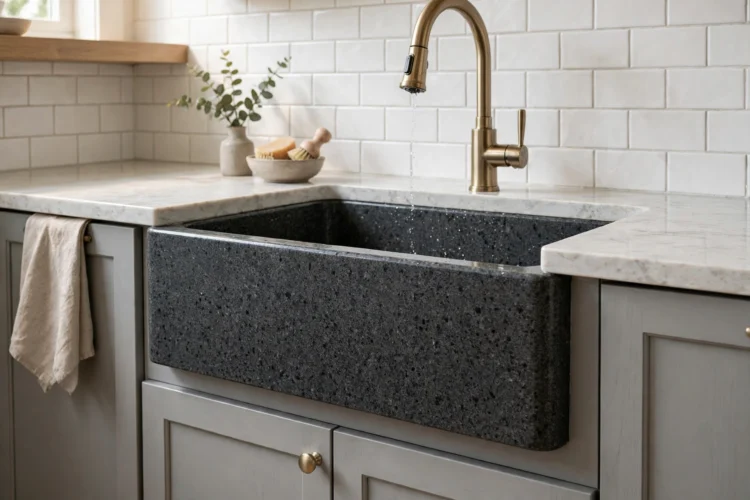
Granite composite in gray, brown, or speckled finishes bridges rustic and contemporary. The stone-like texture feels at home with shaker cabinets and wood accents, while the clean apron lines keep it current. It is a practical pick for households that want the farmhouse look without babying a glaze.
Composite resists chips better than fireclay and costs less than copper. The tradeoff is a matte texture that some cooks find less luxurious than glazed ceramic. Pair it with a simple pull-down faucet in a matching dark finish. If your cabinets are gray, choose a composite tone a few shades darker for definition.
Some fireclay sinks ship with a smooth front on one face and a fluted front on the other. You choose the style at installation, which removes the hardest decision from the purchase. It also future-proofs the kitchen. If you restyle from cottage to modern in ten years, flip the sink during the next countertop swap.
The catch is commitment at install time. Once the countertop goes on, flipping means a full removal. Decide before the template is cut, and mark which side faces out for the installer in writing. This feature appears mostly on 30 and 33 inch fireclay models, so confirm availability in your size.
A short-apron sink trims the height of the visible front, usually to around 7 inches instead of the standard 9 or 10. The result keeps the farmhouse character but shows less ceramic, which suits kitchens where the sink wall is broken up by drawers or where you want the countertop to dominate.
The shallower apron also means a slightly shallower basin on some models, so check the interior depth if you wash tall stockpots. Pair it with a low-profile farmhouse sink cabinet that keeps the drawer stack below intact. Finish the look with a bridge faucet in aged brass for a quietly traditional feel.