Physical Address
304 North Cardinal St.
Dorchester Center, MA 02124
Physical Address
304 North Cardinal St.
Dorchester Center, MA 02124

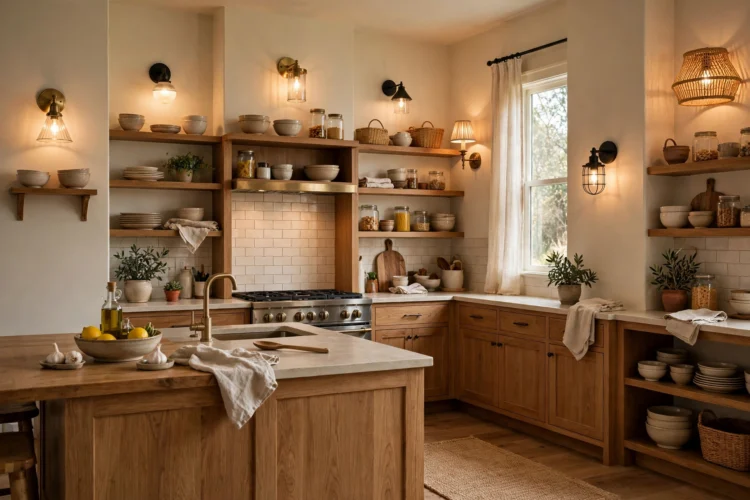
Wall sconces add warm, layered light where overhead fixtures fall flat. These seven kitchen sconce ideas show exactly where to place them for the biggest glow.
Overhead lights do the heavy lifting in a kitchen, but they leave walls flat and corners dull. That is where kitchen sconce lighting earns its keep. A pair of small sconces beside a window or a single picture light over framed art adds a warm layer that makes the whole room feel finished. Sconces also work where pendants cannot, like tight walls, shallow nooks, and the short stretch above open shelves. The seven ideas below cover the spots where sconces shine brightest, with placement notes, bulb tips, and wiring options for renters and owners alike. They also sip electricity, especially with LEDs, so leaving them on through the evening costs very little.
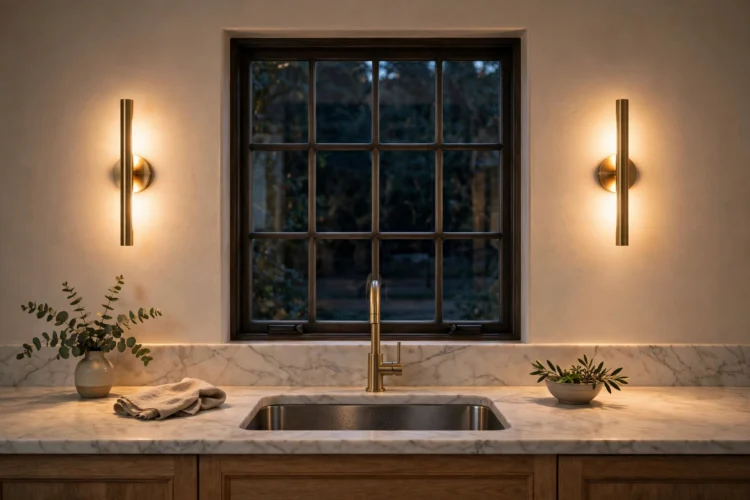
The wall on either side of a window over the range or sink is often dead space. Two matching sconces turn it into a focal point. Choose slim armed sconces in brass or black metal so they read as jewelry against the tile. Mount each one about a hand’s width from the window trim, centered at roughly eye level so the glow lands on the counter below.
Pick a warm bulb around 2700K and keep the wattage modest. You want a soft wash, not a spotlight. If your window sits between upper cabinets, a kitchen wall sconce with a narrow backplate fits the gap without crowding the trim. Hardwired sconces look cleanest here, but battery-powered conversions exist if opening up the wall is off the table. If the wall is tiled, look for a sconce with a mounting canopy wide enough to cover the tile cutout cleanly.
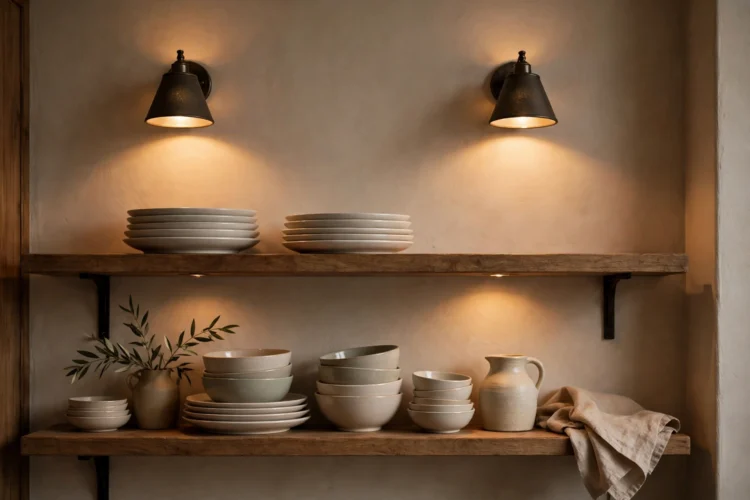
Open shelves look best with a little drama, and a row of small sconces mounted on the wall just above them delivers it. The light grazes down across stacked bowls and glassware, which makes everyday dishes look styled. This is the classic use of kitchen sconce lighting on a shelf wall, and it suits kitchens from farmhouse to modern.
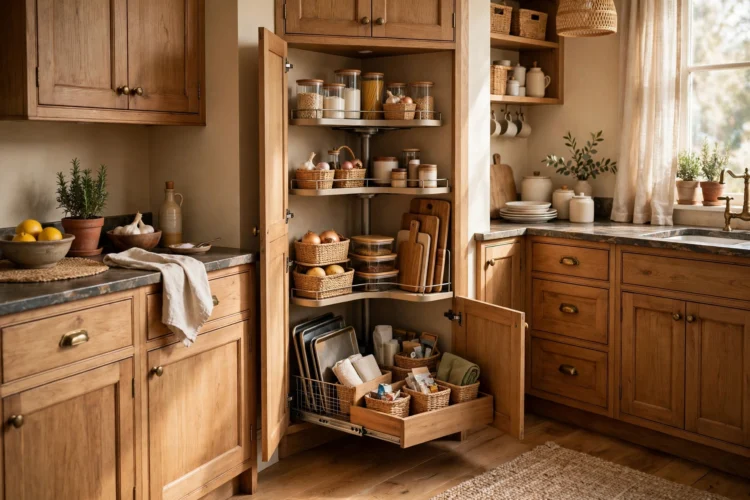
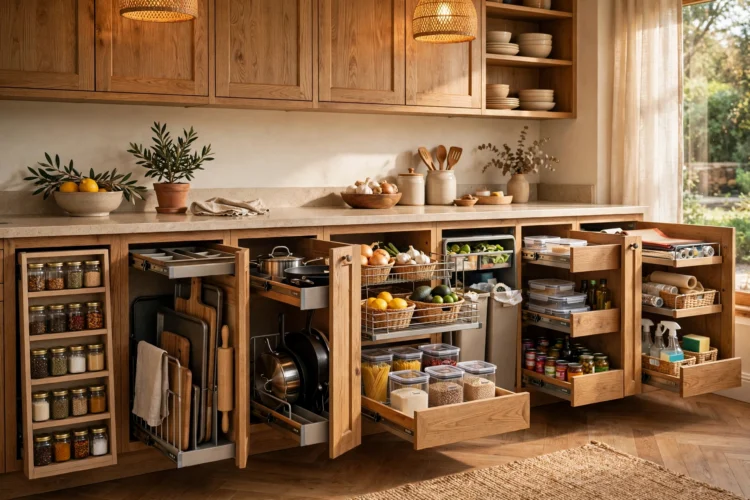
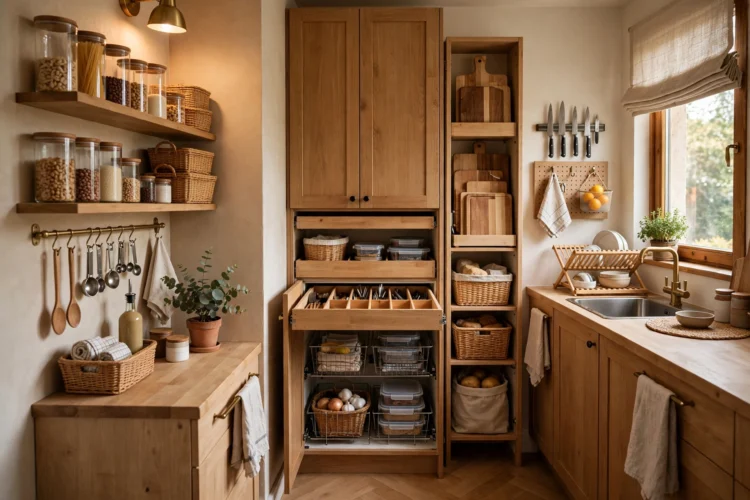
Use one sconce per 24 to 30 inches of shelf run so the pools of light overlap gently. Shades matter more than the fixture body here. A small opaque shade or half shade throws light down and keeps glare out of your eyes at the counter. Pair this look with some of our kitchen organization ideas so the shelves you are lighting actually deserve the spotlight.
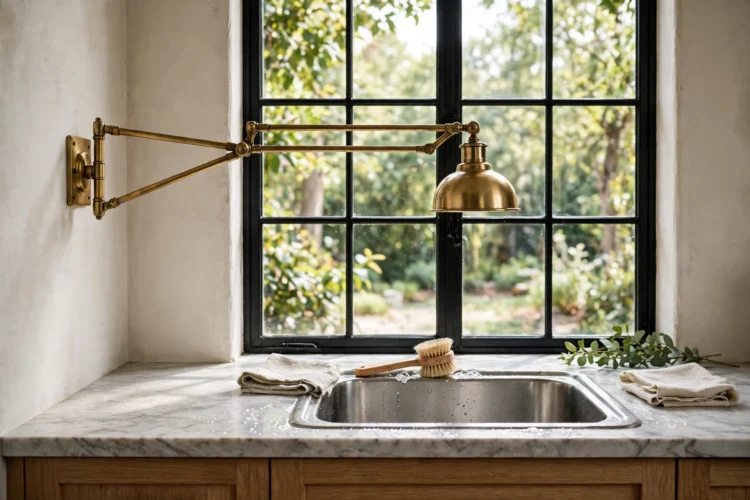
A swing arm sconce gives you task light that moves. Park it against the wall most of the time, then swing it over the sink when you are scrubbing pots after dinner. This beats a fixed sconce in kitchens where the sink sits under a window and there is no room for a pendant.
Look for an arm that extends at least 12 inches and locks in place without drooping. Brass and matte black finishes pair well with most faucet metals. If you are shopping for the tap too, our kitchen faucet ideas guide covers which finishes play nicely together. Mount the base plate a few inches outside the window frame so the arm clears the trim when it swings. A 2700K bulb keeps the sink area feeling warm rather than clinical at night.
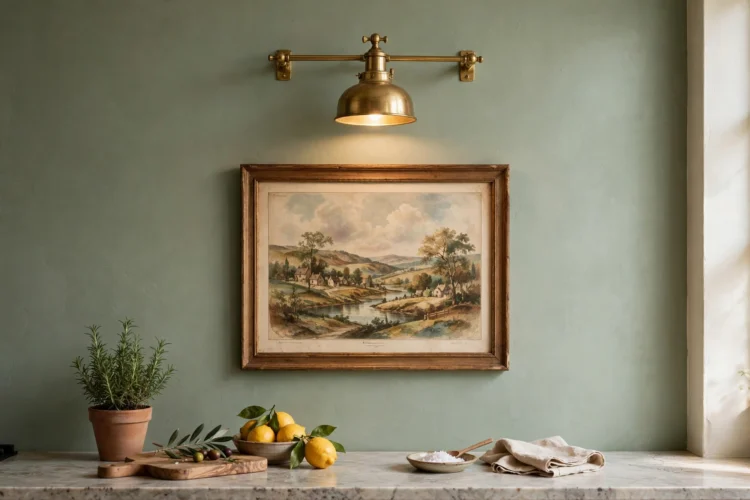
Kitchens deserve art, and art deserves light. A kitchen picture light mounted above a framed print, vintage sign, or small gallery wall brings a collected feel that overhead cans never will. The slim brass bar reads classic in a farmhouse kitchen and tailored in a modern one.
Size the light to about half to two-thirds the width of the frame. Mount it so the top of the light sits just above the frame and angles down at roughly 30 degrees. Battery-powered picture lights have gotten good, with remotes and timers, so you can add one without an electrician. Just check the battery type before you buy, since some use pricey specialty cells.
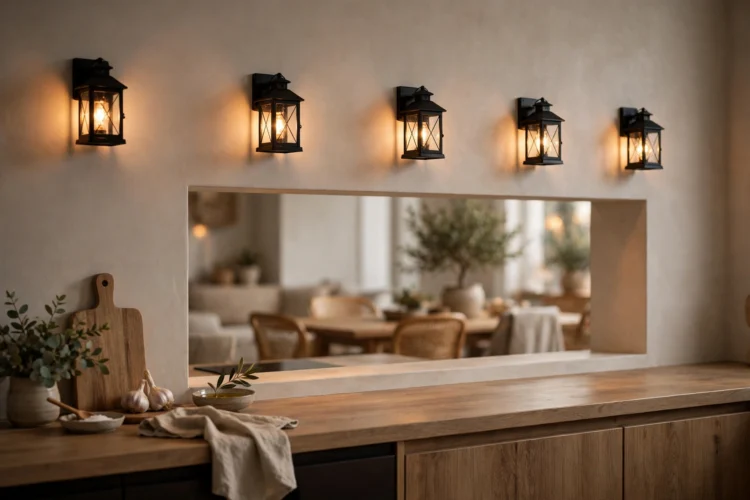
A pass-through or cased opening between kitchen and dining room gets overlooked as a lighting spot. Two or three mini lantern sconces marching along that wall give the opening a rhythm and mark the transition between rooms. The lantern shape suits farmhouse and coastal kitchens especially well.
Keep the scale small. A 5 to 7 inch wide lantern is plenty on a narrow wall. Space them evenly and wire them to one switch so they act as a single feature. Clear glass shows the bulb, so use a vintage-style LED filament bulb for the look without the heat. Tying them to the same switch as the dining room light gives you one-touch entertaining light. If your kitchen leans farmhouse, these sit beautifully near the farmhouse sink ideas we rounded up for classic charm.
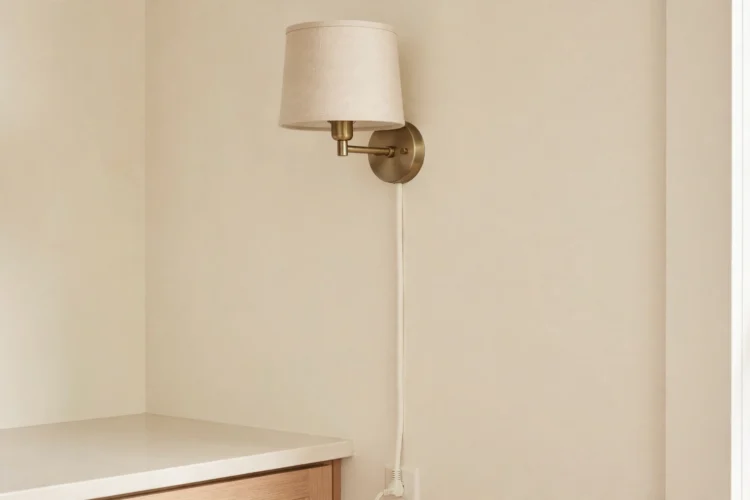
Every kitchen has one blank wall that collects clutter. A plug-in wall sconce gives it a job. No electrician, no drywall repair. You mount the fixture, run the cord down to the nearest outlet, and hide it with a cord cover painted to match the wall.
This is the renter-friendly star of kitchen sconce lighting. Cord covers come in paintable plastic and slim metal, and once painted they nearly disappear. Choose a shade style that suits the room, from a linen drum for soft traditional light to a metal dome for focused task light. Add a smart plug and you get scheduling and dimming without touching the wiring.
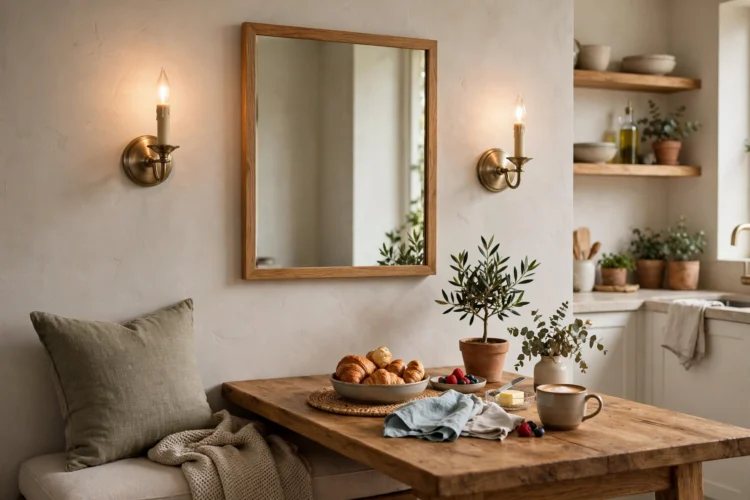
A breakfast nook with a candle-style sconce on each side of a window or mirror feels like a tiny restaurant booth. The flicker-free LED candle bulbs now look convincingly warm, and the fixture itself adds height to a corner that usually holds nothing but a table.
Mount them high enough that seated diners do not stare straight into the bulb. About 60 inches from the floor to the center of the fixture is a safe starting point. Dimmable versions let you drop the light to candle-glow levels for slow weekend breakfasts. Pair the nook lighting with warm wood tones and linen for the full effect.