Physical Address
304 North Cardinal St.
Dorchester Center, MA 02124
Physical Address
304 North Cardinal St.
Dorchester Center, MA 02124

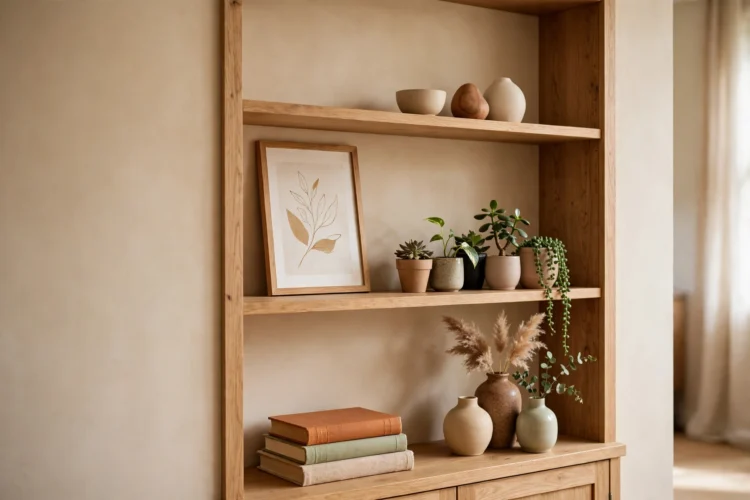
A bookshelf holds more than books. With art, objects, and breathing room, it becomes the most personal feature in the room.
Bookshelf styling ideas matter because a shelf full of books alone can look like storage, not style. The shelves that draw the eye mix books with art, objects, plants, and empty space, and they do it with a plan. You do not need rare objects or a designer budget. Most good shelves use things already in the house: a vase, a framed photo, a stack of books turned sideways, a small plant. The skill is grouping and spacing, not shopping. These 11 ideas work on built-in shelves, freestanding bookcases, and the small shelf above a desk.
Take everything off before you style anything. A shelf styled over old clutter keeps the old clutter. Empty the shelves, dust them, and sort what you removed into three piles: books worth showing, objects worth showing, and things that belong elsewhere. Most shelves hold too much, so be honest about the third pile. When the shelf is bare, you can see its shape and plan each section instead of filling gaps at random. This reset takes twenty minutes and changes the result more than any new object. If your bookshelf also divides a room, these bookshelf room divider ideas show how styling works when both sides are visible.
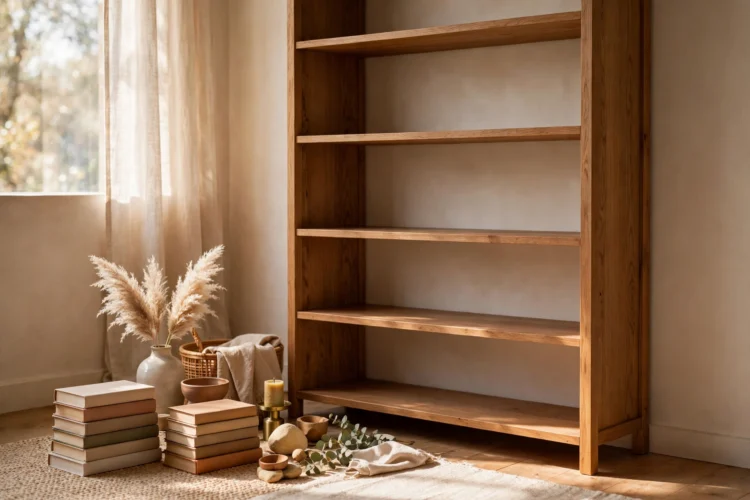
Groups of three or five look settled in a way that pairs often do not. A tall vase, a short stack of books, and a small framed print make one group. A candle, a stone, and a tiny plant make another. The odd count keeps the eye moving instead of splitting the shelf into two equal halves. Vary the heights inside each group so the tallest piece anchors one side and the shortest sits near the other. Leave a clear gap between groups so each one reads on its own. If a group looks crowded, remove the smallest piece first. Shelf styling tips like this one sound simple, and they are: odd groupings are the fastest fix for a shelf that feels random.
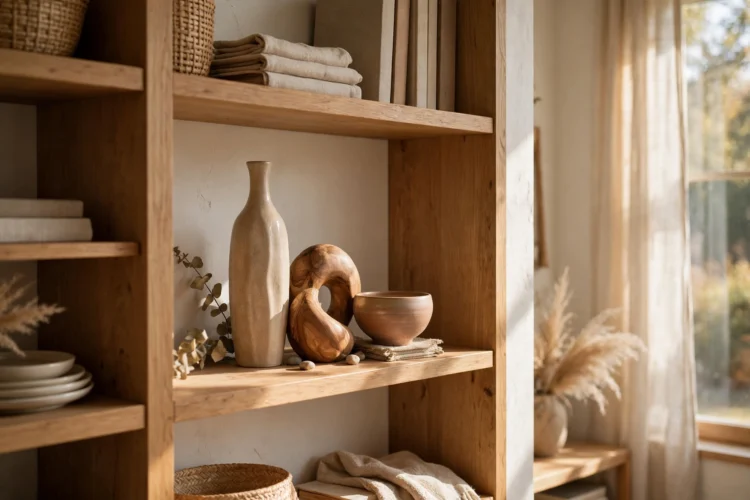
Rows of upright books are fine, but a shelf of only upright rows looks like a library aisle. Break the pattern with horizontal stacks. Lay three or four books flat, then place a small object on top of the stack, such as a candle, a small clock, or a smooth stone. The flat stack acts as a pedestal and gives the shelf a change of direction. Alternate one horizontal stack with one upright run on each shelf so the rhythm repeats without becoming a pattern. Keep the horizontal stacks near the ends of shelves where they anchor the row, not floating in the middle. Bookshelf decor ideas like this one cost nothing and use books you already own.
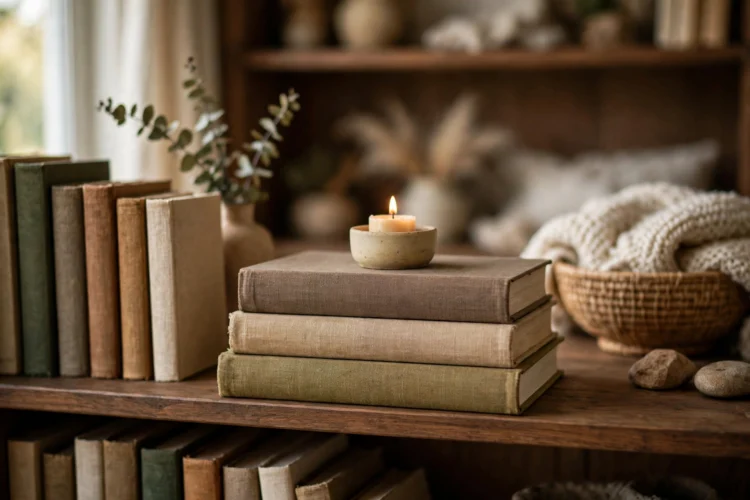
Empty space is part of the styling, not a gap you forgot to fill. Open shelf styling rewards restraint: leave about one third of each shelf empty so the objects have room to breathe. A shelf packed edge to edge reads as storage, while the same objects with space between them read as a display. The easiest way to keep space is to style one shelf at a time and stop when it looks full from the doorway, not from six inches away. Step back often. If you cannot see wall or backing behind the objects, the shelf is overfilled. Negative space also makes dusting easier, which keeps the shelf looking good between restyles.
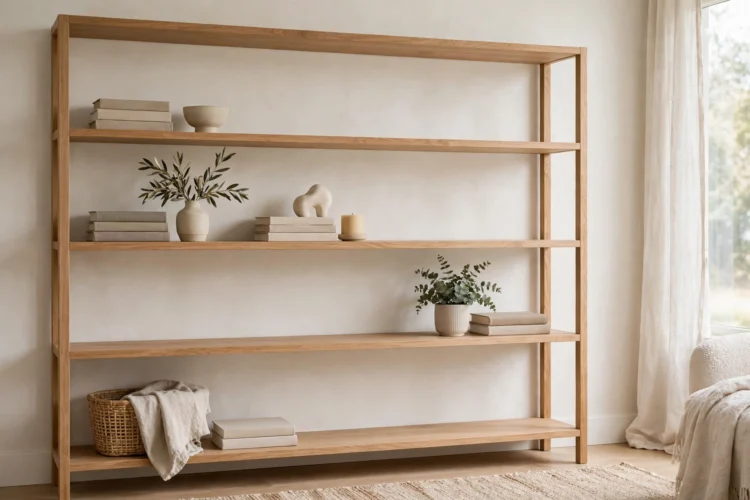
Leaning art adds height and a casual feel that hung frames cannot match. Place a framed print or a small canvas at the back of a shelf, leaning against the wall, then arrange books and objects in front of it. The frame fills the vertical space and gives the shelf a backdrop. Use one leaning piece per shelf at most, and keep it smaller than the shelf width so it does not dominate. Unframed art on a small easel works the same way. This trick suits renters because it needs no nails. For walls nearby, these gallery wall ideas show how framed pieces work together in a living room.
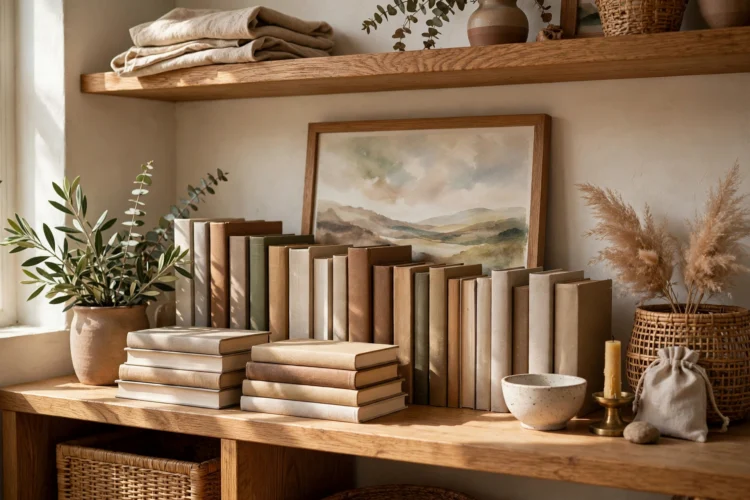
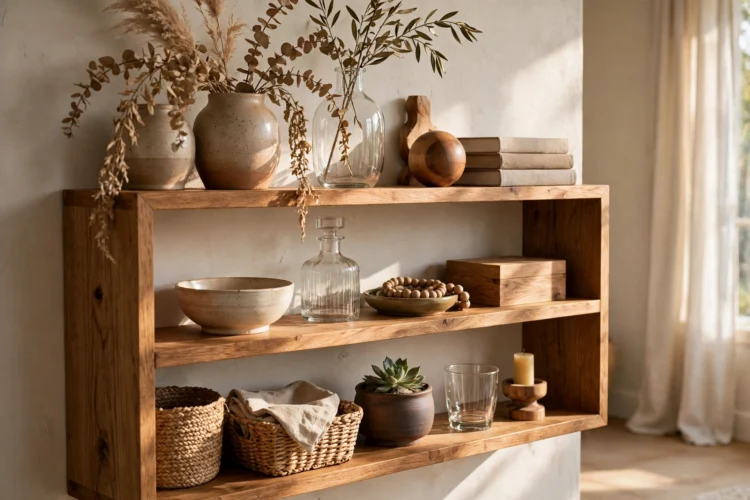
A shelf of only ceramics looks like a shop display. Mix wood, glass, metal, paper, and plants so the shelf feels gathered over time. A wooden box next to a glass vase, a brass candle holder beside a linen-bound book, and a ceramic pot with a trailing plant give the eye five textures in one glance. The mix is what makes a shelf feel personal instead of bought in one trip. Keep the color range narrow while the materials vary, so the shelf stays calm even with many textures. One metal accent per shelf is usually enough; more than that and the shine takes over.
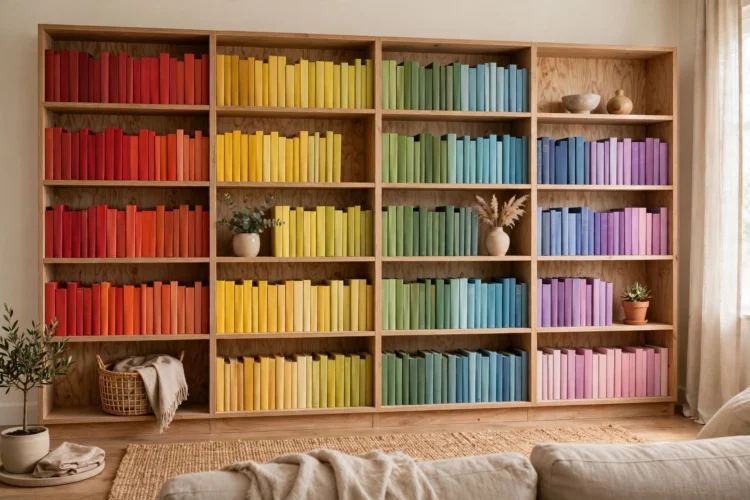
Grouping books by color creates a calm, graphic shelf, and it works best when the color groups are loose, not strict. Sort books into warm, cool, and neutral groups, then place one group per shelf section. Keep one shelf mostly neutral, with cream, wood, and white objects, so the colored shelves have somewhere to rest. Strict rainbow order looks clever in a photo and tiring in a room. If color sorting feels like too much work, group only the books with plain spines and leave the rest in a natural mix. Styling shelves with objects in a matching color keeps the shelf tied to the room, so pull at least one color from the rug or cushions into the shelf.
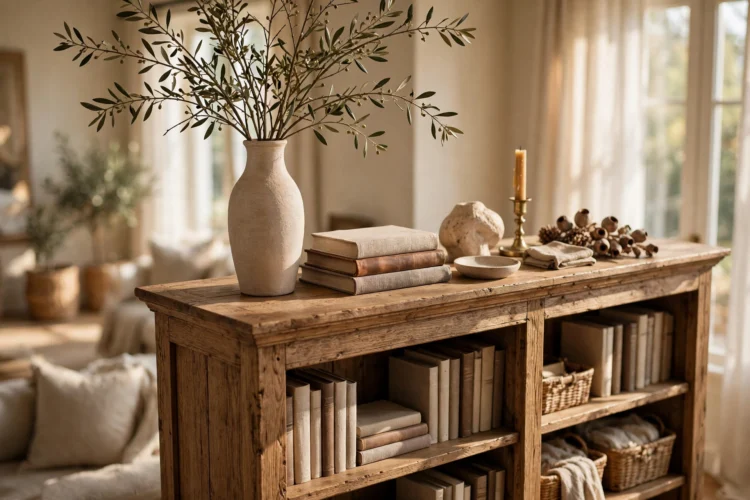
The top of a bookcase is a shelf like any other, and leaving it bare wastes the tallest surface in the room. Place one tall object there, such as a large vase with branches, a basket, or a stack of oversized books, and keep the rest clear. The top should hold fewer pieces than the shelves below because it sits at eye level from across the room. Avoid lining up a row of small objects along the top, since they read as clutter from a distance. One strong piece with space around it finishes the bookcase and draws the eye upward. For a collected look in the whole room, these living room bookshelf styling ideas show how shelves fit beside sofas and windows.
Pick one shelf and finish it today instead of restyling the whole bookcase at once. Take everything off that shelf, keep the pieces you love, and put back one group of three with space around it. Live with that shelf for a week and notice what you reach for and what you ignore. The pieces you ignore can move to a closet or another room. The pieces you touch every day earn their spot. Repeat the same process shelf by shelf, top to bottom, and the bookcase will change without a shopping trip. If a shelf still feels off after two tries, remove the tallest object and see whether the shelf relaxes. Most styling problems come from too much height in one place or too many small pieces fighting for attention. A shelf that holds books you read, objects you chose, and space you left empty on purpose will look good for years, and it will change easily when your taste changes.