Physical Address
304 North Cardinal St.
Dorchester Center, MA 02124
Physical Address
304 North Cardinal St.
Dorchester Center, MA 02124

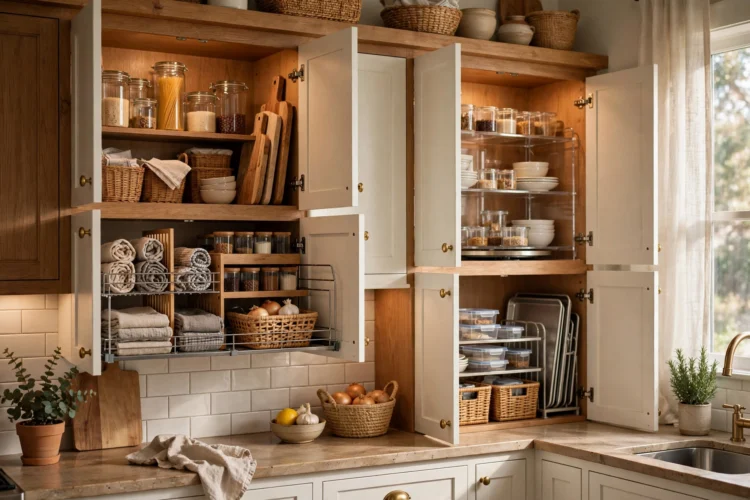
Fifteen cabinet-by-cabinet systems, from cooking zones and shelf risers to turntables and labeled decanting, that keep cluttered kitchen cabinets tidy for good.
Cluttered cabinets rarely mean you own too much. They usually mean every cabinet holds a little of everything, so nothing has a home and finding the paprika takes a full excavation. These kitchen organization ideas fix that with a cabinet-by-cabinet approach: zones that group items by task, risers that double shelf space, turntables that end the dark-corner reach, and systems that keep working after the initial tidy-up. Work through one cabinet at a time, and the whole kitchen follows.
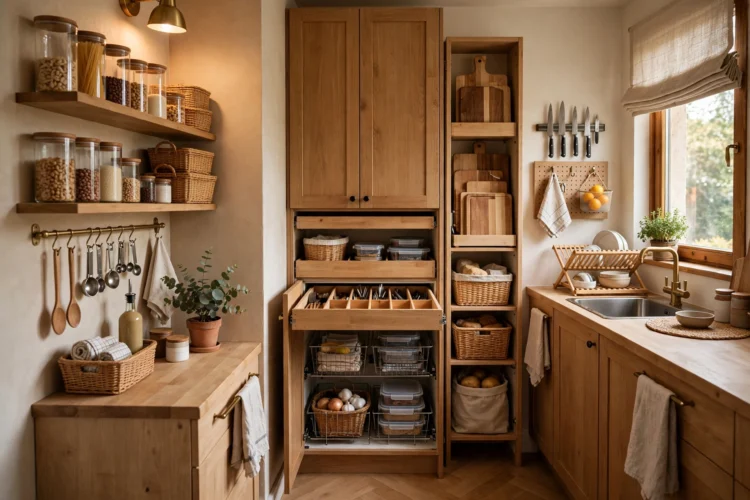
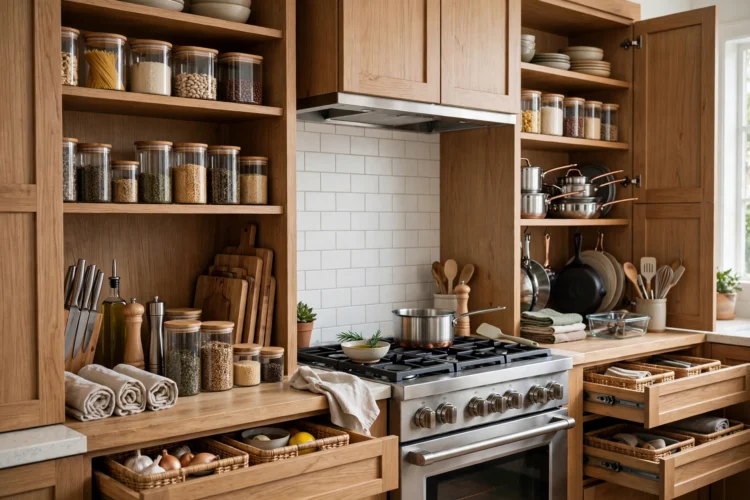
A cabinet zone system assigns each cabinet a job instead of a random assortment. Put cooking oils, spices, and utensils in the cabinet nearest the stove; baking supplies near the mixer; everyday dishes above the dishwasher for fast unloading. When every item lives where its task happens, putting things away takes seconds and the system survives busy weeks. Map your three most-used tasks first, then assign cabinets to match.
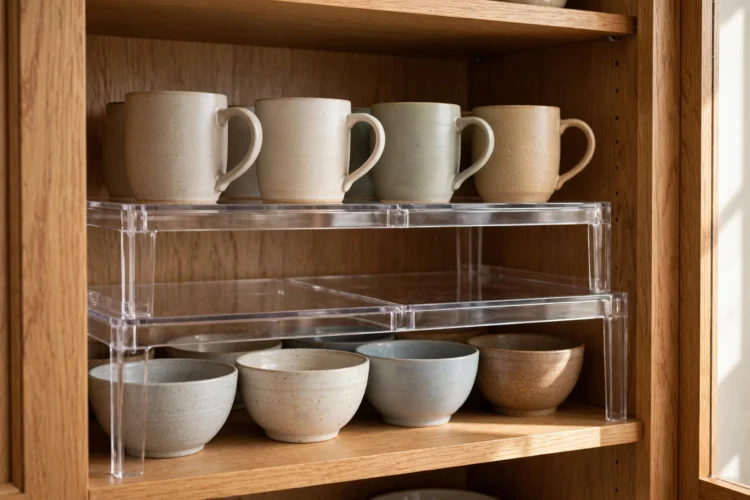
Shelf risers for cabinets add a second level inside deep shelves, so mugs sit above bowls and cans stack two high without toppling. They cost little, need no tools, and instantly double the usable surface of the worst cluttered shelves. Measure your shelf height first; you need clearance for the tallest item on each level. Use them in dish cabinets and under-sink-adjacent storage first, where stacking wastes the most vertical space.
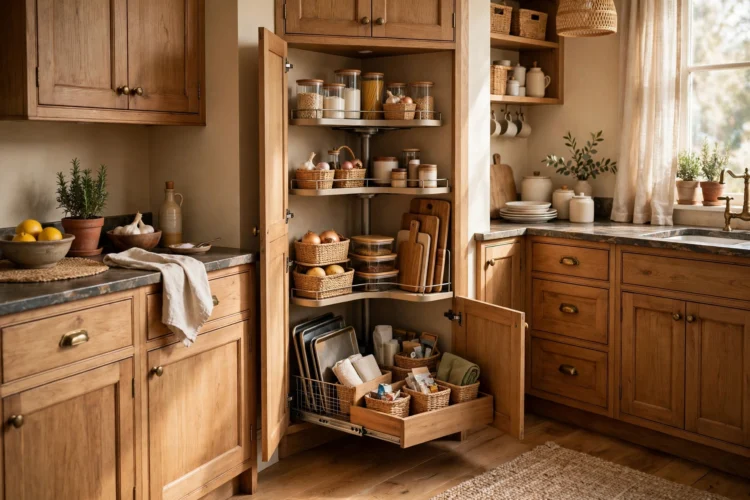
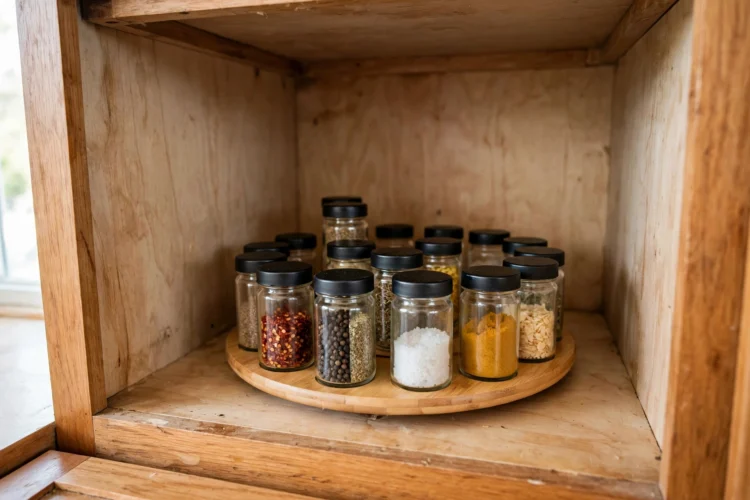
Kitchen turntable organizers end the dark-corner reach in deep cabinets and lazy corners. One spin brings the back row forward, so duplicate spice jars stop accumulating because you forgot what you owned. Use a two-tier turntable for spices and a larger single-tier one for cooking oils and vinegars near the range. Wipe the surface monthly; sticky rings are the main maintenance this system needs.
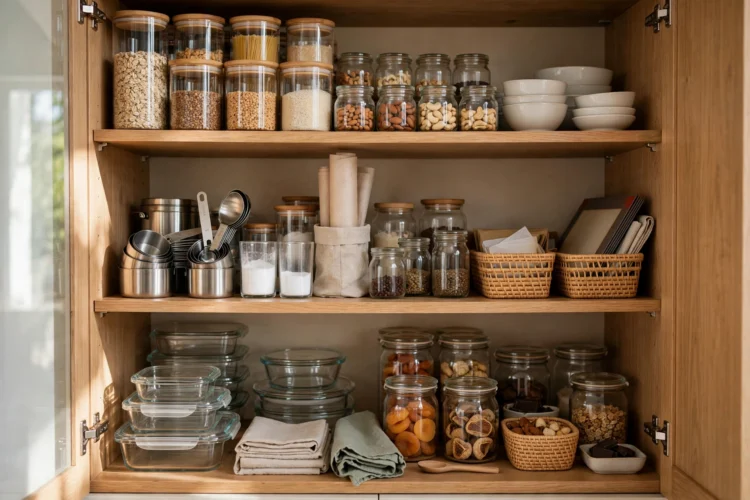
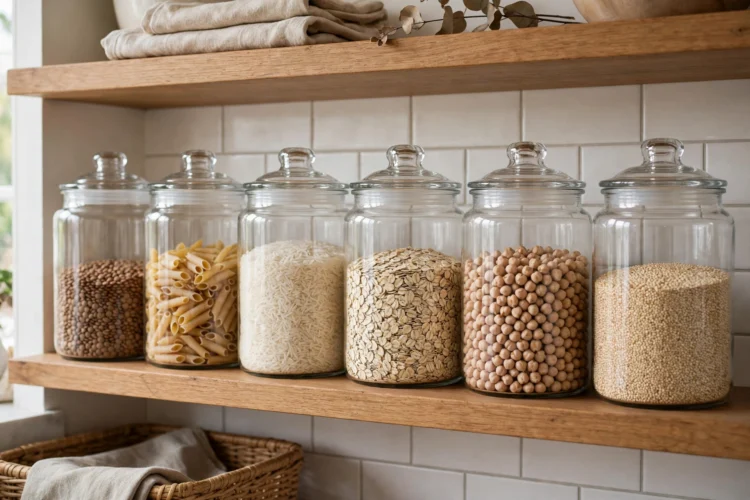
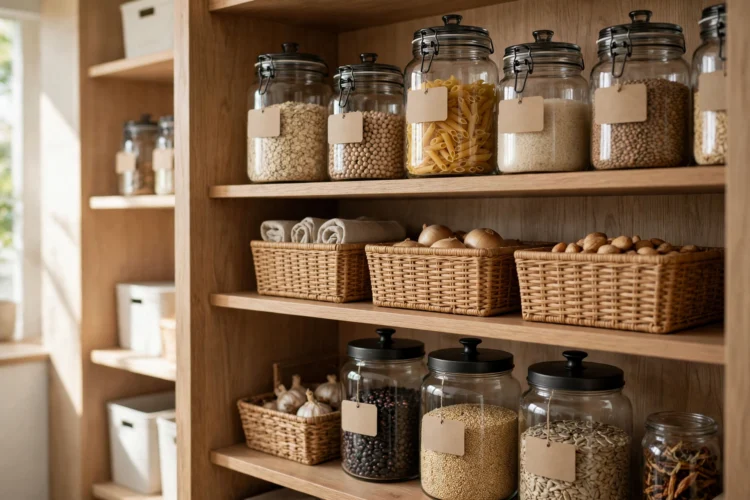
Half-empty bags of flour, rice, and pasta are cabinet clutter in its purest form. Decanting into clear, matching canisters makes contents visible at a glance, stops spills from torn bags, and lets you stack uniformly. Keep the original cooking instructions taped under each lid or photographed on your phone. This one habit also powers several of the best 12 kitchen storage ideas for small spaces, where every inch counts double.
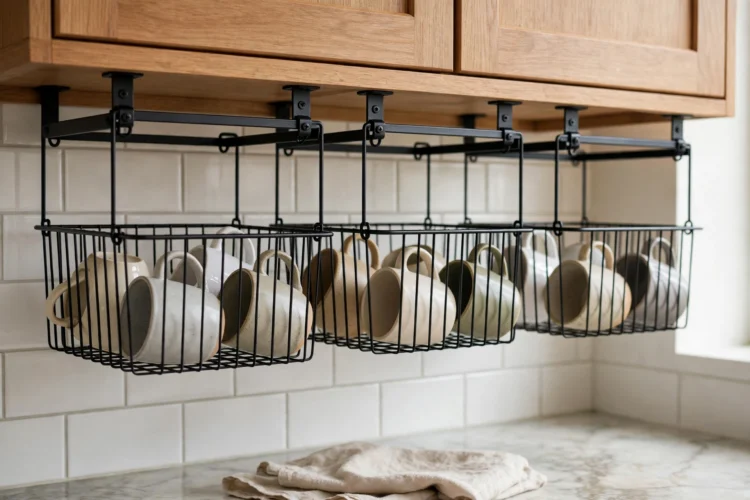
Under-shelf baskets hook onto existing shelves and create a hanging layer for mugs, small bowls, or spice packets. They use the dead air between shelves that risers cannot reach, and they install in seconds without hardware. Reserve them for lightweight items; heavy stacks will strain the hooks. They shine in dish cabinets where mugs multiply faster than shelf space.
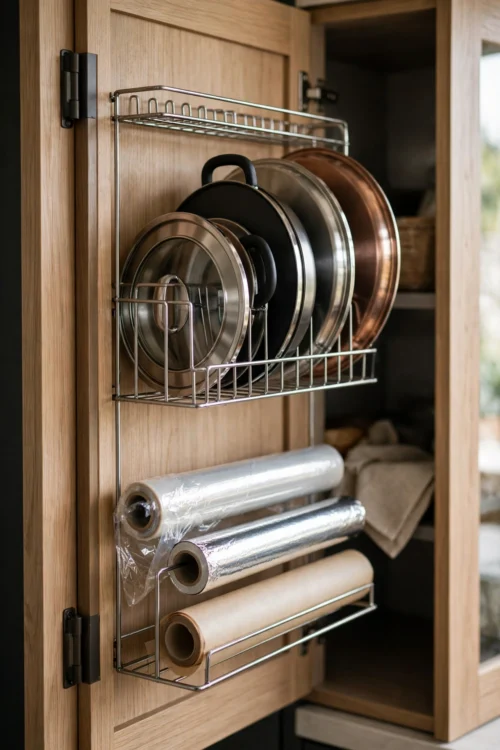
The inside of a cabinet door is free real estate. Slim racks mounted there hold pot lids, plastic wrap, foil, and parchment within arm’s reach without eating shelf space. Check door clearance before buying; the rack must clear the shelf edge when the door closes. This trick works best on deep lower cabinets where lids otherwise slide into unreachable piles.
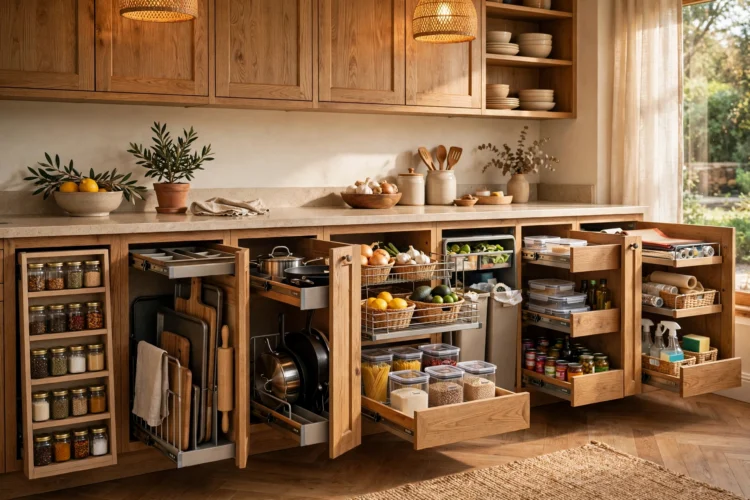
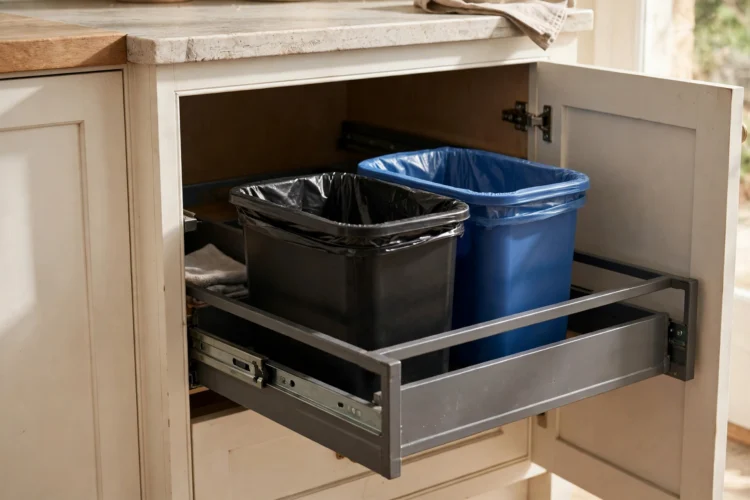
Dedicating one lower cabinet to pull-out trash and recycling bins removes the freestanding bin from your floor and puts waste where the mess happens. Choose a double-bin unit so recycling has its own slot, and line both bins for fast swaps. If your cabinet is deep, the full guide to 10 pull-out kitchen storage ideas for deep cabinets shows hardware that brings the back bin fully forward.
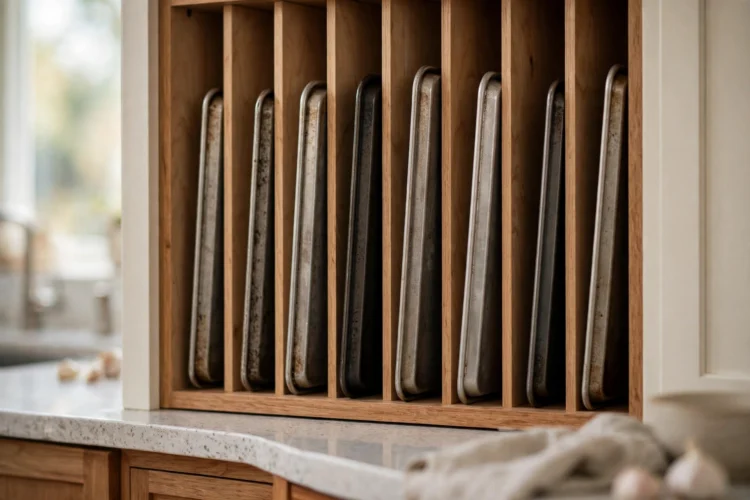
Baking sheets, cutting boards, and muffin tins store best upright, not stacked. Tension-rod dividers or a simple vertical rack inside a narrow cabinet turn a leaning pile into a file system where you grab one item without disturbing the rest. Place this cabinet near the oven so hot pans travel the shortest distance. It is one of the cheapest upgrades with the most daily payoff.
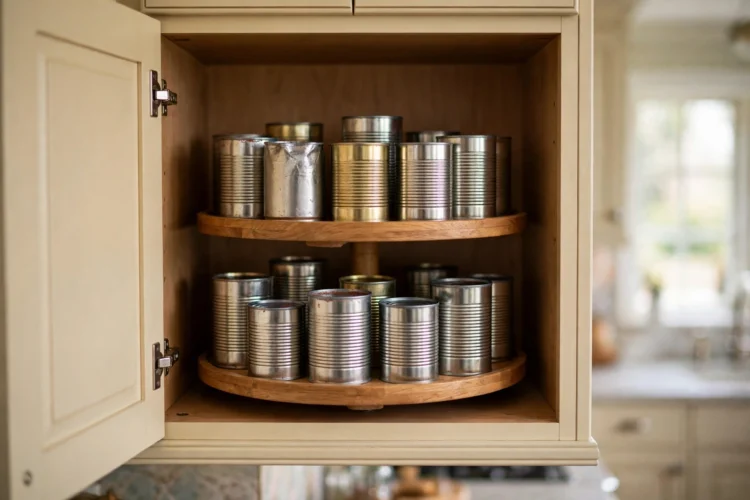
Deep upper cabinets swallow cans and jars the same way lower corners do. A small lazy susan insert on each shelf keeps the back row reachable without unloading the front. Group by category: canned tomatoes together, broths together, so nothing hides. For the trickier lower corners, compare hardware in these 9 corner cabinet storage ideas that end the dead zone.
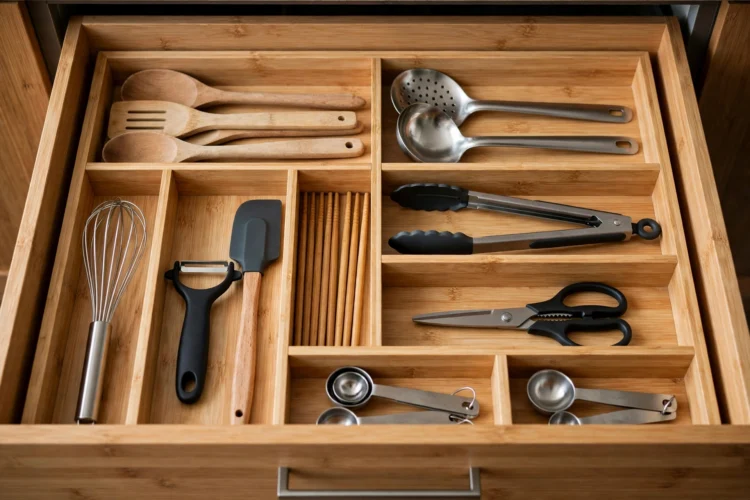
The utensil drawer is the junk drawer of every kitchen. Adjustable drawer dividers carve it into slots for spatulas, tongs, thermometers, and gadgets, so each tool has a lane. Spring-loaded dividers fit without measuring; bamboo trays look better in visible drawers. Purge duplicates first. Nobody needs three vegetable peelers, and the dividers only work when every slot earns its place.
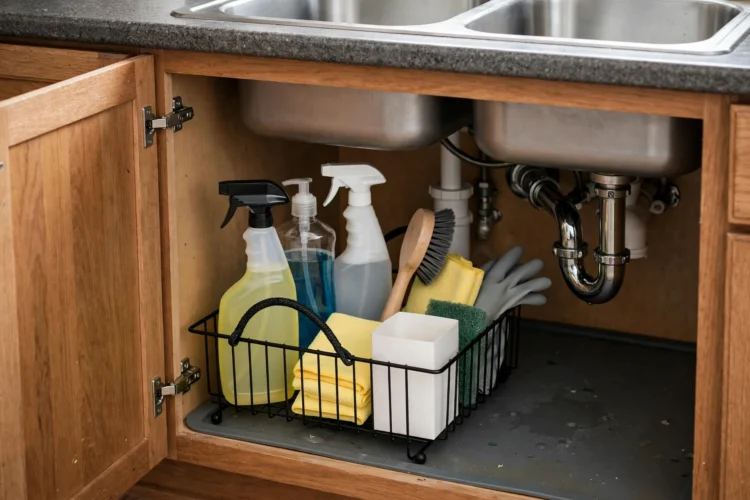
The cabinet under the sink collects half-used bottles because plumbing makes the space awkward. A handled caddy corrals sponges, brushes, dish soap, and garbage bags into one lift-out unit, and a small tension rod across the top hangs spray bottles above it. Keep only what you use weekly; the rest belongs in a laundry or garage stash. These 10 kitchen sink organization ideas around the basin extend the same thinking to the countertop around it.
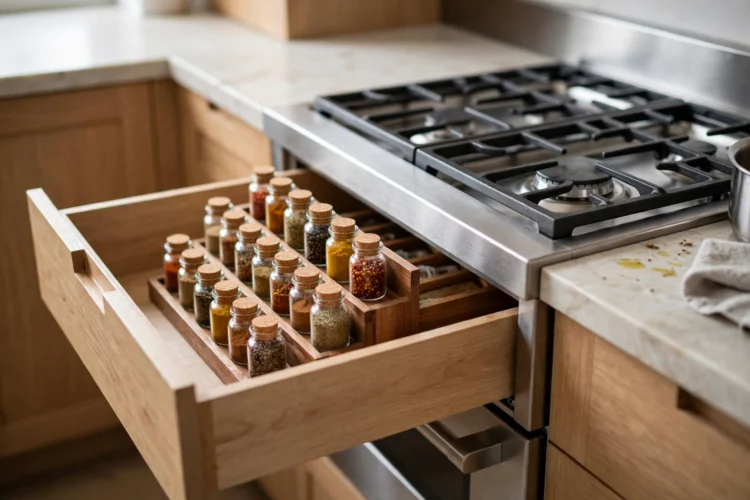
A spice drawer organizer beats a spice cabinet for one reason: you see every jar at once, lying flat with labels facing up. A shallow drawer near the stove fitted with tiered inserts holds 20 or more jars in alphabetical or frequency order. Decant into uniform jars so labels line up and the drawer reads like a chart. This single change cuts seasoning time during cooking more than any other small upgrade.
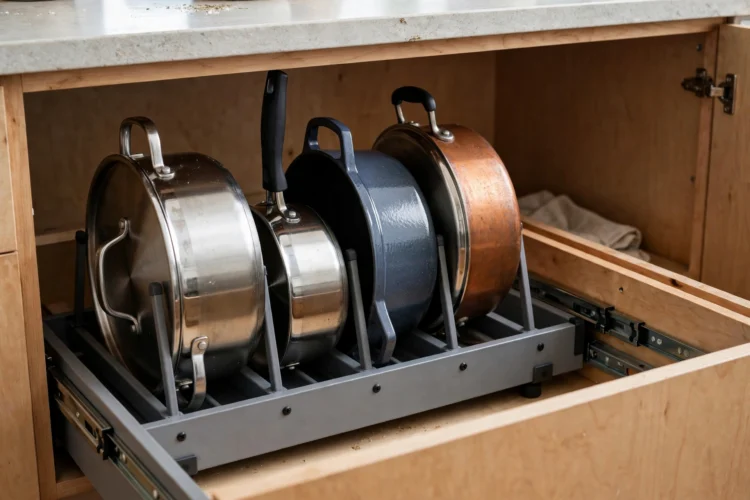
Stacked pots scratch and topple; nested pans with protectors survive but still require unstacking the whole tower. An adjustable organizer inside a deep lower cabinet files pots upright or on pull-out tiers, so you lift one pan without moving five. Match the organizer to your heaviest Dutch oven, since weight ratings matter here. Lids get their own door-mounted or vertical rack beside it.
Labels sound fussy until the third time someone grabs baking soda instead of baking powder. A simple label maker or chalk labels on canisters, bins, and turntable zones tell every household member where things live, which is what keeps the system alive when you are not the one cooking. Label the shelf edge too, not just the container, so the empty spot itself calls the item home.
Every system above decays without a maintenance rule, and the simplest one works: when a new gadget, mug, or container enters the kitchen, an old one leaves. Tape the rule inside a cabinet door for the first month until it becomes reflex. Do a five-minute reset each Sunday night, returning strays to their zones. Cabinets stay organized not because the system is clever but because the inflow finally matches the outflow.