Physical Address
304 North Cardinal St.
Dorchester Center, MA 02124
Physical Address
304 North Cardinal St.
Dorchester Center, MA 02124

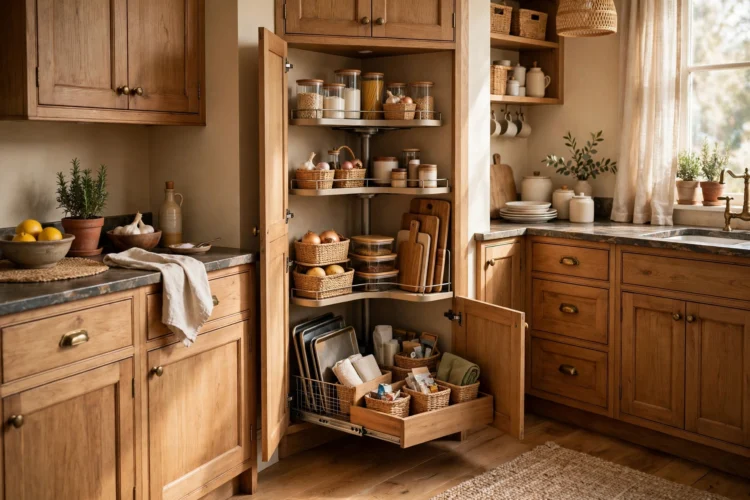
Nine ways to end the kitchen dead zone, comparing blind-corner pull-outs, magic corners, lazy susans, and diagonal cabinets, plus what to actually store in corners.
Every kitchen has a corner cabinet where items enter and never return. Standard blind corners run 36 inches wide and 24 inches deep, which means nearly two feet of storage sits behind a 15 inch door opening, invisible and unreachable. These corner cabinet storage ideas end that dead zone with hardware matched to each corner type, plus honest guidance on what belongs in corners and what should live somewhere easier to reach.
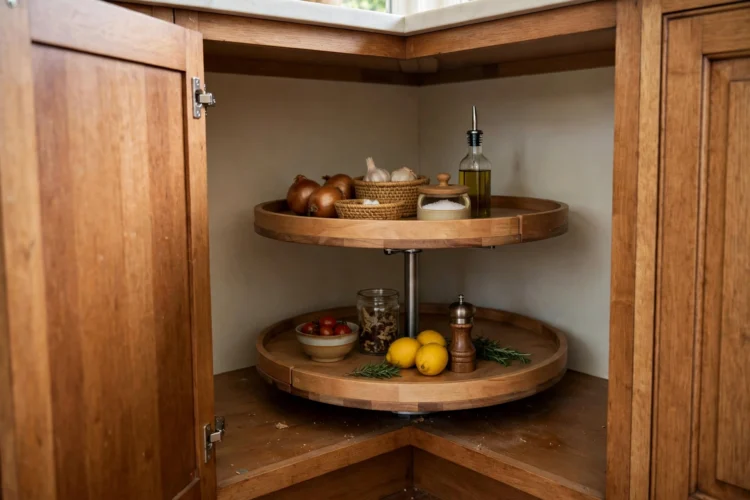
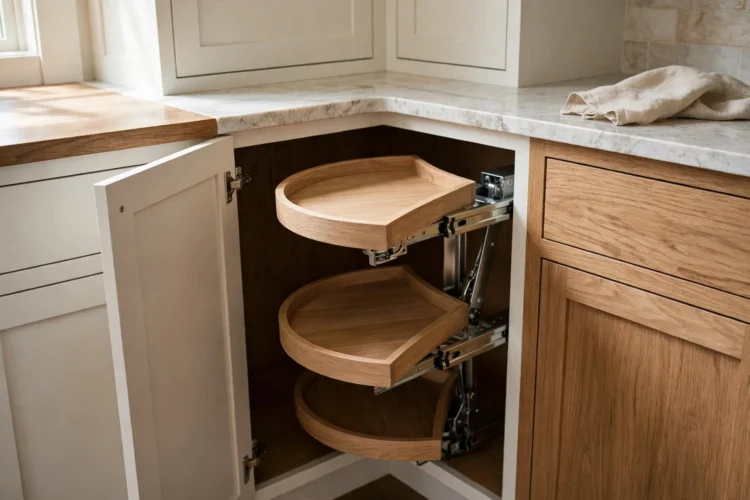
The lazy susan corner cabinet is the classic fix for a reason: two rotating trays inside a 33 to 36 inch corner base bring the back row around with a spin. D-shaped trays fit the corner footprint best, and raised rims keep items from sliding off mid-rotation. Two-tier models double capacity in the same footprint. Check the tray diameter against your cabinet’s interior before ordering, since corner bases vary by manufacturer. Keep the load balanced so rotation stays smooth, and choose solid trays over wire if small items keep tipping through the gaps. Stock it with heavy, low-tip items like canned goods, small appliances, and mixing bowls. Avoid tall bottles that topple when the tray turns, and wipe the trays seasonally since corners collect crumbs.
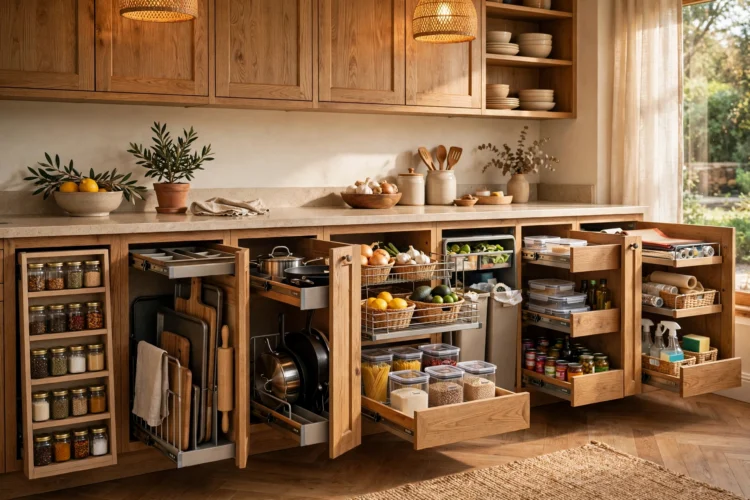
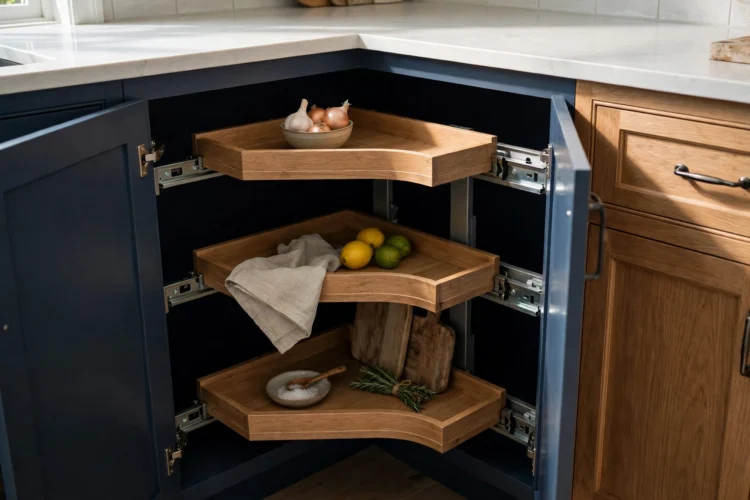
A blind corner pull-out mounts half-moon or kidney-shaped shelves on a track so the hidden section slides out through the door opening. It is the simplest retrofit for an existing blind corner because it uses the cabinet you already have, and most kits install with basic tools in an afternoon. Load heavier items toward the pivot and lighter ones on the outer shelves for smooth motion, and choose shelves with raised edges so nothing slides off mid-swing. This retrofit costs far less than replacing the cabinet, which is why it is the default recommendation for existing kitchens. Compare this against the deeper options in these 10 pull-out kitchen storage ideas for deep cabinets if your corner also needs tray or pantry storage.
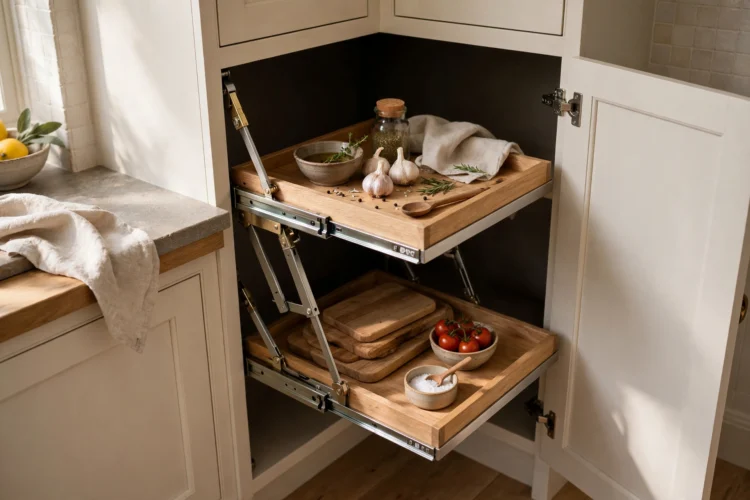
A magic corner cabinet uses linked shelves that swing out and fold back in sequence, bringing the entire blind section into the open in one motion. LeMans-style units do the same with kidney-shaped shelves that curve out elegantly. Watch the motion in a showroom or video before buying; the choreography of linked shelves surprises some cooks. Because every shelf exits the cabinet fully, you can store small items here without losing them. Both cost more than a basic pull-out but use the corner’s full volume with the least wasted air. These suit remodels and new builds best, since the mechanisms need precise installation. For daily-use items in a busy kitchen, the full-access motion earns its price within months.
Diagonal corner cabinets, with their angled front door, pair naturally with half-moon pull-out shelves that pivot out through the wide opening. The D-shape matches the cabinet footprint, so almost no space goes unused. The pivot hardware mounts to the cabinet floor and the shelf with no side clearance needed, which keeps installation simple. Keep the rotation path clear of items on adjacent shelves. This is often the easiest corner to organize because the door opening is generous; the half-moon simply makes the back half reachable. Store everyday pots and pans here, since the wide access makes them genuinely convenient rather than theoretically stored.
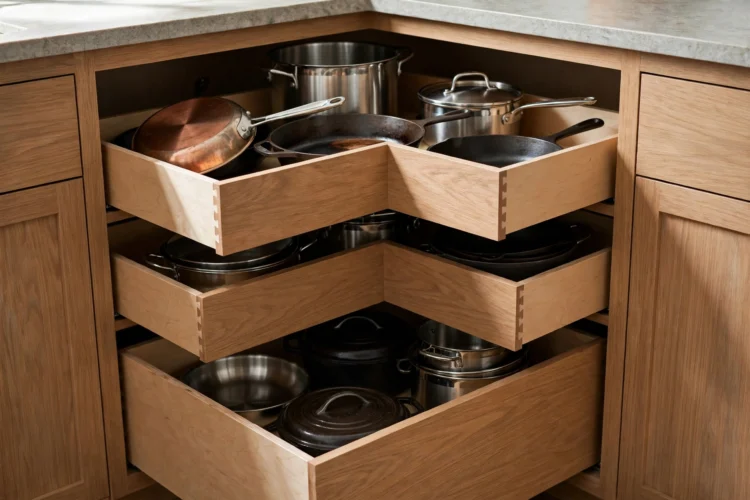
Some designers skip the corner door entirely and run deep drawers into the corner from one side. Three deep drawers hold pots, pans, and small appliances with full visibility from above, no hardware gymnastics required. The top drawer can hold cutlery or cooking tools, freeing a drawer elsewhere, and high-sided drawer boxes contain tall pots safely. This layout also ends the dark-corner cleaning problem, since every surface pulls into the light. You sacrifice a few inches of absolute corner volume, but every remaining inch stays reachable and organized. This approach suits new layouts best and pairs well with the drawer systems in these 15 kitchen organization ideas for cluttered cabinets.
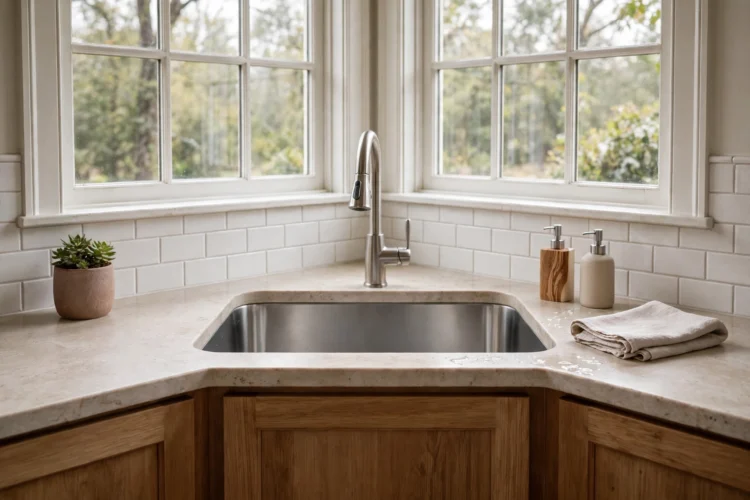
A corner sink base turns the awkward angle into the hardest-working spot in the kitchen. The wide front accommodates a large single basin, and the deep sides swallow cleaning supplies and bins. A pull-out faucet with a long hose reaches every corner of the wide basin. Store dish soap and brushes in a caddy under the sink rather than on the narrow side decks. Apron-front models look especially intentional in this position; browse these 9 farmhouse sink ideas for classic kitchen charm for corner-friendly inspiration. Corner sinks pair well with corner windows, turning dishwashing into the best view in the house. Plan the faucet reach and window placement early, since corner sinks sit farther from the wall than standard ones.
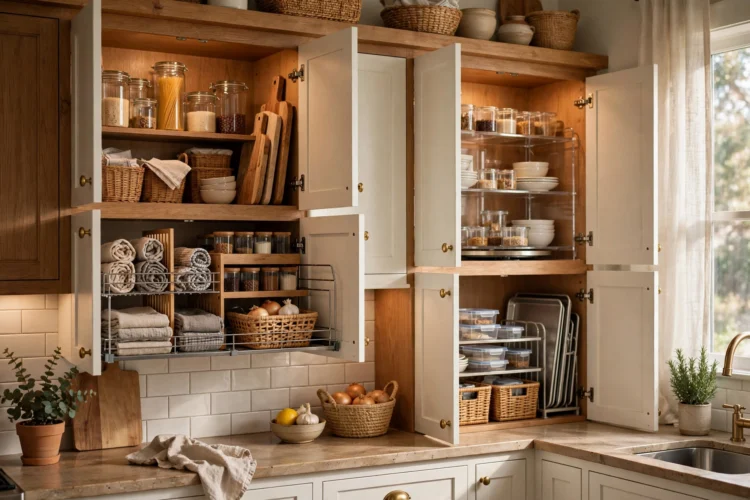
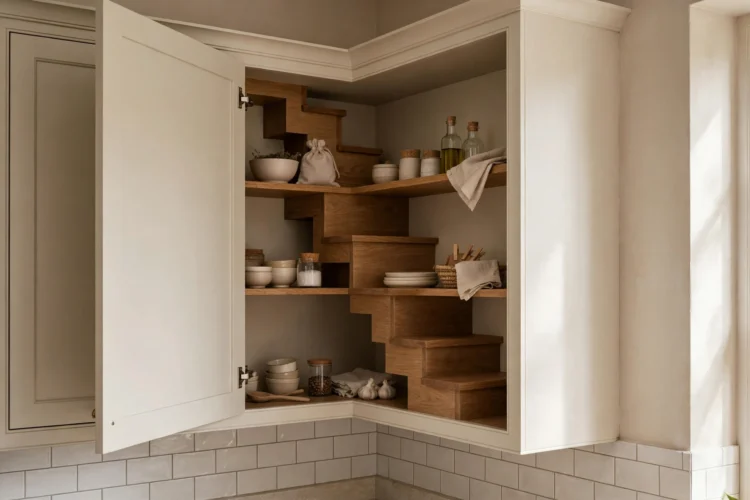
Upper corners suffer the same dead-zone problem at eye level. Diagonal-front upper cabinets open the corner with a wide angled door, and a small lazy susan or stepped shelf inside keeps contents reachable. A two-tier stepped shelf doubles the usable levels; keep the heaviest items on the bottom step for stability. If the upper corner still feels dark, a small battery-powered light makes the contents visible. Store lightweight everyday items here: glasses, mugs, and cereal boxes. Keep heavy stand-mixer attachments lower, since lifting them from an upper corner is asking for a dropped bowl. For more upper-cabinet strategies, see these 12 kitchen storage ideas for small spaces.
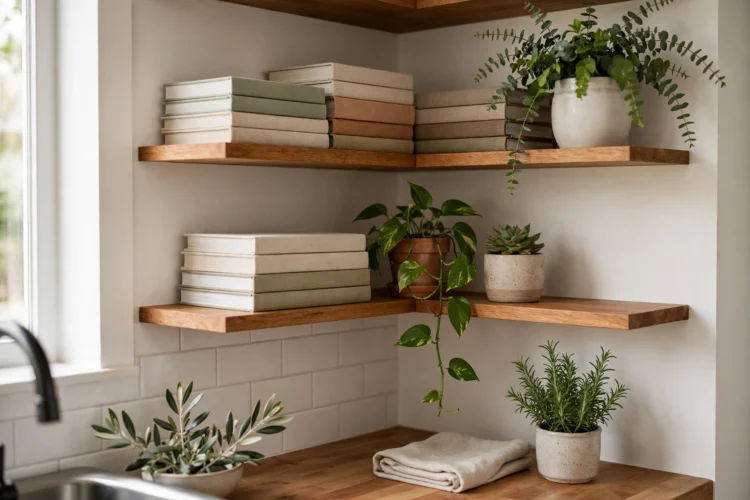
Not every corner needs a door. Open corner shelves, either floating or bracketed, turn the angle into display space for cookbooks, plants, and the serving pieces too pretty to hide. Limit open shelves to one corner so the kitchen does not feel cluttered, and dust the display monthly since open storage trades convenience for maintenance. Match the shelf material to your countertops for a built-in look. The trade-off is dust and visual noise, so curate rather than cram: a few beautiful objects beat a crowded shelf. This works best in kitchens with enough closed storage elsewhere, where the corner can afford to be decorative instead of purely functional.
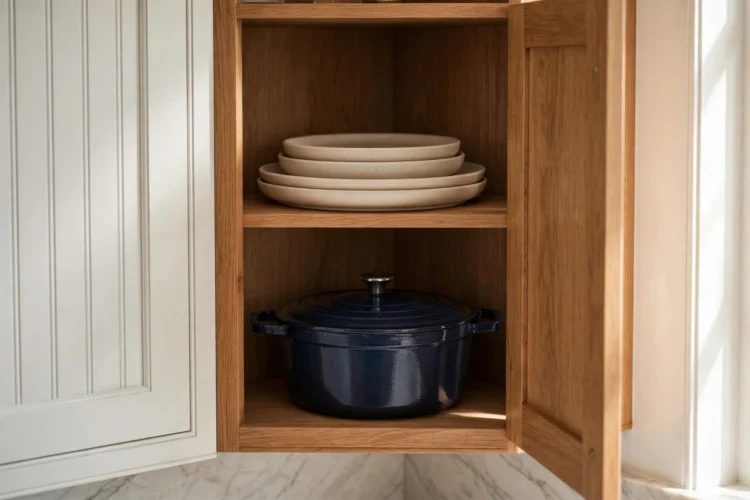
Even the best hardware cannot fix the wrong contents. Corners suit heavy, bulky, infrequently used items: the Dutch oven, the food processor, holiday serving platters, bulk cans. They do not suit daily spices, the coffee filters, or anything you grab half-asleep before work. Move daily items to easy-reach cabinets even if it feels like demoting them; convenience beats square footage. Label the corner’s zones if multiple cooks share the kitchen. Audit each corner twice a year and evict anything that migrated there out of laziness rather than logic, and revisit the audit when seasons change since holiday gear and summer tools rotate through. Buy the insert that fits your corner, then stock the corner with things that forgive a slightly longer reach. That pairing is what actually ends the dead zone.