Physical Address
304 North Cardinal St.
Dorchester Center, MA 02124
Physical Address
304 North Cardinal St.
Dorchester Center, MA 02124

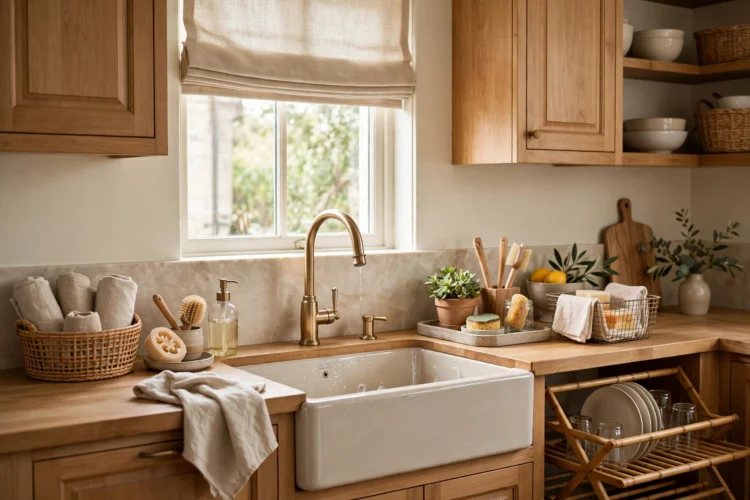
The sink zone collects clutter faster than any spot in the kitchen. These ten organization ideas keep the basin, the counter, and the cabinet below tidy.
The sink is the wettest, busiest zone in the kitchen, and it shows. Sponges pile up, bottles crowd the counter, and the cabinet below becomes a graveyard of half-used cleaners. Good kitchen sink organization treats the basin, the surrounding counter, and the under-sink cabinet as one system. The ten ideas below start at the rim and work down, so every part of the zone earns its keep.
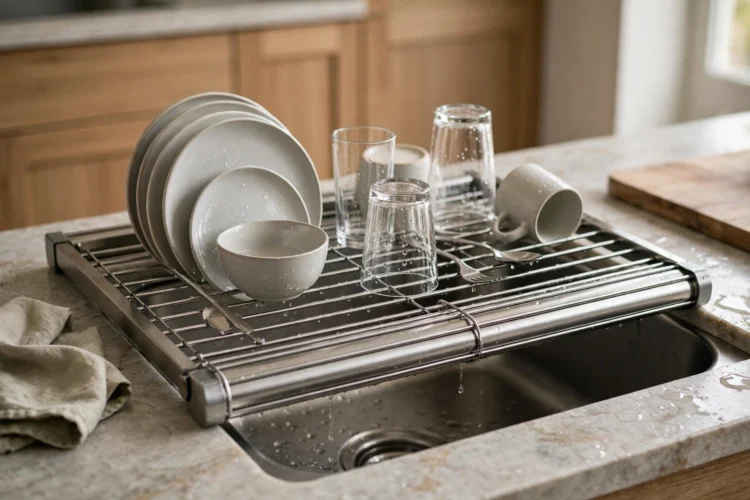
A roll-up over sink drying rack is a mat of stainless rods that unrolls across the basin. Dishes dry over the sink, so drips fall where they belong and the counter stays clear. When you need the basin, you roll it up and stash it in a drawer.
Measure your basin before buying. The rack should span the full width with a little overlap on each side. Silicone-coated ends protect the counter edge from scratches. This is the single highest-impact kitchen sink storage upgrade for small counters, and it costs less than most organizers.
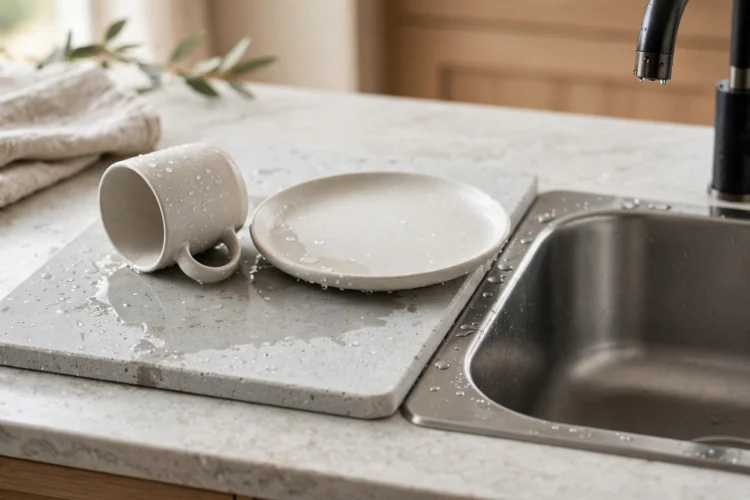
Stone drying mats, made from diatomaceous earth, absorb water fast and dry themselves out. They beat fabric mats, which stay damp and start smelling, and they beat plastic trays, which pool water. Set one beside the basin for hand-washed glasses and mugs.
The mat works best for light daily use rather than full dish loads. Keep it away from the range, since thermal shock can crack the stone. When it stains, a light sanding with fine sandpaper refreshes the surface. Pair it with the caddy idea below to corral the whole drying station in one tidy footprint.
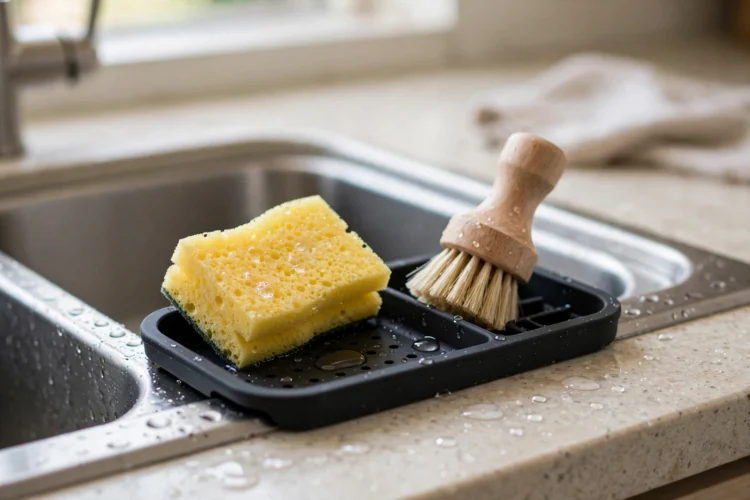
A sink caddy holds the sponge, brush, and soap in one compact footprint at the back of the basin or on the counter edge. The drip tray underneath is the key detail. Without it, the caddy leaves a puddle ring that breeds mildew.
Pick a caddy with drainage holes and a removable tray you can rinse in seconds. Stainless or weighted ceramic stays put better than light plastic. Keep it minimal. One sponge, one brush, one soap. A caddy stuffed with five gadgets defeats its own purpose. For the bigger cabinet picture, our kitchen organization ideas for cluttered cabinets extend the system beyond the sink.
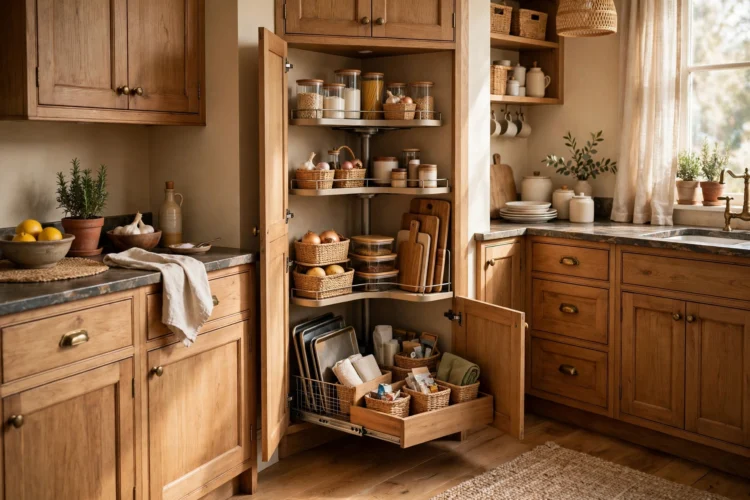
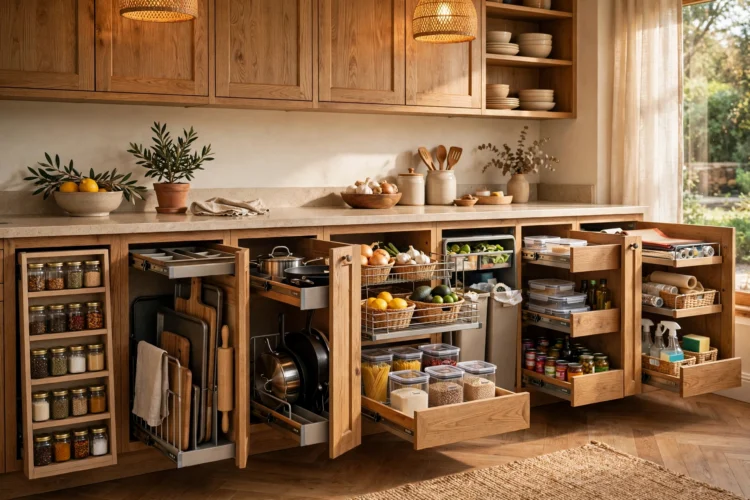
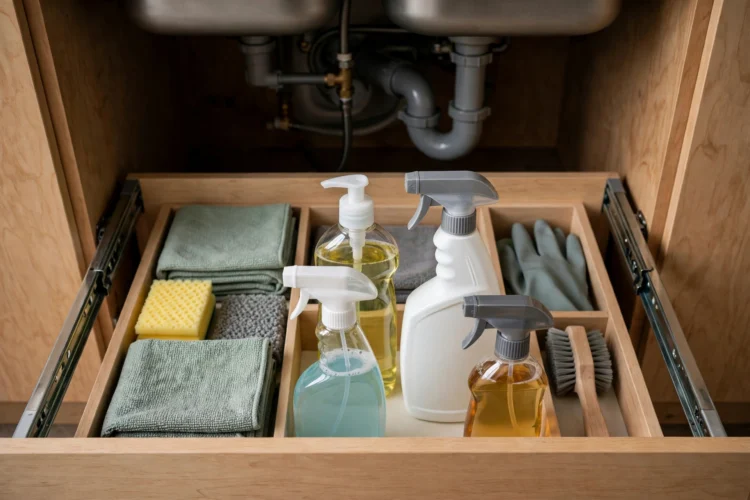
The cabinet under the sink is deep, dark, and plumbed through the middle, which is why bottles end up in a heap. An under sink organization drawer that pulls out on slides brings the back of the cabinet to you. No more kneeling and reaching past the pipes.
Measure around your plumbing before ordering. P-trap and disposal placement dictate which drawer shapes fit. U-shaped drawers wrap around the pipes and use the space best. If a full drawer feels like too much project, our pull-out storage ideas for deep cabinets cover simpler slide-out trays that install with screws.
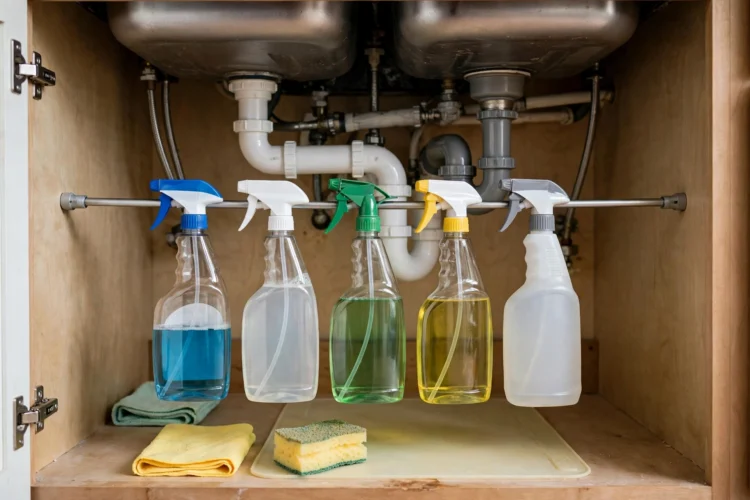
A spring tension rod wedged across the under-sink cabinet creates an instant hanging rail for spray bottles. Hook the triggers over the rod and the bottles hang above the cabinet floor, freeing the whole bottom shelf for bins and refills.
This is the cheapest under sink organization trick that actually works. A 12 to 20 inch adjustable rod fits most sink bases. Keep heavier bottles on the floor and hang only sprays and light cleaners. The rod needs solid side walls to grip, so skip it in cabinets with damaged interiors.
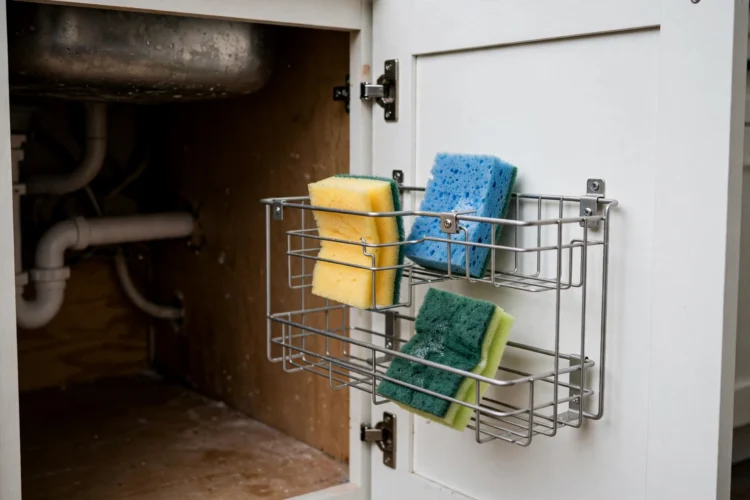
The inside of the sink cabinet door is wasted space in most kitchens. A slim wire caddy screwed or hooked to the door holds spare sponges, gloves, and scrub pads where you can see them. It uses zero shelf space and keeps damp items aired out.
Check the door clearance before you mount anything. The caddy must clear the cabinet frame and any pull-out drawer when the door closes. Over-door hooks avoid screws if you rent, but screwed mounts hold more weight. Keep it to light items. A door caddy is not the place for full cleaner bottles.
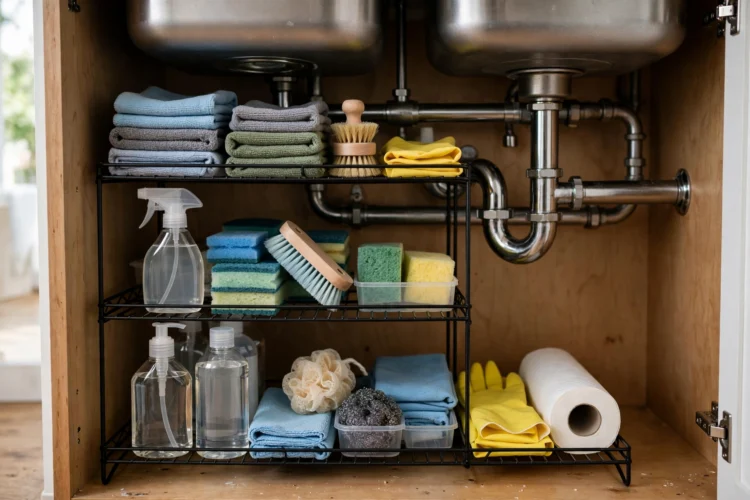
Under-sink cabinets are tall and mostly empty above the bottles. Stackable wire shelves add a second tier without any installation. You set them around the pipes and instantly double the usable surface for kitchen sink storage.
Freestanding shelves beat fixed ones here because you can rearrange around plumbing quirks. Choose rust-resistant coated wire, since the under-sink zone sees moisture. Put daily cleaners on top for grab-and-go access and backstock below. Leave the center open around the P-trap for future plumbing access.
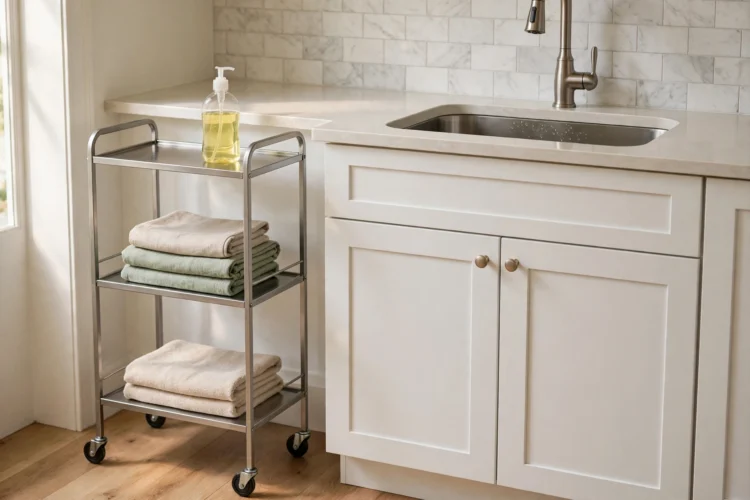
The 6-inch gap between the sink base and the next cabinet is a classic dead zone. A slim rolling cart fills it with tiered storage for dish soap refills, towels, and trash bags. You pull it out like a drawer and everything is visible.
Measure the gap at the floor, the middle, and the top. Baseboards and uneven walls shrink the real width. Carts with locking casters stay put when you bump them. This is also a good home for the items that do not fit under the sink because of the plumbing. For more ways to squeeze storage from tight kitchens, see our kitchen storage ideas for small spaces.
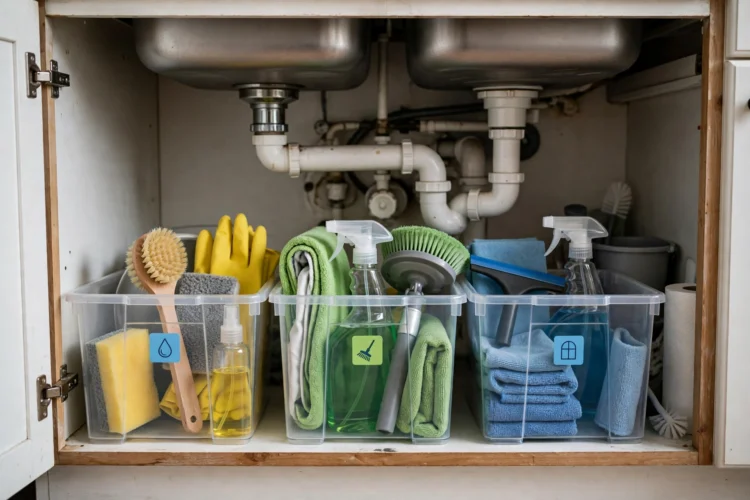
Bins turn the under-sink heap into zones. One bin for dish care, one for surface cleaners, one for specialty products. Clear bins let you see stock levels, and labels keep everyone in the house putting things back in the right place.
Use bins with handles so you can lift a whole category out at cleaning time. Waterproof plastic beats cardboard and fabric in a zone that sees leaks. Keep a small bin for hazardous items like drain cleaner, up high and out of kid reach. The system only works if every bottle has a home, so declutter first and bin second.
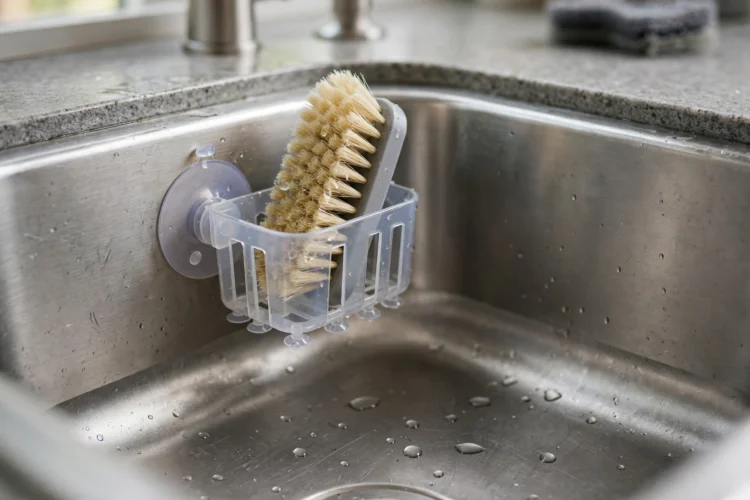
A small suction-cup holder stuck to the inside wall of the basin keeps the scrub brush off the counter and within reach. It drains straight into the sink, so the brush dries fast and the counter stays clear. Simple, cheap, and oddly satisfying.
Suction works best on smooth stainless and fireclay. Textured composite can defeat the seal, so test placement before loading it up. Re-wet the cup monthly to keep the grip strong. If suction fails on your basin, an over-the-divider saddle holder does the same job on double-bowl sinks.