Physical Address
304 North Cardinal St.
Dorchester Center, MA 02124
Physical Address
304 North Cardinal St.
Dorchester Center, MA 02124

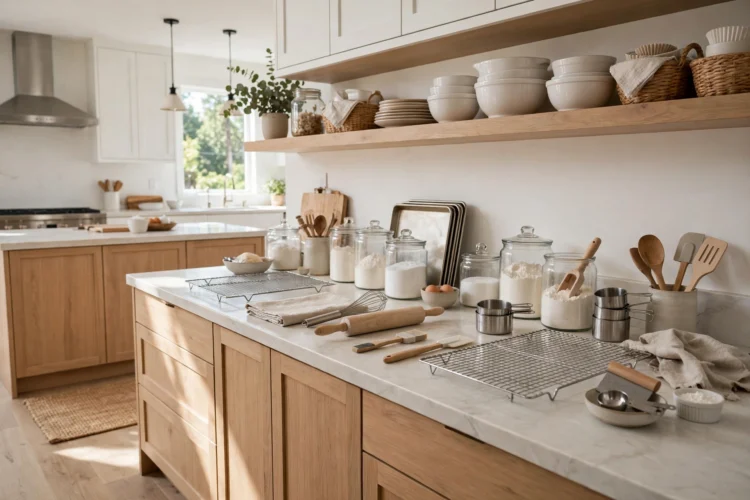
A baking station keeps flour, tools, and cooling racks in one spot so baking feels easy instead of like a full kitchen reset.
If you bake more than once a week, you already know the drill. The mixer lives in a high cupboard, the flour sits two rooms away, and by the time you find the cooling rack the dough has over-proofed. Good baking station ideas fix that by putting everything a baker needs in one tight zone, arranged in the order you actually use it. A home baking station does not need a remodel or a spare room. A single run of counter, one deep drawer, and a shelf can hold the whole routine.
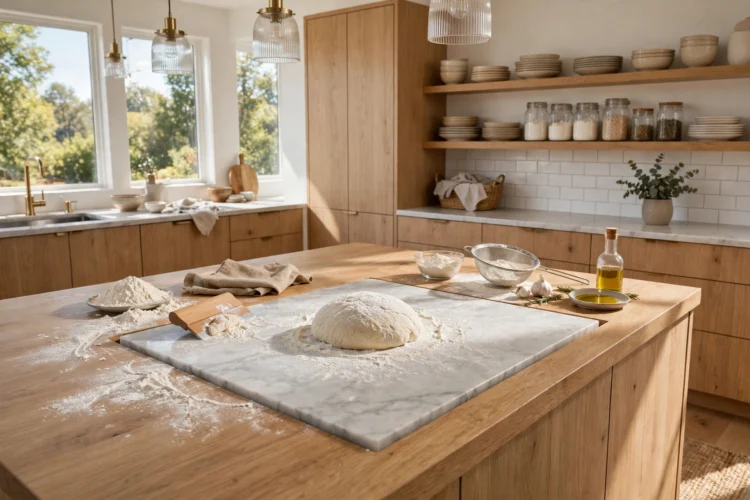
Marble stays cool, and cool dough is easier dough. A marble slab insert set flush into the counter gives you a rolling surface that never warms up under your hands, which matters for pastry, pie crust, and laminated dough. Ask a stone supplier for an offcut from a countertop job. A piece around 24 by 18 inches fits most counters, costs far less than a full slab, and drops into a cutout with a bead of silicone.
Keep the slab near the mixer, not across the kitchen. You roll, fill, and shape in one spot, and the flour stays contained instead of drifting across the whole counter. Wipe it with a damp cloth after use and skip the soap, since marble stains easily. If marble feels too fussy, a thick beech or maple pastry board does the same job and can slide into a drawer when dinner takes over the counter.
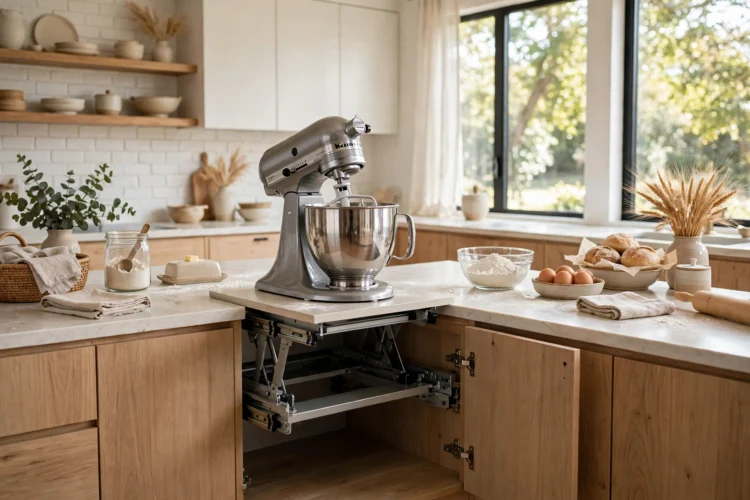
A stand mixer weighs close to 30 pounds, and that weight is the reason most of them sit unused. A mixer lift solves it. The platform mounts inside a base cabinet and springs up to counter height with one pull, then drops back down and hides behind a closed door. You never lift the machine, and the counter stays clear when you are not baking. If a lift feels like too much hardware, these stand mixer storage ideas show simpler ways to keep the machine handy without giving up counter space.
Measure before you order. A mixer lift cabinet needs a base at least 18 inches wide and 24 inches deep, plus clearance for the mixer head when it rises. If a full lift does not fit your budget, a sturdy pull-out shelf on heavy-duty drawer slides gives you most of the benefit. Store the mixer on the shelf, roll it out, and push it back when the cookies are in the oven. A nearby outlet inside the cabinet keeps the cord off the counter, and that small detail makes the whole setup feel finished.
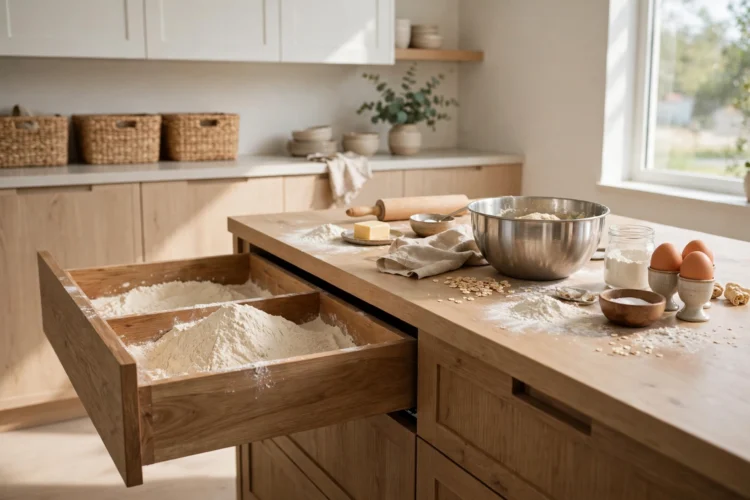
Flour, sugar, and salt belong within arm’s reach of the bowl, not in a pantry down the hall. A deep drawer fitted with sealed bins turns scooping into a one-handed job. Food-grade plastic bins with tight lids keep flour fresh and keep weevils out, and a scoop clipped inside each lid stops the hunt for a measuring cup mid-recipe.
Label the front of each bin with the contents and the date you filled it. Flour keeps for about six months in a cool cupboard, so a label stops you from baking with stale stock. If you bake with several flours, give each its own bin: all-purpose, bread flour, whole wheat, and a gluten-free blend. The drawer sits beside the mixer, so the path from bin to bowl is one step. Add a small drawer above for yeast packets, baking powder, and vanilla, and the whole dry-goods station fits in two drawers.
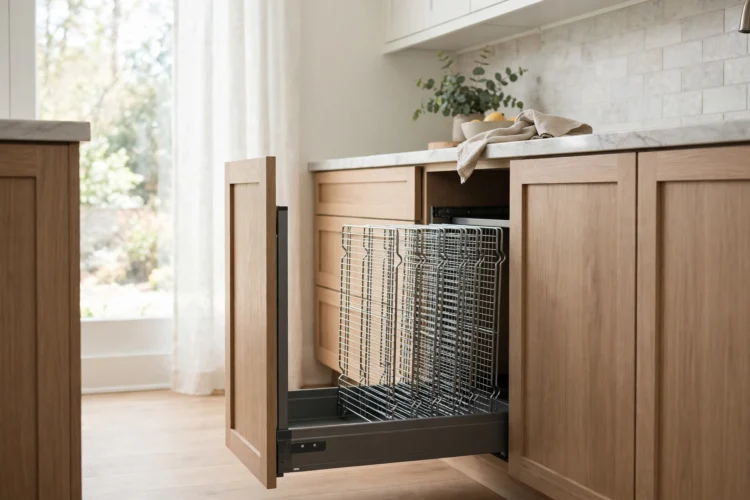
Cooling racks are flat, awkward, and always in the way. A narrow vertical pull-out, the kind built for tray storage, holds them upright in a slot only a few inches wide. Slide the rack in, close the cabinet, and it disappears. The same slot holds sheet pans, muffin tins, and cutting boards, so one thin cabinet ends the leaning tower of baking sheets beside the oven.
Place this storage between the oven and the baking counter. Hot trays come out of the oven, land on the rack, and the rack slides back into its slot once everything cools. If you do not have a spare cabinet, a simple vertical divider inside an existing base cabinet does the same job for the price of two boards and a few screws. Keep a folded tea towel in the slot too, so you always have something to grab a hot pan with.
Every baker has a shelf of odd ingredients: cocoa, molasses, three kinds of chocolate chips, and a bag of almond flour bought for one recipe. A dedicated baking pantry gathers them in one place, and good baking storage ideas start with seeing what you own before you shop. Shallow shelves work best, since deep shelves hide jars at the back until they expire.
Baking station ideas work best when the pantry sits beside the oven. A pull-out pantry there is ideal, but a single cupboard with door-mounted racks works just as well. Group items by use: chocolate and cocoa together, leaveners and extracts together, nuts and dried fruit together. Clear jars with labels let you see levels at a glance, which stops the duplicate purchases that fill most pantries. If your kitchen has no spare cupboard, a pull-out pantry for narrow gaps fits the same supplies into a gap you thought was unusable.
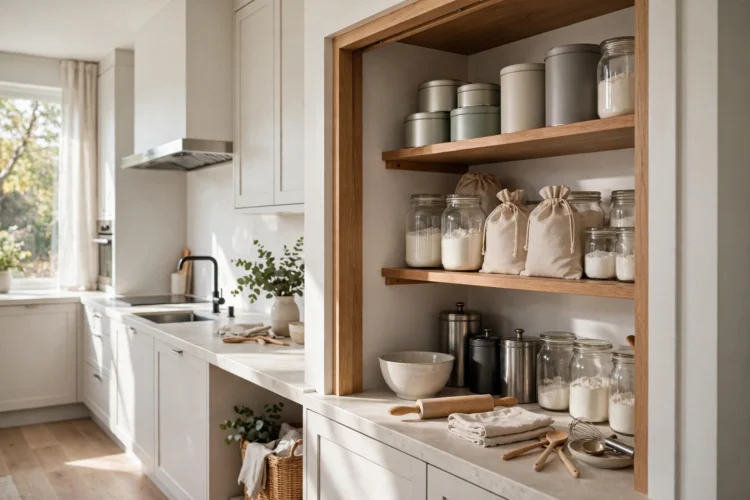
Baking uses a lot of bowls, and stacking them inside a deep cabinet means unstacking five to reach the one at the bottom. Open shelves fix that. Two shelves above the baking counter hold mixing bowls, measuring cups, and the tins you reach for weekly, all visible and grabbable. The pieces you use most sit at eye level; the bundt pan you use twice a year goes up high.
Keep the shelf count low and the pieces few. A crowded open shelf looks messy and collects flour dust, while three or four bowls per shelf look calm and stay clean enough to use. Choose shelves at least 12 inches deep so a large mixing bowl sits flat without tipping. A rail under the lowest shelf holds measuring spoons and a whisk on hooks, which frees a drawer for the tools that do need hiding. These shelves pair well with a styled open shelf run elsewhere in the kitchen, and this guide to styling open kitchen shelves without the clutter shows how to keep them looking calm.
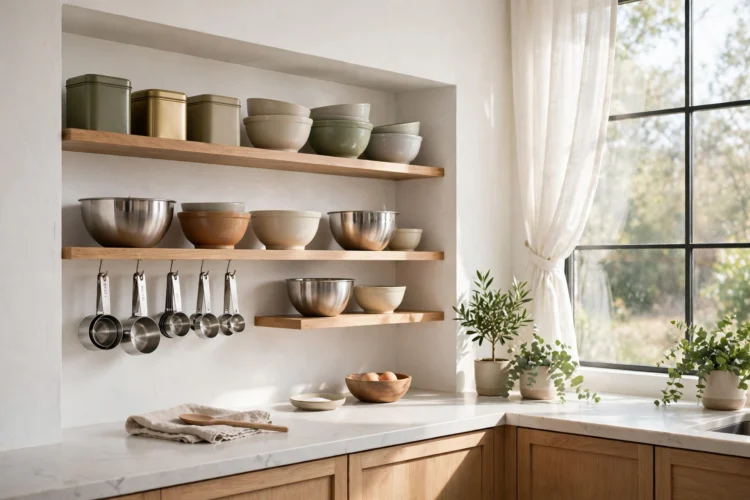
Standard counters sit 36 inches high, which suits chopping but not kneading. Kneading at elbow height strains your shoulders, and rolling pastry on a high surface tires your arms fast. A baking counter at 32 to 34 inches puts the work at the right height, and your back will notice the difference after one long bread session.
You do not need a whole new counter. A butcher block slab on a sturdy low table, or a pull-out section set a few inches below the main counter, gives you the same working height. A thick wooden pastry board on the standard counter raises the dough toward you, which helps a little, but a true lower surface is better for anything that takes more than ten minutes of hand work. If you bake standing for long stretches, a cushioned mat in front of the low counter saves your feet, and a stool nearby lets you sit while dough rests.
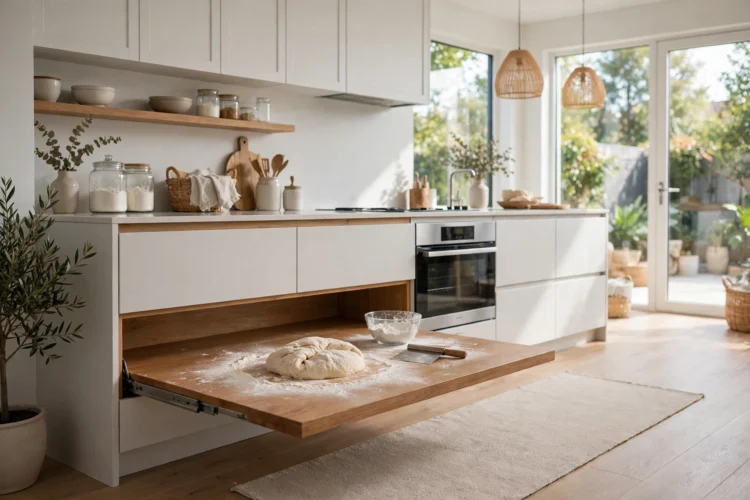
Baking makes a mess, and the mess is mostly flour, eggshells, and sticky dough on your hands. A small prep sink inside the baking zone lets you wash up without crossing the kitchen, and a trash pull-out right beside it catches eggshells and parchment scraps as you work. The cleanup loop stays inside the zone, so the rest of the kitchen stays clean while you bake.
A full second sink is a big job, so look for the cheaper version first. A trash pull-out under the baking counter and a roll of paper towels on a wall-mounted holder cover most of the need. If the counter still feels crowded, an appliance garage that hides small appliances frees the surface for rolling and shaping instead. If your baking zone sits near the main sink already, skip the second sink and spend the money on a spray bottle for the counter and a bench scraper, which cleans flour off a surface faster than any cloth.
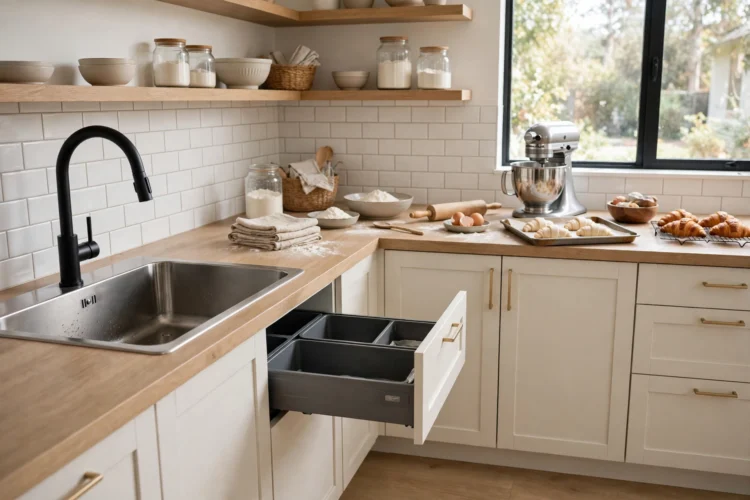
A baking center kitchen grows one zone at a time, so start with the piece that solves your biggest annoyance. If the mixer is the problem, buy the lift. If flour ends up everywhere, build the slab and the bins. These baking station ideas all share one goal: every step of baking happens in one place. Pick your first project this weekend and bake in it next week.