Physical Address
304 North Cardinal St.
Dorchester Center, MA 02124
Physical Address
304 North Cardinal St.
Dorchester Center, MA 02124

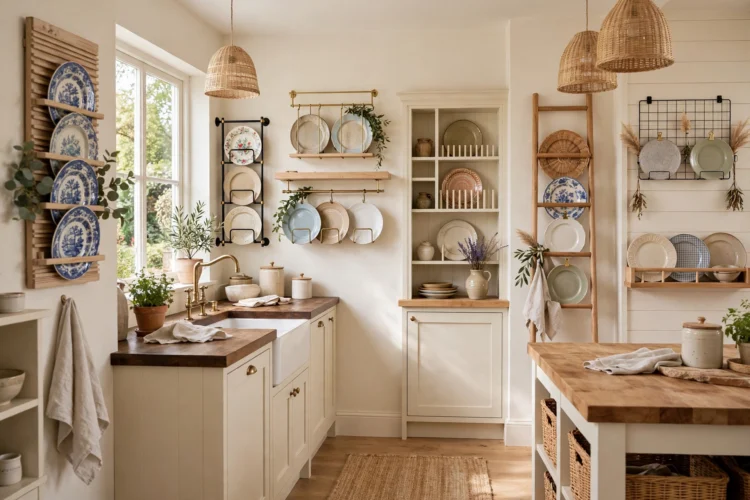
Plate racks pull everyday dishes out of dark cupboards and onto the wall, where they stay reachable and double as cottage-style decor.
Most plates live stacked in a dark cupboard, and the nice ones only come out for guests. Plate rack ideas change that. A kitchen plate rack puts the plates you use every day where you can see them and grab them, and the dishes themselves become part of the room. The trick is picking a rack that holds plates safely, fits the space you have, and looks like it belongs in your kitchen instead of a restaurant pass.
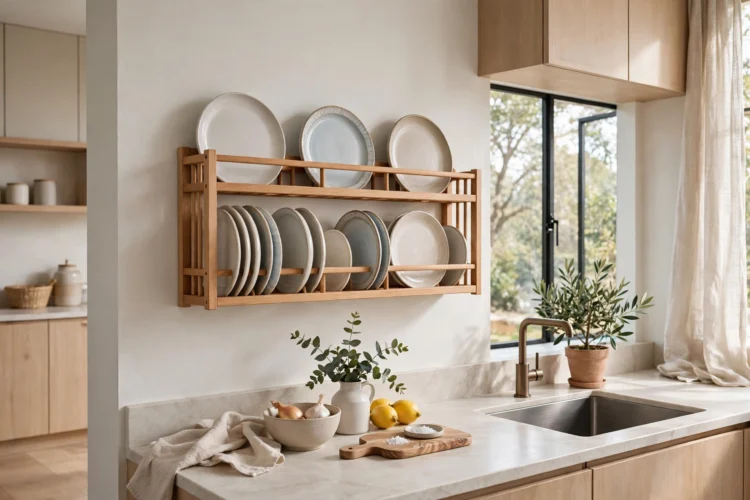
A wall-mounted wooden rack is the classic, and it works because it is simple. A horizontal rail with a grooved shelf holds plates upright, and a small lip at the front stops them from sliding off. Mount it at eye level above a counter or a sideboard, and the plates sit where hands reach them without a step stool.
Choose a wall plate rack at least 12 inches deep so dinner plates lean back at a safe angle instead of standing straight up. Hardwood holds up better than pine in a steamy kitchen, and a food-safe oil finish beats paint on a rack that touches dishes daily. Hang the rack on studs, not drywall anchors, since a full row of stoneware is heavier than it looks. If you like the open look, these open shelving kitchen ideas show how to pair a rack with shelves above it.
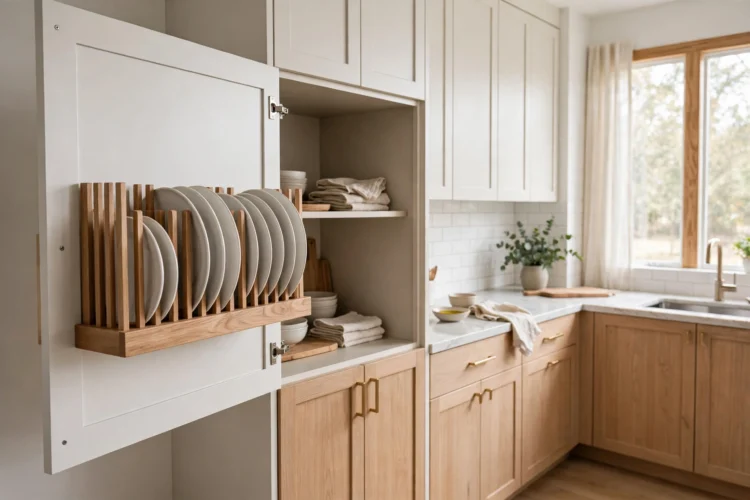
If open racks feel too busy for your kitchen, a cabinet insert gives you the same easy access behind a closed door. A vertical divider set inside a base cabinet holds plates upright in slots, so you pull one plate out without unstacking five. It works best in a cabinet beside the dishwasher, where clean plates go straight from the rack to the shelf.
Measure your plates before you buy the insert. Dinner plates need slots about an inch wider than the plate diameter, and the divider should sit at least 2 inches from the cabinet door so plates clear the hinges. Wooden dividers are quieter than wire ones and kinder to plate rims. If your cabinet is deep, add a second row of dividers at the back for salad plates and saucers, so the whole set lives in one place. This setup suits kitchens that already use pull-out storage in narrow gaps, since the same logic applies: store things upright, and nothing hides at the back.
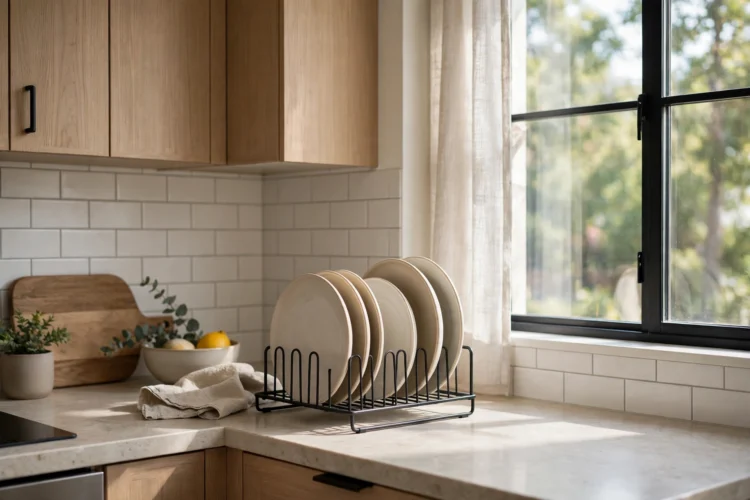
A countertop rack needs no screws, no studs, and no landlord permission. A freestanding wooden or bamboo rack sits on the counter and holds six to eight plates upright, ready to grab at dinner time. It suits renters, small kitchens, and anyone who wants to try the plate-rack look before drilling holes.
Keep it near the sink or the dishwasher so clean plates go straight onto the rack. A rack with a drip tray underneath catches the last drops from hand-washed plates, and a folding design lets you pack it away when the counter needs to host a big cooking session. The downside is counter space: a rack this size eats about a foot of it, so it works best in kitchens with a spare stretch of counter or a sideboard nearby. Move it to a sideboard in the dining room if the kitchen counter is tight, and it still keeps plates within a few steps of the table.
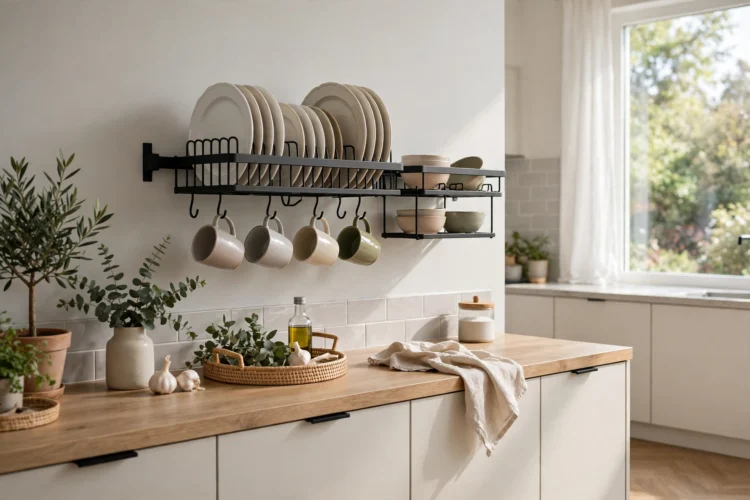
Rail-based plate rack ideas do more than hold plates. A sturdy metal rail with S-hooks and a grooved shelf carries plates above and mugs below, while small baskets clipped to the rail hold bowls and linen napkins. One rail can replace a whole shelf of cupboard space, and everything on it stays visible.
Mount the rail on a wall with no upper cabinets, such as the wall beside a window or above a breakfast bar. Brass rails warm up a white kitchen, while matte black rails suit a modern one. Keep the weight balanced: plates on the shelf, mugs on the hooks, and nothing heavier than a small bowl in the baskets. A rail works well above a coffee station or a tea corner, where the mugs get used daily and the plates wait for toast and eggs. If you want the dishes on show but behind glass instead, these glass-front cabinet ideas give you the same display with a layer of dust protection.
A painted plate rack is the simplest plate display rack: it brings cottage character to a plain wall. Sage green, cream, or dusty blue paint turns a simple wooden rack into a feature, and the plates on it add pattern and color for free. The grooves are cut into the shelf itself, so plates sit at a slight tilt and show their pattern instead of their backs.
Match the paint to something already in the room: the island, the lower cabinets, or a chair. One painted piece is enough; painting every rack in the room makes the kitchen look like a showroom. Fill it with your everyday set, not the good china, since daily use is the point. Mismatched plates look fine here, even charming, as long as the colors share a family. White, cream, and one accent color keep the rack calm. Add a small vase or a framed print at one end, and the rack reads as decor first and storage second.
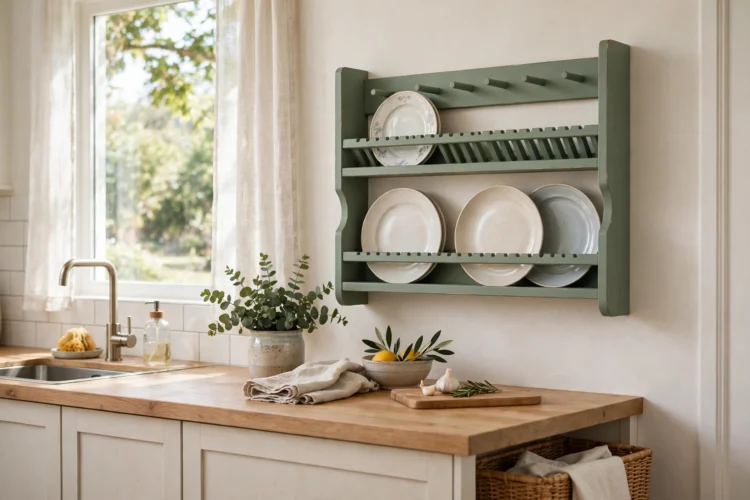
Plates do not have to live in the kitchen. A rack above the sideboard in the dining room keeps serving plates and platters a step from the table, and it fills a blank wall that usually gets a mirror by default. The sideboard catches the overflow: stacked bowls below, the rack above, and the table setting becomes a short walk instead of a trip across the house.
Hang the rack about 18 inches above the sideboard so there is room to lift a plate out without knocking the lamp. Use the rack for platters and serving dishes, the pieces that are too big for kitchen cupboards anyway. Everyday dinner plates can stay in the kitchen, and the dining room rack holds the pieces that make a meal feel like an occasion. A row of small framed prints or a runner on the sideboard ties the rack into the room, and these wall-mounted kitchen storage ideas show how the same approach frees counter space in the kitchen too.
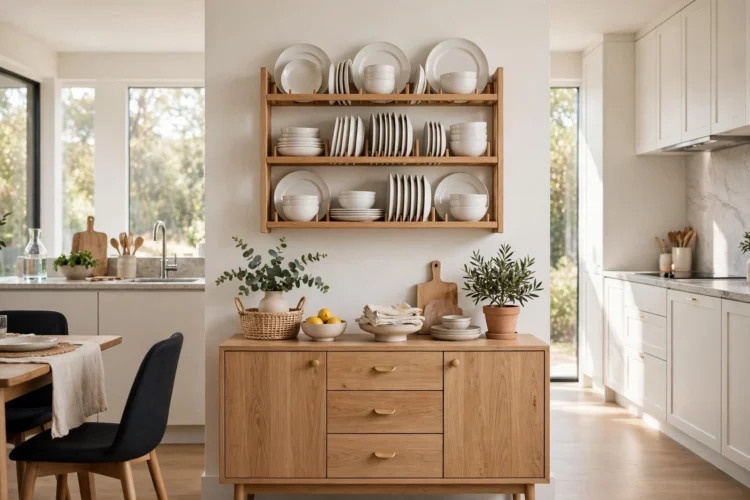
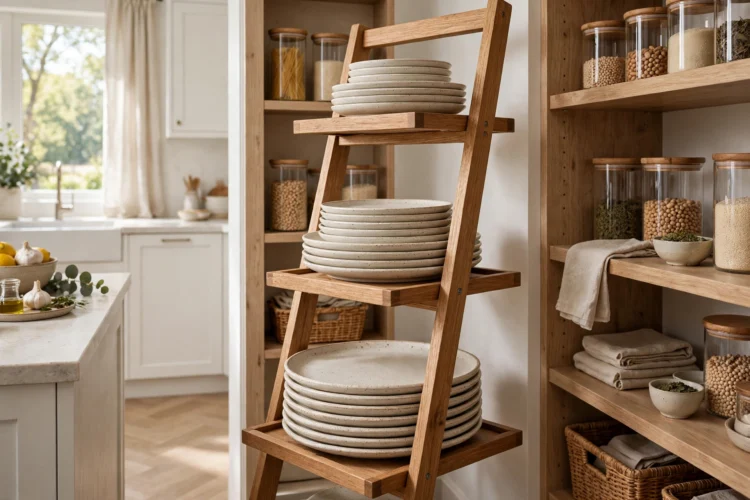
A tiered rack uses height instead of wall space. Two or three stepped shelves hold plates in rows by size: dinner plates at the back, salad plates in the middle, saucers at the front. Everything is visible from the front, and you can pull any plate without moving the ones above it.
Tiered racks suit pantries and deep cupboards, where a single row wastes the vertical space. A wooden tiered rack inside a pantry keeps the full set in one place, and a metal one on a counter works for a small household that owns few dishes. Check the step height before you buy: each tier needs enough clearance for the plate behind it to lean without touching the tier above. If the rack lives inside a cupboard, measure the door opening too, since a tiered rack is wider than it looks once loaded. This is the rack to choose when wall space is gone and the cupboard is the only option left.
Pick the rack that fits your wall, your plates, and your habits. A wall rack suits a kitchen with an empty stretch of wall. A cabinet insert suits a kitchen that already feels full. Either way, the plates you use every day end up where you can see them, and the cupboard gains a shelf for the things that truly belong behind a door. These plate storage ideas all share one goal: the plates you use every day end up where you can see them. Hang one rack this weekend and see how fast dinner setup gets.