Physical Address
304 North Cardinal St.
Dorchester Center, MA 02124
Physical Address
304 North Cardinal St.
Dorchester Center, MA 02124


A flat bed usually misses one thing: layers. These ten ideas show how sheets, duvet, coverlet, and throws work together to make a bed look finished and feel inviting.
Bedding layering ideas matter because a bed is the largest surface in most bedrooms. When it looks flat, the whole room feels unfinished. When it has layers, the room feels considered, even if nothing else changed. The good news is that layering follows a simple order, and you do not need expensive bedding to get it right. You need the right pieces in the right order, with texture doing more work than pattern.
Think of the bed in four layers, from skin outward: sheets, duvet, coverlet, and throw. Each layer has a job. Sheets handle comfort against the skin. The duvet gives warmth and loft. The coverlet adds a finished look and a lighter option for warm nights. The throw adds color and a soft touch at the foot. When a layer is missing, the bed either looks bare or feels too heavy, so check which layer your bed lacks before buying anything new.
This order is the layered bedding formula in its simplest form, and it works in small rooms as well as large ones. Build the bed from the bottom up each morning, smoothing each layer before adding the next. A tidy base makes every layer above it look better, and the whole routine takes about two minutes once it becomes habit.

Sheets touch your skin all night, so feel matters more than thread count labels. Cotton percale feels crisp and cool, which suits warm sleepers. Cotton sateen feels smooth and slightly heavier, which suits cool rooms. Linen feels textured and breathes well in summer. Pick the feel you like, wash new sheets once before first use to soften them, and keep two sets per bed so a wash day never leaves the bed bare.
Fold the top sheet back about a third of the way down the bed. This fold, called the cuff, shows off the sheet, gives a neat edge for the duvet to sit against, and makes the bed look made even when the rest is casual.

A duvet gives the bed its shape. Shake it out fully before laying it down, and let it puff up for a minute instead of flattening it at once. Size up if you can. A duvet one size larger than the mattress drapes over the edges and stops the nightly tug of war over covers. Tuck the sides loosely for a tailored look, or leave them free for a relaxed look, but keep the top edge even with the sheet cuff.
Choose filling by climate, not by label alone. A light filling suits warm rooms and summer, a medium filling covers most of the year, and a heavy filling belongs in cold rooms. A washable duvet saves dry cleaning trips, which matters when pets or kids share the bed.

A coverlet is the piece most beds skip, and it is the piece that makes layering visible. It sits over the duvet, folded across the middle or lower third of the bed, and adds a second color or texture without extra warmth. Duvet coverlet throw layers work because each piece stays distinct. If the coverlet matches the duvet exactly, the layers blur into one flat block. Pick a coverlet in a contrasting texture, such as a waffle weave over smooth cotton, or a quilted stitch over plain linen.
On warm nights, the coverlet alone can serve as the cover, with the duvet folded back to the foot. This flexibility is the real payoff of layering, giving you a bed that adapts to the night instead of one fixed setup.
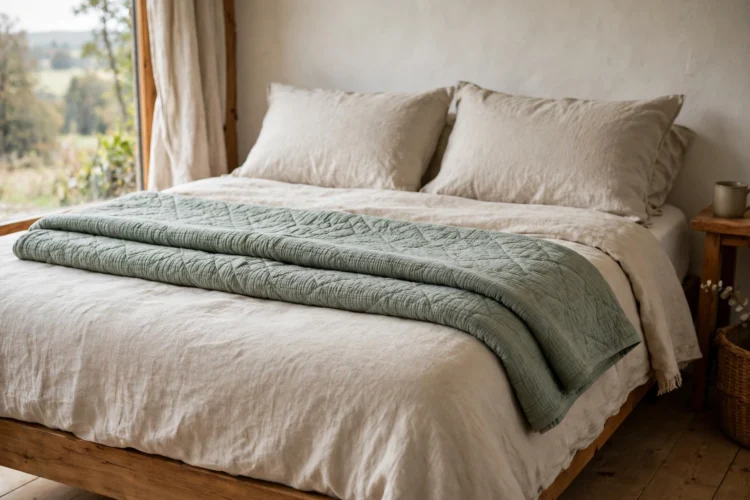
A throw is the smallest layer and the easiest way to change the look of a bed. Drape it across the foot, fold it into a wide band, or toss it casually over one corner for a relaxed feel. Because throws are cheap relative to bedding sets, they are the best place to try a bold color or pattern. A rust throw on white bedding, or a deep green throw on grey bedding, changes the room in seconds.
Keep throws washable. A throw that cannot be washed ends up folded in a closet, while a washable one actually gets used on cold evenings. Store a spare throw in a basket near the bed so it is within reach without cluttering the bedding.

Pillows split into three roles, and mixing them up causes most bed mess. Sleep pillows stay flat against the headboard for actual sleeping. Support pillows, such as a firm square or a reading pillow, prop you up for reading. Show pillows, usually smaller and decorative, sit in front. A good setup for a double bed is two sleep pillows, two support pillows, and two or three show pillows. More than that turns bedtime into a nightly clearing exercise.
Arrange pillows tallest at the back and smallest at the front, and karate chop the centers of show pillows only if you like that look. Fluff sleep pillows daily and replace them when they stop springing back, since a flat pillow ruins even the best layered bed.

Bedding texture combinations decide whether layers look rich or muddled. Pair a smooth sateen duvet with a textured waffle coverlet, or crisp percale sheets with a soft knit throw. When every layer has the same smooth finish, the bed looks flat even in a pretty color. When every layer is heavily textured, it looks busy. Aim for two textures that contrast and one that repeats, such as linen sheets, a cotton duvet, and a linen throw.
Color follows the same rule of restraint. Start with a neutral base across the big pieces, then add one accent color in the throw and one show pillow. This keeps the bed calm and lets you swap the accent with the seasons without replacing the whole set.

A cozy bed styling routine changes with the seasons, and small swaps keep it fresh without a full shopping trip. In summer, drop the heavy duvet for a light coverlet, switch to percale or linen sheets, and use a thin cotton throw. In winter, bring back the loftier duvet, add a wool or chunky knit throw, and layer a second coverlet at the foot for extra warmth on cold nights.
Store off season bedding clean and dry, in breathable bags rather than sealed plastic, so it smells fresh when it returns. The same seasonal thinking works in a bathroom too, where spa-like bathroom ideas show how fresh towels and a lighter palette change a room. Borrow the calm of terrazzo bathroom ideas for a neutral base that survives seasonal swaps, add soft evening light inspired by bathroom skylight ideas thinking about natural light, and finish with a vintage accent from vintage bathroom ideas if the room leans classic. Swap one layer at a time, live with it for a few nights, and keep only the changes that actually improve your sleep.