Physical Address
304 North Cardinal St.
Dorchester Center, MA 02124
Physical Address
304 North Cardinal St.
Dorchester Center, MA 02124


A padded headboard changes a bedroom more than almost any other single piece. These twelve ideas help you pick the fabric, shape, and size that suits your room.
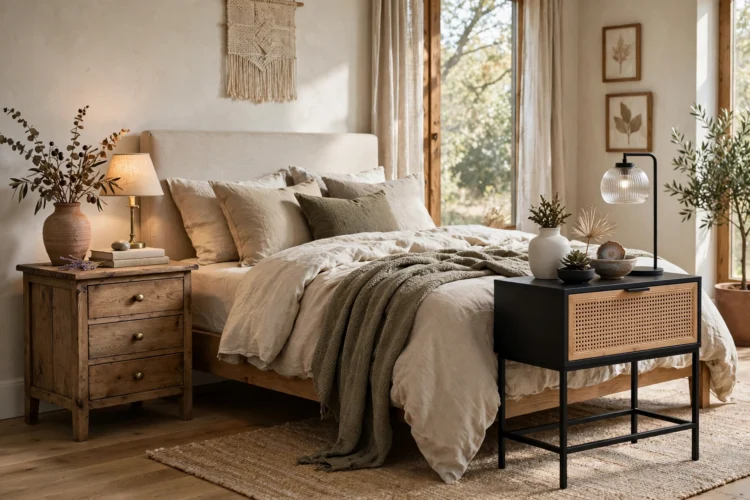
Upholstered headboard ideas earn their place in a bedroom because they do two jobs at once. They soften the wall behind the bed, and they give the whole room a clear focal point. A wooden frame can look bare without art above it, but a padded headboard finishes the bed on its own. The trick is picking a fabric and shape that fits how you actually use the bed, whether you read there every night or just want the room to look pulled together.
Start with the bed itself. A headboard should sit at least as wide as the mattress, and a little wider looks more generous in a large room. Height matters too. A low headboard suits a room with art above the bed, while a tall one fills a blank wall and makes a small room feel grand. Check the wall before you buy. Radiators, outlets, and light switches all limit where a headboard can sit, and a wall mounted design needs solid fixing points.
Think about how you sit in bed. If you read for an hour each night, a thick, slightly reclined pad beats a flat, firm panel. If the bed is mostly for sleep, a slimmer profile keeps the room feeling open and leaves more space for bedside tables.

A boucle headboard brings instant texture. The looped yarn catches light and shadow, so even a plain cream headboard looks interesting up close. Boucle suits calm, neutral bedrooms where you want warmth without pattern. It pairs well with oak furniture, linen bedding, and a wool throw, and it hides minor marks better than a flat weave because the texture breaks up the surface.
Boucle does shed a little at first, so vacuum it with an upholstery attachment in the first weeks. Keep it away from rough Velcro or pet claws, which can snag the loops, and choose a slightly darker shade if the bed sits in a sunny spot where light colored fabric shows dust faster.

Velvet gives a bedroom a richer, moodier feel than any other common headboard fabric. Deep green, navy, or rust velvet absorbs light and makes the bed look dressed even when the bedding is simple. It works best in rooms that get evening use, since velvet looks its best under warm lamps. Pair it with plain cotton sheets and one contrasting cushion, and let the headboard carry the color.
Velvet headboard care is simpler than its reputation suggests. Brush it weekly in one direction to keep the pile even, blot spills at once instead of rubbing, and steam out pressure marks from pillows. Avoid placing velvet in direct sun all day, since strong light can fade the pile over time.
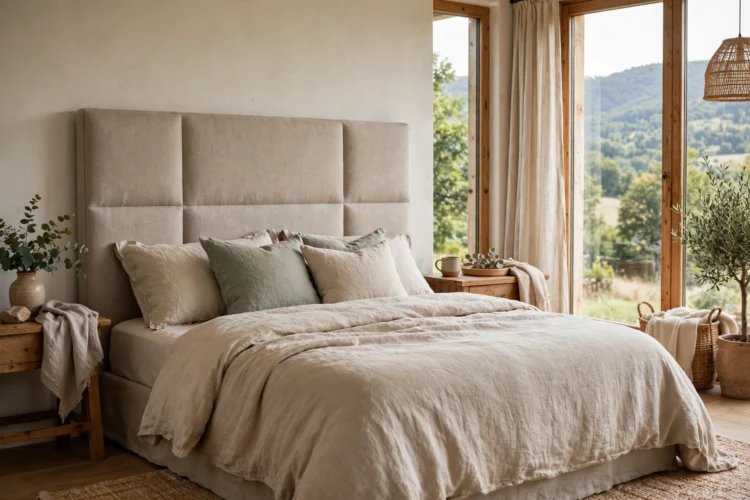
A linen headboard style suits bedrooms that lean casual and airy. Linen wrinkles, and that is part of its charm, giving the bed a relaxed look that never feels stiff. Natural shades such as oatmeal, stone, and sage keep the room calm, and linen blends easily with cotton bedding and rattan or light wood furniture. It is also a practical pick for warm rooms, since linen breathes better than heavier fabrics.
Choose a removable cover if you can. A linen slipcover goes in the wash, which matters when the headboard doubles as a backrest for reading and morning coffee. If the cover is fixed, a fabric protector spray applied before first use helps with everyday marks.
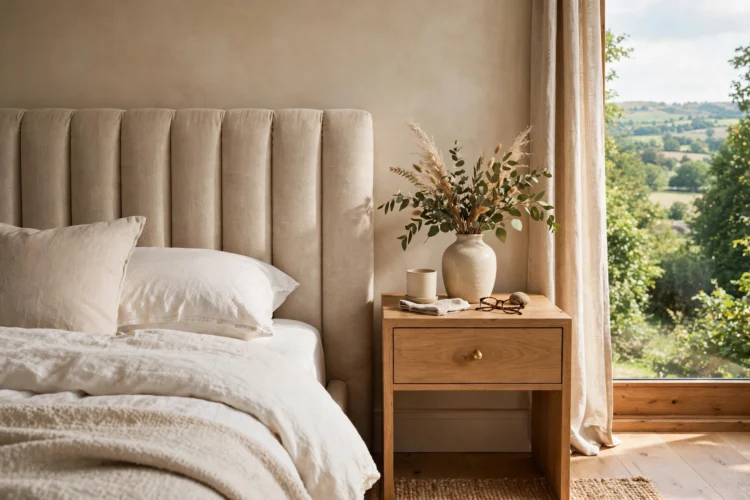
Tufting changes the whole character of a headboard. A channel tufted headboard, with its vertical padded ridges, looks modern and tailored, and it gives good back support because the channels run the way you lean. Button tufting looks more classic and formal, with diamond folds that catch the eye, but the buttons can press into your back if you lean against them for long. Plain, untufted panels sit between the two, offering a clean look that suits minimal rooms.
Test tufting by leaning on it in the shop, not just looking at it. A headboard you lean on every night needs to feel good, not just photograph well, and padding depth matters more than the pattern once you live with it.
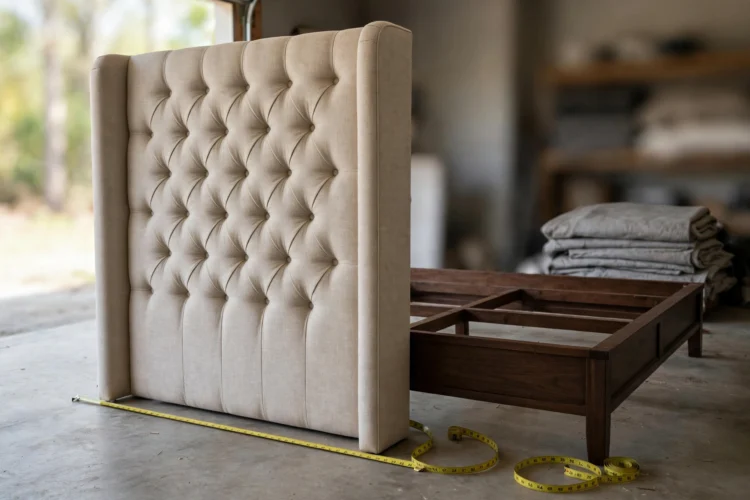
Measure twice before ordering. A headboard that is narrower than the mattress looks like a mistake, while one that is much wider can crowd bedside tables. As a rule, match the mattress width or add a few inches per side, and leave enough room for lamps and books. Height is a style choice with a practical edge. Tall headboards suit rooms with high ceilings and plain walls, while lower ones keep a small room feeling open and let art or shelves take the upper wall.
Check the total height against pillows. Pillows stacked for sleeping should not hide the headboard completely, or the shape you paid for disappears. Stand back and look at the bed as a whole, not just the headboard on its own. Also check the gap on each side. A headboard that leaves no room for a lamp base or a book forces you to balance things on the mattress, which defeats the point of a tidy bedside. Measure the wall, the bed, and both tables together, and write the numbers down before ordering, since returning a large upholstered piece costs time and delivery fees.

When the headboard is the star, bedding should support it rather than compete. Pick sheets and a duvet in a tone pulled from the room, not a rival pattern, and add color through one throw and two cushions. A patterned headboard pairs with plain bedding, while a plain headboard can handle a patterned duvet or a striped throw. This balance keeps the bed looking styled instead of busy.
The same restraint works across the house. A calm bathroom, for example, gains from the same thinking as spa-like bathroom ideas show, where one feature leads and the rest stays quiet. In the bedroom, let the headboard lead, and keep mirrors and fixtures simple, much like bathroom mirror ideas advise for reflective surfaces. Finish the look with a bedside lamp in a warm metal, echoing brass fixture bathroom ideas for a cohesive feel.
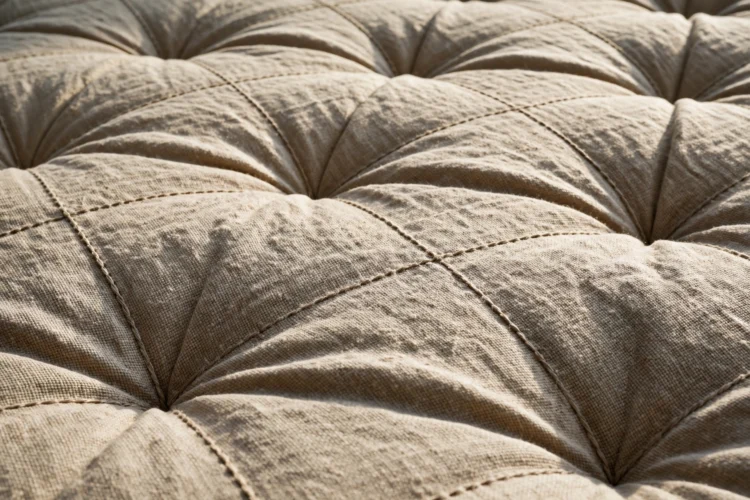
Every fabric has its own care routine, and a little regular attention keeps a headboard looking new for years. Vacuum weekly with a soft brush attachment to stop dust settling into the weave. Blot spills at once with a clean cloth, working from the edge inward so the mark does not spread. For velvet, brush the pile back into place after cleaning. For linen, a gentle steam refreshes the weave between washes. For boucle, skip harsh brushes that can catch loops.
Once a year, give the headboard a deeper clean following the fabric label, and check the fixings to the wall or bed frame at the same time. Tighten any loose bolts, since a headboard that shifts when you lean on it wears its fabric unevenly and feels unstable. If the label allows it, a handheld steam cleaner refreshes padding that has absorbed bedroom dust over months, but test on a hidden corner first and let it dry fully before making the bed again.
A headboard that stays firm and clean anchors the room far longer than one that slowly loosens, and a vintage touch nearby, inspired by vintage bathroom ideas, can add character without stealing focus from the bed.
Before you commit to one fabric, order swatches and live with them for a few days. Pin a swatch to the wall behind the bed and look at it in morning light, in evening lamplight, and next to the bedding you already own. A fabric that looks soft and calm in a shop can read darker or warmer at home, and it is far easier to swap a swatch than to return a finished headboard. Check how the fabric feels against bare arms and shoulders too, since you will lean on it in summer as well as winter. If two fabrics both appeal to you, pick the one that is easier to clean and that matches the bedding you plan to keep, and let cushions carry the bolder color instead.