Physical Address
304 North Cardinal St.
Dorchester Center, MA 02124
Physical Address
304 North Cardinal St.
Dorchester Center, MA 02124

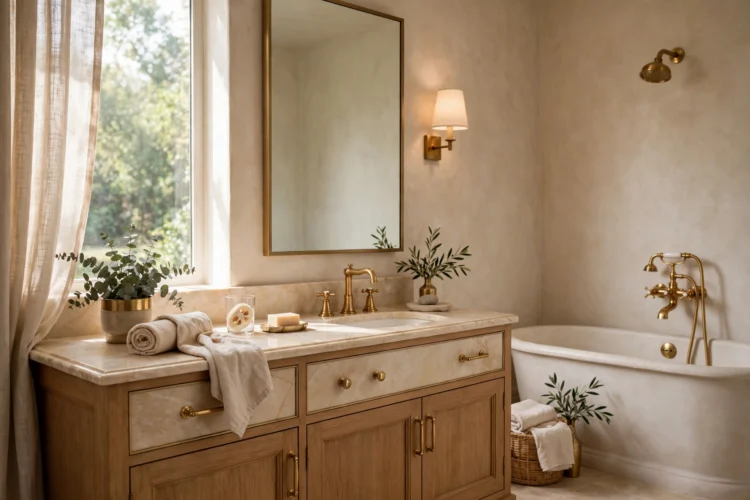
Brass is the warm counterpoint to years of matte black fixtures, and it suits stone, white tile, and wood better than most metals. These 11 ideas show how to use brass in a bathroom without overdoing it.
Brass fixture bathroom ideas offer a warmer path than the matte black trend that has ruled bathrooms for years. Unlacquered brass starts bright, then softens into a lived-in patina that suits stone, white tile, and wood. That aging is a feature, not a flaw, and it is why designers keep returning to brass for bathrooms meant to feel warm rather than stark. These 11 ideas show where brass works hardest, how much to use, and how to keep it looking good as it ages.
In a small bath, brass works best as jewelry, not as the main event. A brass faucet, a matching mirror frame, and one or two brass hooks give warmth without overwhelming the room. Because brass catches light, even small pieces draw the eye, so you need fewer of them than you would with a quieter finish. Keep the rest of the room light, with white tile and a pale wall, so the metal has room to glow.
Choose one brass tone and stick with it. Mixing polished, brushed, and aged brass in one room looks accidental rather than collected. If your faucet is brushed brass, match the towel ring, the toilet paper holder, and the cabinet pulls to the same finish family. For contrast, look at how dark metals behave in small spaces in these black fixture bathroom ideas, which show why one strong metal choice beats a mix.
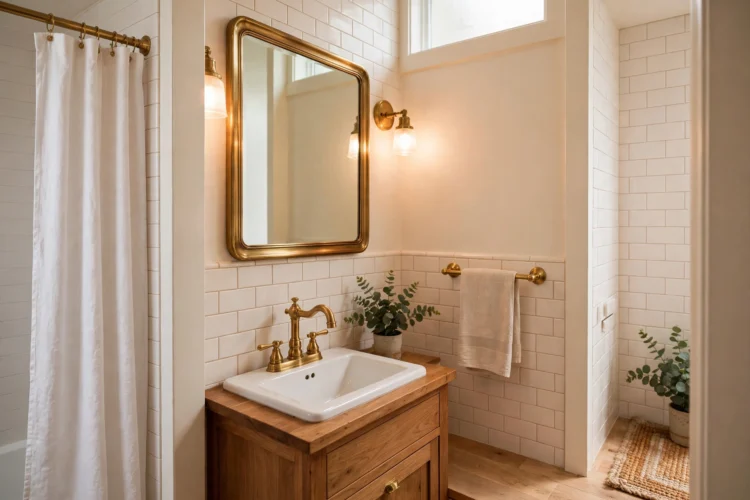
Unlacquered brass has no clear coating, so it reacts with air and water and develops a deeper, darker patina over time. Some owners love this evolving look, since each fixture gains character that lacquered brass never will. The patina is uneven by nature, darker around joints and handling points, which reads as handmade rather than worn out. If you like the look of old brass in historic homes, unlacquered is the way to get it honestly.
If you prefer a brighter look, you can polish unlacquered brass back with a gentle brass cleaner, though most owners polish only the faucet and let the rest age. Lacquered brass stays bright with less work but can look flat by comparison, and a damaged lacquer coat is hard to repair invisibly. Decide which maintenance style suits you before buying, since the two finishes age very differently. Brass bathroom fixtures in unlacquered form reward owners who enjoy the slow change.
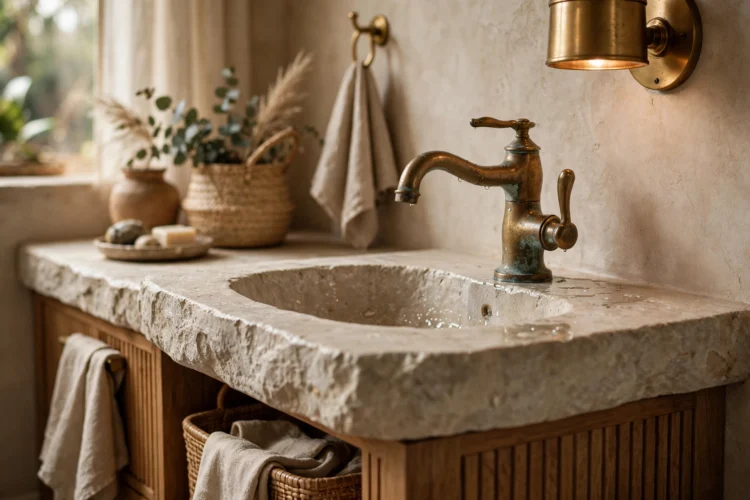
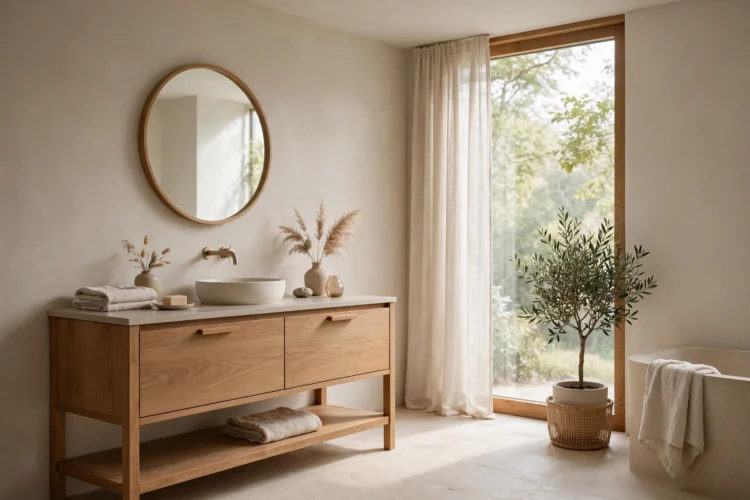
The faucet is the natural star of a brass bathroom. A wall mounted brass faucet above a stone or ceramic basin reads sculptural, while a deck mounted bridge faucet suits a traditional vanity. Brushed brass hides water spots better than polished brass, which matters on a faucet touched with wet hands daily. Pair the faucet with a matching pop-up drain so the metal story continues below the basin.
Check compatibility before falling for a style. Wall mounted faucets need in-wall plumbing and a reinforced wall, which is easier during a renovation than a simple swap. For a simpler update, a deck mounted brass faucet replaces most standard faucets without moving pipes. Either way, buy from a maker that sells matching accessories, so you are not hunting for the same finish months later. Brass bathroom fixtures ideas often start at the faucet and spread from there.
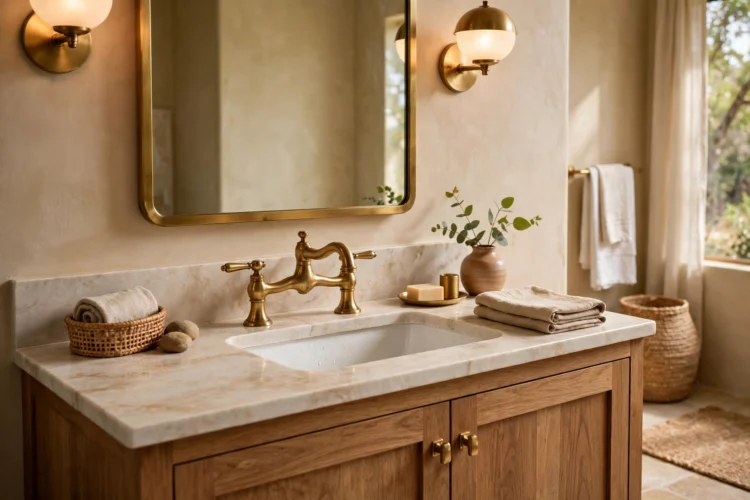
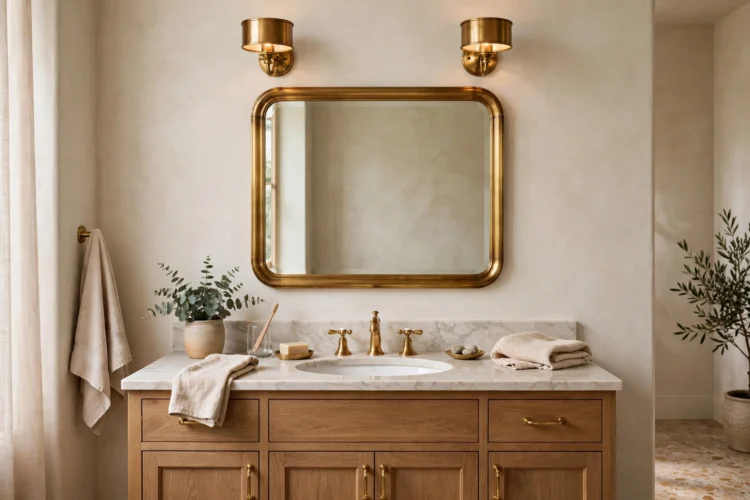
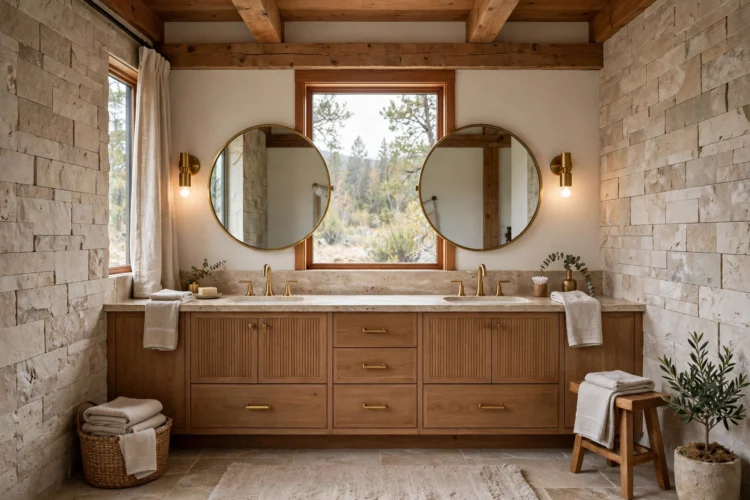
Once the faucet is set, mirrors and lighting carry the brass theme across the room. A thin brass framed mirror echoes the faucet without competing with it, and brass sconces beside the mirror add warm light that flatters both the metal and the room. Cabinet pulls, robe hooks, and towel rings in the same finish tie the vanity zone together. These smaller pieces cost less than plumbing, so they are a good way to test brass before committing to a faucet.
Keep the scale of brass hardware in proportion to the room. Slim pulls suit a small vanity, while chunky knobs suit a large double vanity. For mirror shapes and placements that suit brass frames, see these bathroom mirror ideas ranging from backlit panels to classic arches. A brass mirror frame pairs especially well with an arched shape, which softens the straight lines of tile and cabinetry.
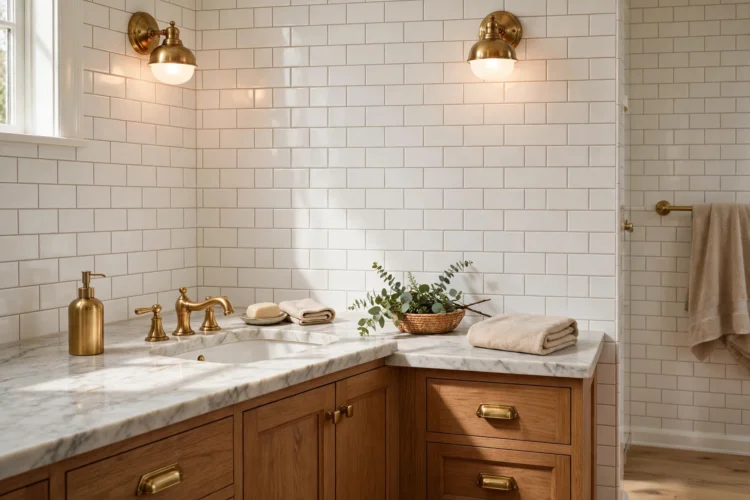
Brass looks best against quiet backgrounds, and white tile plus marble are the classic pairing. White subway tile lets brass hardware stand out, while marble counters with soft veining echo the warmth of the metal. The combination feels timeless because it borrows from traditional bathrooms without copying them exactly. Keep grout light and grout lines thin so the tile reads as a calm backdrop.
For tile layouts that suit this pairing, these subway tile bathroom ideas show patterns beyond the basic brick layout, including stacked and herringbone options. A marble look porcelain tile gives you the veining without the sealing routine of real marble, and it pairs with brass just as well. Avoid pairing brass with strongly patterned tile in the same zone, since two loud elements fight for attention.
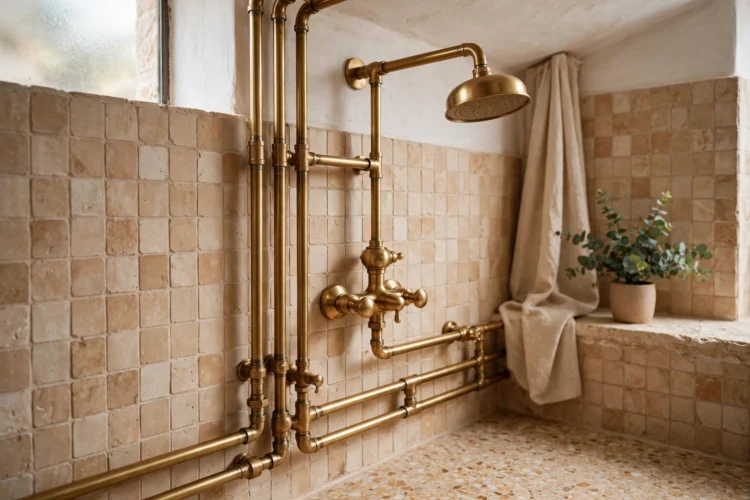
Brass in the shower needs a little more thought than brass at the sink. Shower valves, trim plates, and shower heads in brass create a cohesive look, but the shower environment is wetter and hotter, so the finish ages faster there. Brushed brass handles this better than polished, since its matte surface hides spots and early patina. Choose a full trim kit from one maker so the valve, shower head, and hand shower match exactly.
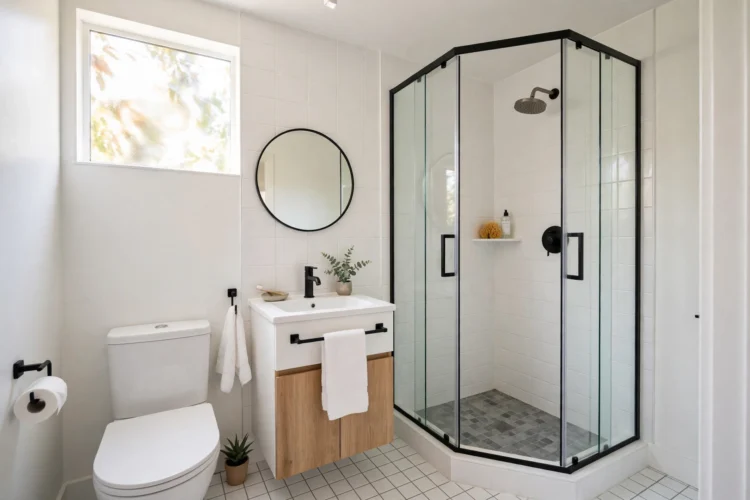
Exposed shower pipes in brass make a strong statement in a traditional or industrial bath, and they pair well with a freestanding tub filler in the same finish. If your shower has a glass enclosure, brass hinges and clamps on the glass continue the theme without adding another metal. Keep the shower niche and shelves in a neutral tile so the brass trim stays the accent rather than competing with busy surfaces.
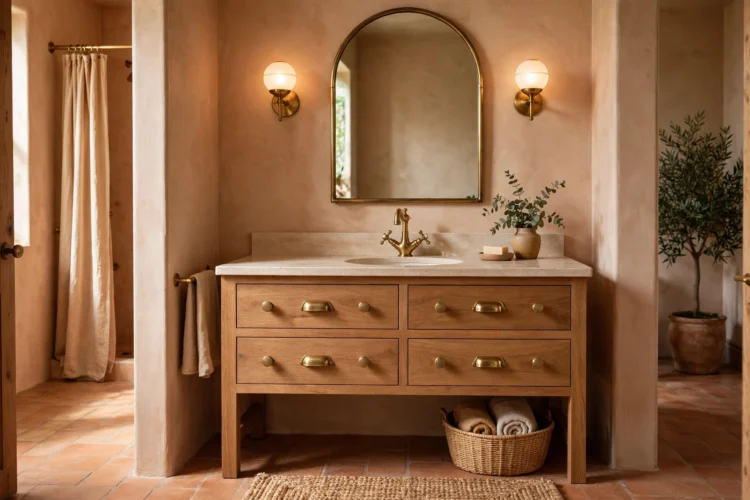
Wood and brass are natural partners. A walnut or oak vanity warms up brass fixtures, and brass pulls on wood drawers look intentional rather than decorative. The combination suits transitional bathrooms that sit between modern and traditional, and it avoids the cold feeling that all-metal or all-white baths can have. Keep the wood tone warm but not orange, since very red wood can clash with golden brass.
A wood vanity also gives you a place to repeat brass in small doses, such as a brass tray on the counter or a brass framed art print above the toilet. For vanity styles that pair well with warm metals, these bathroom vanity ideas cover floating, double sink, and furniture style options. A furniture style vanity with brass feet or hardware leans traditional, while a floating wood vanity with slim brass pulls leans modern.
Brass works best in a supporting role. A good rule is to pick two or three brass moments in a bathroom: the faucet, the mirror or lighting, and one hardware group. When every element is brass, including the toilet flush plate, the shower drain, and the towel warmer, the room can feel like a themed display rather than a real bathroom. Let stone, tile, and wood carry most of the room and let brass provide the warmth.
If you inherited brass you did not choose, editing is easier than replacing. Swap the most visible pieces first, usually the faucet and mirror, and leave less visible hardware until the next update. A single brass accent in an otherwise neutral bath still reads as warm and intentional. The goal is a room that feels collected over time, not decorated in one shopping trip.
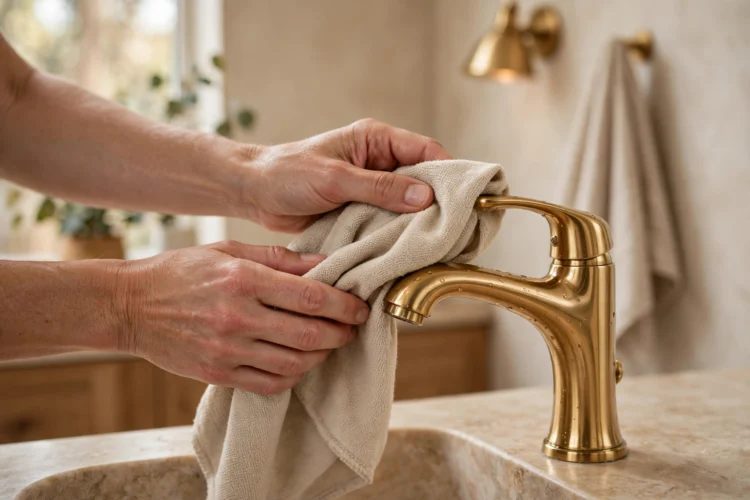
Brass care depends on the finish. Lacquered brass needs only a wipe with a soft damp cloth and mild soap, and harsh cleaners should be avoided since they can damage the coating. Unlacquered brass can be left to patina or polished with a gentle brass cleaner when you want it brighter. Never use abrasive pads on either finish, since scratches show clearly on metal.
Daily habits matter more than deep cleaning. Wipe the faucet dry after heavy use to reduce water spots, and keep acidic cleaners and toothpaste off the finish. In a hard water home, a quick weekly wipe prevents mineral buildup that dulls the metal. With that small routine, brass bathroom fixtures keep their warmth for years, and the patina on unlacquered pieces becomes part of the room’s story rather than a maintenance problem.