Physical Address
304 North Cardinal St.
Dorchester Center, MA 02124
Physical Address
304 North Cardinal St.
Dorchester Center, MA 02124

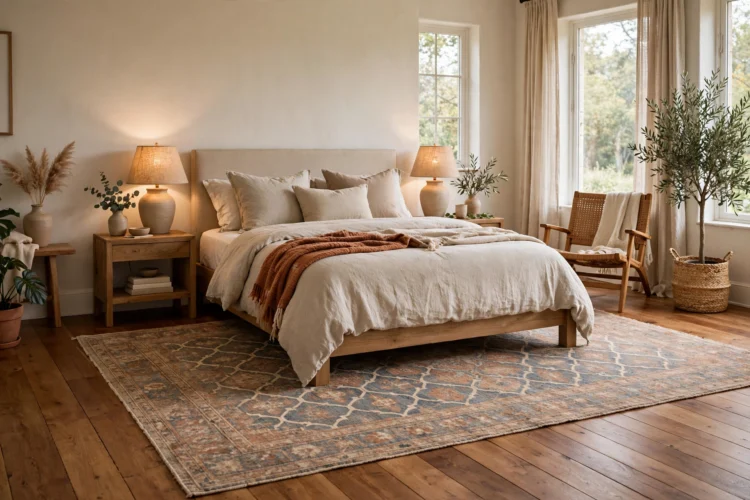
A rug in the wrong size makes a bedroom feel off, even when everything else is right. These placement rules match rug size to bed size so you buy once and place it with confidence.
Bedroom rug placement ideas matter more than most people expect. A rug that is too small floats under the bed like an island, while a rug that is too large swallows the room and hides the floor for no reason. Get the size and position right, and the bed looks anchored, the room feels warmer underfoot, and the whole space reads as finished. The rules are simple once you know them: the rug should extend well beyond the sides and foot of the bed, it should sit far enough under the bed to stay put, and it should leave a sensible border of floor around it. This guide covers rug sizes for the most common beds, the runner versus area rug choice, and the tricky layouts where the bed sits against a wall.
Start every rug decision at the bed, not at the rug store. Measure the bed frame, including any headboard and footboard, and note where you step when you get up in the morning. The rug needs to cover those first steps on both sides and at the foot, or it fails at its main job, which is warm feet and a finished look. An area rug under bed placement usually works best when the rug starts a short way under the headboard side and extends well past the foot. That way the rug stays anchored by the weight of the bed and does not creep across the floor. Tape the outline of a rug size on your floor with painter tape before you buy, and walk around it for a day. The tape test prevents the most common rug regret, which is a rug that looked right in the store and wrong at home.
Remember that nightstands matter too. A rug that runs under the front legs of the nightstands looks intentional, while a rug that stops short of them can look like it shrank.

A handy rule is that the rug should cover at least two thirds of the bed length, measured from the foot toward the head. For most beds that means the rug ends somewhere under the middle of the bed, not at the foot edge and not all the way at the headboard. This placement keeps the rug visible at the sides and foot, where it does its visual work, while the bed weight holds it steady. It also means you do not pay for rug area that nobody ever sees under the head of the bed. If your bed has a tall footboard, check that the rug still extends far enough past it to step onto, since a footboard can eat into the visible rug area more than you expect.
When the rug length is borderline, choose the larger size. A rug that is slightly generous looks deliberate, while a rug that is slightly small looks like a mistake.
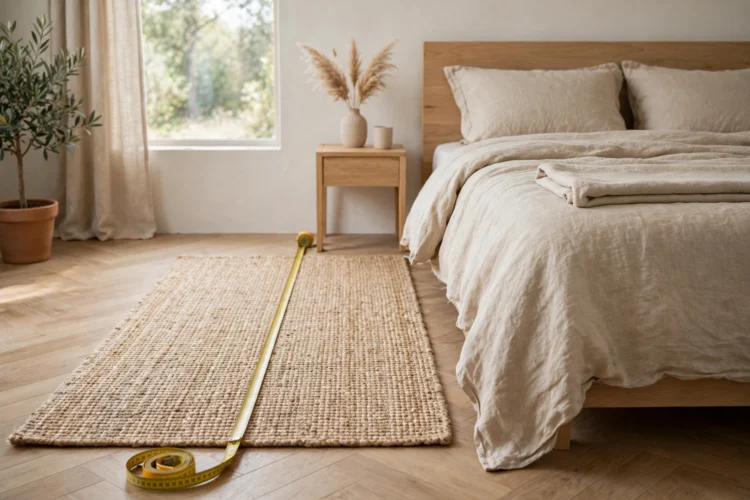
For a queen bed, a rug size queen bed shoppers reach for most often is eight by ten feet, which gives a comfortable border on both sides and at the foot. A nine by twelve foot rug works in a larger room and under a queen bed with wide nightstands. For a king bed, a rug size king bed guide usually points to nine by twelve feet as the standard choice, since anything smaller leaves only a narrow strip to step onto. Measure your room before you commit to the larger size, and leave at least a foot of bare floor around the rug edges so the room does not feel carpeted wall to wall. If your room is narrow, a rug that is long but not too wide can still work, as long as it extends past the sides of the bed by a similar amount on each side.
Bedding layers change how a rug reads, since a long throw or a thick duvet can cover part of the rug at the foot. These bedding layering ideas help you balance the bed dressing with the rug so neither crowds the other.

Bedroom rug runners suit rooms where a large rug would crowd the space or the budget. Place one runner on each side of the bed, running from near the headboard to past the foot, so both sleepers step onto softness. Runners work well on beautiful wood floors you want to show off, and they are easier to clean than a large rug. A large area rug, by contrast, unifies the room and anchors the bed as a single zone, which suits larger bedrooms and carpet free floors. The choice is not about right or wrong; it is about what the room needs. A small room with a large rug can feel cramped, while a large room with only runners can feel unfinished. Match the rug scale to the room scale, and let the floor you already have guide you.
Runners also solve the problem of a bed against a wall, where only one side needs a rug. One runner on the open side is enough, and it costs far less than a full size rug.
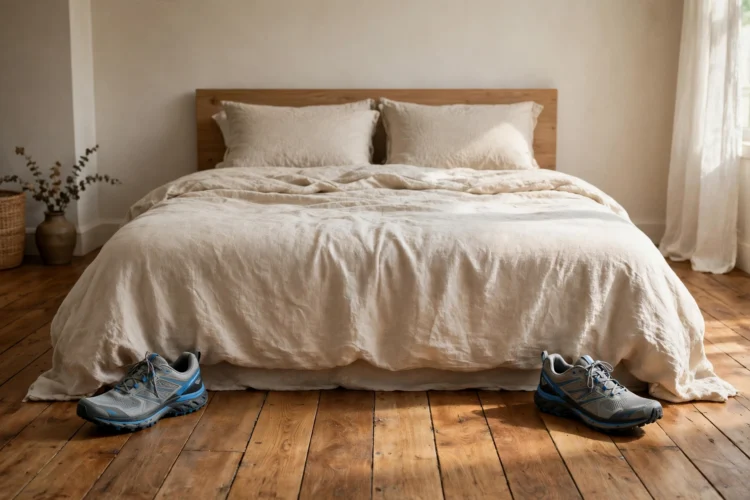
A bed pushed against a wall breaks the symmetry that most rug guides assume, but the fix is simple. Center the rug on the open side of the bed rather than on the bed itself, so the visible rug border looks even where it matters. The rug can run partly under the bed and extend further on the open side, giving the person who sleeps on that side a generous landing strip. If both sleepers use the open side to get in and out, a wider rug on that side is worth the investment. Alternatively, a single runner on the open side keeps things simple and leaves the rest of the floor clear. Either way, avoid centering a large rug exactly under the bed when one side is hidden by the wall, since the visible portion will look lopsided.
Small rooms often force a bed against the wall, and these small bedroom layout ideas show how to arrange the rest of the furniture around that choice without blocking doors or drawers.
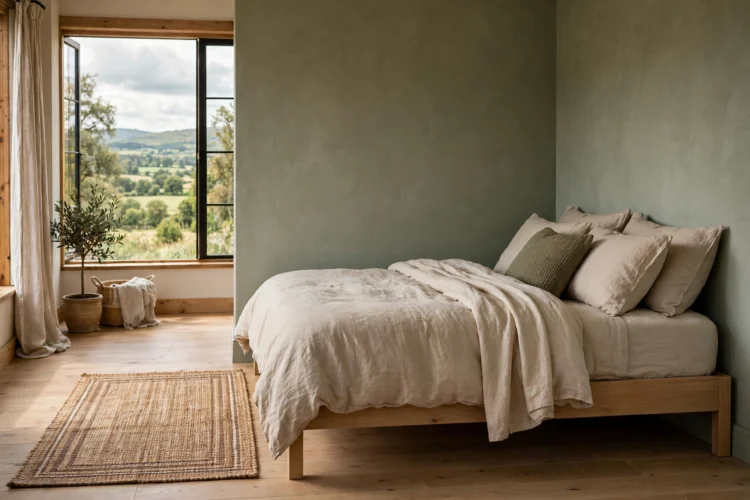
Layering lets you add pattern or color without replacing a good neutral base rug. Start with a large flat weave rug, such as jute or a low pile wool rug, in a size that anchors the bed. Then add a smaller, softer rug on top, placed at an angle or centered at the foot of the bed, in a pattern or texture you love. The top rug should be clearly smaller, by at least a foot on each side, so the layering reads as intentional rather than accidental. Use a rug pad between the layers to stop slipping, and keep the top rug low pile so it does not create a trip edge. Layering is also a practical trick: the top rug takes the wear and can be cleaned or replaced more easily than the base rug.
Keep the base rug quiet and let the top rug carry the personality. Two loud patterns layered together compete, while one quiet base and one lively top layer complement each other.

Small bedrooms need rugs that do their job without eating the floor. A rug placed across the lower two thirds of the bed, extending to the sides, often works better than a full room rug that leaves only a sliver of floor showing. Another option is a rug at the foot of the bed, wide enough to step onto from either side, which gives the warmth without the bulk. Measure the walkways around the bed and keep them clear, since a rug edge in a walkway becomes a trip hazard. A low pile rug is safer and easier to vacuum in a tight room, and a rug pad keeps it from sliding when space is tight. The overall goal is the same as in a large room: a soft landing when you get up, and a visual anchor for the bed.
A headboard can change how a rug reads, since a tall headboard draws the eye up and makes the floor zone feel smaller. These upholstered headboard ideas pair well with a simple rug, since both anchor the bed without competing for attention.
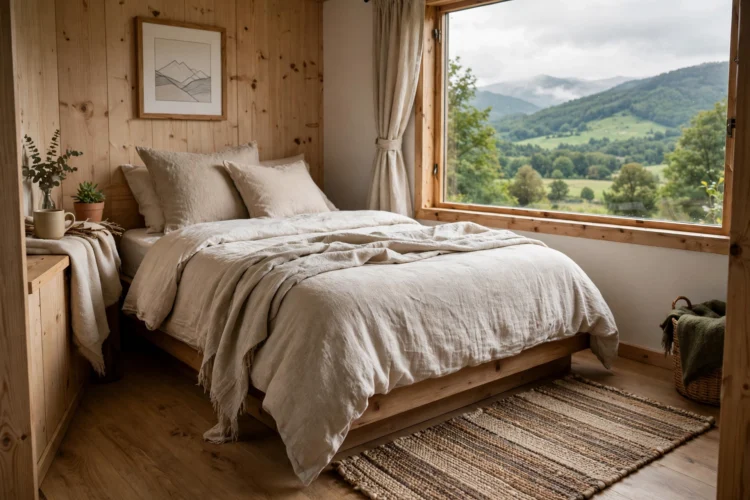
A rug only anchors a room while it looks good, so care matters. Vacuum regularly, rotate the rug every few months so wear evens out, and clean spills quickly before they set. A rug pad extends the life of the rug and protects the floor underneath, and it also stops the rug from creeping out from under the bed. In sunny rooms, rotate more often, since direct sunlight fades one side faster than the other. The same restful, finished feeling that a good rug creates is the aim of these master bedroom ideas for a calm retreat, where every piece earns its place and nothing looks tired.
Measure the bed, tape the outline, and choose the larger size when in doubt. Your feet and your room will thank you every morning.