Physical Address
304 North Cardinal St.
Dorchester Center, MA 02124
Physical Address
304 North Cardinal St.
Dorchester Center, MA 02124

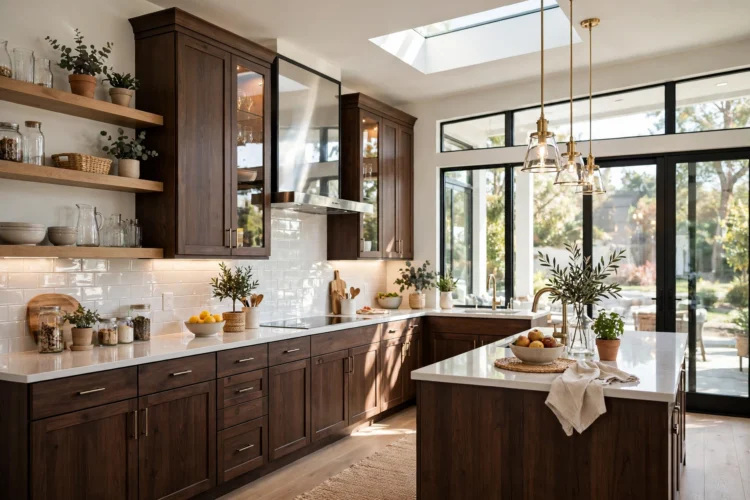
A dark kitchen does not need new cabinet paint to feel brighter. These eight fixes use light, reflection, and editing to lift a north-facing or window-poor kitchen.
A dark kitchen wears you down slowly. You flip on the lights at noon, you chop vegetables in your own shadow, and the room never quite feels awake even on a sunny day. The usual advice is to paint the cabinets white, but that is not the only fix, and for many kitchens it is not even the best one. Learning how to brighten a dark kitchen starts with understanding where the light goes: it gets absorbed by dark surfaces, blocked by heavy window treatments, and lost in shadows under the cabinets. Fix those three leaks and the room lifts without a single coat of paint. The eight ideas below are ordered from the quickest win to the most lasting change, and most of them cost less than a dinner out.
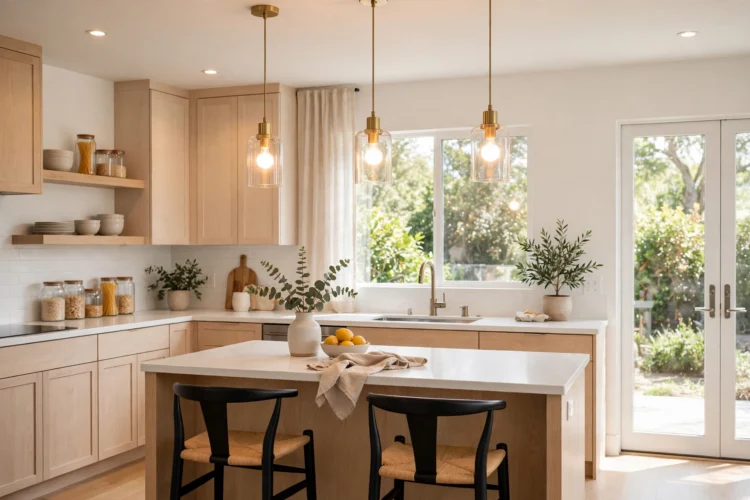
The cheapest fix is also the most overlooked. Many dark kitchens are lit by old bulbs with the wrong color temperature, often a cool white that makes wood look grey and walls look flat. Swap every bulb to a warm white near 2700 to 3000 Kelvin, and check the brightness too: a kitchen needs more lumens than a bedroom, so pick bulbs rated for the task rather than the cheapest pack on the shelf.
Brighten dark kitchen lighting further by cleaning the fixtures. A dusty glass cover or a yellowed diffuser can cut a surprising amount of light, and a five-minute wipe can feel like a new fixture. While you are up there, check the bulbs inside the range hood and over the sink, because those two spots do the most work and are the ones people forget.
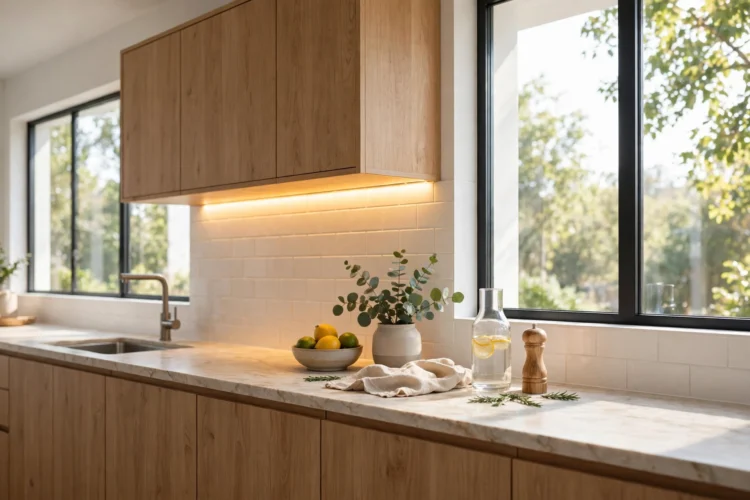
Overhead lights throw shadows exactly where you work, because your body blocks the light from above. Under-cabinet lighting fixes that by putting the light where the work happens. LED strips or slim bars mounted under the uppers wash the counter in even light, remove the shadow line under the cabinets, and make the backsplash glow after dark.
Run the strips along the full length of the uppers rather than in short patches, because gaps in the light read as unfinished work. Battery-powered bars stick on in minutes and are the right choice for a rental or a first test, while plug-in strips stay brighter and never need charging. Choose warm white to match the ceiling bulbs so the room reads as one light, not two.
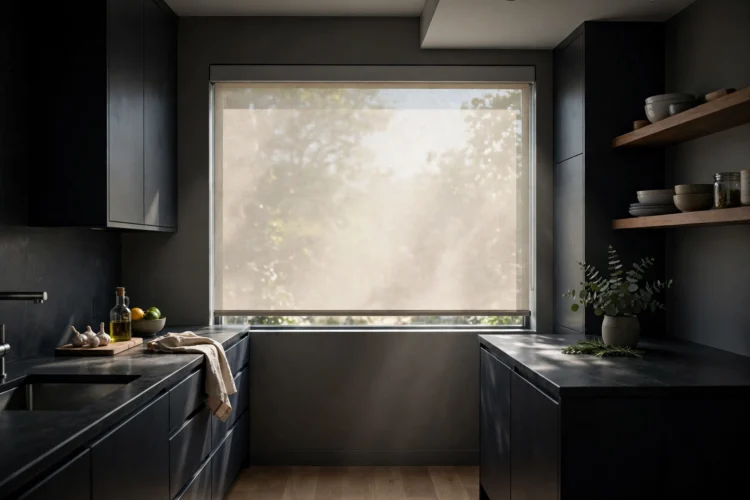
Heavy curtains are the biggest light thief in a dark kitchen. Thick fabric, dark colors, and valances that cover the top of the frame can block a third of the window before the light even enters the room. Swap them for a light-filtering roller shade, a linen cafe curtain that covers only the lower half, or a simple sheer that softens the view without stopping the sun.
Hang the rod or the shade a few inches above the frame so the window reads taller and the full glass stays exposed. If the window sits over the sink, pick a washable fabric and a shade that stops at the sill, because steam and splashes reach further than you expect. The goal is to let the daylight in and keep the privacy you actually need, not to dress the window like a living room.
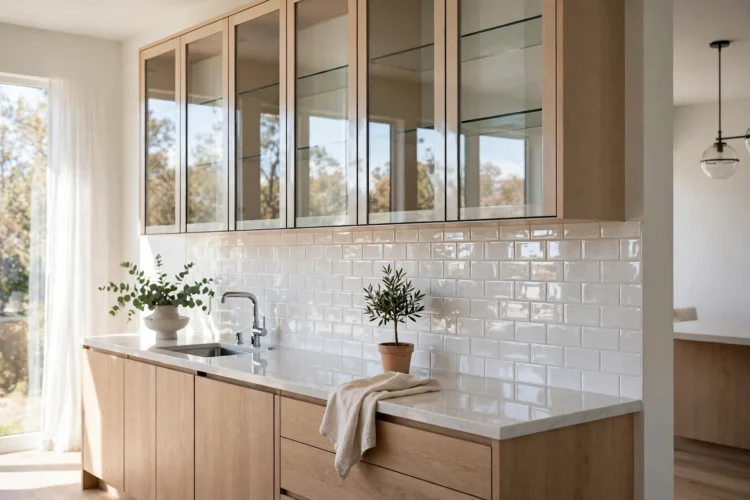
A dark kitchen does not always need more light. Sometimes it needs the light it already has to travel further. Reflective surfaces do that work for free: a glossy backsplash, a polished faucet, glass-front cabinet doors, and even a light-colored cutting board all bounce daylight deeper into the room. The trick is to place reflective surfaces where the light lands, such as the wall opposite the window or the backsplash under the window.
Glass-front cabinets are the strongest version of this idea, because they break up a wall of dark doors and let light move through the room. Our glass-front cabinet ideas show how to display dishes without the visual noise, and a single glass door in the darkest corner can change the whole wall. Keep the glass clean, because a smudged door reflects nothing but smudges.
The backsplash sits at eye level across the whole work wall, so its color sets the tone of the room. A dark or busy backsplash absorbs light and makes the wall feel heavy, while a light one reflects it back onto the counter. To lighten a dark kitchen from the wall outward, start with the backsplash. Peel-and-stick tiles in a pale subway, a soft handmade-look glaze, or a light stone pattern can replace a dark backsplash in an afternoon with no grout and no mess.
Pick a tile that picks up a color already in the room, such as the veining in the counter or the tone of the floor, and keep the grout lines light. A glossy finish reflects more light than a matte one, so favor glaze over texture in a dark room. If the existing tile is in good shape, a tile paint made for the job can lighten it for far less than a replacement.
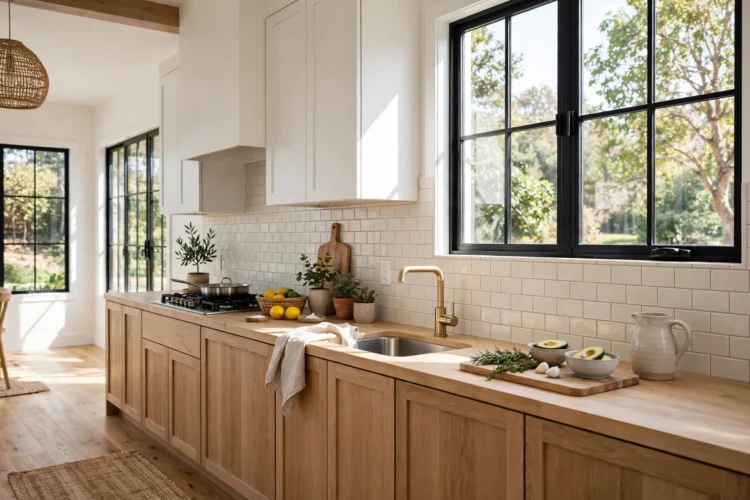
Clutter blocks light the same way curtains do. Every appliance, stack of mail, and pile of dishes on the counter casts a shadow and breaks up the reflective surface that would otherwise bounce light around the room. Clear the counters completely, wipe them down, and put back only what you use daily. The empty stretch of counter is not wasted space. It is a light reflector.
Corral the daily tools on a single tray near the stove so the group reads as one object instead of five. Move the small appliances you use less than once a week into a cabinet, and keep the windowsill to a single plant. A kitchen that is clear at counter level feels brighter even before you change a single bulb, and it stays brighter because cleaning takes minutes instead of an hour.
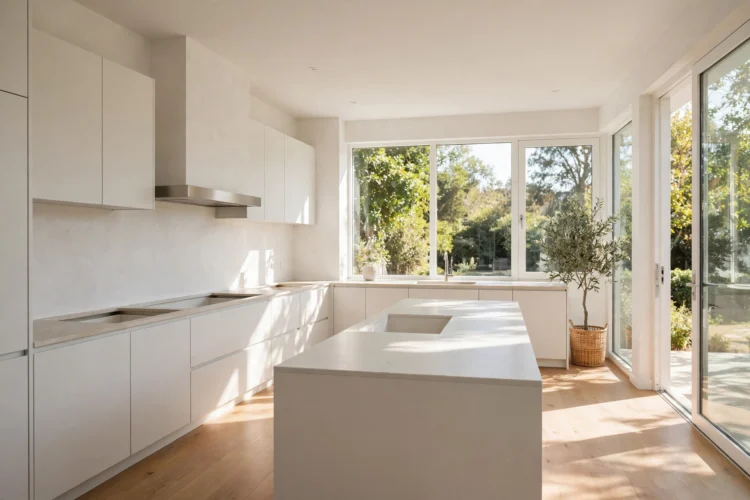
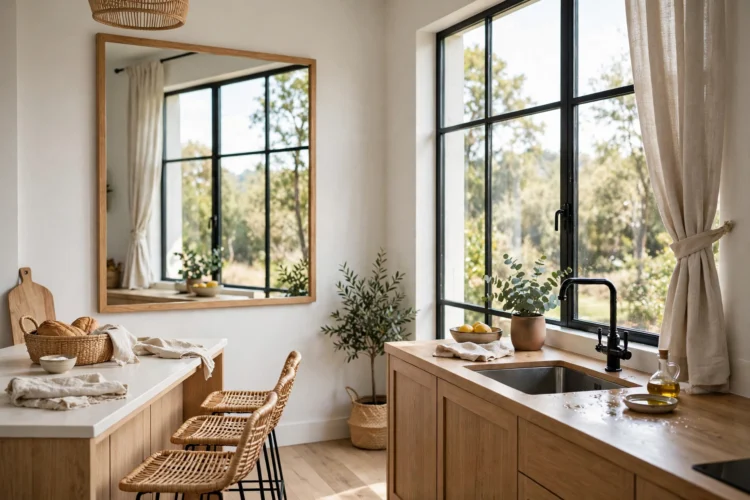
A mirror opposite the window doubles the daylight in a room, and in a dark kitchen that is the closest thing to adding a second window. A framed mirror over the sink wall, a glossy piece of art on the far wall, or even a stainless steel tray leaned against the backsplash can throw light into the corners that never see the sun. The effect is strongest when the mirror faces the window directly rather than sitting at an angle.
Keep the mirror simple and the frame light, because a heavy dark frame undoes the work. Wipe the glass weekly, since kitchen grease dulls a mirror faster than dust does in any other room. If a mirror feels wrong in your kitchen, a large piece of glossy art in pale tones does much of the same work without the reflection.
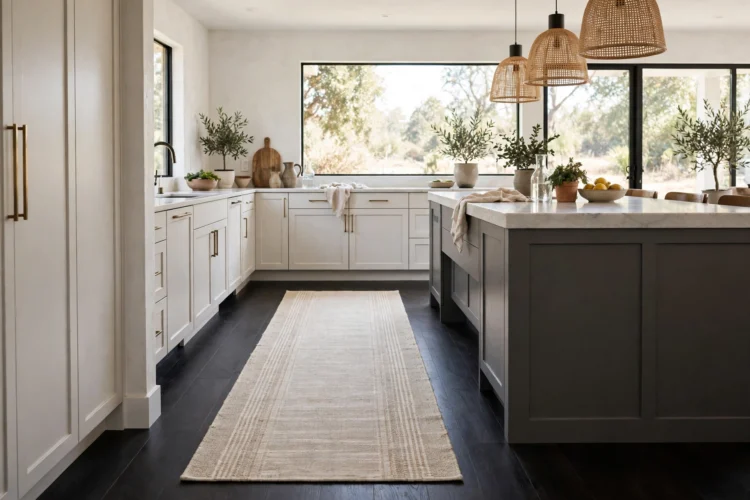
The floor is the largest surface in the room, and a dark floor swallows light from above. A light washable runner along the main work aisle breaks up the dark expanse, reflects light upward, and warms the room underfoot at the same time. Pick a pale pattern with a warm undertone rather than a stark white, because kitchen floors earn their keep through spills and foot traffic.
A runner also marks the work zone, which makes a small kitchen feel organized rather than cramped. Our roundup of kitchen runner ideas shows how much color and pattern one strip can add. Keep the runner flat with a non-slip pad underneath, and choose a washable one so the light color stays light. Dark kitchen solutions do not have to be dramatic to work, and a runner is proof: one strip of fabric, and the floor stops eating the light.
Start with the bulbs tonight, then add the under-cabinet light this weekend and the window treatment next. A dark kitchen usually needs three of these eight fixes, not all eight, and the right three depend on where your light is going. Fix the leak, and the room will tell you it worked the first time you walk in at noon without reaching for the switch. For more light-first design thinking, see our Scandinavian kitchen ideas built on light wood and simplicity and our clerestory window ideas for light-filled homes, which show the same principles at a larger scale.