Physical Address
304 North Cardinal St.
Dorchester Center, MA 02124
Physical Address
304 North Cardinal St.
Dorchester Center, MA 02124

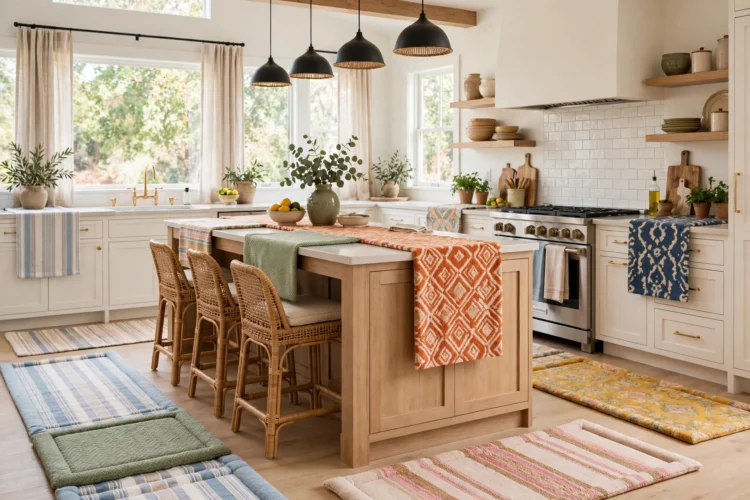
Ten kitchen runners for galley runs and sink zones, covering washable materials, pattern choices that hide spills, and sizing rules for narrow walkways.
A kitchen runner does two jobs at once: it adds color to a hard floor, and it cushions the spot where you stand longest. The best kitchen runner rug ideas treat the rug as a working piece, not just decoration. It should be washable or wipeable, sized to the walkway, and flat enough that it never catches a toe or a chair leg. This guide covers ten runners for galley runs, sink zones, and open kitchens, with material and sizing notes for each. The right runner makes the kitchen feel warmer underfoot and easier on the knees, and it survives the spills that come with daily cooking.
The sink is where a runner earns its keep. Water splashes, soap drips, and dishes get washed there every day, so the rug in front of the sink should be a washable kitchen runner that can go in the machine or be hosed down outside. Look for a low pile or flatweave construction, a non-slip backing, and a material that dries fast, such as cotton or a synthetic blend. Avoid thick shaggy rugs here, since they hold water and take too long to dry in a humid kitchen.
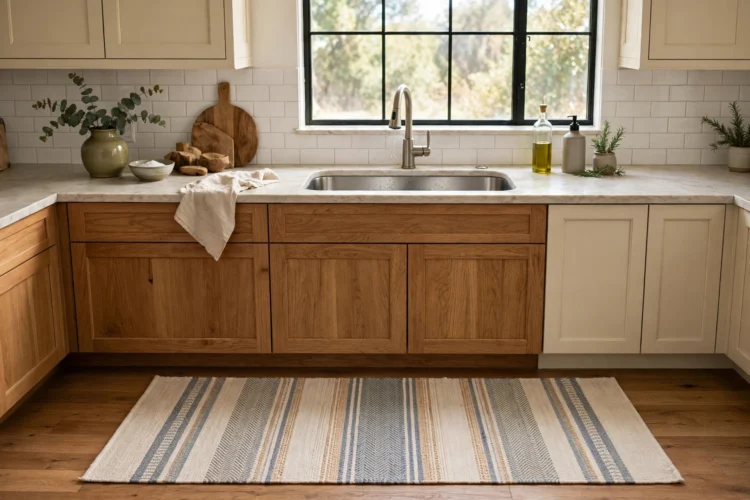
A patterned runner is the practical choice for a kitchen that sees real cooking. Small motifs, busy geometrics, and faded vintage patterns all hide crumbs, splashes, and stains better than a solid pale rug. A dark or mid-tone pattern is the most forgiving, while a light pattern with a busy design still hides more than a plain light rug. Choose a pattern with at least two colors, so a single stain does not stand out against a flat field of color.
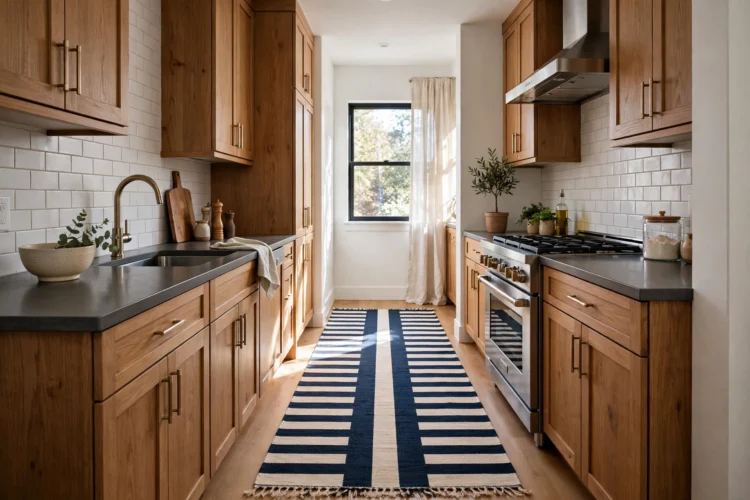
A bold stripe suits a galley kitchen because it follows the line of the room. Stripes running lengthwise make a narrow kitchen feel longer, while a rug that is too wide or too busy can make the same room feel crowded. Choose a stripe in two colors that already appear in the kitchen, such as navy and white in a blue kitchen, or terracotta and cream in a warm one. A flatweave stripe is the best construction here, since it lies flat and lets chairs and carts roll over it.
Keep the stripe width in proportion to the walkway. A wide stripe suits a wide galley, while a narrow stripe suits a tight one. Measure the walkway and leave a few inches of bare floor on each side, so the rug reads as a runner rather than wall-to-wall carpet. A galley kitchen rug with stripes also hides the wear path down the middle of the room, where feet travel most. For more color ideas for the walls around the runner, these blue kitchen ideas from powder to deep navy show how one strong color can carry a whole room.
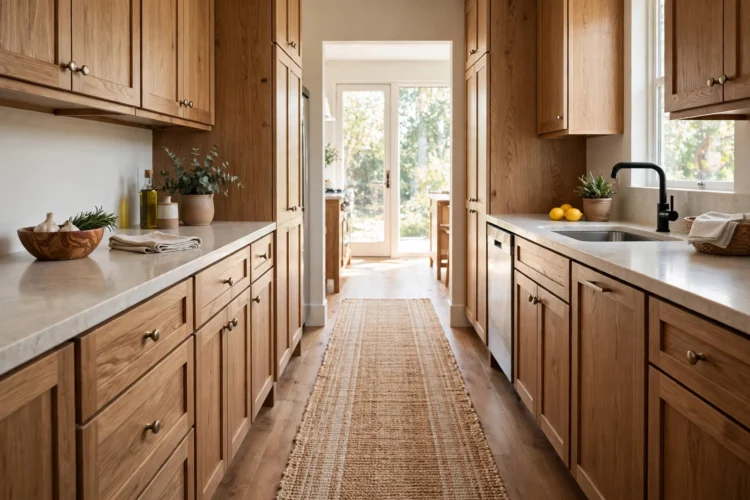
Kitchen runner sizing starts with the walkway, not the rug. Measure the gap between the cabinets or between the island and the wall, then subtract four to six inches on each side so the rug sits in the middle with bare floor showing around it. A standard galley walkway of 42 inches suits a runner about 24 to 30 inches wide. A wider walkway of 48 inches can take a runner up to 36 inches wide. Length matters too: the runner should cover the main standing zone, usually the sink and the stove, without running under cabinet doors that swing open.
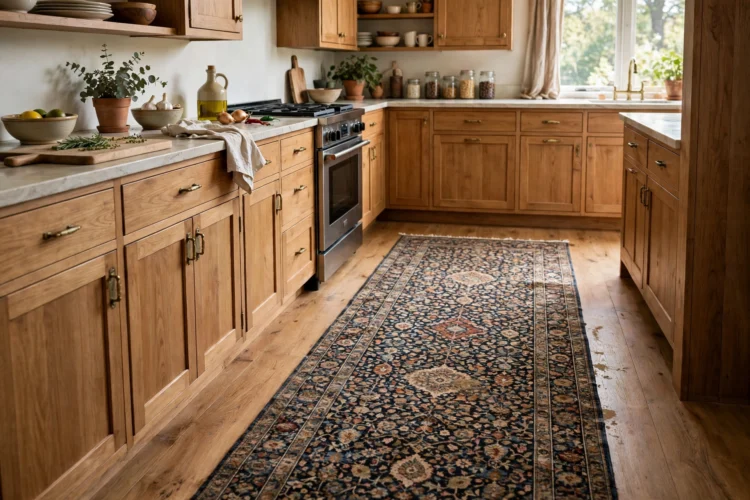
A classic kitchen suits a runner with a traditional pattern: a faded Persian style, a small diamond motif, or a border design in muted colors. The rug should feel like it has been there for years, even when it is new. Muted reds, blues, and creams work well with wood cabinets and stone counters, while a runner with a dark border grounds a pale floor. Keep the pattern calm, since a classic kitchen already has plenty of detail in the cabinets and the hardware.
Choose a low pile so the rug sits flat under cabinet doors and does not catch on chair legs. A vintage-look runner in a washable material gives the classic look without the care a real antique rug needs. Pair the runner with warm lighting and wood tones, and let it be the softest thing in the room. For a classic kitchen with earthy colors, these earthy kitchen ideas in clay, wood, and stone tones show how a runner can repeat the room’s palette underfoot.
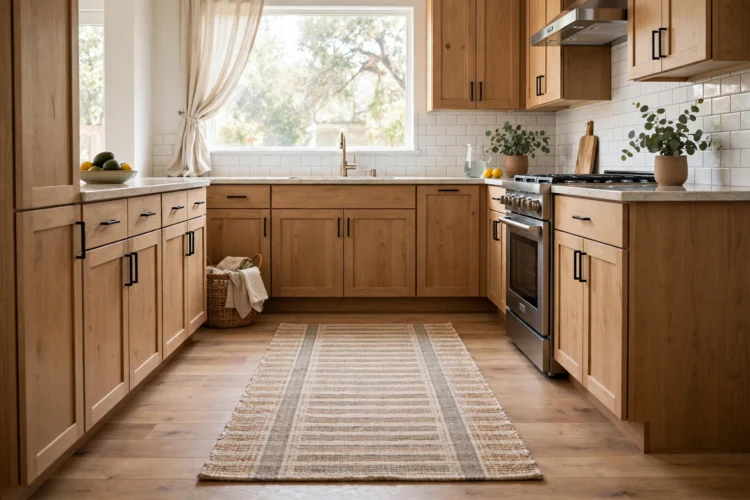
A flatweave runner is the workhorse of kitchen rugs. Woven flat with no pile, it lies close to the floor, resists stains, and lets doors swing over it without catching. Cotton flatweaves wash well and feel soft under bare feet, while wool flatweaves resist stains naturally and last for years. Synthetic flatweaves suit the busiest kitchens, since they can be hosed down and dry fast. Choose a tight weave, since a loose one snags on chair legs and shows wear sooner.
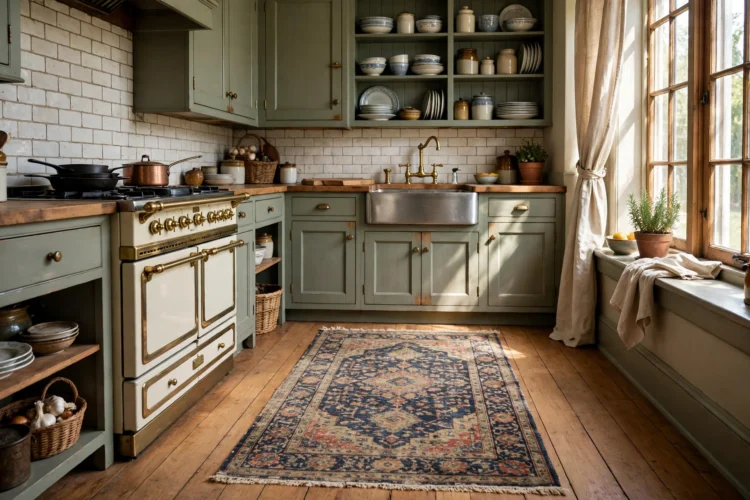
A vintage-style runner brings instant character to a new kitchen. The faded colors and worn pattern look collected rather than bought, and the muted palette suits wood, stone, and painted cabinets alike. Modern versions of vintage runners come in washable materials, so you get the old look without the care an antique rug demands. Look for a pattern with a clear border and a center medallion, which reads as traditional even when the colors are faded to soft blues and creams.
Keep the rest of the kitchen simple when the runner is this detailed. Plain cabinets, a quiet backsplash, and one or two warm metals let the rug lead without competition. A vintage runner suits a boho or eclectic kitchen especially well, where layered texture is part of the style, as in these boho kitchen ideas with pattern, plants, and texture. Vacuum the runner weekly with a low setting, and rotate it end to end every few months so wear spreads evenly.
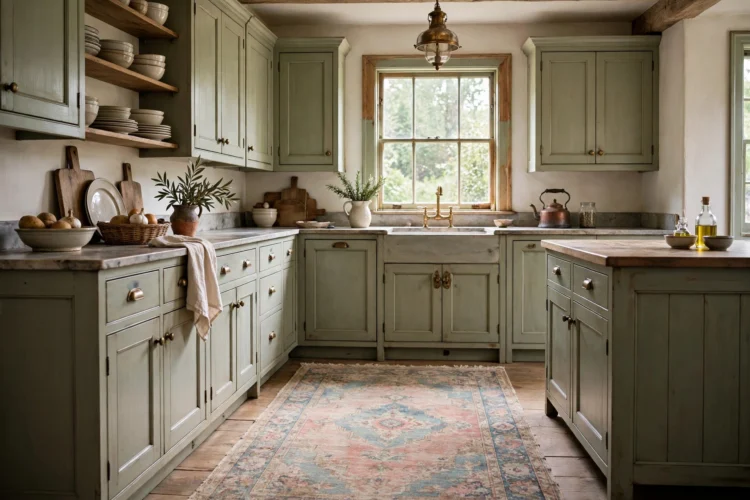
A solid color runner suits a kitchen where the cabinets already carry the color. Deep green cabinets, navy cabinets, or a bold backsplash need a quiet floor, and a solid runner in a neutral tone gives them room to lead. Choose a color that repeats a small detail in the room, such as the grout, the hardware, or the countertop flecks, rather than matching the cabinets exactly. A solid runner in charcoal, warm gray, or deep navy hides stains well and suits most kitchens.
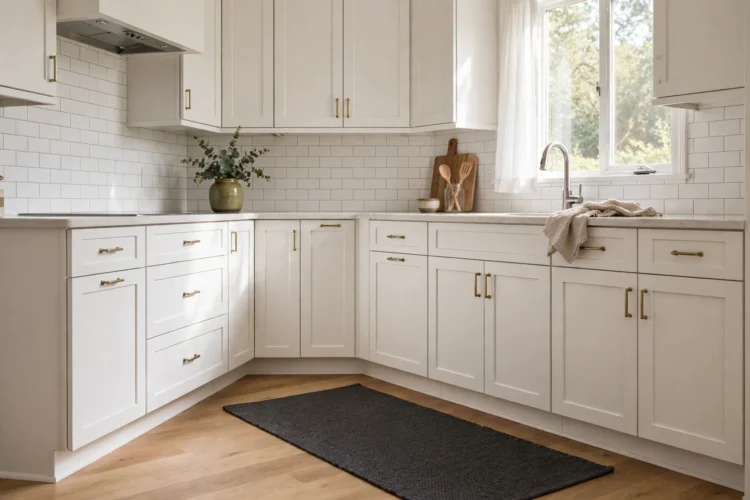
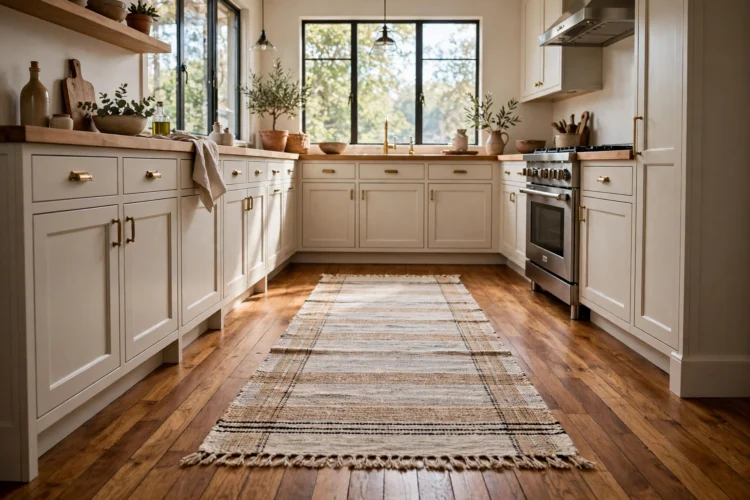
Hardwood floors look beautiful in a kitchen, but they feel cold and hard underfoot during long cooking sessions. A runner layered over hardwood adds warmth and cushion without hiding the floor entirely. Choose a runner that leaves hardwood showing on both sides, so the floor still reads as wood and the rug reads as a layer, not a cover. A wool runner adds the most warmth, while a cotton runner is easier to wash. Keep the rug pad thin, so the runner does not slide on the smooth wood surface.
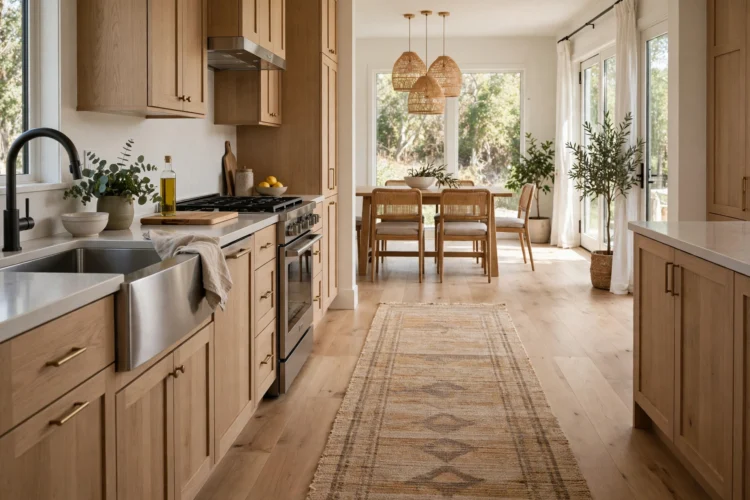
An open kitchen flows into the dining room, and a runner can mark that path. Place a long runner from the kitchen work zone toward the dining table, using the same color family as the dining rug or the table linens. The runner becomes a visual bridge between the two zones, guiding the eye from cooking to eating. Choose a pattern that suits both rooms, since the runner sits in the middle of the transition. A simple stripe or a small geometric pattern works well here.
Keep the runner flat and low, since it crosses a walkway used by everyone carrying food. A rug pad is essential, because a runner that creeps across an open floor is a trip hazard. If the dining room has its own rug, leave a gap of bare floor between the two rugs, so each zone keeps its own identity. For more ideas on linking the two spaces, see these kitchen sink organization ideas around the basin that keep the cooking zone tidy while the dining zone stays welcoming.
Start at the sink, where a runner works hardest, and choose a washable, low-pile rug sized to the walkway. Live with it for a month before you buy a second runner for the stove zone. The right kitchen runner should feel good underfoot, hide the odd spill, and stay flat and safe every day, not just on the day you unroll it.