Physical Address
304 North Cardinal St.
Dorchester Center, MA 02124
Physical Address
304 North Cardinal St.
Dorchester Center, MA 02124

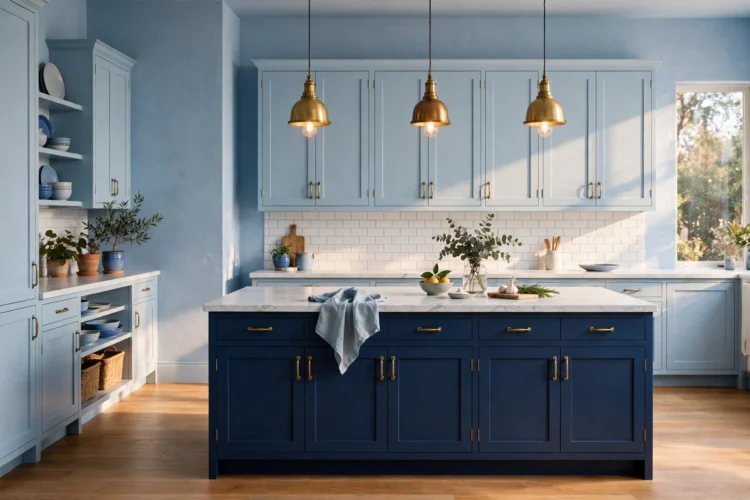
Blue works in a kitchen at every shade, from powder to deep navy. These 10 ideas show where to put the color and how much to use.
Blue kitchen ideas cover more ground than most colors because blue changes character with its shade. Powder blue feels calm and airy, mid blue feels fresh and coastal, and deep navy feels rich and formal. The same kitchen can carry blue on the walls, the tile, the island, or the cabinets, and each placement reads differently. The 10 ideas below walk the full shade range so you can pick the version that fits your light, your budget, and your nerve. Start pale if you are unsure; you can always go deeper later.
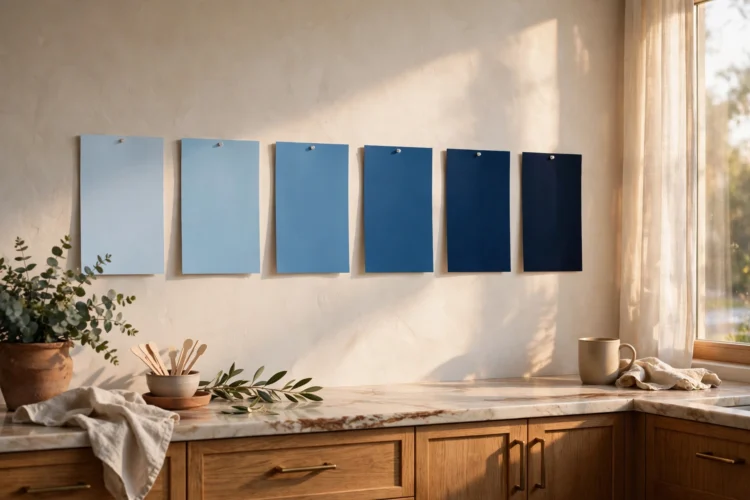
The first choice is the shade, and it sets the mood of the whole room. Powder blue suits small kitchens and north-facing rooms because it reflects light. Mid blues like dusty denim suit family kitchens that need color without drama. Deep navy suits large rooms with strong daylight and reads almost like a neutral. Pick the shade against your floor and your counter samples, not against a white paint chip. A blue that looks perfect on a card can turn gray or purple on a wall, so test a large swatch and live with it for a few days.
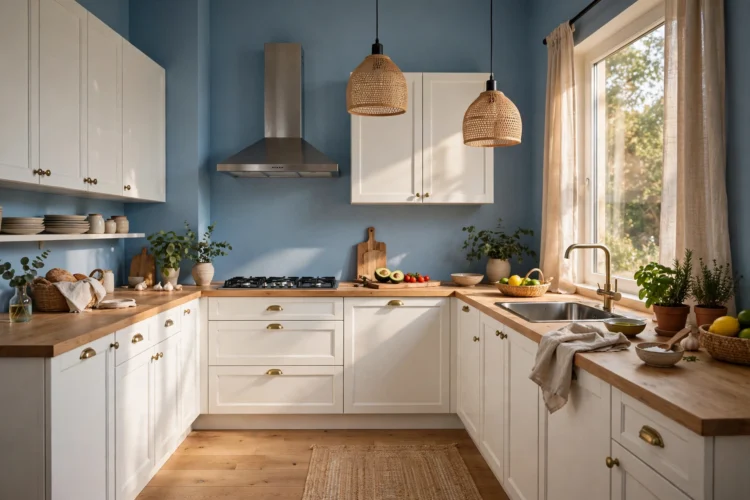
Powder blue kitchen walls are the lowest-commitment way to try blue. The color reads calm in the morning and soft in the evening, and it pairs with white cabinets, pale wood, and brass without a fight. Paint the walls only and keep the cabinets white, so the blue is a backdrop rather than the main event. If the room feels too pale, add a deeper blue in one place, such as the island stools or a runner. Walls are also the cheapest blue to change, which makes this the right first step for renters and cautious renovators.
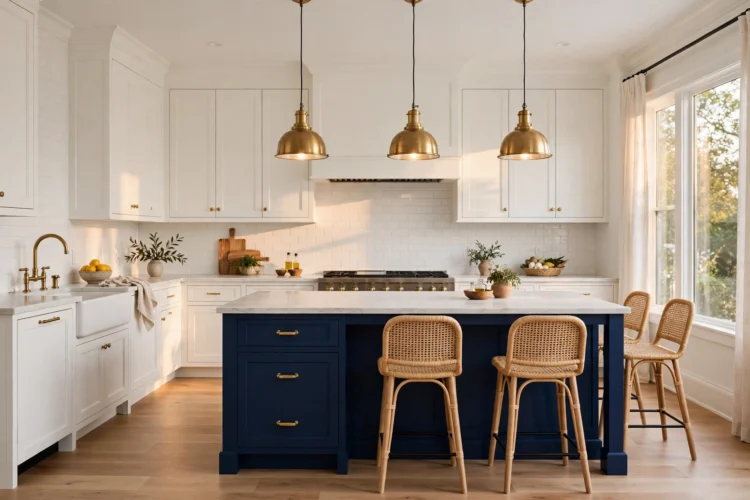
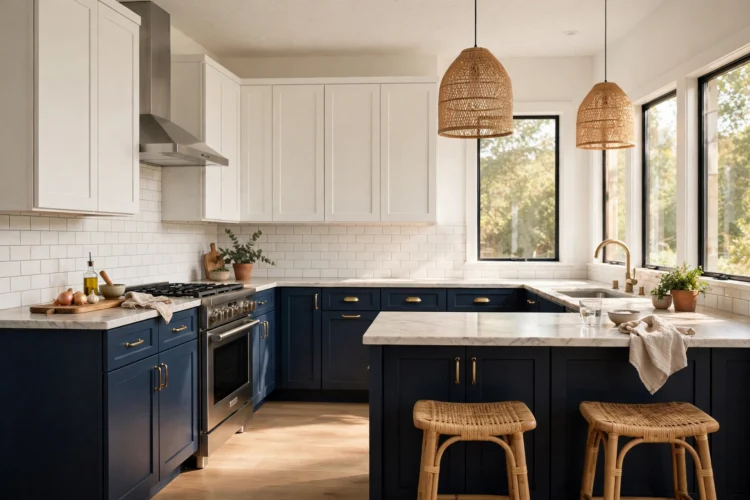
A navy island in a white kitchen is the boldest single move in this palette, and it works because the dark block anchors the room. Top the island with white stone so the navy reads as one strong shape with a pale lid, and hang two or three pendants above it to mark the spot. The rest of the kitchen stays white, so the navy never overwhelms the room. A blue kitchen island also hides scuffs from stools and feet better than a white one. Keep the island the only large navy piece unless the room is big enough to carry more.
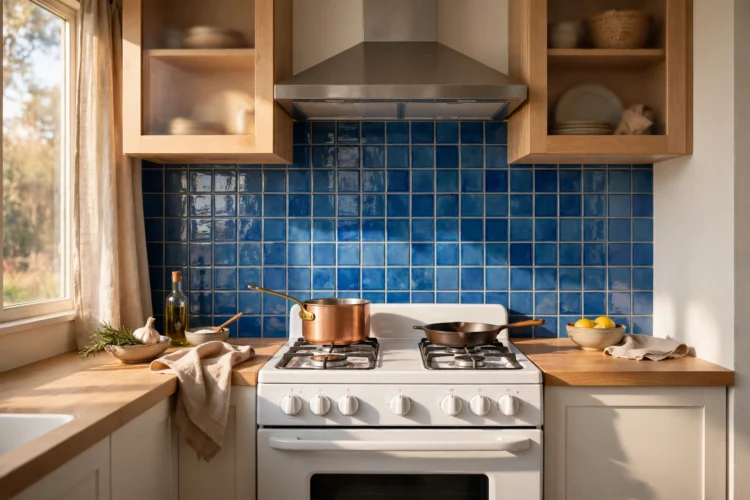
Blue kitchen tile turns the backsplash into the focal point without painting a single cabinet. A deep navy subway tile with pale grout reads graphic and classic, while a handmade-look tile in a dusty blue catches the light and adds movement. Keep the grout in mind: white grout outlines every tile, dark grout quiets the pattern. If the cabinets are already blue, choose a pale tile so the room has one star. For handmade texture, these zellige tile backsplash ideas for handmade texture show how uneven glaze adds life to a plain wall.
Navy blue kitchen cabinets on the lowers with white uppers is the most balanced way to use deep blue. The dark base grounds the room while the white uppers keep it bright, and the line between them gives the kitchen a tailored shape. Matte navy hides smudges better than gloss, and white uppers bounce light back into the room. Keep the hardware one finish across both colors so the two halves feel like one kitchen. If the full split feels bold, try navy on the island only and leave every other cabinet white. For more navy inspiration, see these navy blue kitchen cabinet ideas for classic contrast.
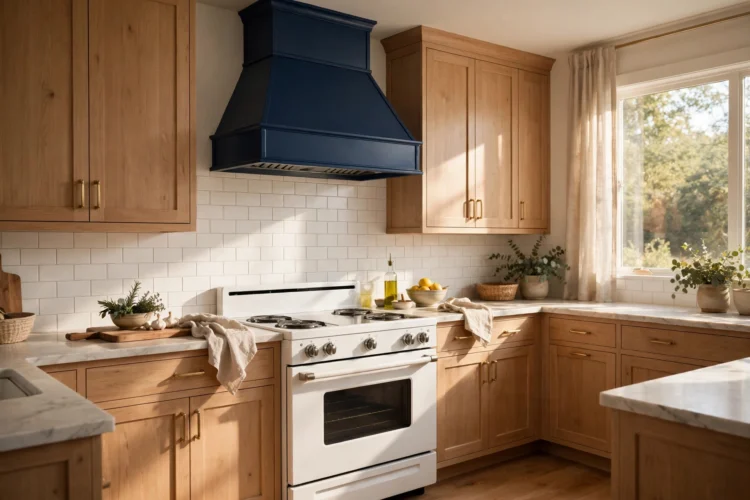
The range hood is a natural place for a strong color because it already stands out. A navy hood over a white range draws the eye up and gives the kitchen a focal point without painting a wall of cabinets. A powder blue hood does the same job more quietly. Keep the hood in the same undertone family as the other blues in the room so the pieces feel related. A plaster hood in a soft blue reads custom and calm, while a metal hood in navy reads sharper and more modern. Either way, one blue hood is enough; the rest of the room should stay quiet.
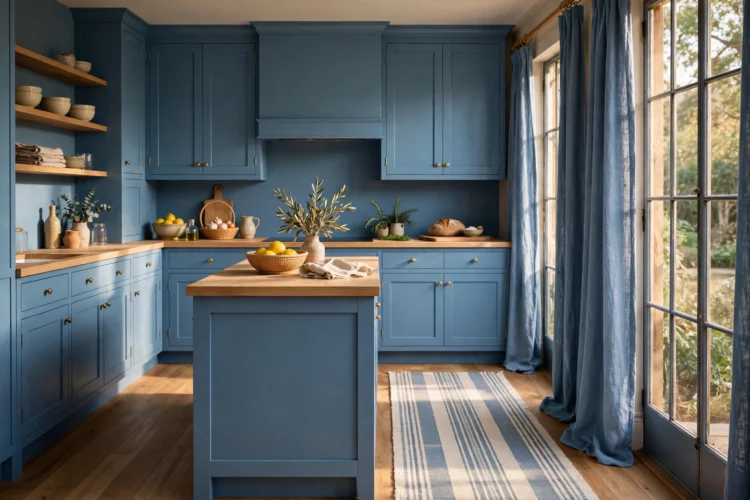
Not every blue has to be permanent. A striped runner, linen curtains in dusty blue, or a set of blue dish towels lets you test the color for the price of a shopping trip. Textiles also soften a kitchen that already has blue cabinets, because fabric breaks up the hard surfaces. Keep the textile blue in the same family as the painted blue so the room reads as one palette. Swap the textiles with the seasons: deeper navy in winter, paler blue in summer. If the textiles feel right after a month, the color has earned a permanent spot.
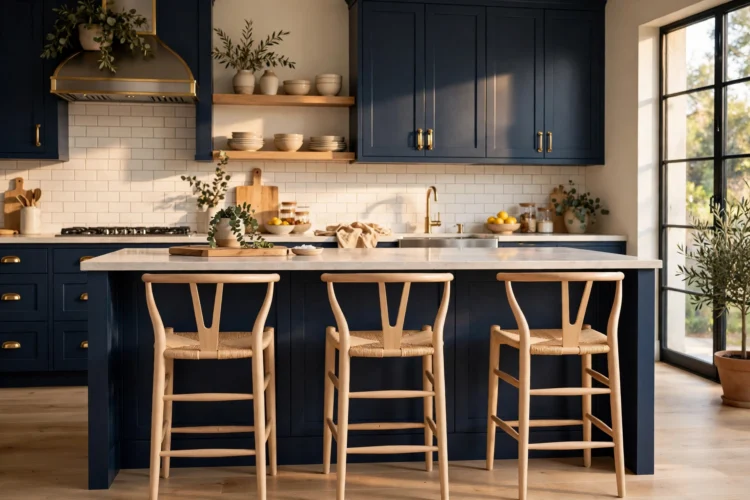
Blue can read cold on its own, and brass and warm wood fix that. Aged brass hardware, a brass faucet, and pale oak stools add warmth that keeps navy from feeling severe and powder blue from feeling chilly. The wood should sit in a warm tone: honey oak with dusty blue, walnut with deep navy. Keep the metals consistent across the room so the warmth feels planned. Two or three brass pieces and two wood pieces are enough to change the temperature. The blue still leads, but it no longer has to carry the room alone.
Small kitchens can carry blue if white does most of the work. Keep the uppers white, the walls pale, and the ceiling white, then spend the blue on one piece: the lower cabinets, the island, or the backsplash. A pale blue backsplash adds color without darkening the wall, and a navy island in a small room works if the rest stays bright. Open shelves in white keep the sightlines clear, and a large mirror or glass cabinet door bounces light around. The rule for small rooms is simple: blue defines, white opens, and neither should crowd the other out.
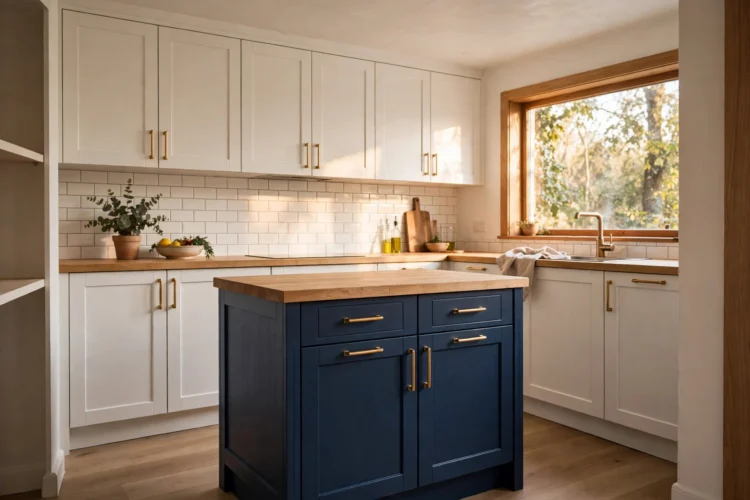
Blue shifts more with light than almost any color. North-facing rooms cool blue down and can turn a dusty blue gray, while south-facing rooms warm it up and can pull a navy toward purple. Test a large swatch on the wall that gets the most light and the wall that gets the least, and check both at noon and at dusk. Artificial light matters too: warm bulbs around 2700K soften blue, while cool bulbs sharpen it. Live with the swatch for a few days before you commit. The right blue looks good in your kitchen at every hour, not just in the paint store.
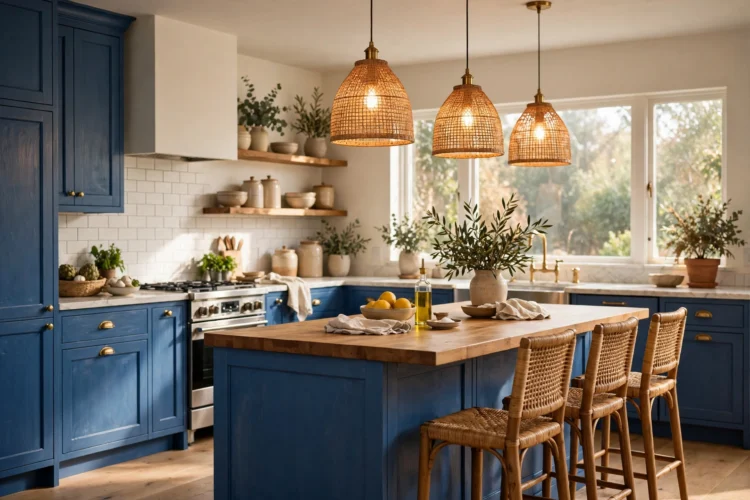
Blue absorbs more light than white, so a blue kitchen needs layered lighting to stay welcoming. Pendants over the island, under-cabinet strips for the counters, and a ceiling fixture for general light cover the three zones. Warm bulbs keep navy soft and powder blue calm; cool bulbs make blue read hard and flat. Put the lights on dimmers so the room can shift from bright prep light to a low evening glow. For fixture styles, these kitchen chandelier ideas for over the island suit a blue kitchen well, and these kitchen island ideas for every size of kitchen help you plan the island the lights will hang over.
Blue rewards a clear shade choice and a little restraint. Pick the depth that fits your light, spend it on one or two strong pieces, and let white, wood, and brass do the rest. The result is a kitchen with real color that still feels calm enough to cook in every day.