Physical Address
304 North Cardinal St.
Dorchester Center, MA 02124
Physical Address
304 North Cardinal St.
Dorchester Center, MA 02124

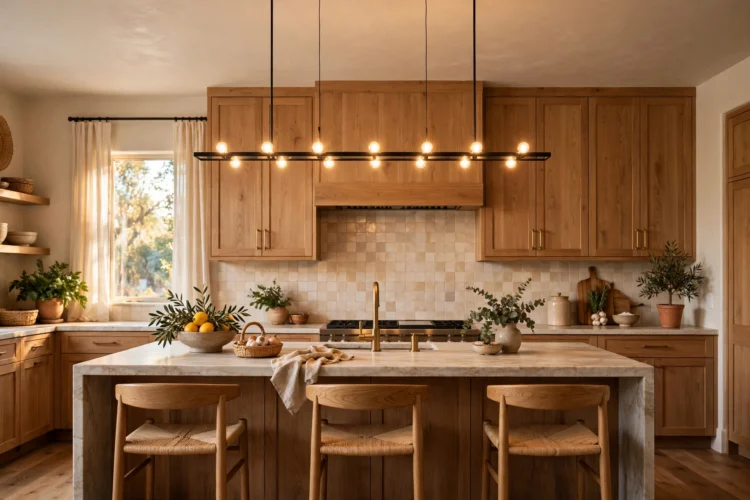
Eleven chandelier ideas scaled for kitchen islands, with the clearance and sizing rules that keep every style clear of heads and sightlines.
A kitchen chandelier over island counters breaks the old rule that chandeliers belong in dining rooms, and kitchens are better for it. A chandelier scaled to the island gives you ambient light across the whole room plus a centerpiece that plain pendants cannot match. The sizing math is simple. Keep the bottom of the fixture 30 to 34 inches above the countertop, and make a linear fixture about two thirds of the island length. A six-foot island takes a fixture around 48 inches long. Clearance matters more than with pendants because chandeliers run wider, so measure twice. These eleven ideas run from linear bars to clustered globes, each with the measurements that keep it clear of heads and sightlines.
A linear chandelier is the easiest fixture to size for an island because it follows the two-thirds rule. Make the fixture length about two thirds of the island length. A six-foot island takes a fixture around 48 inches long. An eight-foot island takes one around 64 inches. Hang the bottom of the fixture 30 to 36 inches above the countertop, measured from the counter surface to the lowest glass or metal part. Center the fixture on the island length, and keep at least six inches of counter visible past each end of the fixture so the light does not feel like a lid sitting on the island.
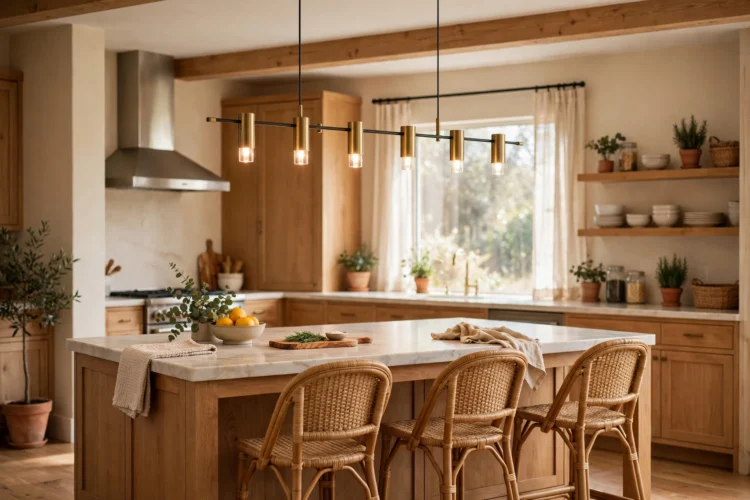
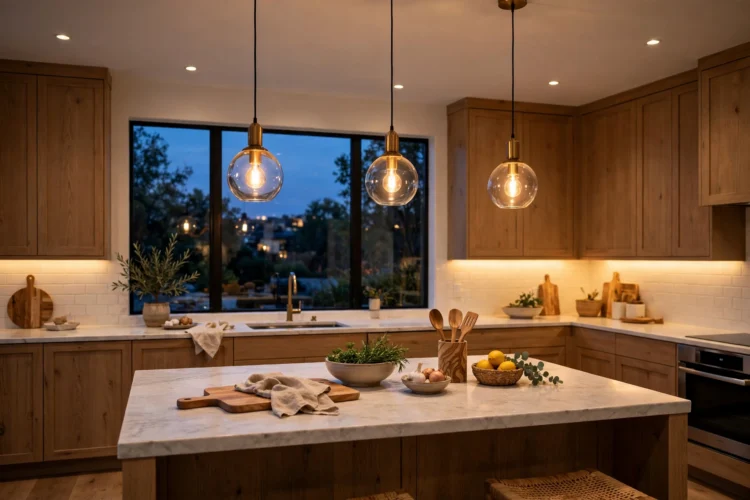
A cluster chandelier groups several small pendants on one canopy, which reads as a chandelier but lights like pendants. Hang three glass globes, each eight to ten inches in diameter, from a single rectangular or round canopy. Stagger the drops by four to six inches so the globes form a gentle wave instead of a flat line. Keep the lowest globe 30 inches above the countertop and the highest no more than 36 inches. Space the globes 24 inches apart. The mixed heights catch the eye, while the shared canopy keeps the ceiling wiring to one box and one dimmer.
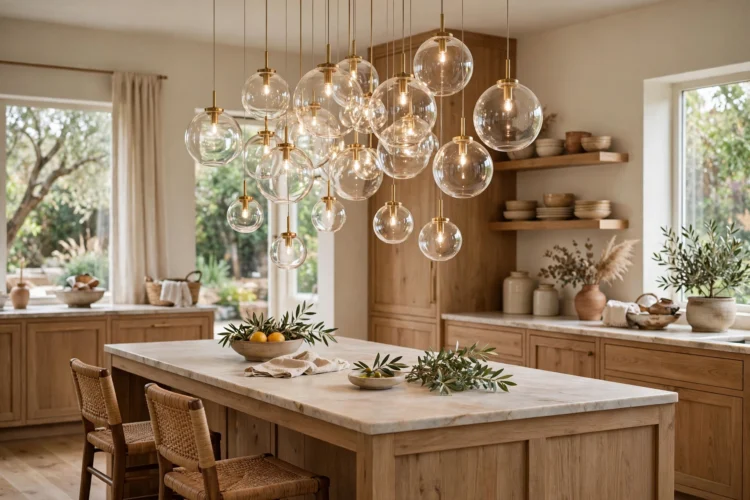
Drum chandeliers wrap the bulbs in fabric or metal, which softens the light across the whole kitchen. Size the drum 20 to 24 inches in diameter for a six-foot island. The chandelier clearance rule is stricter here than with pendants because drums are wide. Keep the bottom of the drum 32 to 34 inches above the countertop so seated guests can see under it. A linen drum in white or natural flax pairs with almost any cabinet color. Add a diffuser disc at the bottom of the drum to hide the bulbs from anyone sitting at the island.
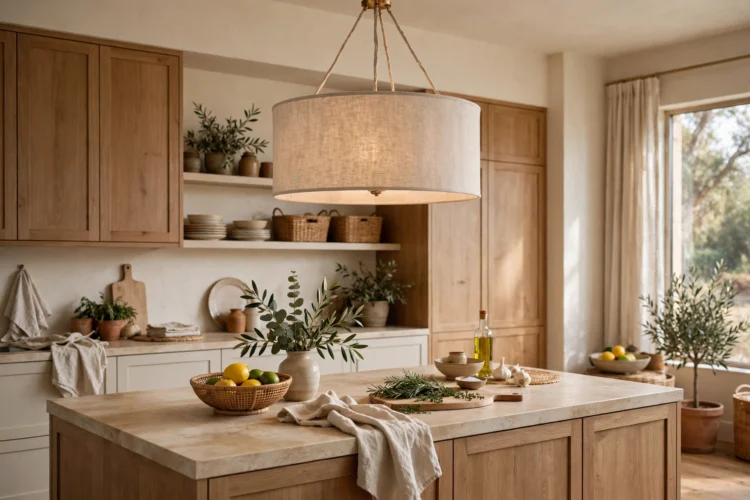
Sputnik and branch chandeliers throw arms in many directions, which fills a kitchen with ambient light instead of a single downward beam. Choose a fixture 24 to 30 inches wide for a six-foot island. Because the arms spread light sideways, pair this style with recessed cans or under-cabinet strips for task light on the counter. Hang the lowest arm 34 to 36 inches above the countertop. Brass arms suit warm wood cabinets. Matte black arms suit white kitchens with black hardware. Check the arm span against walkways so nobody clips an arm carrying a tray.
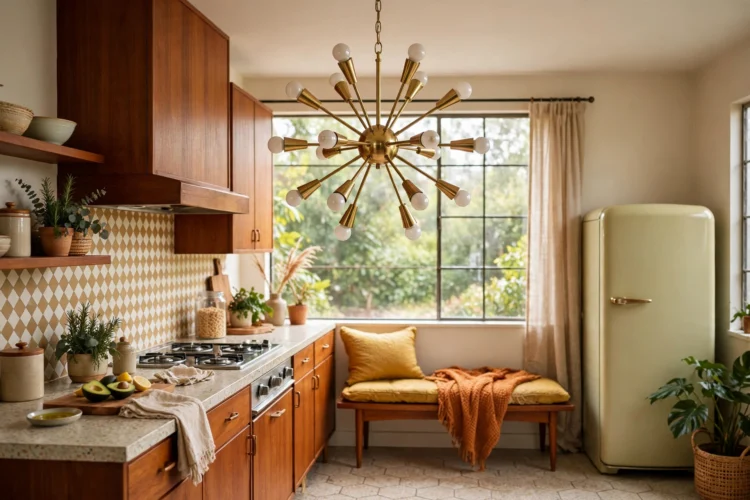
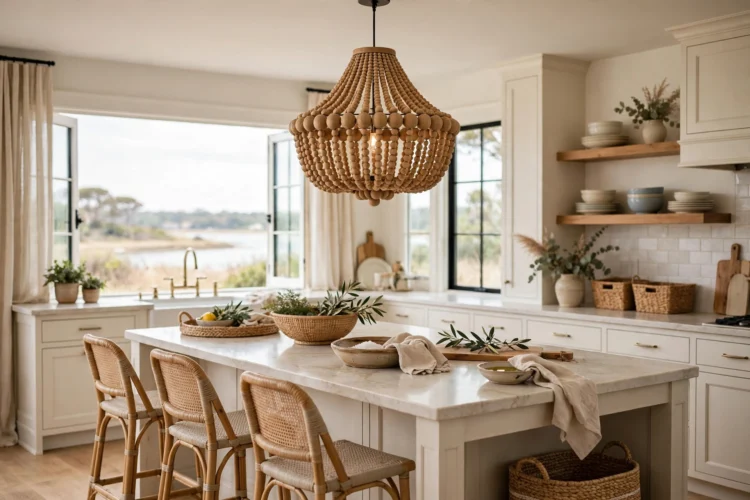
Wood bead chandeliers bring a coastal or farmhouse note without the heaviness of iron. Strands of wood beads form an open drum or empire shape, usually 18 to 24 inches wide, that lets light pass through in every direction. Hang the bottom 32 inches above the countertop. The open design means the bulbs stay visible, so use frosted LED bulbs in 2700 Kelvin to avoid glare. Two beaded chandeliers suit an eight-foot island. Space them 36 inches apart center to center and keep the bead strands dusted, since open strands collect kitchen grease over time.
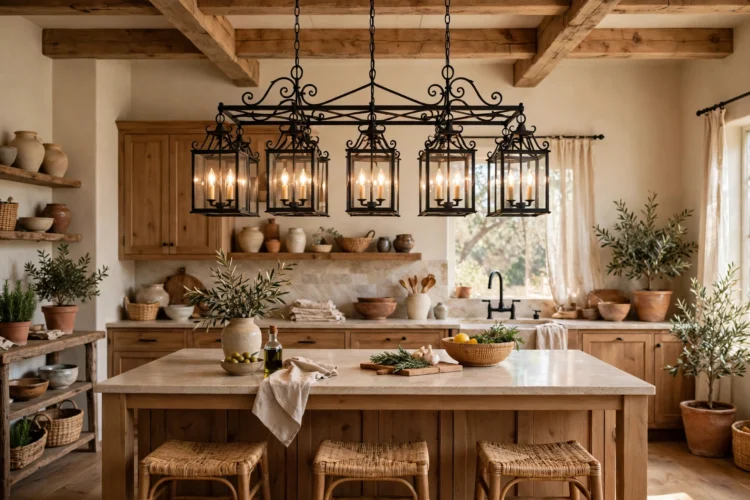
Lantern chandeliers frame the light in metal and glass, which suits farmhouse and transitional kitchens. Pick a lantern 14 to 18 inches wide and 24 to 30 inches tall for a six-foot island. Hang it so the bottom of the glass sits 30 to 32 inches above the countertop. The glass panels keep the light focused downward while the open frame keeps the fixture from looking like a solid block. Black iron pairs with dark countertops. Aged bronze pairs with cream cabinets. Two lanterns work on an eight-foot island if each stays under 18 inches wide.
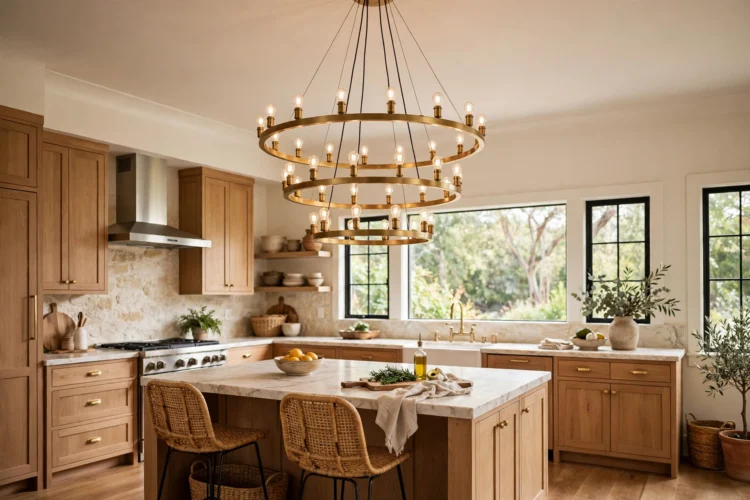
Tiered chandeliers stack two or three rings of lights, which fills vertical space on nine-foot and ten-foot ceilings. Choose a fixture 20 to 26 inches wide with an overall height of 24 to 36 inches. The island chandelier sizing rule still starts with the island: two thirds of the island length sets the maximum width, and the tiers fill the height. Hang the bottom tier 34 inches above the countertop on a nine-foot ceiling. Each tier should carry its own bulbs. A single bulb per tier leaves dark bands between the rings that read as a mistake, not a design choice.
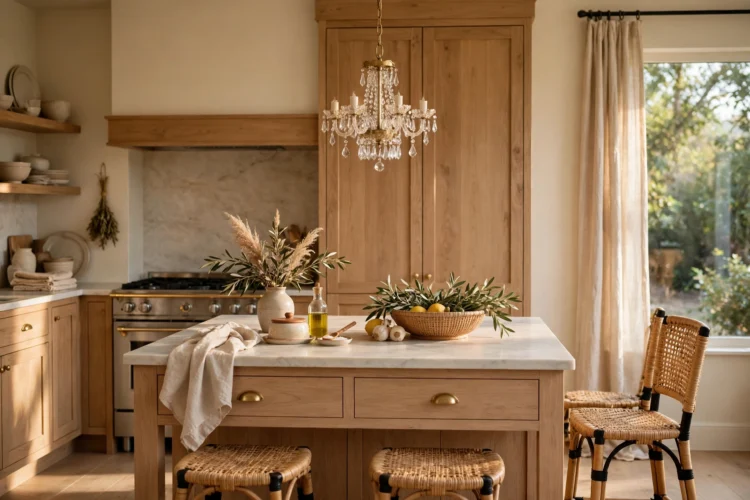
Crystal belongs in kitchens when the fixture stays small. A mini crystal chandelier 16 to 20 inches wide brings sparkle without the ballroom scale. Hang the bottom 32 to 34 inches above the countertop so the crystals sit above eye level for seated guests. Keep the crystal count modest. A fixture with two tiers of strands reads elegant. One with five tiers reads busy over a workspace. Pair with simple cabinet hardware. The chandelier is the jewelry here, so everything else in the sightline should stay quiet and let it carry the room.
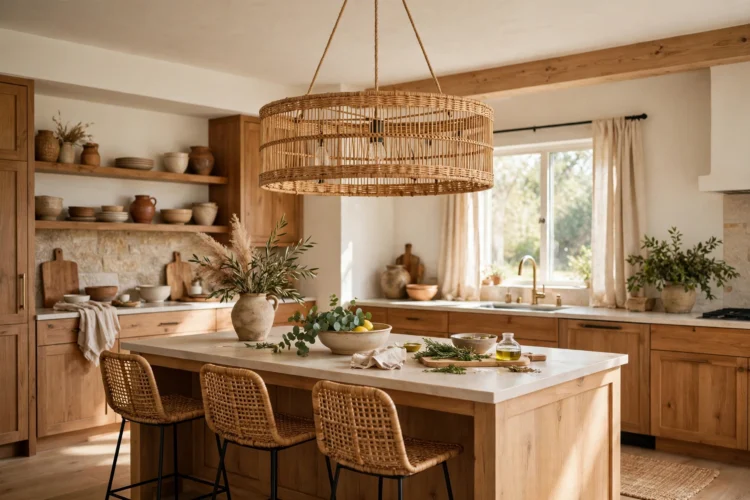
A rattan drum chandelier works like the woven pendant but at chandelier scale. The woven shade, usually 20 to 24 inches wide, leaks warm light sideways while an inner diffuser pushes task light down onto the counter. Hang the bottom 34 inches above the countertop, slightly higher than a fabric drum, because the sideways light can glare at eye level. One rattan drum centers a six-foot island. The natural material pairs with butcher-block counters and oak floors. Keep the rest of the lighting simple so the texture stays the focus of the room.
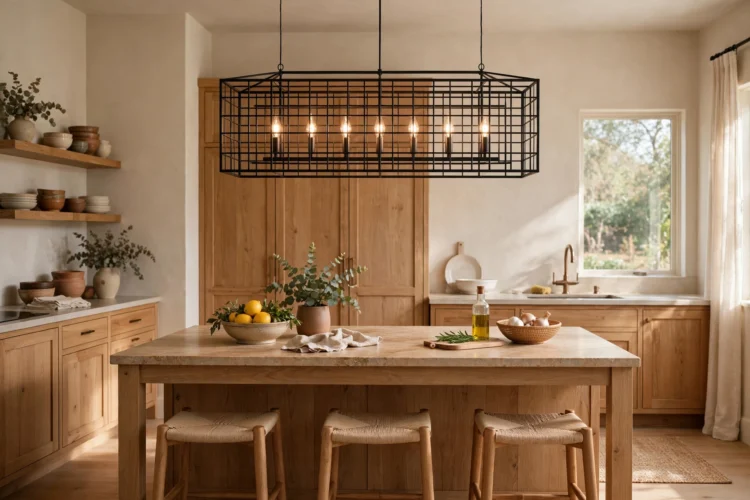
Cage chandeliers frame visible bulbs in an open geometric frame, which suits industrial and modern farmhouse kitchens. Choose a rectangular frame about two thirds of the island length. A six-foot island takes a 40 to 48 inch cage. Hang the bottom 30 to 32 inches above the countertop. The open frame means bulbs are visible from every angle, so use dimmable filament-style LED bulbs and a compatible dimmer. Full brightness handles food prep. Dimmed to half, the cage becomes a warm centerpiece for dinner without any extra fixtures.
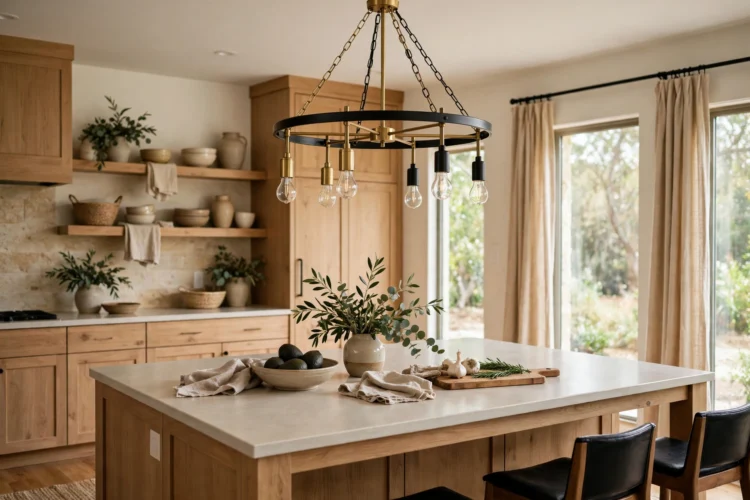
Every chandelier over an island should sit on a dimmer, and a mixed metal finish makes the dimmer worth using. Combine brushed brass arms with matte black accents, or polished nickel with oil-rubbed bronze details. Size to the two-thirds rule and hang 32 inches above the countertop. The dimmer lets one fixture cover three jobs: full brightness for chopping, medium for homework hour, low for evening. Check that the fixture is labeled dimmable and that the dimmer matches the bulb type. LED bulbs need an LED-rated dimmer or they will flicker at low settings.
Size the chandelier to two thirds of the island length, keep the bottom 30 to 36 inches above the counter, and put every style on a dimmer. The fixture that respects those numbers looks intentional no matter which of the eleven styles you pick.