Physical Address
304 North Cardinal St.
Dorchester Center, MA 02124
Physical Address
304 North Cardinal St.
Dorchester Center, MA 02124

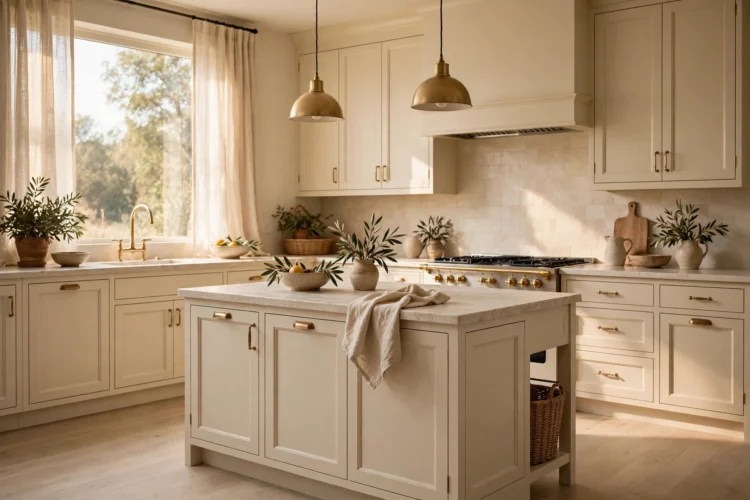
Cream cabinets give you the brightness of white with a softer, warmer feel. These 12 ideas cover undertones, counters, and hardware that keep cream from reading yellow.
Cream kitchen cabinets are the middle ground between stark white and full color. They keep a kitchen bright while adding a softness that white cannot give, and they suit homes that feel too cold in pure white. The risk is real, though: pick the wrong cream and the cabinets read yellow, dated, or dirty. The 12 ideas below show how to choose the undertone, pair the counters, and pick hardware that keeps cream fresh. Get the undertone right and the rest of the room falls into place.
Cream cabinet undertones decide whether the room reads warm and fresh or yellow and tired. A cream with a pink or peach base feels soft in morning light, while a cream with a green or gray base stays cooler and suits north-facing rooms. Hold large swatches against your floor and your counter samples in daylight, not under store lights. Farrow and Ball Wimborne White and Benjamin Moore Swiss Coffee are two widely used warm creams, and both shift with the light in a room. Test the swatch at noon and at dusk before you order a single door.
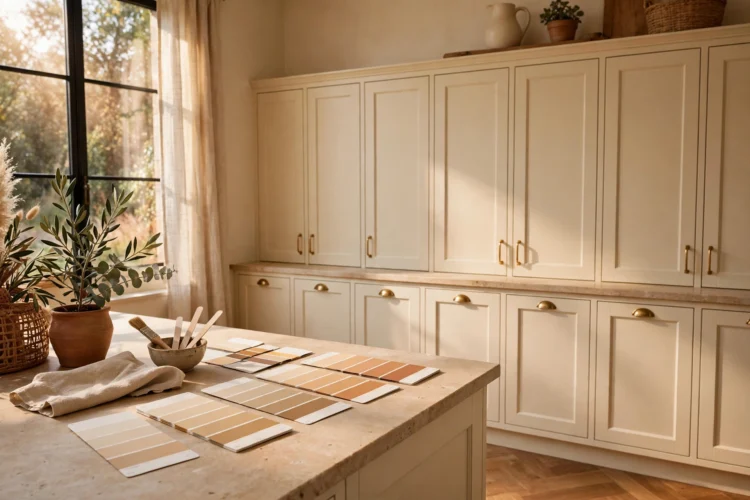
Cream cabinets against bright white walls make the cabinets look dirty by comparison, so match the wall to the cabinet. Warm cream paint on the walls, one shade lighter than the cabinets, keeps the two in the same family. The trim can stay a touch brighter than the walls to frame the room, but keep it warm too. If the walls go cool white, the cream will always look yellow next to them. The fix costs one coat of paint, so choose the wall color after the cabinets, not before.
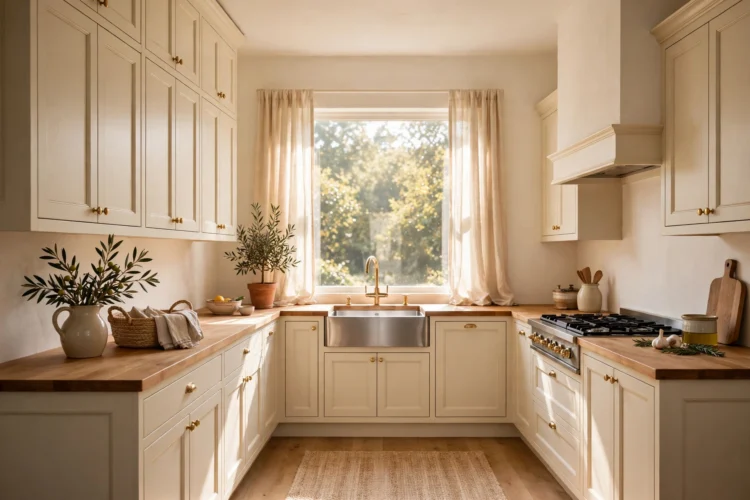
The counter sits right next to the cabinets, so it either steadies the cream or pushes it toward yellow. White quartz with soft gray veining cools the cream just enough, while a warm marble with gold veining leans into the warmth and can tip the room too far. Cream and marble countertops work best when the marble has gray or taupe movement rather than yellow. Hold the slab sample vertically against a cabinet door in daylight and step back. If the cream suddenly looks yellow, the counter is the problem, not the cabinet.
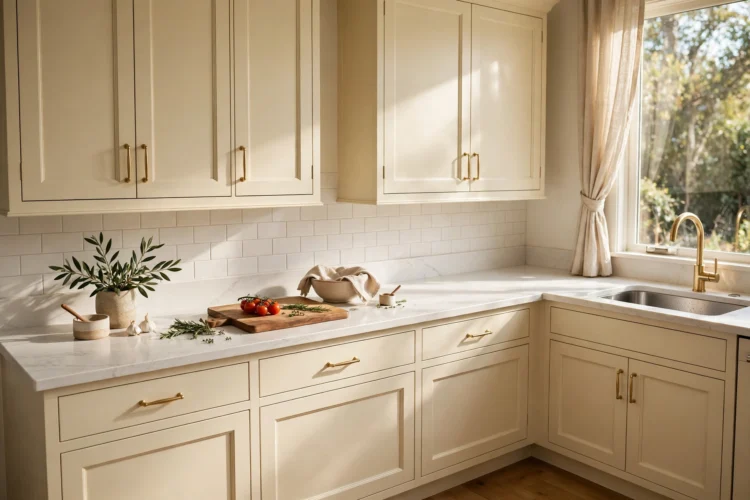
Cream kitchen hardware should stay in the warm family: aged brass, brushed bronze, or a soft gold. Cool chrome and nickel fight the warmth of cream and make the cabinets look muddy. Knobs on doors and pulls on drawers is a classic split, and the finish should match the faucet so the metals read as one choice. Unlacquered brass will darken with use, which suits cream because the patina adds age and character. Keep the hardware warm and the cabinets will read creamy on purpose, not yellow by accident.
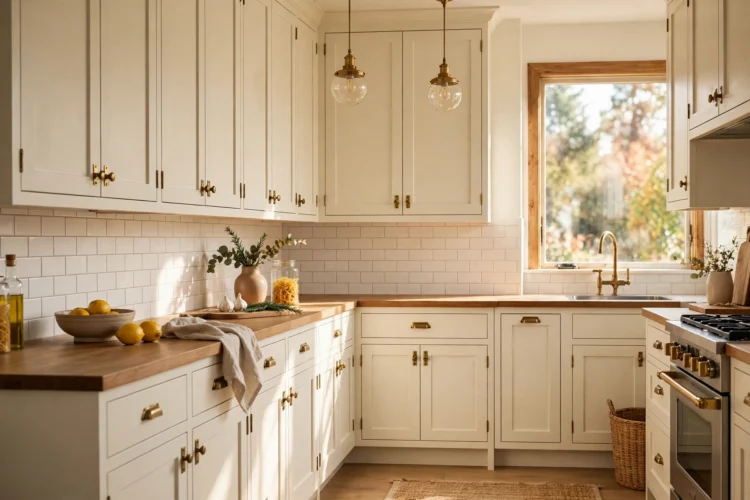
If full cream cabinets feel like a leap, paint the island cream and keep the rest white. The island becomes a warm focal point while the white perimeter keeps the room bright. The two colors need a shared undertone, so pick a cream whose base matches the white around it. A wood or stone island top in a warm tone ties the pair together. This half-step also suits renters and cautious renovators: one island is cheaper to repaint than a whole kitchen if the cream does not suit the light.
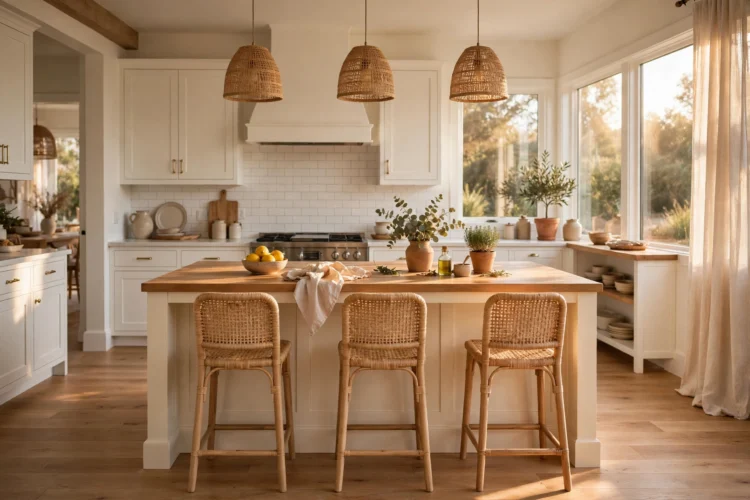
Wood and cream are natural partners because both carry warmth. Pale oak open shelves, a butcher block counter, or a walnut range hood give cream cabinets a material to lean on. The wood stops the cream from floating in a sea of pale surfaces and adds grain where paint cannot. Keep the wood tone in the same warm family as the cream undertone: honey oak with a peach-based cream, pale ash with a gray-based cream. Two wood pieces are enough; the cream should still lead the room.
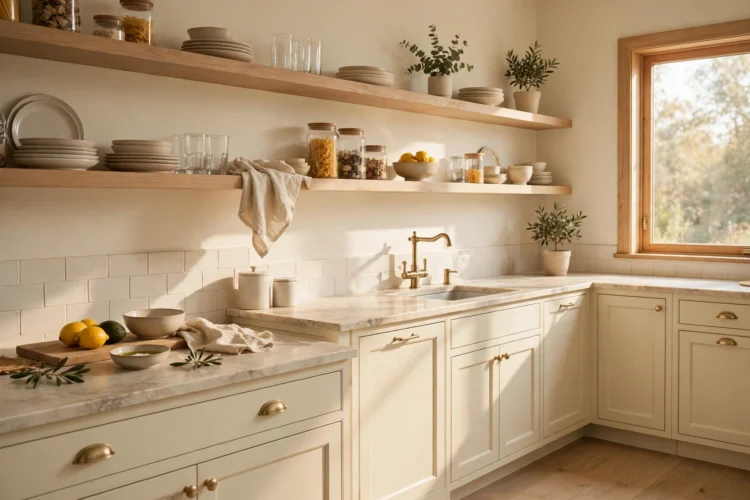
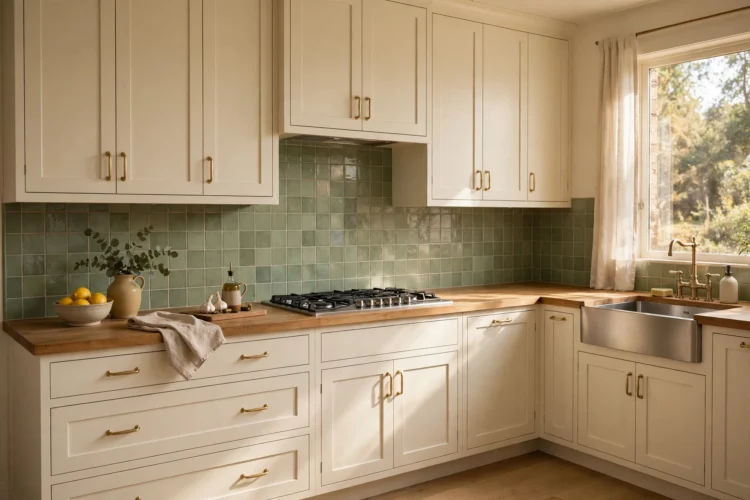
A soft sage green backsplash is one of the best partners for cream cabinets. The green cools the cream slightly and adds color without shouting, and the pairing reads fresh rather than dated. Glazed sage tile catches the light and adds movement, while a matte subway tile in the same tone stays quiet. Keep the grout pale so the tile pattern does not fight the cabinets. If green is not your color, a pale blue-gray tile does the same cooling job. Either way, the backsplash should calm the cream, not compete with it.
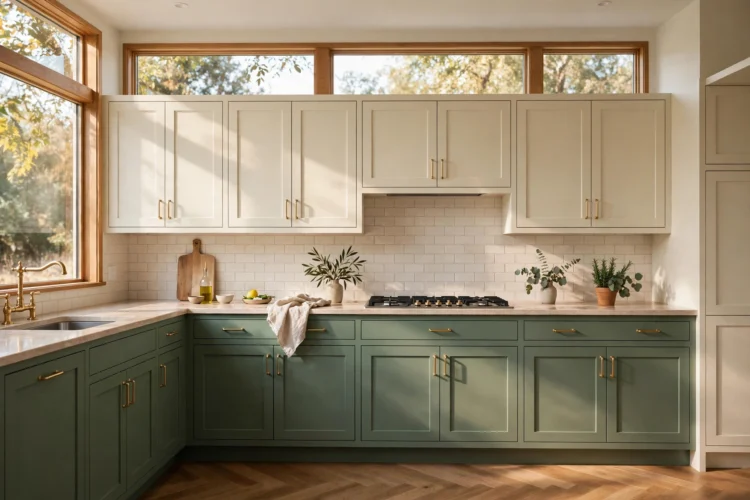
Pair cream uppers with a deeper base color and the kitchen gains shape. A soft sage, dusty blue, or warm greige on the lower cabinets grounds the room while the cream uppers keep it bright. The two-tone split works because cream is light enough to sit next to almost any muted color. Keep the deeper color desaturated so it reads calm beside the cream. The island can carry the deeper color too, which ties the room together. This is the safest way to add color to a cream kitchen without losing its softness.
A white floor under cream cabinets erases the line between floor and cabinet, and the room loses its footing. Choose a floor one or two shades deeper than the cabinets: pale oak, a warm terracotta tile, or a light stone with warm veining. The floor should sit in the same undertone family as the cabinets so the two agree. A washable runner in a muted pattern adds a soft layer and protects the floor where you stand to cook. The floor is the largest warm surface in the room, so let it do some of the work.
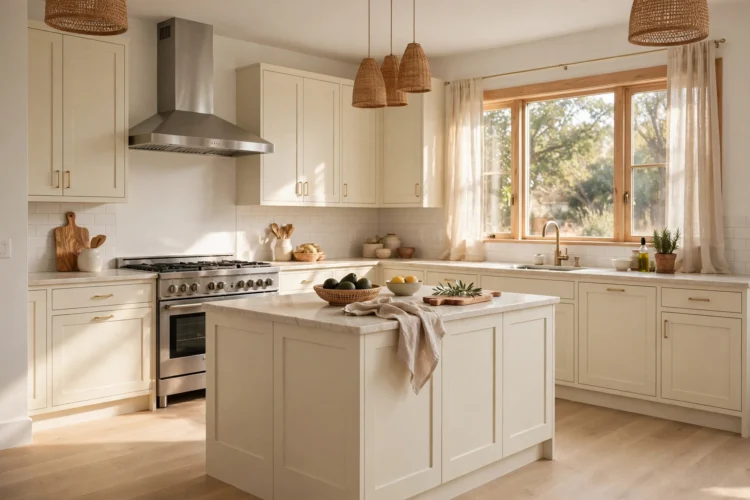
Glass-front cabinets break up a long run of cream doors and show what lives inside. Use them on one or two uppers near the sink or stove, and fill them with everyday dishes in white, cream, and pale blue. The glass adds a reflective surface that brightens the cream, and the dishes add soft color without paint. Keep the shelves tidy, since glass hides nothing, and store the clutter in closed cabinets nearby. A single glass cabinet can change a whole wall of cream from flat to layered.
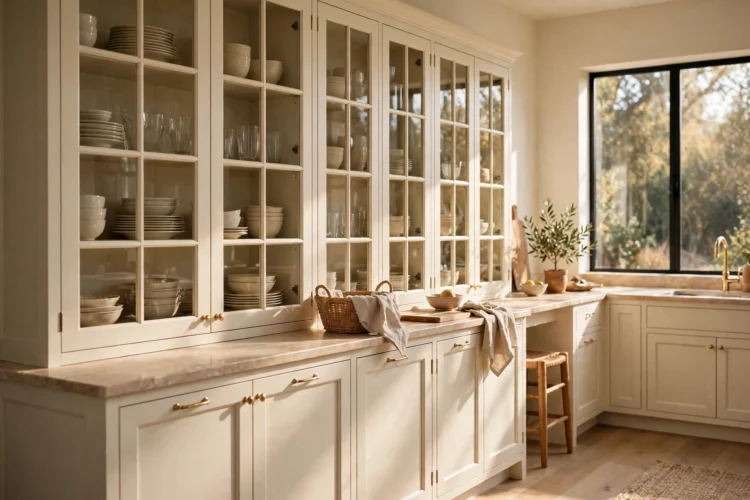
Cream cabinets ask for soft, natural styling. Linen curtains, a woven runner, ceramic canisters, and a wooden board give the room texture that paint alone cannot provide. The styling should stay in the same warm, muted family: no bright plastic, no high-gloss chrome. A bowl of lemons or a small vase of eucalyptus adds a living note. Keep the counters to three or four groupings so the kitchen still works. The styling is what makes cream read as a choice rather than a compromise.
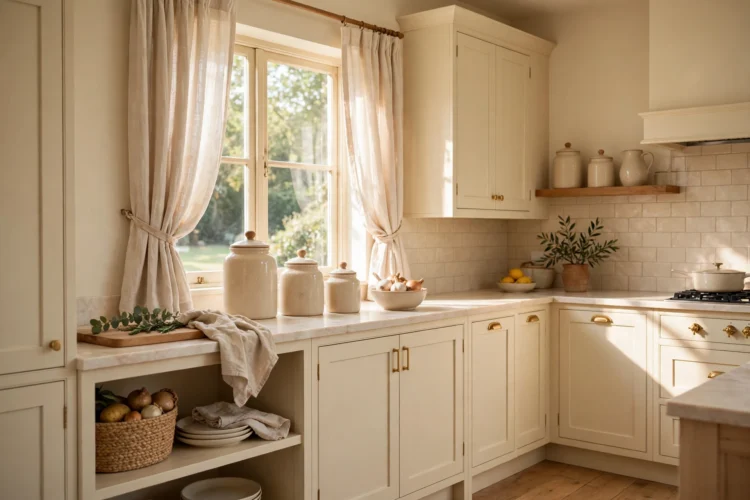
Cream changes more with light than white does, so test it where it will live. Paint a large swatch on a cabinet door or a board and move it around the room at morning, noon, and evening. North-facing kitchens cool cream down, while south-facing rooms warm it up. Artificial light matters too: warm bulbs around 2700K keep cream soft, while cool bulbs can turn it gray. Live with the swatch for a few days before you commit. The right cream looks good in your kitchen, not just in the paint store. For more color options, see these kitchen cabinet color ideas beyond basic white, and if you like a classic door style, these Shaker cabinet kitchen ideas for every style suit cream especially well.
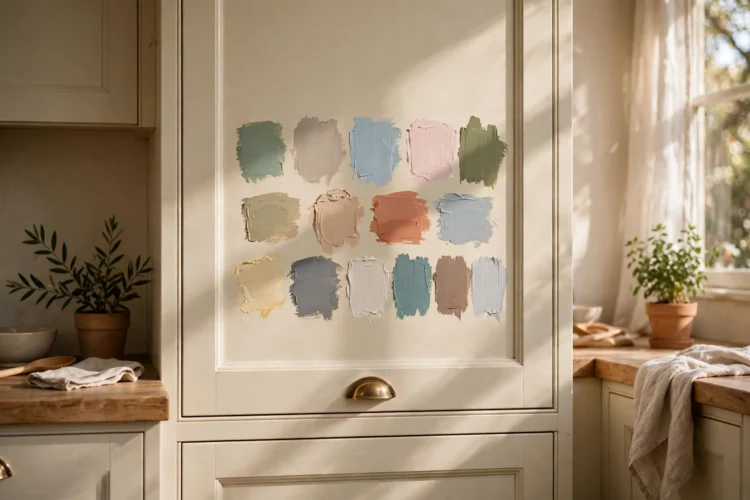
Cream is a warm, forgiving color when the undertone is right and the pairings stay in the same family. Test it in your own light, pair it with warm metals and natural wood, and keep the counters cool enough to hold the line. The result is a kitchen that feels bright without feeling stark, and soft without feeling dated.