Physical Address
304 North Cardinal St.
Dorchester Center, MA 02124
Physical Address
304 North Cardinal St.
Dorchester Center, MA 02124

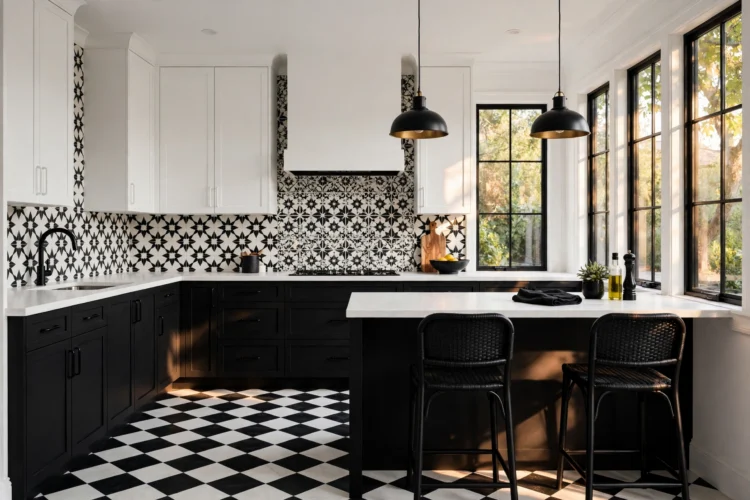
Black and white never goes out of style, but the ratio makes or breaks the room. These 11 ideas show how to get the contrast right.
These black and white kitchen ideas work because the pairing is simple and the range is wide. A kitchen can be mostly white with black notes, mostly black with white relief, or split down the middle, and each version reads differently. The trick is deciding the ratio first and letting every other choice follow it. The 11 ideas below cover cabinets, floors, tile, islands, and lighting at several drama levels, so you can pick the version that fits your home and your nerve. Start with the ratio, then build the details around it.
Before you pick a single finish, choose how much black the room will carry. A 70-30 split in favor of white feels bright and classic, while a 50-50 split reads bold and graphic. A kitchen that is mostly black needs strong light and pale floors to stay welcoming. Sketch the room on paper and shade the black areas: cabinets, island, floor, backsplash, fixtures. If the black clusters on one side, the room will feel lopsided. Spread it around so the eye travels. The ratio is the one decision you cannot fix later with accessories.
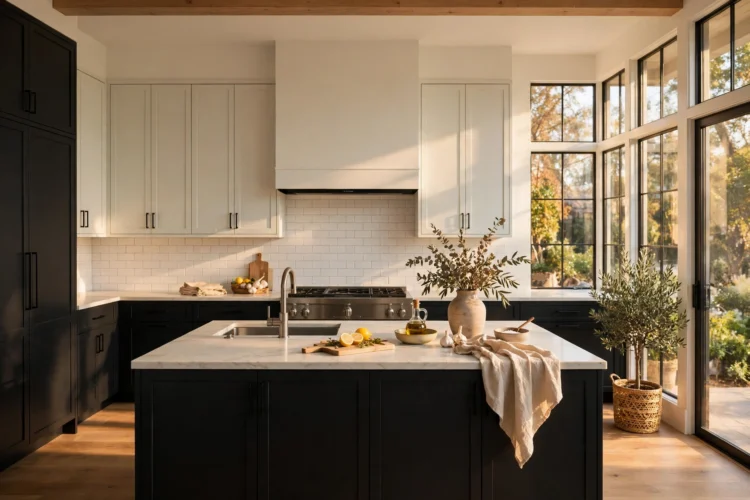
Tuxedo kitchen cabinets put dark lowers under pale uppers, and the split is the most forgiving way to use black. The dark base grounds the room while the white uppers keep it bright, and the line between them gives the kitchen a tailored shape. Matte black lowers hide smudges better than gloss, and white uppers bounce light back into the room. Keep the hardware one finish across both colors so the two halves feel like one kitchen. If the full tuxedo split feels bold, try black on the island only and leave every other cabinet white.
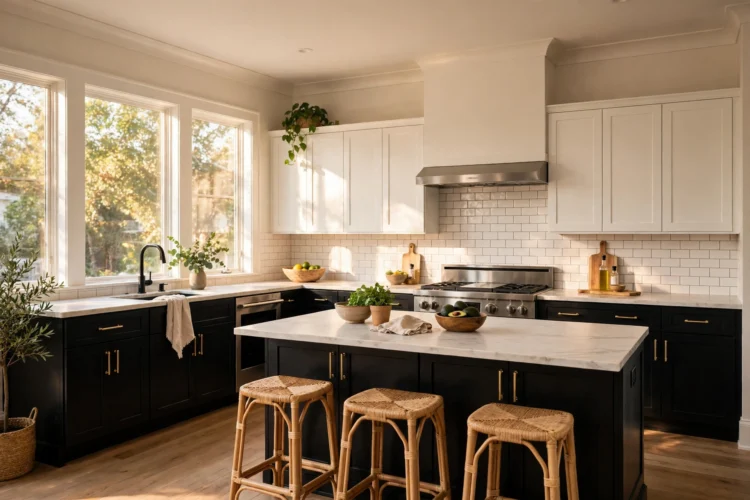
A checkerboard kitchen floor is the oldest move in this palette and still the most reliable. Large black and white squares read calm and classic; small squares read busy and vintage. Marble-look tile keeps the pattern soft, while matte porcelain makes it sharper. Lay the grid on the diagonal in a small kitchen and the floor will look wider than it is. Keep the rest of the room quiet when the floor carries this much pattern, or the kitchen starts to shout. One patterned floor plus plain cabinets is the whole recipe.
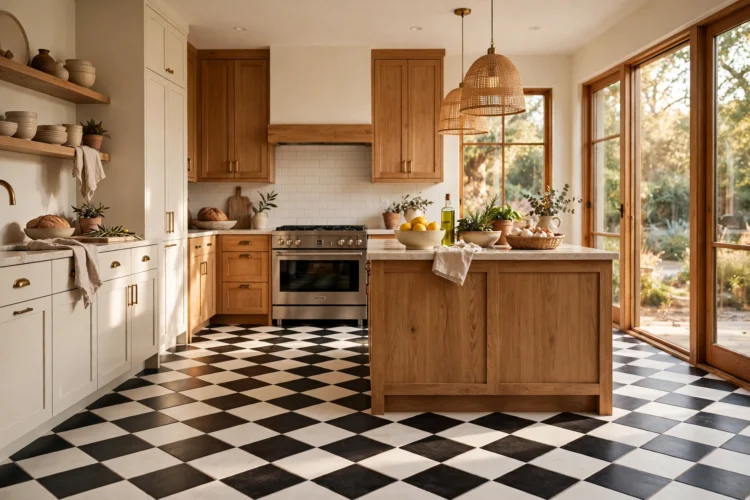
Black and white tile gives the backsplash a job beyond protecting the wall. A bold geometric pattern turns a short run of tile into the focal point, while a quiet pattern like herringbone in two tones adds texture without noise. Keep the grout in mind: white grout on black tile outlines every piece, dark grout on white tile does the same in reverse. If the cabinets are already black and white, choose a simple tile so the room has one star, not three. For quiet pattern options, see these herringbone backsplash ideas that add quiet pattern.
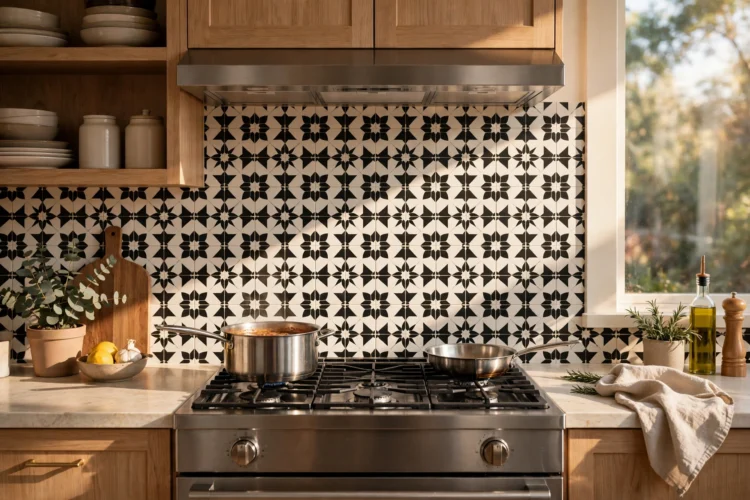
A black kitchen island in an otherwise white kitchen is the single strongest move in this palette. The dark block anchors the middle of the room and gives the white cabinets something to lean against. Top it with white stone so the island reads as one dark shape with a pale lid, and hang two or three pendants above it to mark the spot. A black island also hides scuffs from stools and feet better than a white one. Keep the island the only large black piece if the rest of the room stays pale, or the balance tips.
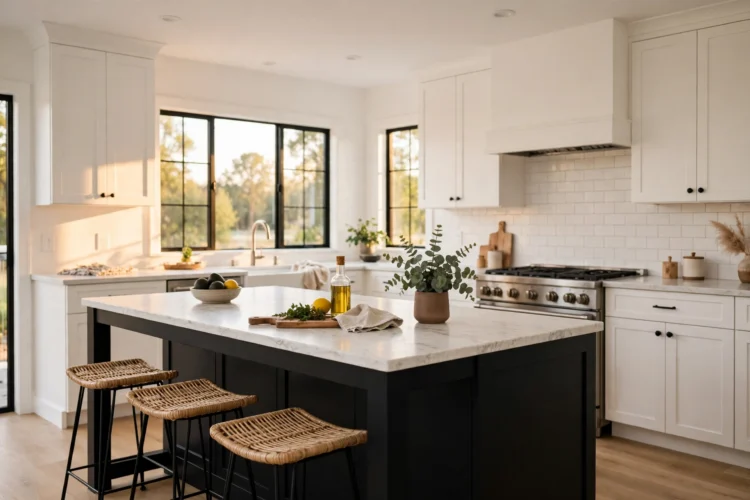
Gloss black shows every fingerprint, water spot, and crumb. Matte black hides them and reads softer in daylight. Use matte paint on cabinets, a honed stone on counters, and a flat black faucet so the dark surfaces feel calm instead of sharp. Mix one satin finish in, such as a brushed metal light fixture, so the room has a little shine somewhere. The mix of matte and satin keeps black from looking flat. In a kitchen that gets cooked in daily, matte is the practical choice as well as the prettier one.
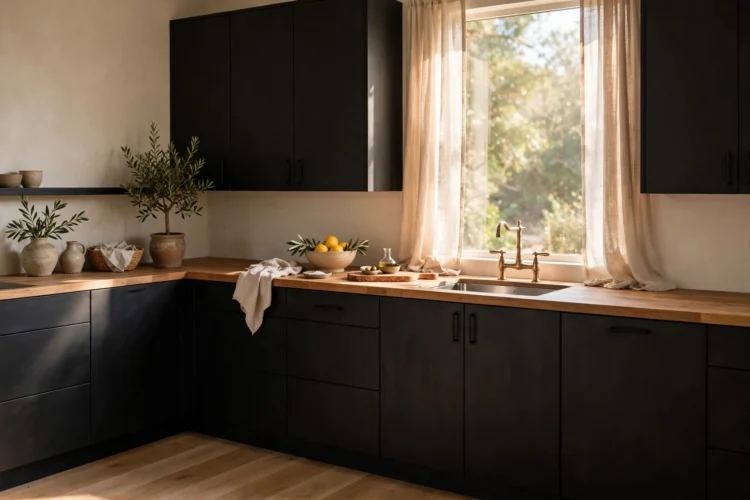
Small kitchens can carry black, but white has to do most of the work. Keep the uppers white, the walls white, and the ceiling white, then spend your black on one or two pieces: the lower cabinets, the island, or the floor border. A white backsplash with dark grout adds contrast without darkening the wall. Open shelves in white keep the sightlines clear, and a large mirror or glass cabinet door bounces light around. The rule for small rooms is simple: white opens, black defines, and neither should crowd the other out.
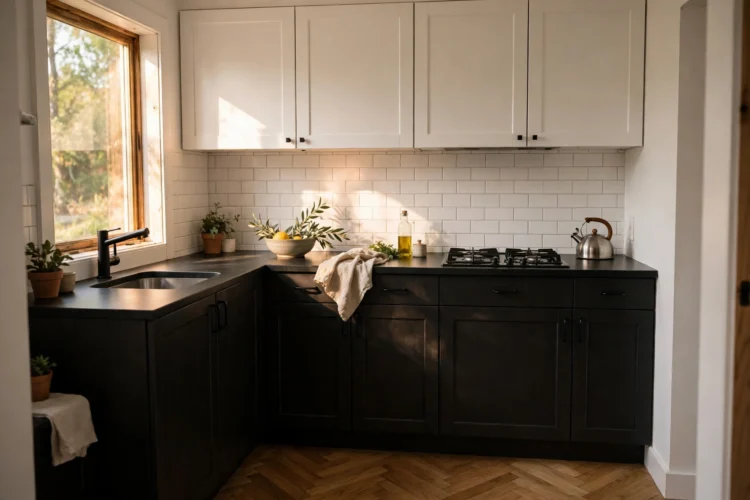
Pure black and white can feel cold, and wood is the easiest way to fix that. A butcher block counter, pale oak stools, or a timber range hood adds a warm third tone that softens the contrast. The wood does not need to dominate; two or three pieces are enough to change the temperature of the room. Pale oak keeps the palette light, while walnut adds weight and suits a mostly black kitchen. Keep the wood in one tone family so it reads as a deliberate third color rather than a random extra.
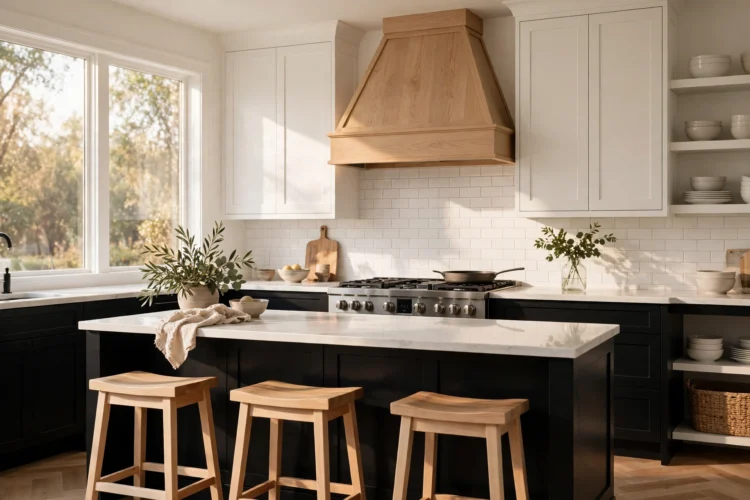
Hardware is small but it shows everywhere, and mixed finishes will fight the clean lines of a black and white kitchen. Pick one metal and use it on knobs, pulls, the faucet, and the light fixtures. Matte black hardware disappears into black cabinets and outlines white ones, which suits this palette well. Brushed brass warms the room up, while polished nickel keeps it cool and crisp. If the budget only covers one change, swap the hardware first: it is the cheapest way to make the black and white scheme feel finished. These black kitchen cabinet ideas that still feel bright show how the right details keep dark cabinets from closing a room in.
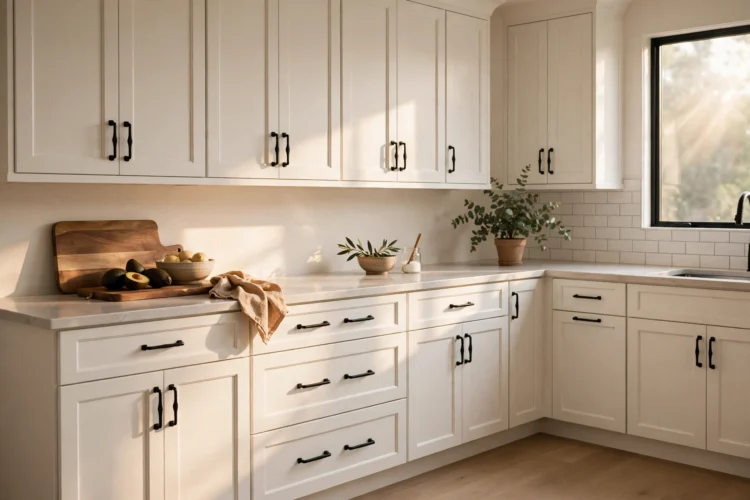
A black and white kitchen looks best when pattern comes in three sizes: one large, one medium, one small. The floor is the large pattern, the backsplash is the medium one, and a textile or a single patterned dish is the small one. If all three patterns are bold, the room turns into an optical puzzle. Let one pattern lead and keep the other two quiet. A checkerboard floor with a plain white tile backsplash and a single striped runner is a good example. The eye needs a place to rest, and the plain surfaces are what give it one.
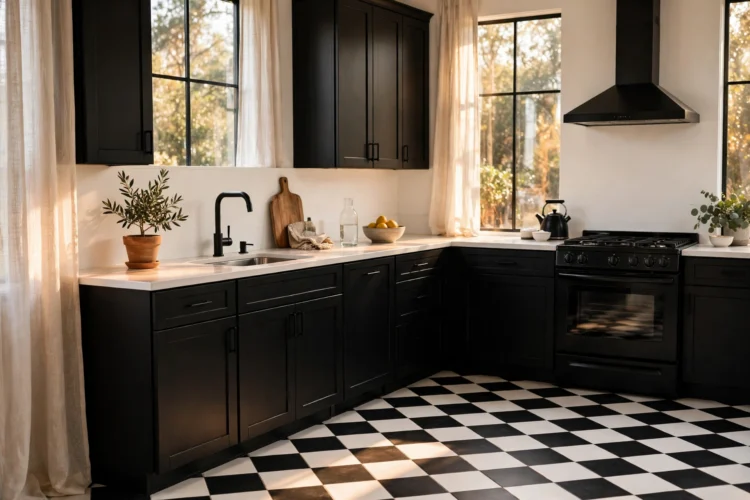
The counter is where black and white meet, so it should carry a little of both. White quartz with gray veining links pale cabinets to a dark island. Black stone with white veining does the reverse. A marble-look surface with soft gray movement is the safest bridge because it reads mostly white from a distance and shows its pattern up close. Avoid a solid black counter on black cabinets, which erases the edge between them. For contrast options, browse these dark countertop ideas for bold contrast before you commit to a slab.
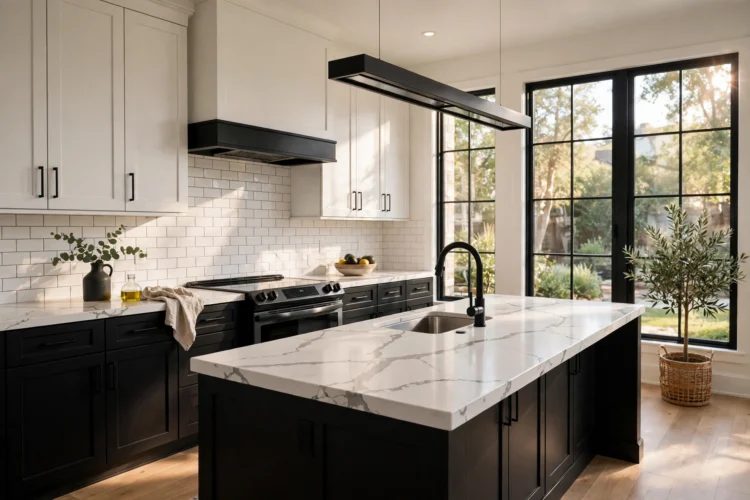
Black absorbs light, so a black and white kitchen needs more of it than an all-white one. Layer ceiling lights, under-cabinet strips, and pendants over the island so no dark surface falls into shadow. Warm bulbs around 2700K to 3000K keep the black soft; cool bulbs make it read blue and hard. Put the lights on dimmers so the room can shift from bright prep light to a low evening glow. If the kitchen feels dark after the cabinets go in, add light before you add decor, because no accessory fixes a room that is underlit. Two-tone schemes like this one pair well with the ideas in these two-tone kitchen cabinet ideas for a custom look.
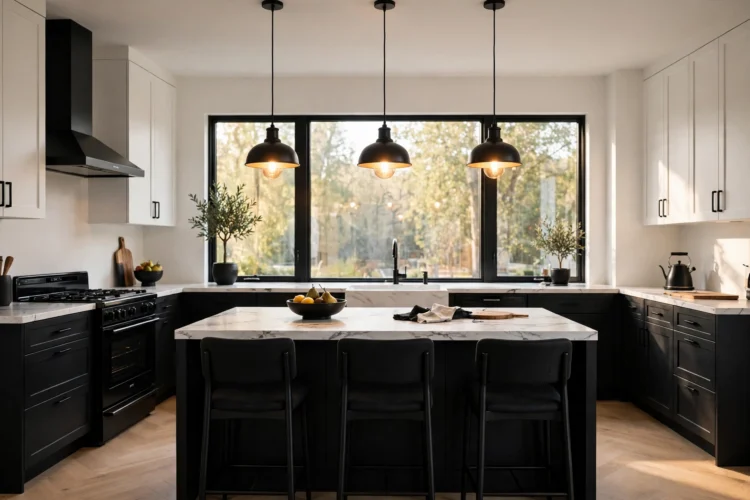
Black and white rewards a clear plan and punishes guesswork. Pick the ratio, spend the black on two or three strong pieces, and let white carry the rest. The result is a kitchen that looks sharp on day one and still looks right ten years from now.