Physical Address
304 North Cardinal St.
Dorchester Center, MA 02124
Physical Address
304 North Cardinal St.
Dorchester Center, MA 02124

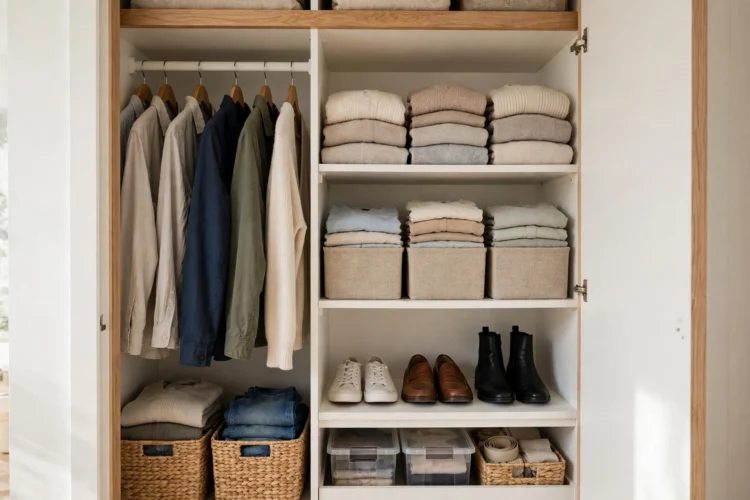
A small closet feels full long before it is actually full. These eleven ideas use rods, racks, and sorters to double the storage in a reach-in closet without renovation.
Small closet organization ideas matter because a reach-in closet wastes space in predictable places. The floor fills with shoes, the top shelf holds a pile nobody can reach, and the door does nothing at all. Fix those three spots and the closet suddenly holds far more, without knocking down a wall. The ideas below work in rental closets too, since most of them hang, hook, or stand freely instead of needing screws in the wall.
Start by emptying the closet completely. This step feels slow, but it is the only way to see what you actually own and what the closet can hold. Sort clothes into keep, repair, and donate piles, and be honest about items unworn for a year. Measure the closet before buying anything: width, depth, rod height, and shelf depth. A sorter that is one inch too wide for the closet is useless, and a rod hung at the wrong height wastes the space below it.
Put back only the keep pile, grouped by type and then by color. Grouping makes outfits faster to find and shows gaps at a glance, such as too many jackets and no shelf space for folded knits.
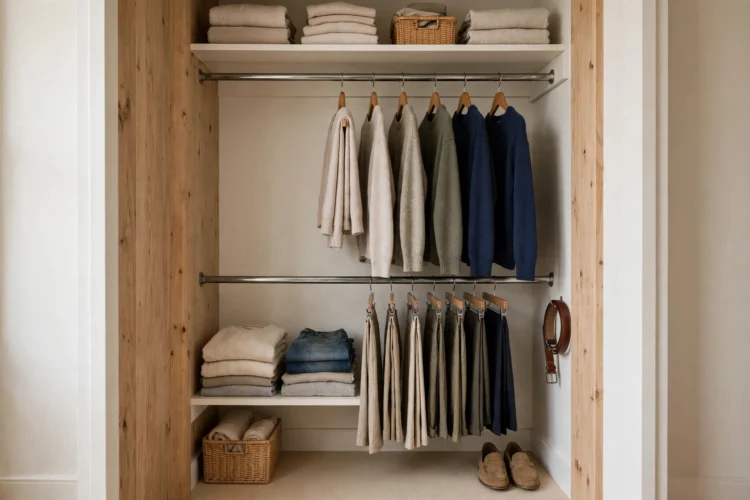
A double rod closet system is the single biggest win in most reach-in closets. Hang a second rod below the existing one, and shirts, blouses, and folded trousers suddenly take half the vertical space they used to. The top rod holds shirts and jackets, the lower rod holds trousers and skirts, and the floor below stays clear for shoes. Adjustable hanging rods cost little and install without tools in many closets, since they hang from the existing rod.
Keep long items, such as dresses and coats, on one side of the closet at full length. If the second rod runs the full width, long clothes end up bunched at the bottom, so leave a full length section and double up the rest.
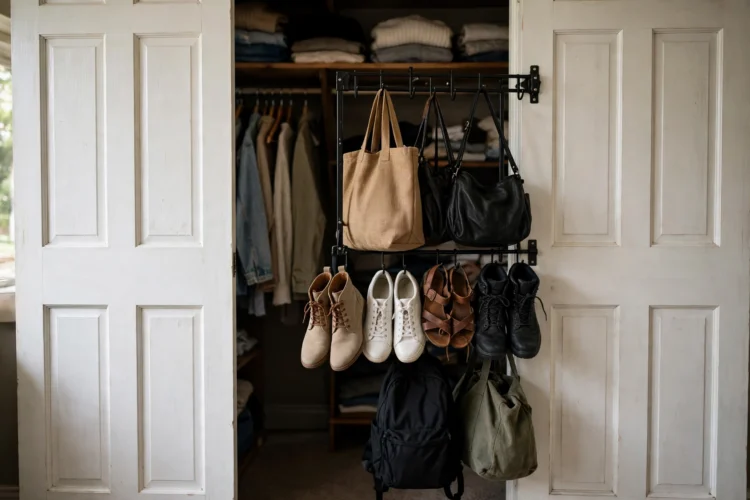
The inside of the closet door is free storage most people ignore. A closet door organizer, either an over door rack or a hanging pocket panel, holds shoes, belts, scarves, and bags without taking a single inch of rod space. Over door racks fit rentals because they hook on and off, while pocket panels suit soft items that fold. Pick a rack that clears the door frame when the door closes, and test it with the heaviest shoes before loading it fully.
Assign the door one category, such as shoes or accessories, instead of mixing everything. A door with one job stays tidy, while a door with five jobs becomes a junk panel within a month.
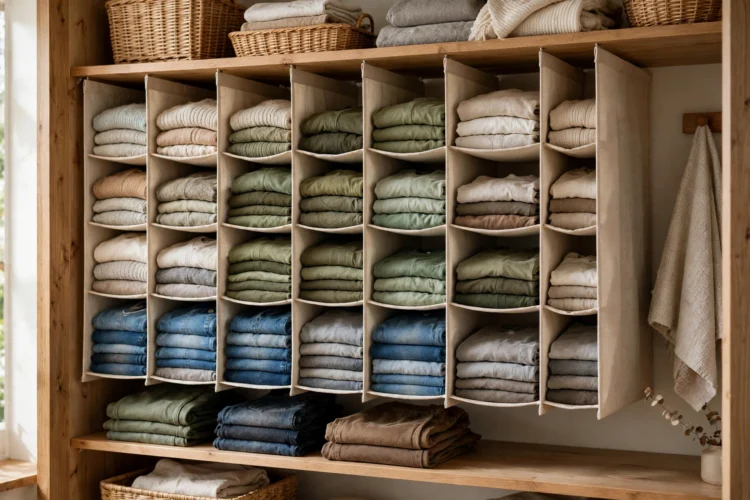
Piles grow because folded clothes have no walls between them. Vertical closet sorters fix this by dividing a shelf into narrow slots, one per category, so pulling out a sweater does not collapse the whole stack. Hanging shelf dividers clip onto the rod and create the same effect in closets without built in shelves. Use one slot per category: tees, knits, workout clothes, and so on, and fold items to the same width so each slot looks neat.
Sorters also reveal what you have too much of. When one slot overflows while another sits empty, the imbalance is visible, and the next clear out practically plans itself.
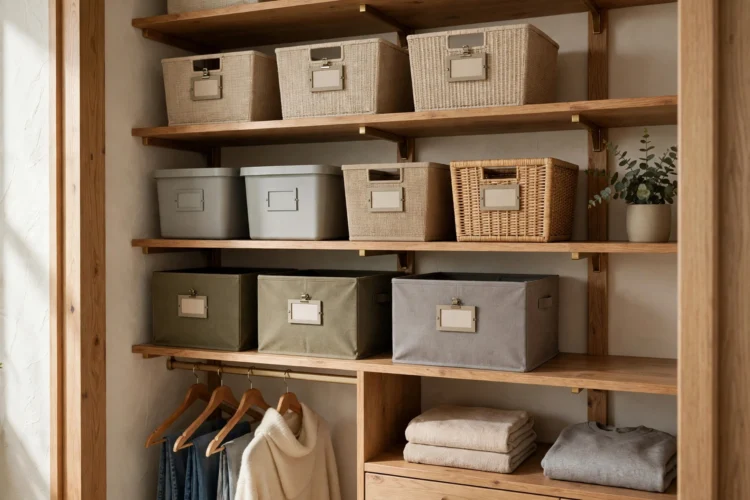
The top shelf of a closet is usually the most wasted space in the house, because it is hard to reach and easy to pile. Low bins with labels fix it. One bin per category, labeled on the front, lets you pull down exactly what you need without emptying the shelf. Clear bins show contents at a glance, while fabric bins look tidier and suit bedrooms. Keep a small step stool nearby if the shelf is high, or the bins will slowly stop being used.
Label everything, even if the system feels obvious today. Labels help other household members put things back in the right spot, and they stop a tidy system drifting back into piles over a few months.
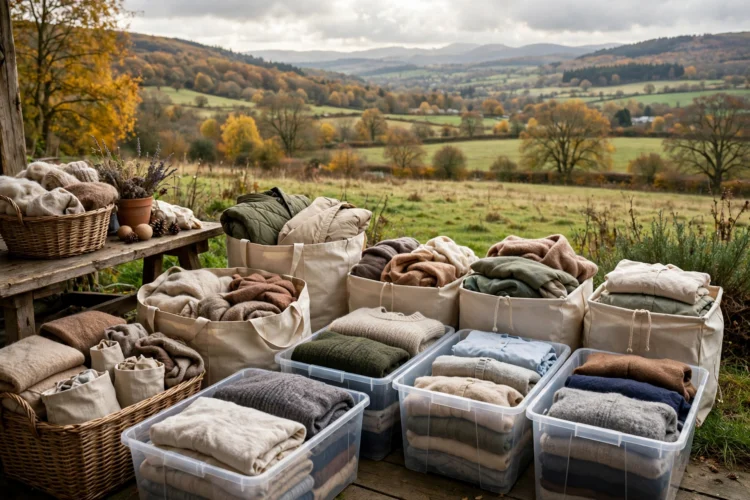
A closet that holds all four seasons at once is a closet at half capacity. Rotate seasonally by moving out of season clothes into labeled boxes on a high shelf or under the bed, and bringing the current season to the front. This single habit frees a surprising amount of daily space, since winter coats and summer dresses never compete for the same rod. Do the swap twice a year, at the start of spring and autumn, and use the moment to check for repairs and donations.
Store off season clothes clean and dry, with cedar blocks or lavender sachets to keep them fresh. A box that smells musty in spring will sit unpacked for weeks, so freshness matters as much as folding. Wash or dry clean everything before boxing it, since stains and body oils set during months in storage and attract moths. Fold knits rather than hanging them, so shoulders do not stretch out of shape, and slip tissue paper between delicate items to stop color transfer. Label each box with the season and a short contents list, and stack the current season at the front so the swap takes an hour, not a weekend.
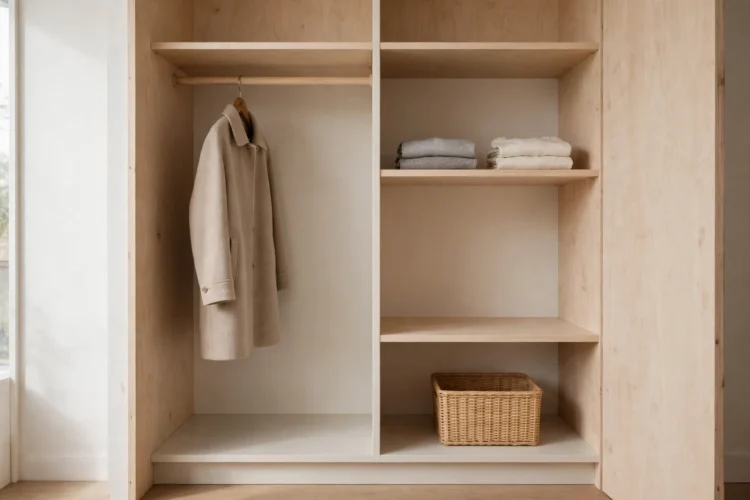
Reach-in closet storage only stays organized if something leaves whenever something arrives. The one in, one out rule works when it is tied to a visible spot: a donation bag hanging in the closet. When a new item comes home, an old item goes in the bag. When the bag fills, it goes to donation. No counting, no spreadsheets, just one bag and one habit. Put the bag where you get dressed, not in a garage or spare room, or the rule quietly dies.
Apply the rule to shoes and bags too, since those categories creep fastest. A closet that gains one pair of shoes a month without losing any will overflow within a year, no matter how good the sorters are.
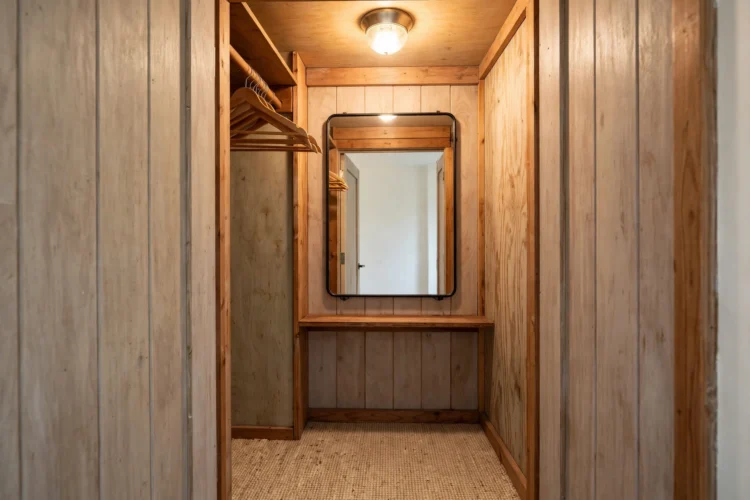
A dark closet hides clothes and invites mess, because you cannot see what you own. A battery powered LED strip along the top of the closet, or a motion sensor light inside the door, changes this completely. Light also makes colors accurate, so you stop pulling out a navy shirt thinking it is black. Stick on lights suit rentals, while wired lights suit owned homes, and either beats dressing by guesswork.
A mirror on the closet door or the wall beside it saves trips to the bedroom mirror and makes the space feel larger. Small space thinking from other rooms applies here as well. Ideas from bathroom storage ideas help sort the small items that usually end up on the closet floor, while small bathroom layout ideas show how a tight space works when every zone has a job. Borrow the bright, airy feel of bathroom skylight ideas when placing closet light, and finish with the calm order of spa-like bathroom ideas as a standard for how the closet should look when you open it. Add light, add a mirror, and the smallest closet becomes a space you can actually use.
Keep the system working with a short weekly reset. Once a week, return stray items to their labeled bins, refold the one stack that always collapses, and drop anything new into the donation bag if the closet gained something that week. A five minute reset stops small drifts from turning into a full clear out, and it keeps the rods, door rack, and sorters doing the job they were bought for. If one zone keeps failing, change the tool instead of blaming the habit: a wider bin, a lower rod, or a different door rack often fixes what willpower cannot.