Physical Address
304 North Cardinal St.
Dorchester Center, MA 02124
Physical Address
304 North Cardinal St.
Dorchester Center, MA 02124

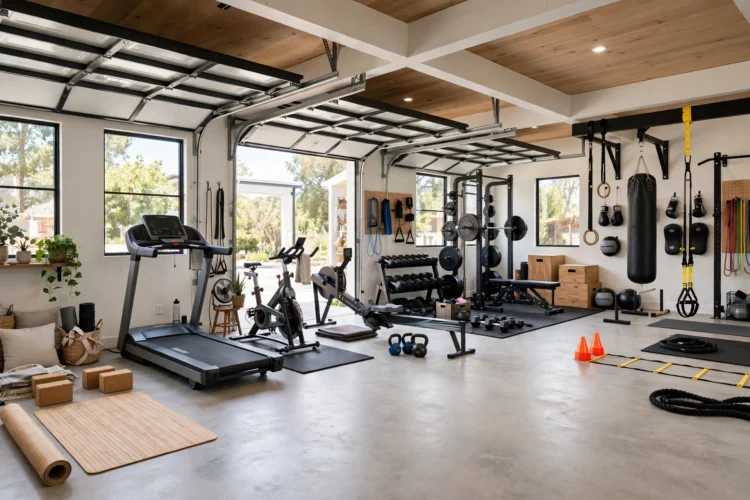
A parking bay can become a real gym with the right floor, airflow, and layout. These fourteen ideas keep the conversion renter-friendly and the car welcome too.
Garage gym ideas make sense the moment you compare the space you already own with the membership you keep paying for. A single parking bay holds a rack, a bench, dumbbells, and a cardio machine, with room to move. The conversion does not need a remodel. It needs a floor that protects the concrete, air that moves, and a layout that keeps the heavy gear against the walls. The fourteen ideas below cover all three, plus the small touches that turn a cold garage into a place you actually want to train in.
Concrete is hard, cold, and dusty, which is the opposite of what a gym floor should be. Cover the workout area before you buy a single piece of equipment. The floor protects the concrete from dropped weights, gives your knees a kinder surface, and stops dust from sticking to sweaty hands. Sweep and mop the concrete first, and fix any cracks that could telegraph through the new surface. A clean base makes the whole conversion feel finished instead of improvised.
Measure the workout zone and leave a border of bare concrete around it if the car still parks inside. The border marks the gym as its own space and keeps the mats from sliding under a tire. Garage gym flooring is the one purchase to make before anything else, because every later choice depends on it.
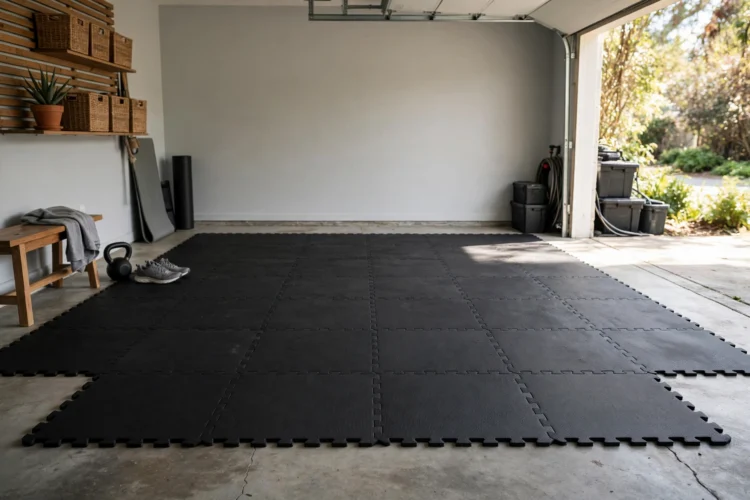
Interlocking rubber tiles are the safest choice for most garages. They lay down without glue, lift up without damage, and a damaged tile swaps out in a minute. Choose tiles at least three quarters of an inch thick under the lifting area and thinner tiles for the rest of the floor. The thick tiles absorb a dropped dumbbell. The thin ones save money where you only stand and stretch.
Full rubber rolls look smoother and cost less per square foot, but they need glue or tape and they are hard to move. If you rent or might need the parking bay back, tiles are the better call. A home gym in garage setups that use tiles can return to a plain garage in an afternoon, which keeps the conversion reversible and the landlord happy.
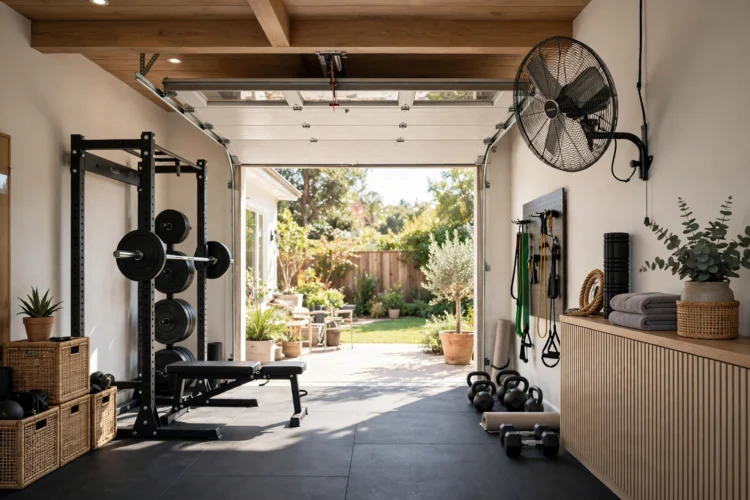
A garage traps heat and fumes, and a workout makes both worse. Sort the air before you buy the rack. Open the garage door a foot during workouts and add a fan that pulls air across the room, not just in a circle. If the garage has a side window, a small exhaust fan in it moves far more air than a second ceiling fan. Keep car chemicals and fuel in a sealed cabinet away from the workout area so the air stays clean.
Train in the cooler hours when summer heat builds up, and keep a water station near the door so hydration is part of the room, not an afterthought. A garage that smells like exhaust and old paint will not get used. A garage with moving air will. If the space still feels stale, check whether the garage door seals and vents are working properly before you add more fans.
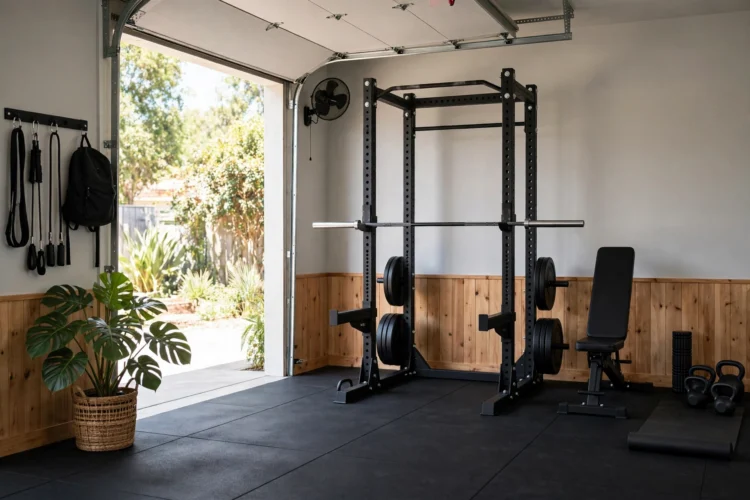
A power rack is the biggest piece in a small garage gym, so give it the back wall. The wall braces it, the bar loads from the front, and the floor in front of the rack becomes the lifting platform. Bolt the rack to the floor or the wall if your lease allows it. If not, a rack with a wide base and plate storage stays stable without bolts, as long as you load plates on both sides.
Leave at least a full bar length of clear space in front of the rack. A barbell needs room to load and unload without hitting a wall or a car. Keep the bench stored upright against the rack when it is not in use, and the whole station folds into a narrow strip along the wall.
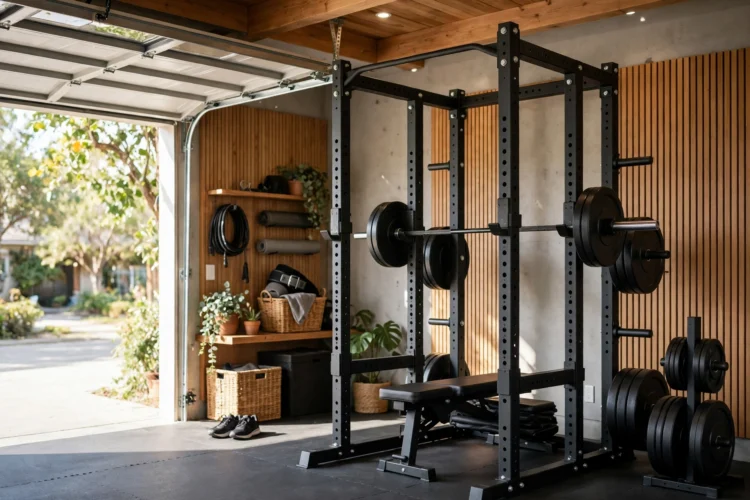
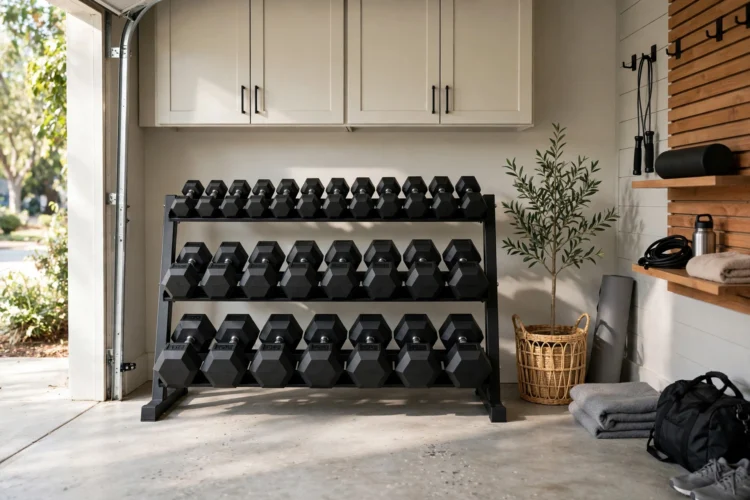
Dumbbells scattered on the floor are a tripping hazard and a motivation killer. A tiered rack holds them in ascending order, light pairs on top and heavy pairs low, so you can read the weights at a glance. Buy the rack before you buy the dumbbells, because the rack decides how many pairs fit. Adjustable dumbbells save even more space and suit a small garage gym where every square foot counts.
Keep a small mat in front of the rack as the dumbbell work zone. When the weights live in one spot and the work happens in one spot, cleanup takes ten seconds. If the rack wobbles, shim the feet instead of moving it. A stable rack is a safe rack.
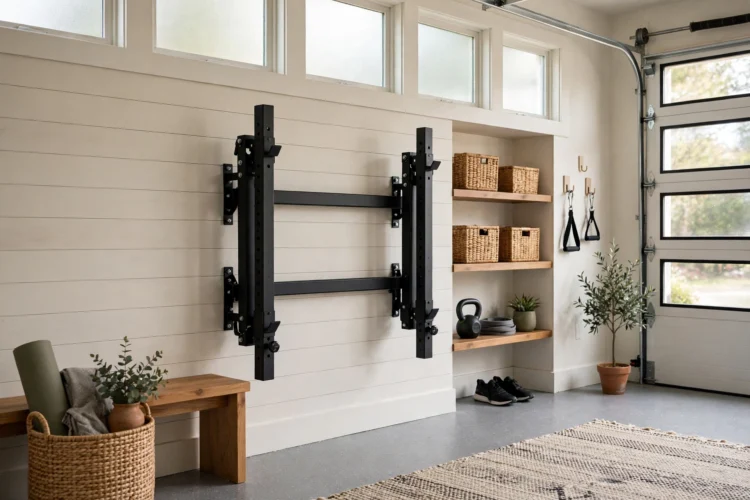
One parking bay is enough for a serious gym if the gear folds. A fold-down squat rack mounts to the wall and folds flat when the car comes home. A folding bench hangs on the wall beside it. Together they free the full bay in under a minute. This is the setup for anyone who still parks inside, because the gym and the car take turns using the same floor.
Mount the rack into wall studs with proper hardware and test it under load before your first heavy set. Store the barbell on the rack itself so it never leans in a corner where it can fall. A garage gym layout for one bay works when every piece has a folded position and a working position, and nothing lives in between.
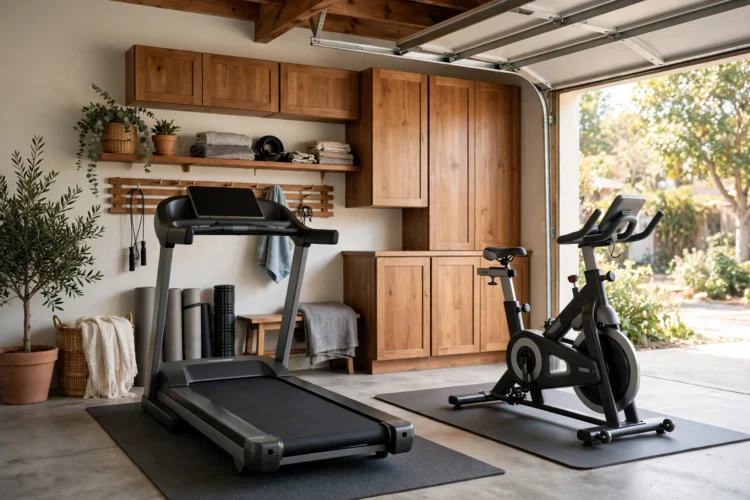
Cardio machines are big, so give them the corner with the best airflow and the worst light. A treadmill or a bike in the corner stays out of the lifting area and near the door for fresh air. Put a mat under the machine to protect the floor and to dampen vibration, and leave a clear path behind it so nobody climbs over the rack to reach the door.
One cardio machine is enough for most home gyms. A bike takes less space than a treadmill and suits a small garage gym better, while a rower stores upright against the wall. Pick the machine you will actually use four times a week, not the one that looks best in a photo.
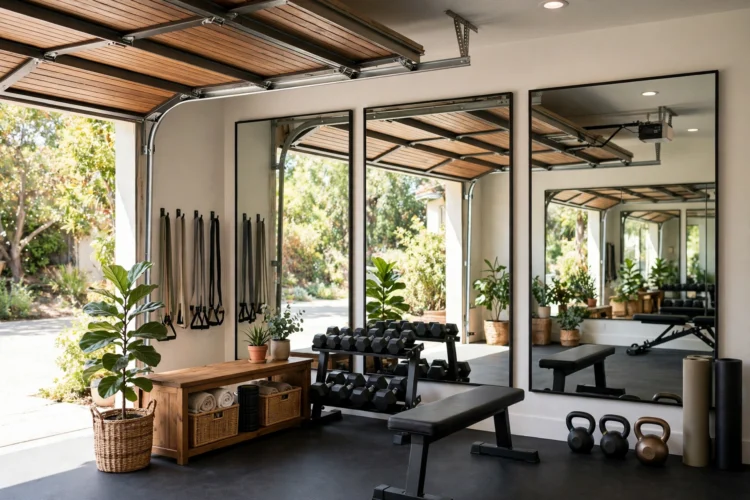
A garage feels like a cave until you add a mirror. One large mirror on the lifting wall lets you check form, and it doubles the sense of space in a small room. Mount it with proper mirror clips and keep it above the height where a barbell could strike it. Acrylic mirror panels are lighter and safer than glass, and they suit a garage where things occasionally get bumped.
Keep the mirror clean, because a dusty mirror makes the whole room feel neglected. A squeegee and a spray bottle stored nearby turn cleaning into a ten-second job. Mirrors also bounce light around the room, which matters in a garage with one small window.
Most garages have one dim bulb in the middle of the ceiling. A gym needs more. Add two bright shop lights over the workout area and the room changes completely. Cool white light suits a workout space because it reads as daylight and keeps you alert. Put the lights on a separate switch from the rest of the garage so the gym can light up on its own.
Avoid a single light directly above the rack, because it casts your shadow over the mirror. Offset the lights slightly and the whole area reads evenly. Good lighting is cheap, it installs in an afternoon, and it does more for motivation than any piece of equipment.
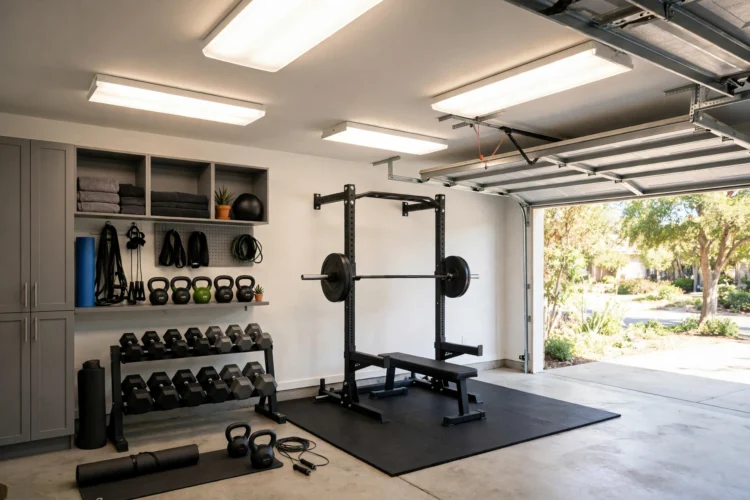
The last idea is the one that keeps the peace: storage that protects the car bay. Wall shelves above the gym area hold towels, bands, and small accessories. A tall cabinet near the door holds cleaning supplies and spare parts. Everything gym-related lives on the walls, and the floor stays clear for the car. When the car and the gym share a garage, the floor is neutral ground.
Label the shelves so the system survives a busy week, the same way laundry room organization relies on labeled spots to stay tidy. Keep a small basket by the door for shoes and a hook for the gym bag, so nothing lands on the car hood. Borrow the landing-spot idea from a mudroom and the entry works the same way. If space is tight, under-stairs storage thinking helps too: use the awkward corners for the awkward items, and keep the center of the room open for training.
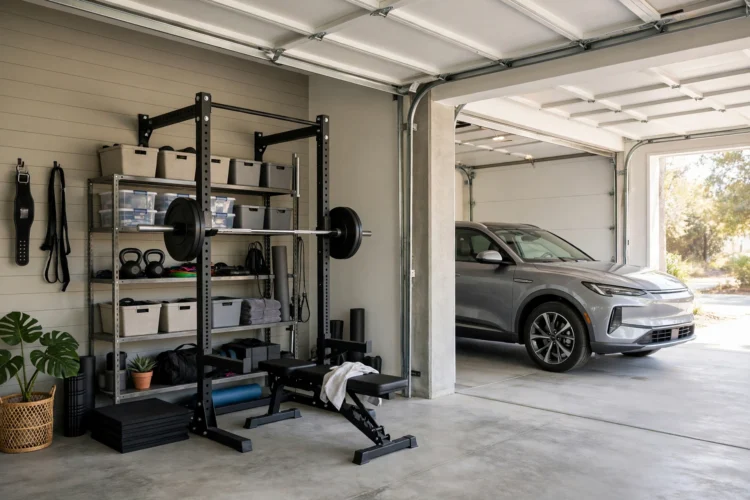
Start with the floor and the air, then add the rack. A gym that feels good to stand in will get used. A gym that feels like a storage room with weights in it will not.