Physical Address
304 North Cardinal St.
Dorchester Center, MA 02124
Physical Address
304 North Cardinal St.
Dorchester Center, MA 02124

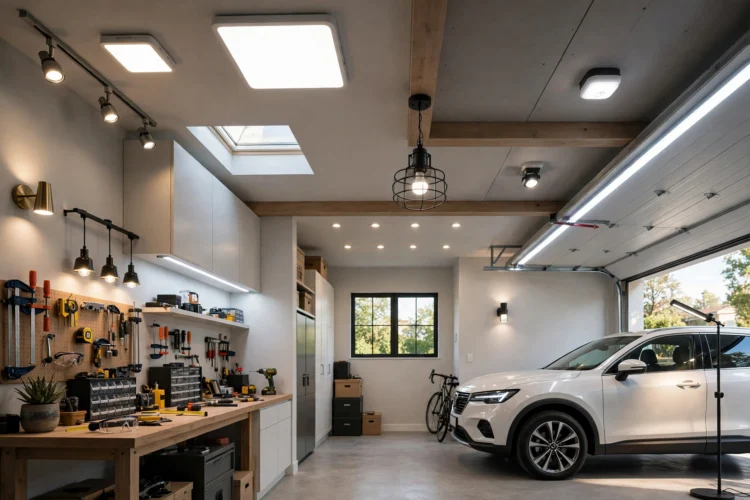
One ceiling bulb cannot light a parking bay and a workbench at the same time. These thirteen ideas split your garage into zones so every corner gets the right light.
Most garages have one ceiling bulb in the middle and a workbench sitting in shadow at the far wall. That setup makes parking easy and everything else hard. These garage lighting ideas split the garage into two zones, parking and work, and light each one for the job it does. The result is a garage where you can see what you are doing without flooding the whole room with glare.
Plan the zones before you buy a single fixture. Walk the garage at night with a flashlight and note where the shadows fall, where you stand to work, and where the car doors swing open. That short walk tells you where the lights belong, and it keeps you from buying fixtures that light the wrong places.
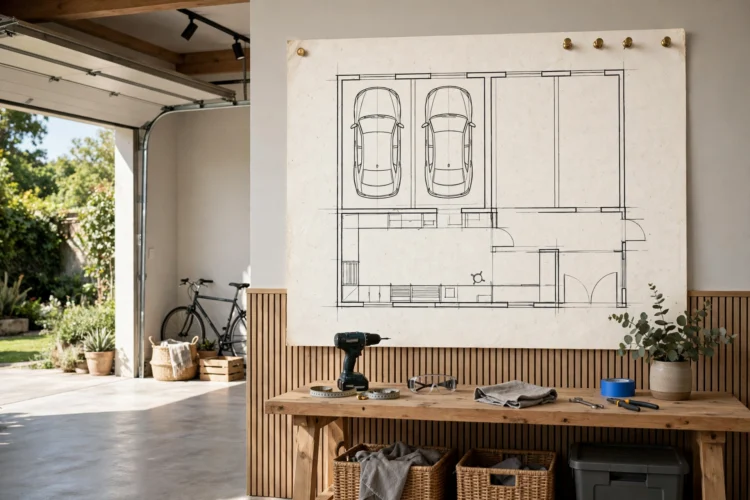
Draw a simple floor plan and mark the parking bays in one color and the work areas in another. The parking zone needs even, general light so you can see the car, the floor, and the path to the house door. The work zone needs brighter, focused light aimed at the bench, the tool wall, and the floor in front of them.
Keep the two zones on separate circuits or at least separate switches, so you can light the workbench without lighting the whole garage. The same zone thinking shows up in these L-shaped kitchen ideas: one room works better when each area gets its own plan. Measure the zones with a tape before you shop, because fixture spacing depends on the real dimensions, not a guess.
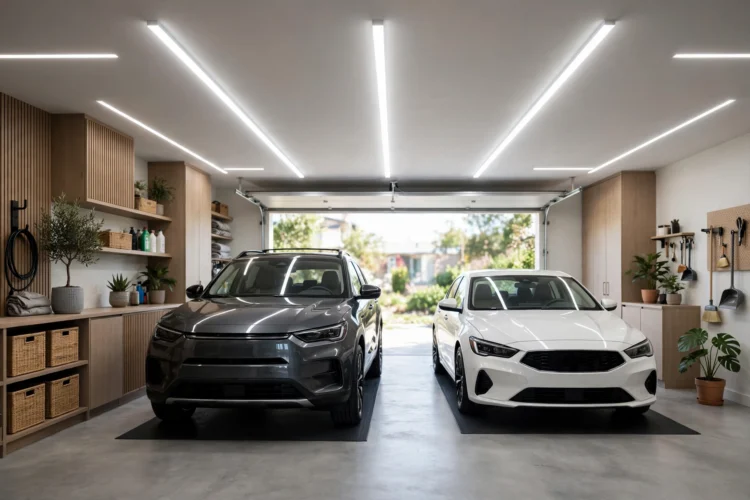
Each parking bay needs its own overhead light, centered over the car rather than over the middle of the room. A single fixture per bay spreads light evenly across the hood and roof, and it keeps the car from casting one big shadow across the floor. LED shop lights or flat panel fixtures work well here, because they give a lot of light without much heat.
Mount the fixtures high enough to clear the garage door when it opens, and check the clearance with the door fully raised before you finalize the position. Two fixtures per bay in a wide two-car garage beat one bright fixture in the center, because the light reaches the sides where you open the doors and unload groceries. Pick fixtures with a diffuser so the light feels soft instead of harsh.
A workbench needs light aimed straight down at the surface, not light borrowed from the ceiling. Garage workbench lighting usually means a long LED bar or two adjustable fixtures mounted under a shelf above the bench, close enough to kill shadows from your hands and tools. Aim for bright, even light across the whole bench so small parts and pencil marks stay visible.
Mount the task light 18 to 24 inches above the bench surface, and choose a fixture you can angle toward the back of the bench where the small work happens. A dimmable bar helps, because fine work wants full brightness while cleanup wants less. Keep the cord or wiring tucked behind the shelf so it never dangles into the work area.

Motion sensor garage lights earn their keep on the nights you walk in carrying groceries or a sleeping child. A sensor near the house door and another near the garage door switch the lights on before your hands find the switch, and they switch off after you leave so the lights never burn all night. Look for sensors with an adjustable timeout so the lights stay on while you unload the car.
Place the sensor where it sees the doorway, not the car, so it triggers on people rather than on the garage door moving. If the garage doubles as a workshop, set the timeout longer during work sessions or use a manual override switch. Sensors also help in a dark garage during the day, when the door is closed and the room has no windows.
Under-cabinet light strips are the cheapest way to kill shadows on a workbench. A slim LED strip under each shelf washes the bench and the shelf below it with light, and it turns a dark corner into a usable workspace. The strips hide under the shelf edge, so they never glare into your eyes while you work.
Choose strips with a warm to neutral color temperature for comfort, and link them with a single plug or a small driver so one switch controls the whole run. Stick-on strips work for a quick fix, but screwed or clipped strips last longer in a garage where temperatures swing. Wipe the strips when you clean the bench, because dust dims them faster than you expect.

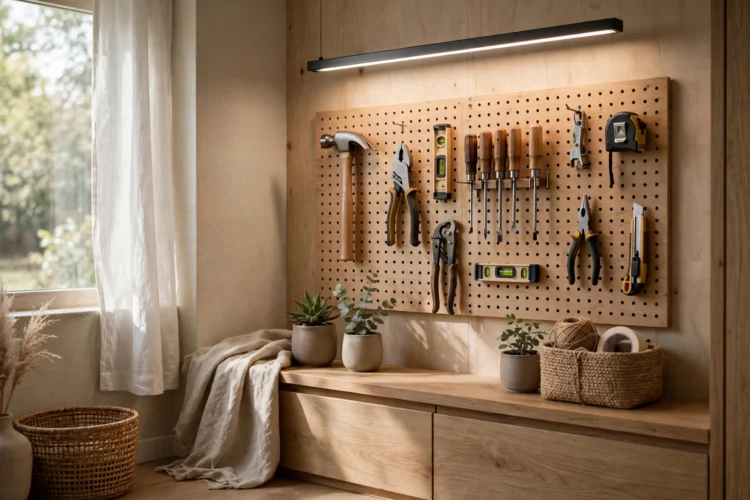
A pegboard full of tools is useless if the tools sit in shadow. Hang a narrow light above or in front of the tool wall so every hook and outline is easy to read. A single slim fixture mounted at the top of the pegboard throws light straight down the wall, and it makes the missing-tool outlines obvious at a glance.
Angle the light slightly toward the wall rather than straight down, so the light grazes the tool handles instead of bouncing off the floor. If the tool wall is wide, use two shorter fixtures rather than one long one, and keep the spacing even. A small pull-chain switch on the fixture lets you light the tools without lighting the whole bench area.
Every garage has a dark corner where boxes pile up and nothing ever gets found. A wall washer fixture mounted high on the opposite wall throws a wide wash of light across that corner, and it turns dead space into usable storage. The trick is to aim the light at the wall and the floor in front of it, not at the middle of the room.
Use wall washers in corners that hold shelves, bikes, or seasonal bins, because those are the spots you need to see when you reach for something. One fixture per dark corner is usually enough, and a fixture with an adjustable head lets you fine-tune the aim after installation. The same idea helps in tight rooms, and these narrow kitchen ideas show how light can open up a cramped space without moving a single wall.
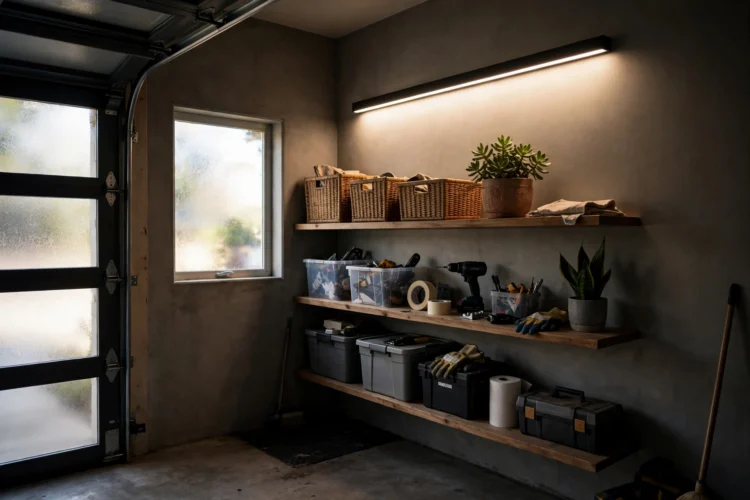
Garage task lighting works best with daylight bulbs, because they show paint, wood, and wire colors the way they really look. A bulb around 5000 Kelvin reads like daylight and helps you match paint, spot a stain, or tell a red wire from a brown one. Warm bulbs feel cozy in a living room, but they muddy colors in a workshop.
Match the color temperature across the work zone so the bench, the tool wall, and the shelves all read the same. Mixing warm and daylight bulbs in one area makes colors shift from spot to spot, which is confusing when you work with paint or stain. Check the bulb box for the Kelvin number rather than trusting the word daylight on the front.

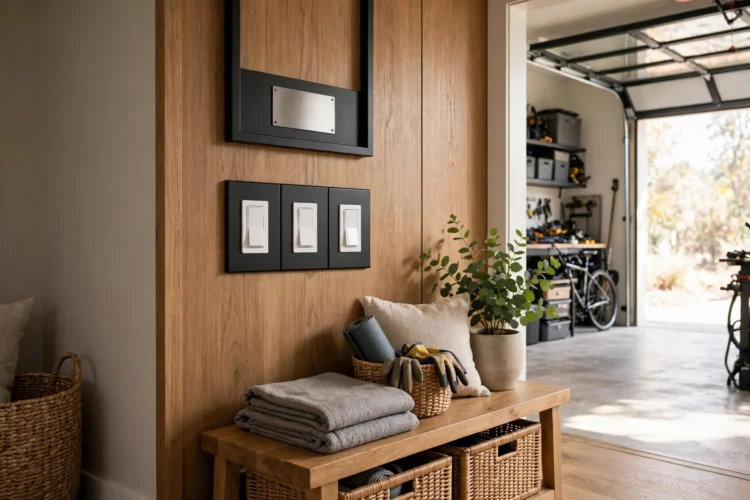
Separate switches turn a good lighting plan into a usable one. Wire the parking bays, the workbench, and the storage corners on their own switches, and label each switch plate so visitors can find the right one. You will use the bench lights for an hour of work and the parking lights for two minutes of unloading, and separate switches make both easy.
Put the work-zone switch near the bench, not at the door, so you can turn the bench lights on after you arrive at the work area. A three-way switch at the house door and the bench covers both entry points. If rewiring sounds like too much, plug-in fixtures with their own switches or smart plugs give you zone control without opening a wall. Small rooms reward the same zone thinking, and these small apartment kitchen ideas show how separate zones keep a tight space working.
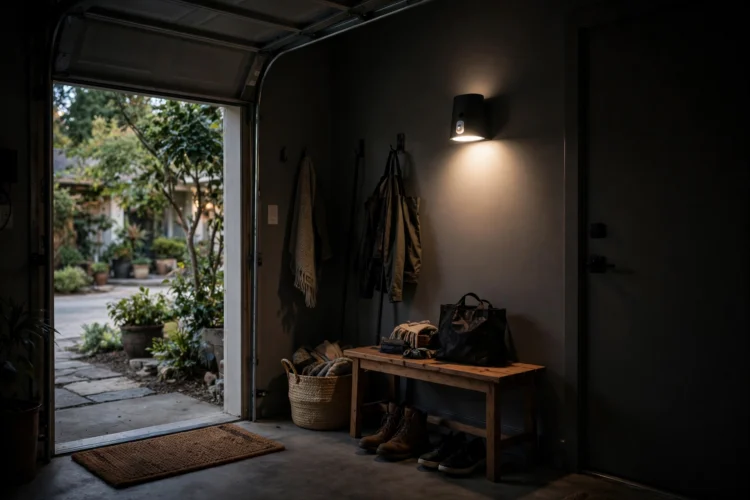
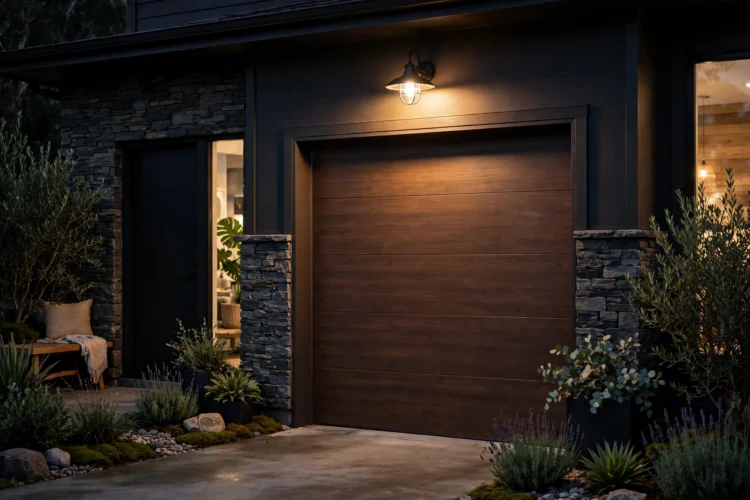
The area just outside the garage door deserves light too, because that is where you unload in the dark and where the driveway meets the house. LED garage ceiling lights are built for indoor use, so for the exterior use fixtures rated for outdoor or damp locations, mounted above or beside the door. A fixture with a motion sensor covers the driveway and scares off nothing but the dark.
Aim the exterior light down at the driveway and the walkway, not out at the street, so it lights your path without blinding neighbors. A warm color temperature works well outside, because it feels welcoming and does not wash out the house facade. Keep the fixture clear of the garage door track so the door never hits it when it opens.
Start with the two zones, then add one fixture at a time and test it at night before you buy the next. Good garage lighting is not about the brightest bulb you can find. It is about putting the right light in the right place, on its own switch, so the parking bay stays clear and the workbench stays bright. Walk the garage after dark, fix the shadows you find, and the whole room will feel bigger and easier to use.