Physical Address
304 North Cardinal St.
Dorchester Center, MA 02124
Physical Address
304 North Cardinal St.
Dorchester Center, MA 02124

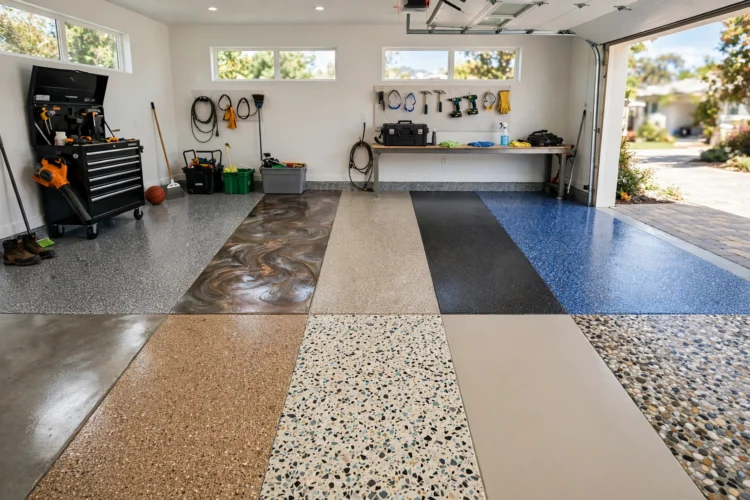
Bare concrete stains, cracks, and dusts. These ten floor coatings compare the durable finishes that stand up to cars, tools, and daily traffic, and how hard each one is to install.
Bare concrete looks fine on moving day and tired a year later. Oil spots, tire marks, and dust settle into the surface, and every winter adds another stain. These garage floor coating ideas compare the finishes that actually survive daily wear, from two-part epoxy to interlocking tiles, so you can pick the one that fits your budget, your skills, and the way your family uses the garage.
No coating fixes a bad slab, so start by checking the concrete itself. Sweep it clean, look for cracks wider than a hairline, and test for moisture by taping a square of plastic to the floor for a day. If the plastic fogs up underneath, the slab holds moisture, and a coating that traps it will peel. Fix cracks and moisture first, and the coating you choose will last years longer.
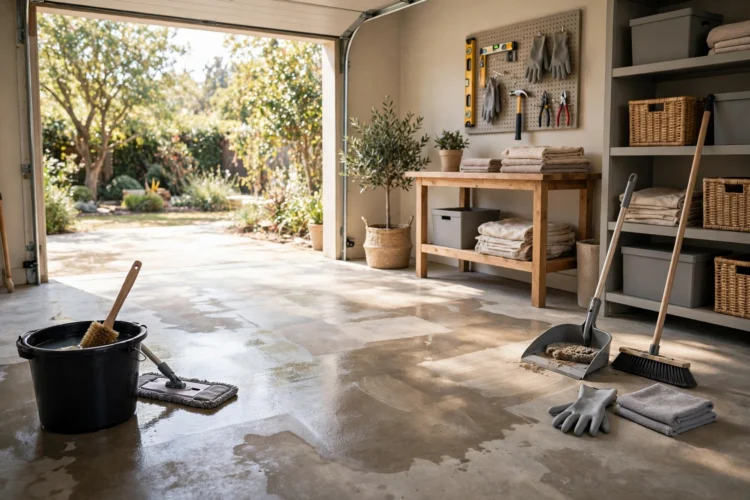
Every coating on this list bonds to concrete, so the prep work decides the result. Clean the slab with a degreaser, scrub out the oil spots, and rinse until the water runs clear. Etch or grind smooth concrete so the coating has something to grip, because a shiny slab sheds coatings the way a waxed car sheds water.
Let the slab dry fully before you open a can of anything, and check the weather if the garage door stays open during the job. A DIY garage floor finish applied to damp or dusty concrete will peel within months, and the repair means stripping the whole floor and starting over. The same prep-first logic shows up in these butcher block countertop ideas: a good finish starts with a clean, dry surface, not with the topcoat.
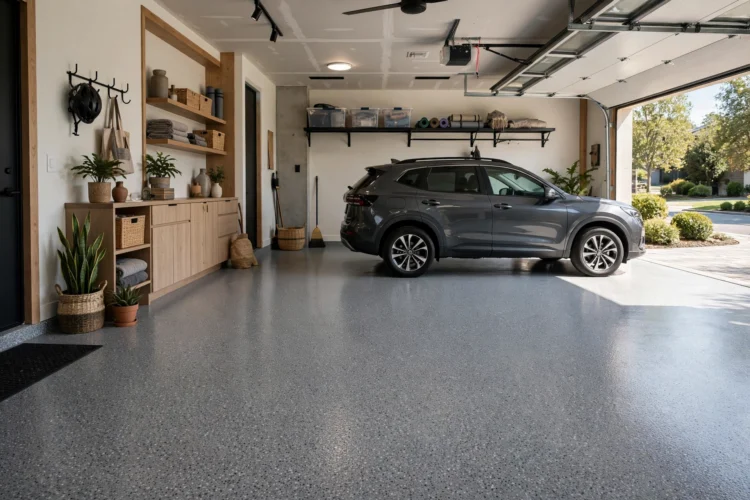
Two-part epoxy is the classic garage floor coating for a reason. You mix a resin and a hardener, roll it on in two coats, and it cures into a hard, glossy skin that shrugs off oil, chemicals, and tire marks. Epoxy garage floor coatings handle hot tires better than paint, and decorative flakes scattered into the wet coat hide dirt and add grip.
Epoxy needs a dry slab, mild temperatures, and a full cure time of several days before you park on it. The mixing ratio matters, so measure carefully and mix only as much as you can roll in about half an hour. A single-car garage usually takes a weekend: one day to prep, one day to coat, and a few days to cure before the car comes back inside.
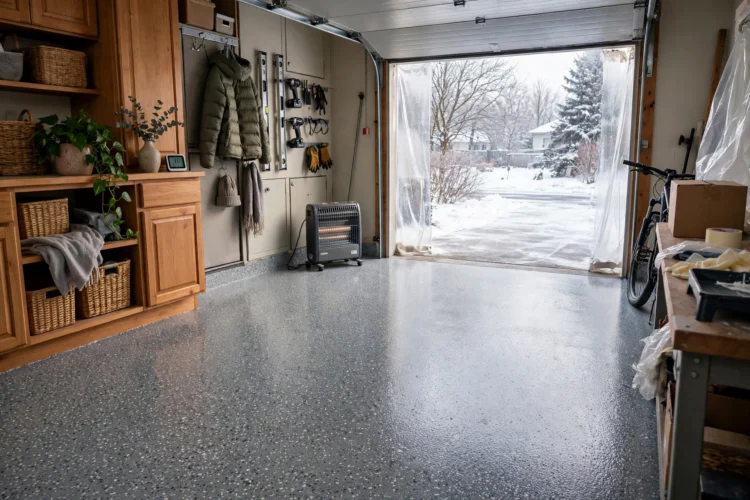
Polyaspartic is a newer coating that cures far faster than epoxy, often in a single day, and it applies in cold weather that would stop epoxy from curing. A polyaspartic garage floor coating goes on thin, cures clear and hard, and resists yellowing from sunlight, which makes it a good pick for garages with windows or a door that stays open.
The fast cure is both the advantage and the challenge, because the coating sets quickly once it is mixed. Work in small sections with a helper, and keep a wet edge as you roll. Polyaspartic usually costs more than epoxy and suits a professional install for larger garages, but a confident DIYer can handle a single bay with careful planning and the right roller.
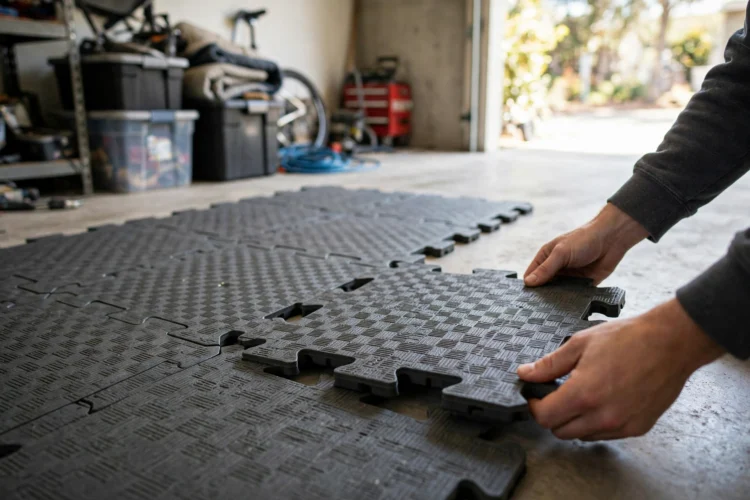
Interlocking floor tiles are the easiest garage floor upgrade of all, because there is no mixing, no fumes, and no cure time. The tiles snap together like a puzzle over the bare slab, and you can walk and park on them the same day. Garage floor tiles come in rigid plastic and flexible rubber, and both handle oil drips and tire marks without staining.
Start laying tiles at the garage door and work toward the back, trimming the edge tiles with a utility knife or a saw. Leave a small expansion gap at the walls, because the tiles shift slightly with temperature. Damaged tiles pop out and swap for new ones, which makes repairs trivial, and the whole floor lifts out if you move house and want to take it with you.
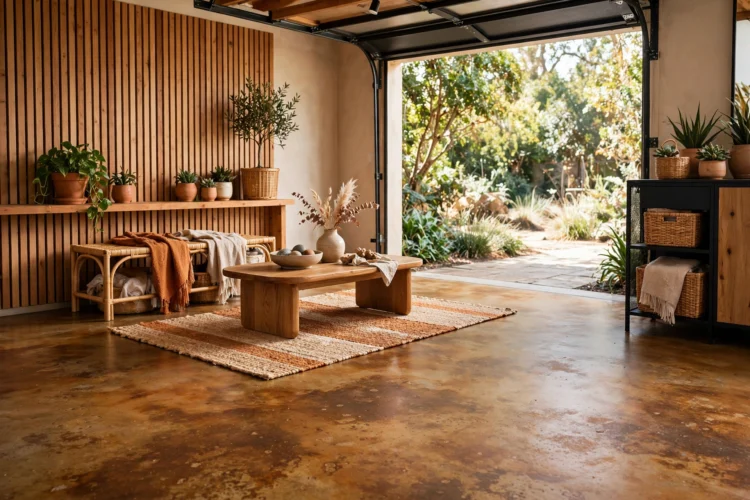
Concrete stain is the cheapest way to make a tired slab look deliberate. The stain soaks into the concrete and colors it from within, so it never peels the way paint can, and it leaves the natural texture of the slab visible. A stain plus a clear sealer gives a garage floor a finished look for very little money and effort.
Stain shows every flaw in the slab, so it suits concrete that is sound but dull, not concrete that is cracked or patched in many places. Test the color on a hidden corner first, because stain reacts with the concrete and the final shade varies from slab to slab. Two thin coats beat one heavy coat, and a matte sealer on top keeps the color from wearing off under tires. The same test-first habit applies to color anywhere in the house, and these kitchen cabinet color ideas show how a small swatch saves you from a big mistake.
Polyurea is a flexible, tough coating that handles hot tire pickup, heavy toolboxes, and temperature swings without cracking. It bonds well to concrete, cures fast, and stays flexible enough to move with the slab through freeze and thaw cycles. Garages that see daily car traffic and a workshop in the same room get the most from it.
Polyurea is usually a professional install, because it sets very fast and needs precise mixing and application. If you hire it out, ask what the warranty covers and how the installer preps the slab, because prep still decides the result. For a DIYer, a polyurea topcoat over an epoxy base coat gives much of the durability without the full professional process.
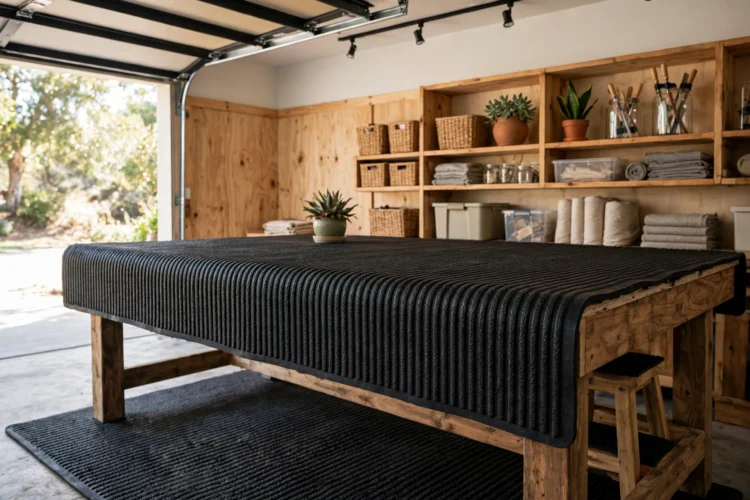
Rubber mats are the quickest fix for a garage floor that needs comfort more than a full coating. Thick rubber mats cushion knees and feet at the workbench, catch oil drips under the car, and roll up when you need the bare floor back. They work well as a partial floor too, covering only the work zone or the parking spots.
Choose mats with a textured top for grip and a flat bottom that stays put on concrete. Horse stall mats are a popular heavy option, because they are thick, cheap per square foot, and cut to size with a utility knife. Air the mats outside for a day before installing them, since new rubber carries a strong smell that fades with time and fresh air.
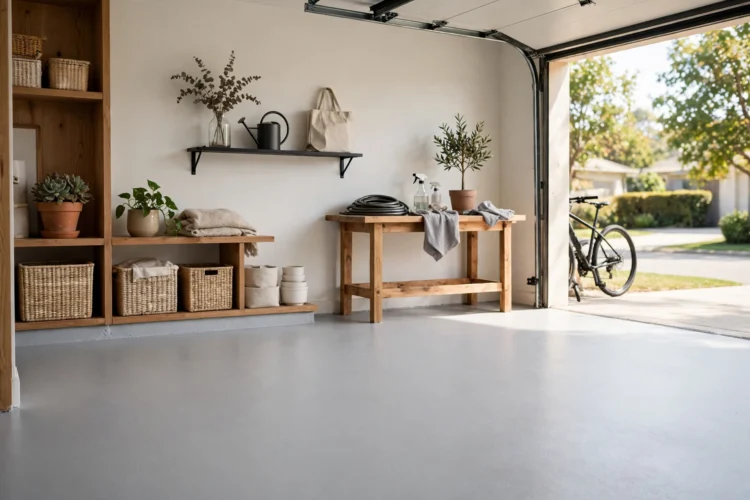
Garage floor paint is the lowest-cost coating, and it works when the expectations match the product. A one-part epoxy paint or a latex floor paint rolls on like wall paint, dries in a day, and freshens a dull slab for a season or two. It suits a garage that sees light use, or a rental where a permanent coating makes no sense.
Paint wears fastest where tires turn, so expect scuffs and chips in the parking spots within a year or two. The same honest tradeoff appears in these kitchen cabinet hardware ideas: a cheap refresh buys a real improvement, as long as you know it is a refresh and not a renovation. Touch up the worn spots with the same paint, and keep a small can labeled for the next round.
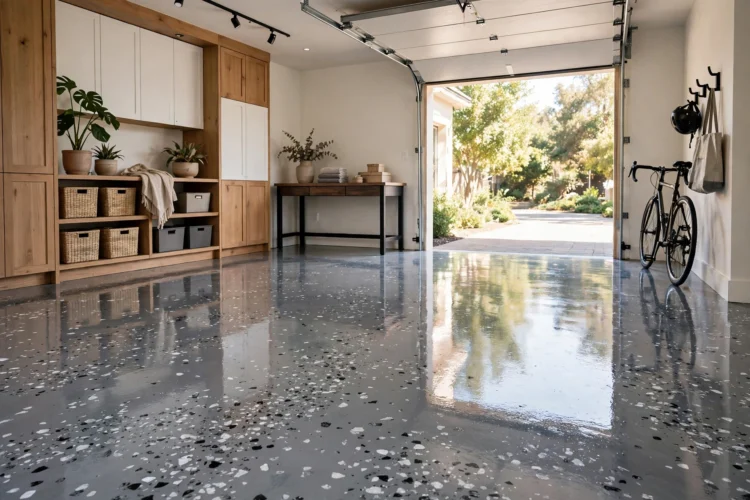
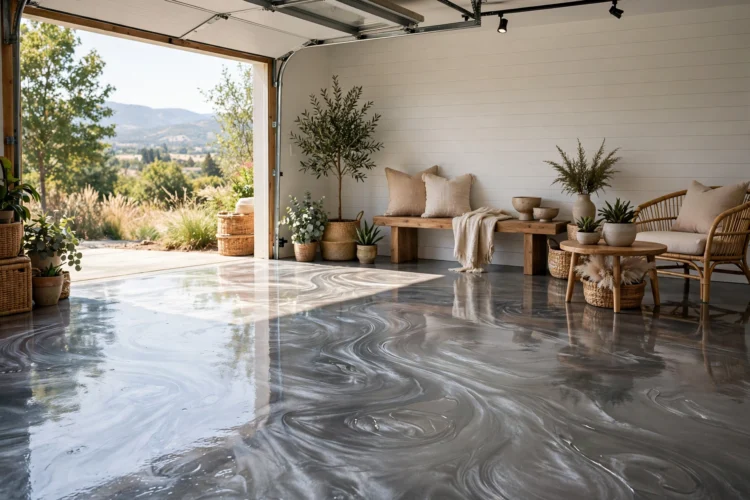
Metallic epoxy turns a garage floor into a showroom surface, with swirls of silver, gold, or copper pigment suspended in a clear epoxy base. The result looks like polished stone and hides dust better than a flat color. It is the coating to pick when the garage doubles as a show space for a classic car or a home gym you are proud of.
Metallic epoxy takes more skill than plain epoxy, because the pigment moves as the coating cures and the pattern is hard to control. Practice on a small test board, work in sections, and use a spiked roller to keep the pattern even. A clear topcoat protects the metallic layer from scratches, and a non-slip additive keeps the glossy surface safe when it gets wet.
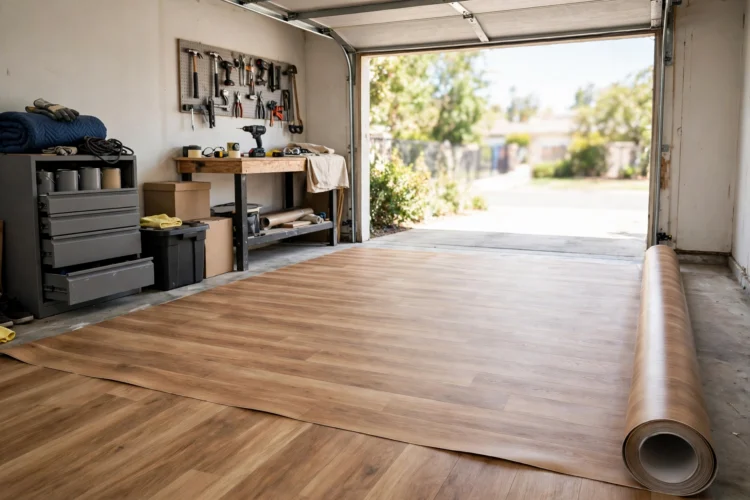
Roll-out vinyl flooring unrolls across the garage like a carpet, covers stains and cracks in an afternoon, and lifts out when you move. The vinyl comes in solid colors and diamond plate patterns, and a single roll covers a one-car bay with one seam or none. It is the best option for a renter, or for anyone who wants a better-looking floor without touching the slab.
Measure the bay and order the roll a few inches long, then trim it at the walls with a utility knife. Tape the edges down or use a threshold strip at the door so the vinyl never curls up under a tire. Roll-out vinyl dents under heavy point loads, so put plywood pads under jack stands and heavy toolboxes. Sweep it clean and mop it like any hard floor, and it will look new for years.
Pick the coating that matches the way you use the garage, not the one that looks best in a photo. A daily driver and a workshop need epoxy or polyurea, a light-use garage is happy with stain or paint, and a renter gets the most from tiles or roll-out vinyl. Prep the slab properly, respect the cure time, and the floor will handle the daily wear instead of showing it.