Physical Address
304 North Cardinal St.
Dorchester Center, MA 02124
Physical Address
304 North Cardinal St.
Dorchester Center, MA 02124

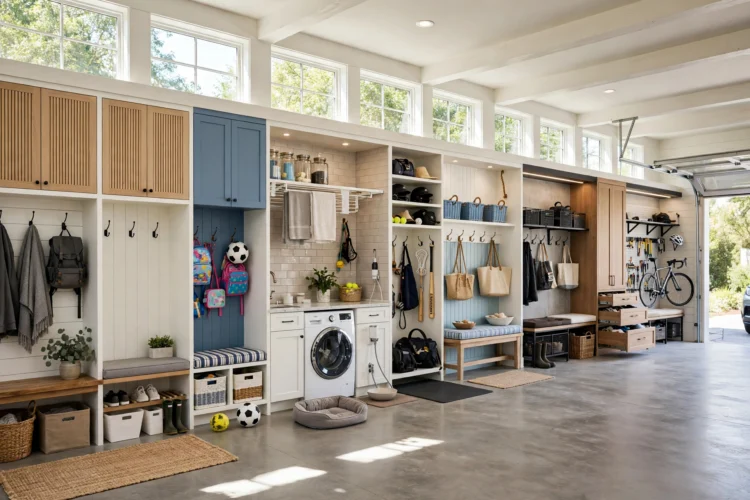
A garage entry can catch coats, shoes, and school bags before they reach the house. These ten setups show how to build a mudroom that survives busy family life.
For most busy families, the garage door is the real front door. Kids come home through it, sports bags land just inside it, and wet shoes pile up beside it. Without a plan, that small patch of floor becomes the messiest spot in the house. These garage mudroom combo ideas turn the garage entry into a hardworking mudroom that catches the mess before it reaches the living room, and they do it without a full renovation.
The trick is to treat the entry like a room with a job. Every item that enters the house needs a place to land, and every place needs to be easy to reach when hands are full. A bench, a row of hooks, and a floor you can mop will do more than any fancy organizer. Start with the pieces your family actually uses every day, then add storage for the rest.
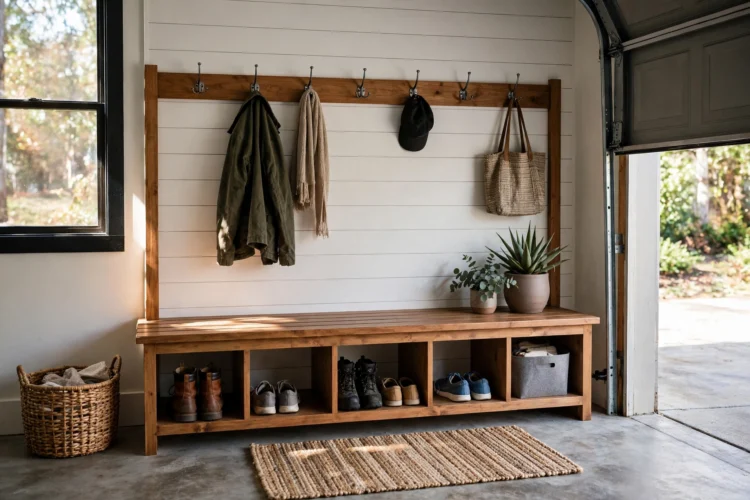
A bench is the anchor of any garage entry, because it gives everyone a place to sit while they pull on boots or lace up shoes. Pick a bench with open cubbies or pull-out baskets underneath so shoes slide straight in instead of piling up on the floor. A bench about 16 inches deep fits against most garage walls without blocking the walkway, and a height of 18 inches works for kids and adults alike.
Look for a garage entry bench with storage built in, rather than a plain seat that needs baskets added later. A solid wood or powder-coated metal frame stands up to wet shoes and heavy bags, and a wipeable seat cushion adds comfort without adding laundry. If the bench sits near the door to the house, leave a clear path of at least 30 inches in front of it so the door swings open freely.
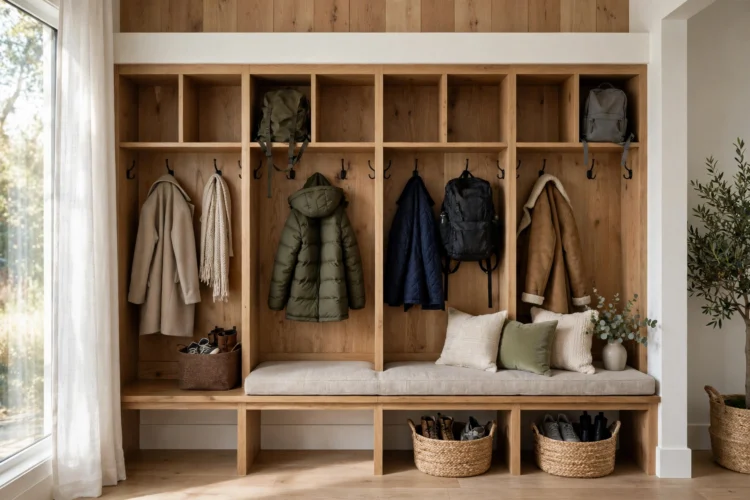
Open lockers give every person one vertical slot for a coat, a backpack, and a pair of shoes, and they end the daily argument about whose jacket is on the floor. Build or buy a row of tall, narrow cubbies above the bench, one per family member, with a hook inside each one. Name plates or small color-coded tags help younger kids find their own spot without asking.
Keep the locker design simple. Deep shelves hold backpacks, a single hook holds a coat, and a small basket at the bottom holds gloves and hats. The same squeeze-every-inch thinking behind these small kitchen ideas works here too: when every inch has a job, a narrow wall can hold a surprising amount of gear. Skip doors on the lockers so kids can toss things in without fumbling with latches.
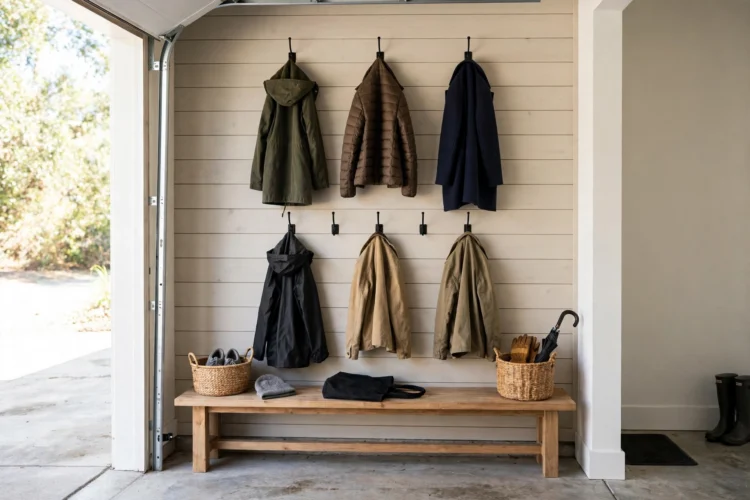
Hooks fail when they sit too high for the people who use them most. Mount a row of sturdy hooks at about 48 inches for kids and another row at about 65 inches for adults, and coats will actually end up on the wall. Use double hooks so one spot can hold a coat and a backpack, and choose hooks with a rounded end so straps slide on and off without snagging.
Space the hooks about 12 inches apart so bulky winter coats do not crowd each other. A long peg rail works well on a narrow wall, and individual hooks let you fill odd gaps between lockers and cabinets. Test the height with your shortest family member before you drill, because a hook a child cannot reach is just wall decoration.
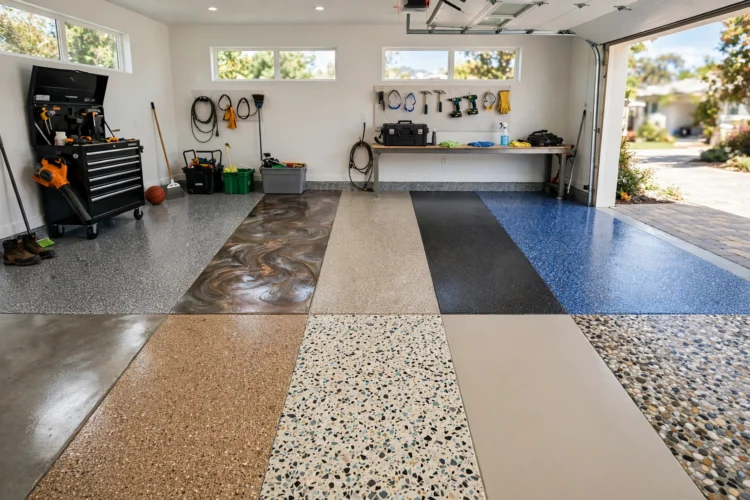
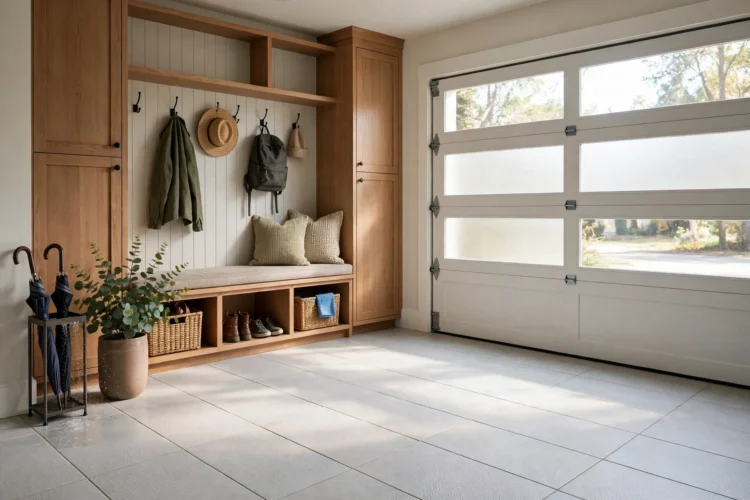
The floor under a garage mudroom takes more abuse than any other floor in the house, so it has to survive mud, snow melt, and spilled drinks. Washable mudroom flooring such as large-format porcelain tile, luxury vinyl plank, or sealed concrete wipes clean with a mop and does not stain the way carpet or bare drywall would. A slightly textured surface gives grip when shoes are wet.
Define the mudroom zone with a change in flooring, even if it is only a 4 by 6 foot patch of tile at the door. The visual edge tells everyone where the dirty zone ends and the clean house begins. Add a drain-friendly slope or a low threshold strip if the garage floor already slopes toward the door, and seal the grout so mud does not settle into the joints.
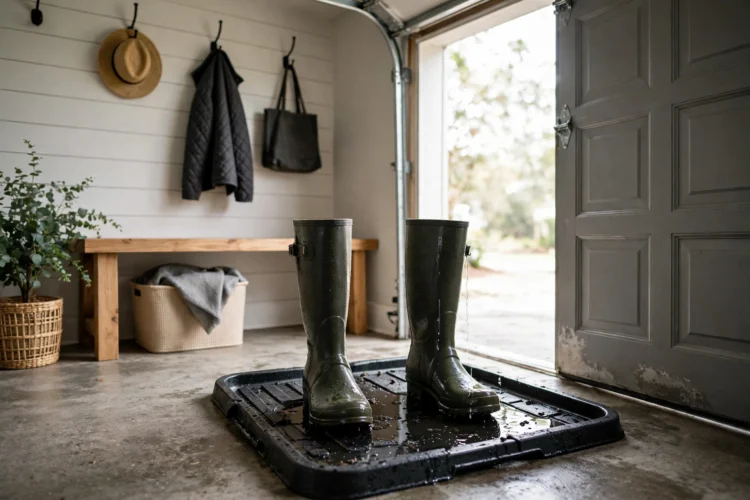
Wet boots are the number one source of garage entry mess, and a boot tray solves it for very little money. Place a large tray with a raised lip right inside the door, big enough for the whole family to park their boots in one row. The lip holds meltwater until it dries, and the tray itself rinses clean in a sink or with a hose.
Give the tray a clear job by putting it exactly where people step out of their shoes, not across the room where it gets ignored. A second, smaller tray near the bench catches shoes that come off while sitting. In rainy seasons, add a few absorbent mats underneath the tray so drips never reach the floor, and empty the tray once a week so it never smells.
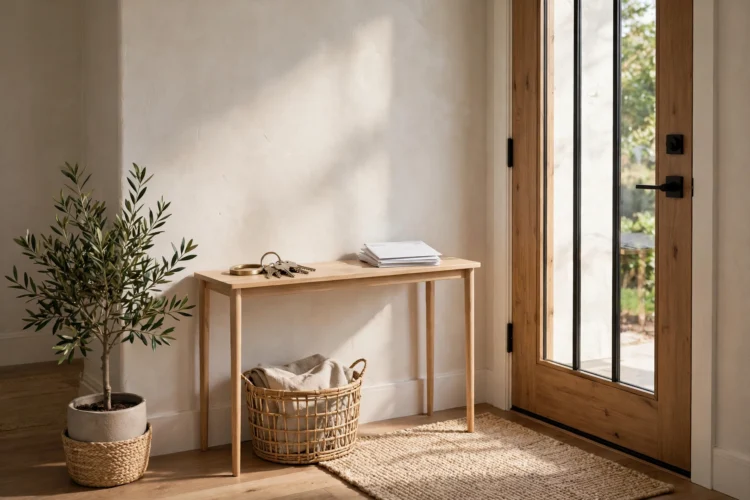
Small items vanish fastest in a garage entry, so give them a home they cannot miss. A slim console table or a shallow wall shelf beside the door holds keys, sunglasses, mail, and the dog leash in one visible spot. A tray on top keeps the small stuff corralled, and a couple of hooks underneath hold the leash and reusable shopping bags.
Keep the console no deeper than 10 inches so it never blocks the walkway. A wall-mounted shelf with a lip works even better in a tight entry, because it leaves the floor clear for shoes and bags. The same idea shows up in these tiny kitchen storage ideas: shallow, visible storage beats deep cabinets for the things you grab every single day. Add a small dish or hook for each adult so keys never end up in a coat pocket.
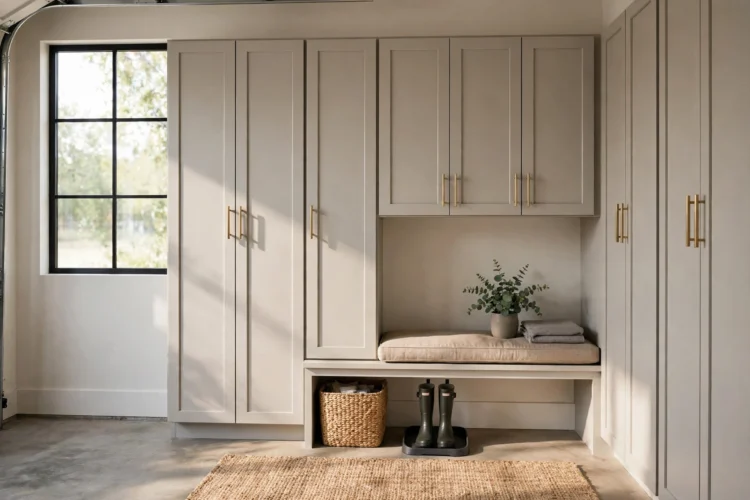
Open storage keeps daily gear within reach, but every family has overflow that looks better behind a door. A tall closed cabinet near the mudroom hides cleaning supplies, sports equipment, and the spare shoes nobody wears this season. Family mudroom organization works best when the open zones hold the daily items and the closed zones hold everything else.
Choose cabinets with adjustable shelves so tall boots and short stacks of gloves can share the same unit. A cabinet with a wipeable interior survives muddy gear, and a magnetic latch keeps doors shut when kids slam them. Label the inside of each door with what belongs on each shelf, so the system survives even when one person does all the tidying.
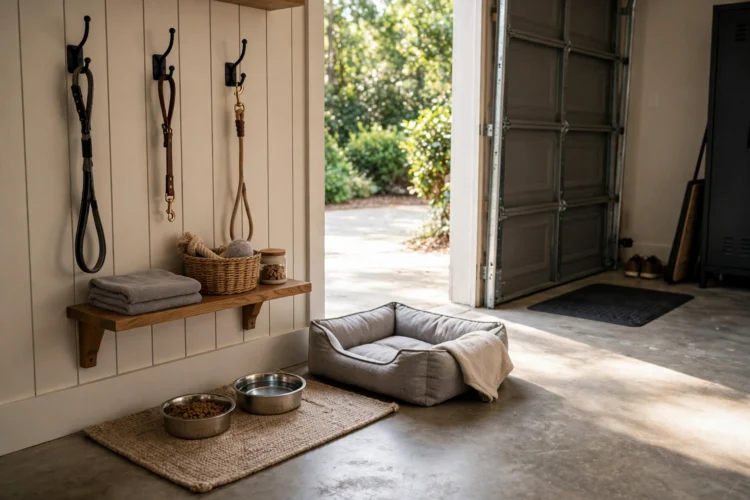
If the dog comes through the garage too, give the pet gear its own corner instead of letting it spread across the mudroom. A low shelf holds food and treats, a hook holds the leash at grab height, and a small basket holds towels for muddy paws. A water bowl on a raised tray keeps spills off the floor and makes the bowl easy to refill.
Place the pet station beside the door the dog uses, not in the middle of the human walkway. A washable mat under the bowls catches drips, and a wall-mounted dispenser for waste bags keeps walks ready to go. For muddy-paw days, keep a stack of old towels in the lowest locker cubby so cleanup takes seconds instead of a trip to the laundry room.
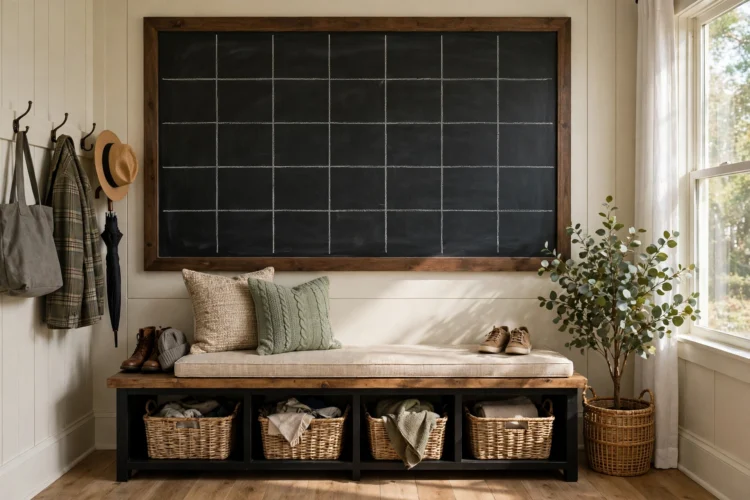
A garage mudroom is the last thing everyone sees before leaving, so it is the best place for the family schedule. A chalkboard, whiteboard, or pin board on the wall above the bench shows practices, appointments, and reminders where nobody can miss them. Keep it to one board and one marker color per person so the schedule stays readable at a glance.
Mount the board at eye level for the adults and add a lower strip for kids to pin their own notes and drawings. A small ledge underneath holds markers, chalk, and a cloth so the board gets updated instead of ignored. This habit pairs well with the planning mindset in these kitchen layout ideas for awkward rooms: a small, awkward space works when one wall carries the planning job and the rest stays clear for movement.
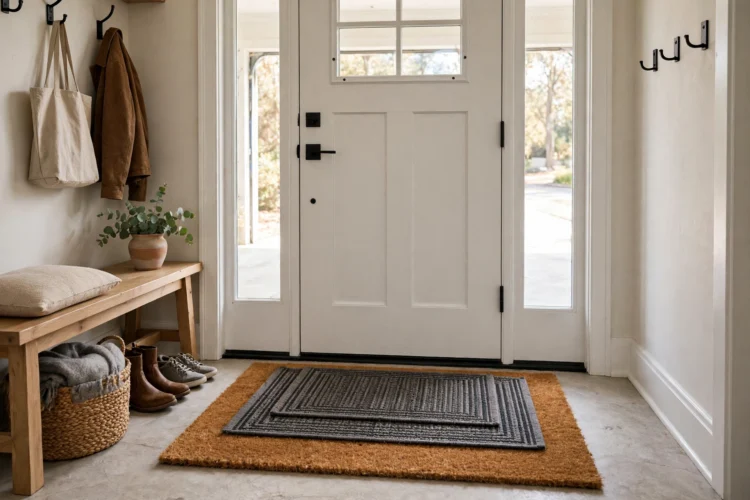
One doormat is never enough for a busy family, because a single mat fills with grit in a day. Mudroom garage entry ideas that last use two mats: a coarse outdoor mat that scrapes off mud and gravel, and a softer indoor mat that catches the fine dust left behind. The pair traps far more dirt than either mat alone, and both mats shake out or hose off in minutes.
Size the outdoor mat to the full width of the door so nobody steps around it, and pick an indoor mat with a rubber backing so it stays put on a smooth floor. Replace the mats when the fibers flatten, because a flat mat stops trapping dirt. A quick shake outside once a week keeps the system working, and it is the cheapest upgrade in the whole mudroom.
Start with the bench and the boot tray, then add lockers and cabinets as the routine settles. A garage mudroom does not need to be large or expensive. It needs a place for every item that comes through the door, and a family that can find each place without thinking. Build the setup that fits your wall, keep the floor washable, and the mess will stop at the door where it belongs.